
When our engineering team finishes assembling each shockwave therapy machine 1, we know the real challenge begins for our clients. Your salon staff stare at a sophisticated device with no idea where to start private-label instructional content 2. Technical support calls flood in. Customers lose confidence. Revenue suffers.
Yes, reputable shockwave therapy machine suppliers provide comprehensive instructional videos and tutorials. These resources typically include device setup guides, operation demonstrations, treatment protocols, and maintenance procedures. Quality suppliers offer video libraries, certification programs, and ongoing training support to ensure safe and effective machine use.
The question is not whether suppliers offer training videos patient screening protocols 3. The real question is whether those videos meet your business needs. Let me walk you through what you should expect and demand from your supplier’s educational resources.
How can I access professional training videos to help my salon clients master shockwave therapy?
Our production facility ships over 200 units monthly to distributors worldwide. We learned early that machines without proper training materials create frustrated customers and expensive returns. Accessing professional training videos starts with choosing the right supplier partnership.
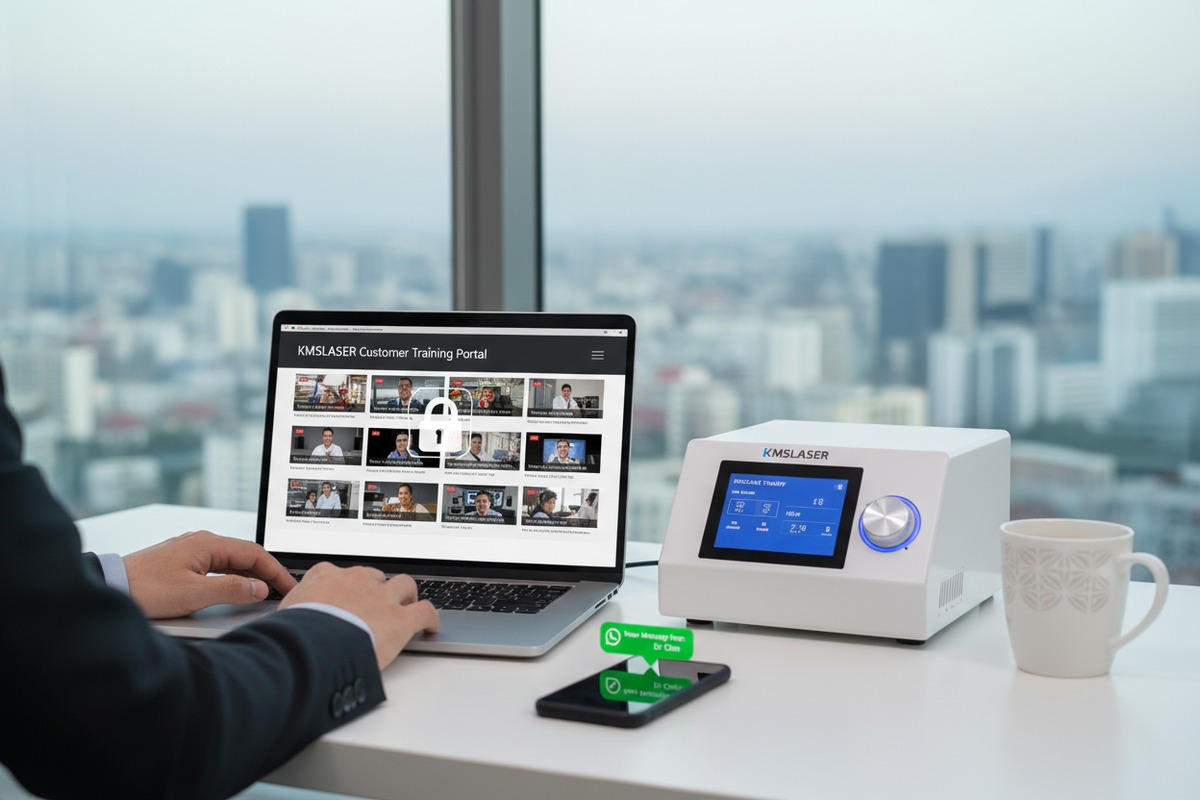
Professional training videos are accessible through supplier websites, dedicated online portals, YouTube channels, and password-protected customer areas. Most suppliers provide free basic training with purchase, while advanced modules may require registration. Look for suppliers offering organized video libraries with certification upon completion.
Where to Find Training Video Resources
Training videos exist across multiple platforms. The key is knowing where to look and what to expect from each source.
| Platform Type | Access Method | Typical Content | Best For |
|---|---|---|---|
| Supplier Website | Direct download or streaming | Basic operation, setup guides | New users |
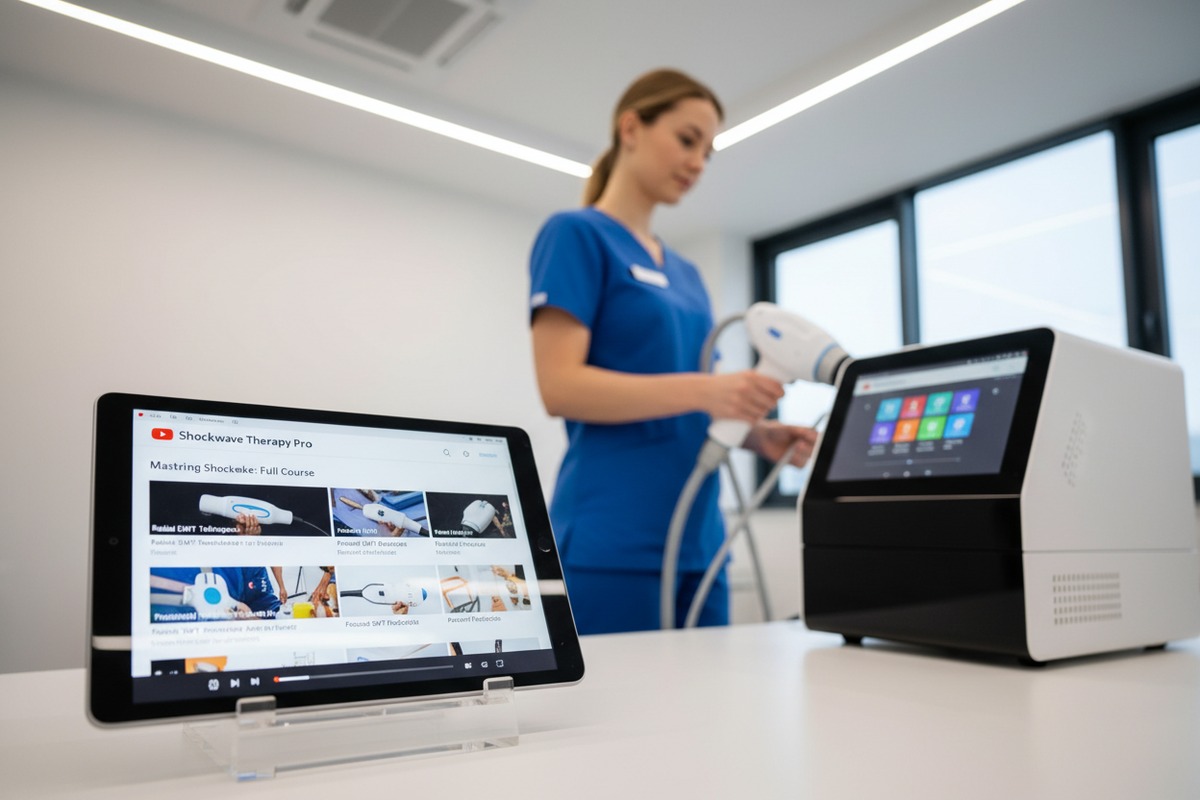
| YouTube Channel | Public access | Product demos, quick tips | Initial research |
| Customer Portal | Login required | Full training curriculum | Registered buyers |
| Third-Party Platforms | Subscription or pay-per-view | Advanced techniques | Experienced users |
What Quality Training Videos Include
Not all training videos are equal. Professional content covers several critical areas.
First, device overview videos explain physical components. These show handpiece types, control panels, and connection points. Our engineers spend weeks designing intuitive interfaces. Good training videos make that investment worthwhile.
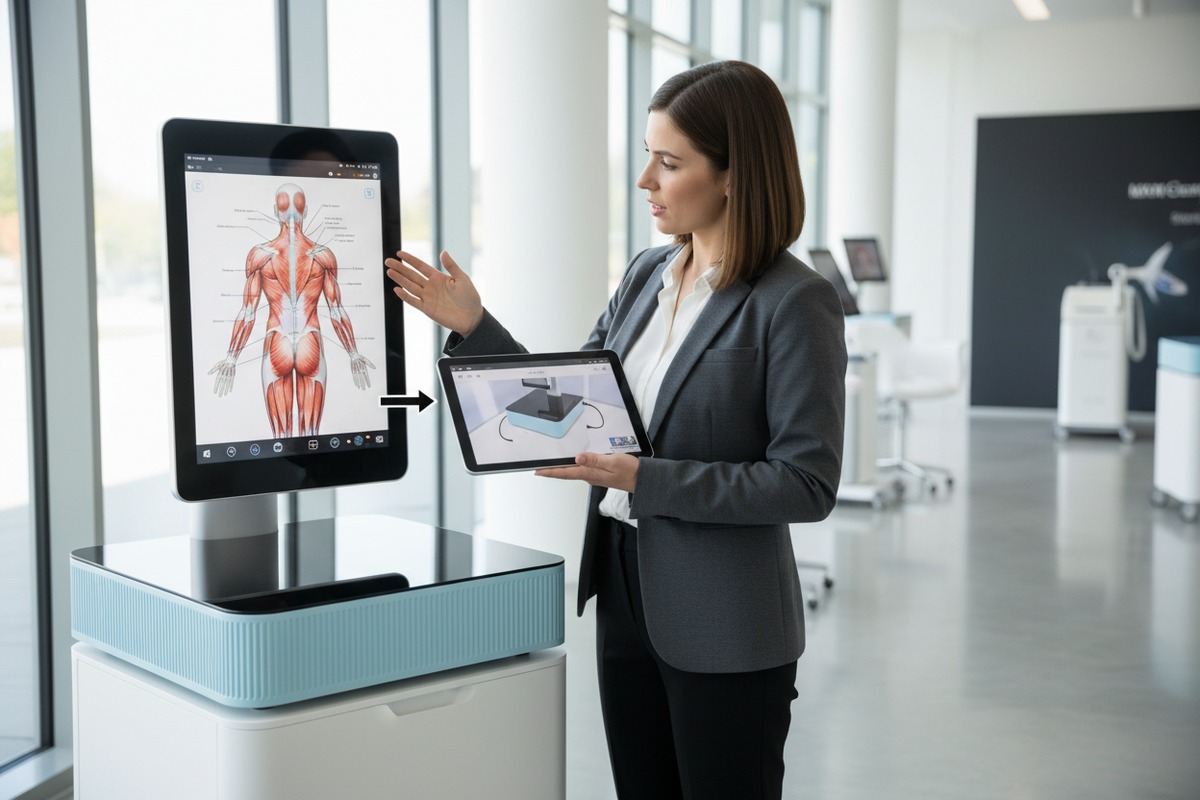
Second, software navigation tutorials guide users through menu systems. Modern shockwave machines like ours feature touchscreen displays with anatomical diagrams. Users need visual guidance to access preset protocols and adjust parameters.
Third, treatment technique videos demonstrate real applications. These show gel application, handpiece positioning, and circular motion techniques. They cover patient communication and pain management during sessions.
Building a Training System for Your Clients
When you distribute our machines to salons, you need training content that works for your brand. Consider creating a tiered approach.
Start with mandatory basics. Every salon operator should complete device setup and safety modules before treating clients. Then offer intermediate content covering specific conditions like plantar fasciitis 4 or tennis elbow. Finally, provide advanced protocol training for experienced practitioners.
This structure reduces your support burden. Clients who complete proper training rarely call with basic questions.
Will my supplier provide private-label instructional content that I can use for my own brand?
We work with brand owners across North America and Europe who need more than generic training materials. They need content that represents their brand identity. This matters for building customer loyalty and professional credibility.
Many suppliers offer private-label instructional content options, though availability varies significantly. Premium suppliers provide white-label videos, co-branded materials, or custom content development services. Discuss these options during initial negotiations, as private-label content often requires additional investment and lead time.
Understanding Private-Label Content Options
Private-label content comes in several forms. Each has different cost and customization implications.
| Content Type | Customization Level | Typical Cost | Lead Time |
|---|---|---|---|
| White-Label Videos | Supplier removes branding | Low to moderate | 1-2 weeks |
| Co-Branded Materials | Your logo added to supplier content | Moderate | 2-4 weeks |
| Custom Video Production | Fully branded content for your company | High | 4-8 weeks |
| Script-Only Packages | Supplier provides scripts, you produce | Moderate | 1-2 weeks |
Why Private-Label Content Matters for Distributors
Your downstream customers see your brand, not ours. When they watch a training video with another company's logo, it weakens your brand authority.
Consider this scenario. A salon owner buys your branded shockwave machine. They access training videos showing a different company name. They start wondering who actually makes the product. Trust erodes.
Private-label content solves this problem. Your brand appears consistently across all touchpoints. Customers associate quality training with your company.
Negotiating Private-Label Agreements
During our OEM discussions with clients, we address content customization early. Here are key points to negotiate.
First, clarify ownership rights. Can you modify the content later? Can you distribute it freely to all customers?
Second, establish update schedules. When we release software updates, will training content be refreshed?
Third, discuss format compatibility. Will videos work on your learning management system? Can you embed them on your website?
Fourth, define quality standards. What resolution and production values can you expect?
Building Your Own Training Ecosystem
Some distributors prefer creating original content using our machines. We support this approach by providing technical specifications, protocol guidelines, and subject matter expert consultations.
Your team films the videos. Your brand appears throughout. You control the message completely.
This approach requires more investment upfront. However, it creates lasting differentiation in your market.
Can I get step-by-step maintenance and setup videos to minimize my technical support calls?
Our customer service team tracks support call patterns. The data tells a clear story. Most calls involve issues that proper maintenance videos would prevent. Setup confusion ranks second. These are avoidable problems.
Yes, quality suppliers provide detailed maintenance and setup videos covering equipment care, tip changing, component replacement, cleaning procedures, and troubleshooting common issues. These resources significantly reduce technical support calls when users complete training before operating equipment.

Common Issues Maintenance Videos Should Address
Based on our support data, here are the top issues maintenance videos must cover.
| Issue Category | Frequency | Prevention Through Video Training |
|---|---|---|
| Handpiece tip wear | Very High | Tip inspection and replacement guides |
| Applicator cleaning | High | Daily and weekly cleaning protocols |
| Software errors | Moderate | Reset procedures and update instructions |
| Connection problems | Moderate | Cable inspection and connector care |
| Calibration drift | Low | Periodic calibration verification |
Setup Video Requirements
Setup videos deserve special attention. First impressions matter. When a salon receives your machine, the unboxing experience sets expectations.
Effective setup videos include unpacking instructions. They show component identification. They demonstrate cable connections and power requirements. They guide initial software configuration 6.
Our machines feature touchscreen interfaces with intuitive menus. Still, users appreciate visual guidance during first setup. A ten-minute video saves hours of confusion.
Maintenance Schedule Communication
Regular maintenance prevents costly repairs. Your customers need clear schedules.
Daily maintenance includes surface cleaning and visual inspection. Weekly tasks cover applicator head cleaning and cable checks. Monthly procedures involve deeper cleaning and performance verification. Quarterly maintenance requires professional inspection in some cases.
Videos should demonstrate each task clearly. Show the right cleaning products. Demonstrate proper techniques. Explain warning signs that indicate problems.
Reducing Support Call Volume
Our distributors who actively promote training videos report 40-60% fewer support calls. This translates directly to cost savings and customer satisfaction.
Create a system where customers must acknowledge completing setup and maintenance training before accessing warranty support. This encourages proper training completion and reduces preventable issues.
Some distributors implement training verification through short quizzes after video modules. Customers who pass demonstrate basic competence. Those who struggle receive additional support proactively.
What level of detail should I expect in the tutorials to ensure my customers operate the machines safely?
When we design training content for our machines, patient safety drives every decision. Incomplete training creates liability risks for everyone in the supply chain. Your reputation depends on customers who operate equipment safely and effectively.
Tutorial detail should cover contraindications, proper parameter settings, treatment area identification, patient screening protocols, emergency procedures, and condition-specific applications. Expect videos ranging from 6-13 minutes per topic, with comprehensive libraries containing 20+ modules addressing all safety-critical operations.

Essential Safety Content Categories
Safety-focused tutorials must address specific categories comprehensively.
| Safety Category | Required Content Elements | Minimum Coverage |
|---|---|---|
| Contraindications 7 | Pregnancy, blood clotting disorders, infections, malignancies | Comprehensive list with explanations |
| Parameter Settings | Intensity levels, frequency, pulse counts per area | Condition-specific guidelines |
| Patient Screening | Medical history review, consent procedures | Step-by-step protocols |
| Emergency Response | Adverse reaction management, when to stop treatment | Clear action steps |
| Hygiene Protocols | Sanitation between patients, applicator cleaning | Detailed procedures |
Understanding Contraindication Training
Contraindication training protects patients and practitioners. Videos must clearly explain conditions that prevent shockwave therapy use.
Absolute contraindications include pregnancy, blood clotting disorders, and treatment over malignant tumors. Relative contraindications require medical consultation before proceeding.
Training videos should present case scenarios. Show how to ask screening questions. Demonstrate documentation procedures. Explain liability implications of skipping protocols.
Treatment Protocol Specificity
Generic treatment guidance is insufficient. Quality tutorials address specific conditions with detailed protocols.
For plantar fasciitis, videos should show precise treatment areas, recommended intensity ranges, pulse counts, and session frequency. For tennis elbow, different parameters and techniques apply.
Our machines include preset protocols for common conditions. Tutorial videos should explain how these presets work and when to modify them based on patient response.
Progressive Intensity Training
The ramp function on our devices gradually increases treatment intensity. This feature requires proper training to use effectively.
Videos should explain when progressive intensity benefits patients. They should demonstrate how to set ramp parameters. They should show how to monitor patient comfort during increasing intensity.
Without this training, operators may start treatments at uncomfortable intensity levels. Patient trust suffers. Treatment outcomes decline.
Certification and Competency Verification
Some suppliers offer certification programs tied to video training completion. This adds credibility for your customers and provides liability protection.
Certification typically requires completing all video modules and passing competency assessments. Some programs include practical evaluations via video submission or live observation.
For your salon customers, certification provides marketing value. They can demonstrate formal training to their clients. This builds consumer confidence in treatment safety.
Conclusion
Quality shockwave therapy machine suppliers provide comprehensive instructional videos covering operation, maintenance, safety protocols, and treatment techniques. When selecting your supplier, evaluate their training resources carefully. Demand private-label options if brand consistency matters. Your success depends on customers who operate equipment safely and confidently.
Footnotes
1. Provides a comprehensive overview of extracorporeal shockwave therapy (ESWT) and its applications. ↩︎
2. Defines private label products and services, explaining the concept of rebranding third-party content. ↩︎
3. Found a relevant and well-explained article on proper patient selection for shockwave therapy, which aligns with patient screening protocols. While not a .gov or .edu, it is a dedicated article on the topic. ↩︎
4. Found a comprehensive and authoritative source (Mayo Clinic) providing a general overview of plantar fasciitis, including shockwave therapy as a treatment option. ↩︎
5. Provides clinical guidelines and best practices for shockwave therapy treatment protocols in sports medicine. ↩︎
6. Provides FDA guidance on software validation for medical devices, which includes proper configuration. ↩︎
7. Provides an academic overview of ESWT, including contraindications and mechanisms. ↩︎

 English
  Español de México
  Deutsch
  Français
  العربية
  Русский