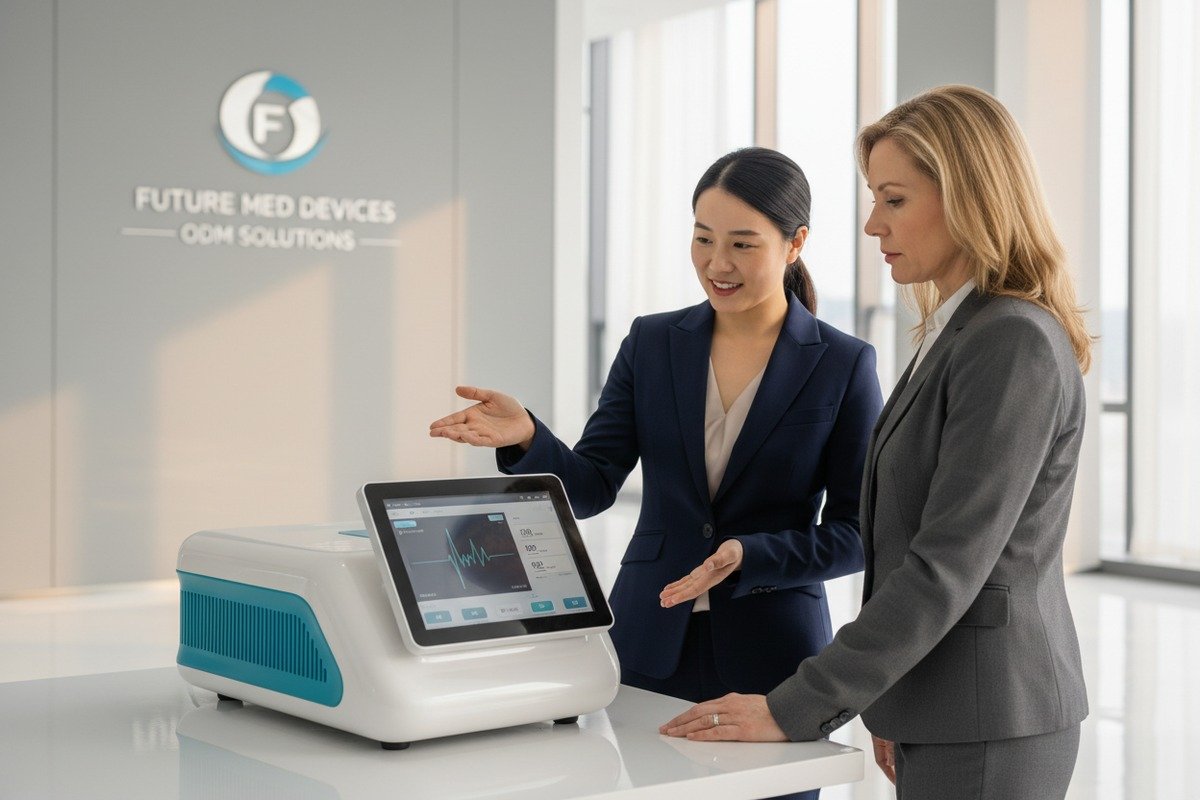
When our engineering team receives inquiries about custom shockwave therapy machines, one question comes up repeatedly ISO 13485 certification 1. Brand owners want unique devices, not generic boxes with logo stickers. But finding a supplier who can actually deliver custom mold development feels like searching for a needle in a haystack.
Yes, many shockwave therapy machine suppliers offer custom mold development, but capabilities vary dramatically. True ODM partners provide full tooling for unique housings, handpieces, and panels, while basic suppliers only offer logo customization. Expect tooling costs from tens of thousands to mid-six figures USD, with MOQs typically ranging from 50 to 300 units.
This article breaks down exactly what to look for when sourcing a custom mold development partner DVT (Design Validation Test) 2. We will cover how to find qualified manufacturers, realistic cost expectations, verification methods for engineering capabilities, and accurate lead time planning.
How can I find a manufacturer that offers full custom mold development for my shockwave therapy machine brand?
Our export experience has taught us that most buyers struggle to distinguish real ODM partners from trading companies with fancy websites NPI (New Product Introduction) 3. The difference matters because only true manufacturers can deliver custom molds on time and on budget.
To find a manufacturer offering full custom mold development, look for in-house engineering teams, request CAD file handling demonstrations, ask for prototype timelines, and verify ISO 13485 certification. True ODM partners ask technical questions about your design requirements rather than simply agreeing to everything.
Understanding the Supplier Spectrum
The shockwave therapy machine market has two types of suppliers. The first type offers "logo sticker" customization. They take a standard machine and add your brand name. Nothing changes inside or outside except the label.
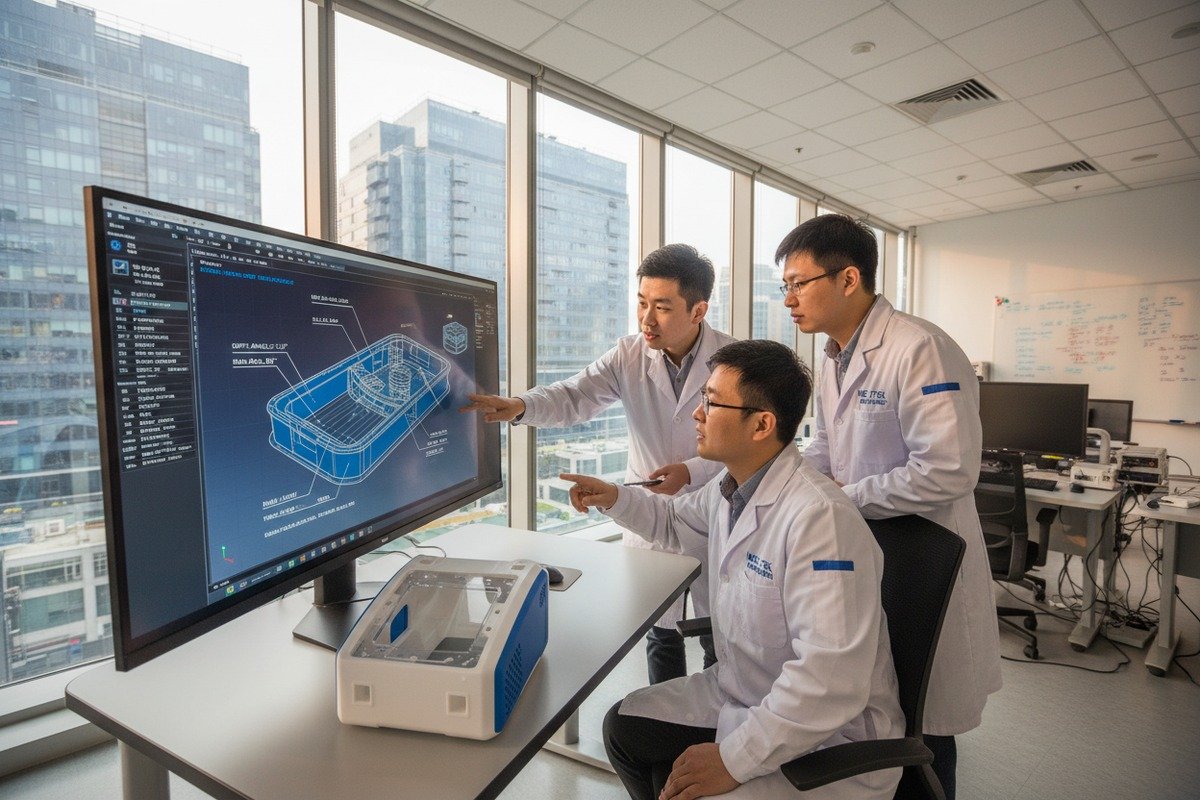
The second type provides true ODM capabilities. These partners can engineer new casings, modify internal layouts, redesign user interfaces, and create unique handpieces. Our factory falls into this second category.
Here is how to tell them apart:
| Indicator | Logo Supplier | True ODM Partner |
|---|---|---|
| Technical Questions | Agrees to everything immediately | Asks detailed specs and raises concerns |
| CAD File Handling 4 | Outsources to third party | Processes in-house within days |
| Prototype Timeline | 2-4 months via subcontractors | 3-4 weeks with in-house equipment |
| Engineering Staff | Sales team only | Dedicated engineers on calls |
| Factory Tour | Shows assembly line only | Shows mold shop and CNC machines |
The Alibaba Verification Shortcut
If you search for suppliers on Alibaba.com, you can assume they have EC REP certification. Alibaba does not allow listings without proper European representation documentation. This saves initial screening time.
However, certification alone does not guarantee mold development capabilities. You need deeper verification.
Red Flags to Watch
When we speak with potential customers, we share warning signs we have observed in competitors:
- Suppliers who never push back on unrealistic timelines
- No questions about wall thickness, draft angles, or material selection
- Inability to provide modification feasibility reports
- Vague answers about where molds are manufactured
- No photos of their mold shop or CNC equipment
The Right Questions to Ask
Contact potential suppliers with specific technical questions. Ask about their experience with medical-grade plastics 5. Request examples of previous custom housing projects. Ask who designs their molds and where fabrication happens.
A qualified partner will respond with detailed answers and follow-up questions about your specific application.
What are the typical costs and MOQs I should expect when I invest in a proprietary mold design?
When customers first ask about custom mold pricing, their expectations often differ significantly from reality. Our quoting process involves detailed cost breakdowns so clients understand where their investment goes.
Custom mold development for shockwave therapy machines typically costs between $30,000 for partial molds to over $100,000 for complete shell sets. MOQs range from 50-100 units with flexible ODM partners to 300 units with standard manufacturers. Total project costs over 1-3 years include tooling, pilot builds, certifications, and production runs.
Breaking Down Tooling Costs
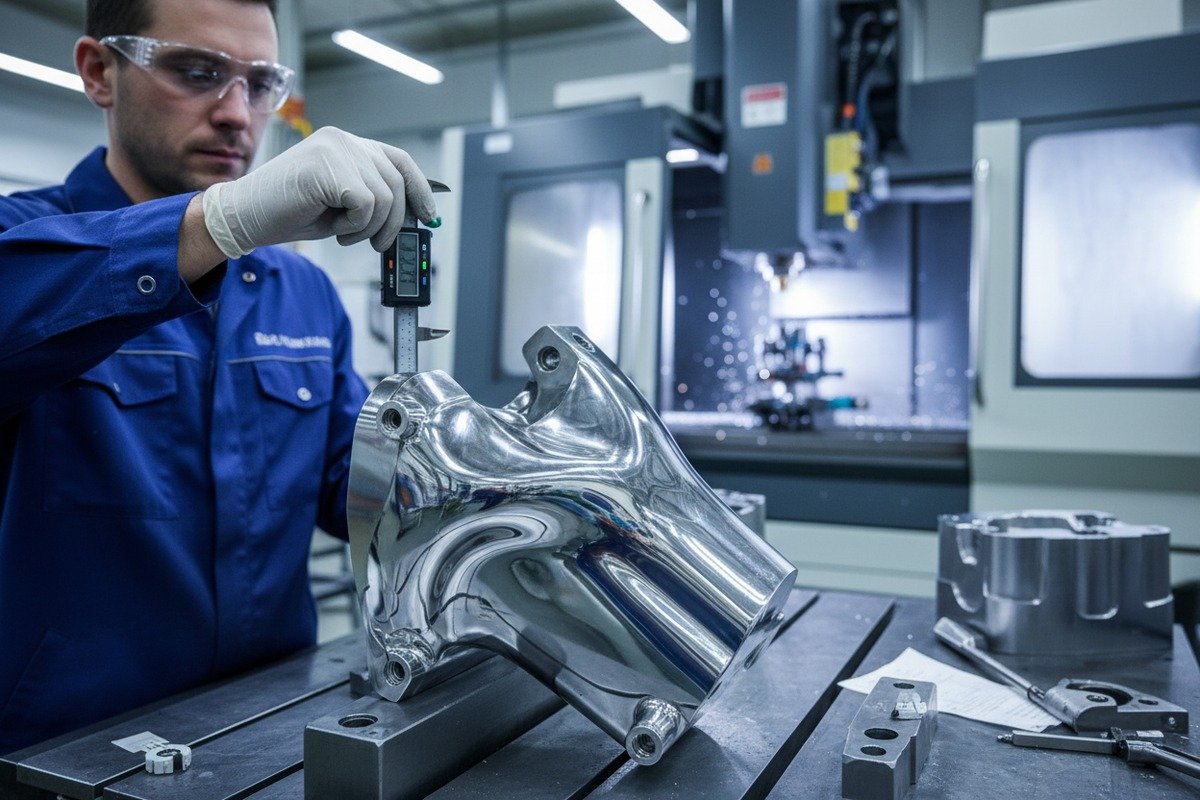
Tooling represents the largest upfront expense in any custom mold project. The complexity of your design directly impacts price.
| Mold Type | Typical Cost Range | What You Get |
|---|---|---|
| Partial Molds (bezels, trims, panels) | $20,000 – $40,000 | Unique exterior elements on proven platform |
| Handpiece Molds | $15,000 – $30,000 | Custom applicator housing design |
| Full Housing Set | $80,000 – $150,000 | Complete unique exterior shell |
| Complex Multi-Cavity | $100,000+ | High-volume production tooling |
The Smart Partial Mold Strategy
Many successful brands start with partial molds rather than full custom shells. This approach changes front bezels, side panels, or trim pieces while keeping the proven internal platform.
Our recommendation for new brands: Begin with partial molds costing $20,000-$40,000. This creates visual differentiation without the risk of full custom tooling. As sales grow, invest in complete shell molds.
Understanding Total Project Economics
Tooling is just one piece of the puzzle. Here is a realistic 18-month project budget:
| Cost Category | Budget Range | Notes |
|---|---|---|
| Initial Tooling | $30,000 – $100,000 | Depends on scope |
| Prototype Builds (EVT/DVT) | $5,000 – $15,000 | 3-5 prototype units |
| Pilot Production Run | $15,000 – $30,000 | 20-50 units for testing |
| CE Certification Updates | $8,000 – $18,000 | If design changes require recertification |
| First Production MOQ | $25,000 – $75,000 | Based on 100-200 units |
| Packaging Customization | $3,000 – $8,000 | Custom boxes, inserts, manuals |
MOQ Flexibility
Minimum order quantities vary significantly between suppliers. Trading companies often demand 300+ units because they need volume to negotiate with their manufacturing partners.
True manufacturers like our operation offer more flexibility. We work with MOQs as low as 50-100 units for custom mold projects. This lower threshold helps brands test market response before committing to large inventory.
The trade-off is unit cost. Lower MOQs mean higher per-unit pricing. As your order volume increases, unit costs decrease proportionally.
How do I verify that my supplier's engineering team can handle the technical requirements of my custom machine?
We have seen projects fail because buyers assumed marketing claims matched actual capabilities. Verification before commitment saves months of frustration and significant money.
Verify engineering capabilities by requesting modification feasibility reports, testing CAD file handling speed, asking for prototype timelines, conducting video factory tours of mold shops, and posing technical questions during initial calls. Competent teams respond with specific technical concerns, not blanket agreement to all requests.
The Technical Interview Process
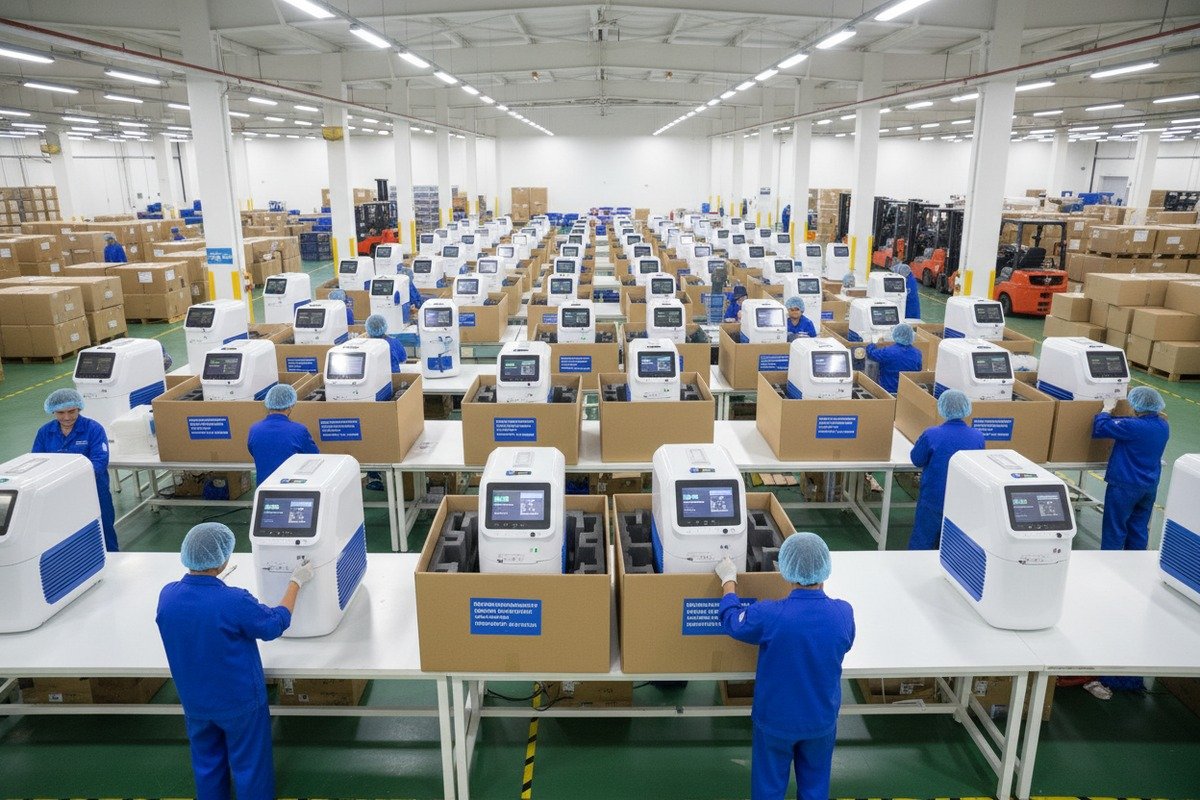
Treat your supplier evaluation like a job interview. Their engineering team should demonstrate specific competencies.
Start with a technical question during your first call. Ask about draft angle requirements 6 for their standard housing design. Ask what medical-grade plastics they recommend for handpiece components. Ask about their wall thickness standards.
Engineers give specific answers with numbers and material names. Sales people without engineering backing give vague responses or promise to "check with the team."
Testing CAD Handling Capabilities
Request a simple modification to their standard design. Ask them to adjust a bezel dimension or add a logo recess to their CAD model. Track their response time.
In-house engineering teams return modified files within 3-5 business days. Companies outsourcing CAD work take 2-3 weeks and often produce files with errors.
Prototype Timeline Verification
Ask for specific prototype timelines with milestones. A capable ODM partner provides schedules like this:
- Week 1-2: CAD finalization and design review
- Week 3: 3D printed or CNC prototype components
- Week 4: Functional prototype assembly
- Week 5: Internal testing and adjustments
- Week 6: Prototype shipment for customer review
Vague timelines like "about two months" indicate outsourced prototyping.
Factory Tour Essentials
Whether in person or via video call, tour the actual manufacturing facility. Look for:
- CNC machining centers for rapid prototyping
- 3D printing equipment for early-stage models
- Mold design workstations with active projects
- Quality control inspection stations
- Medical device assembly cleanrooms
A company showing only product assembly lines likely outsources all development work.
Validation Stage Requirements
Serious ODM partners follow structured validation processes. Ask about their EVT (Engineering Validation Test) 7, DVT (Design Validation Test), and NPI (New Product Introduction) stages.
Each stage catches different problems. EVT verifies basic functionality. DVT confirms design intent meets production reality. NPI ensures consistent manufacturing quality.
Suppliers unfamiliar with these terms lack medical device development experience.
What is the realistic lead time I should plan for from the initial design to the final delivery of my custom-molded product?
Our project managers spend significant time resetting customer expectations about timelines. Marketing pressures create urgency, but cutting corners on development phases leads to expensive failures.
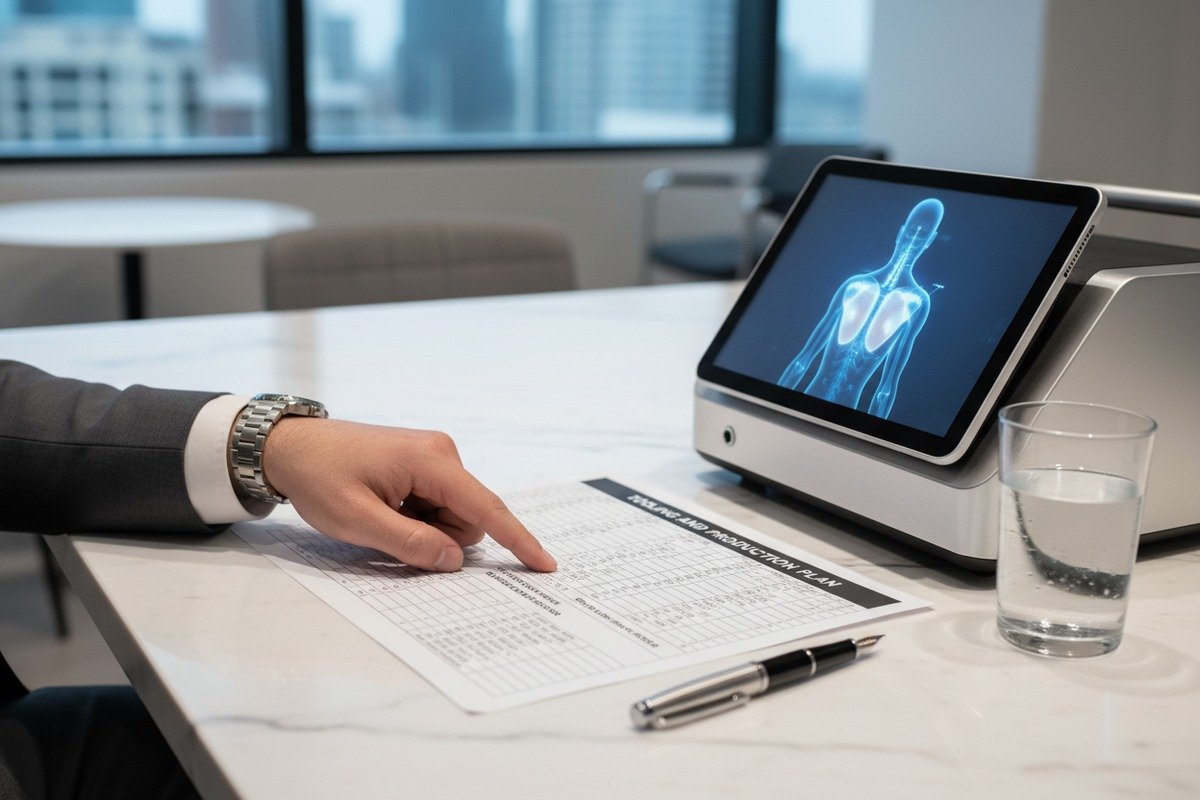
Realistic lead time for custom-molded shockwave therapy machines ranges from 4-6 months for partial mold projects to 8-12 months for full custom shell development. This includes 2-4 weeks for design finalization, 6-10 weeks for mold fabrication, 4-6 weeks for prototype validation, and 4-8 weeks for first production run.
Phase-by-Phase Timeline Breakdown
Every custom mold project moves through distinct phases. Rushing any phase creates problems in subsequent stages.
Phase 1: Design Finalization (2-4 weeks)
This phase involves CAD file refinement, design for manufacturability review 8, material selection, and surface finish specification. Both parties must approve final designs before mold fabrication begins.
Phase 2: Mold Fabrication (6-10 weeks)
Steel mold fabrication is time-intensive. Complex geometries and tight tolerances extend timelines. Simple bezels take 6 weeks. Full housing sets require 10+ weeks.
Phase 3: Prototype Validation (4-6 weeks)
First shots from new molds always need adjustment. Expect 2-3 iterations to achieve acceptable quality. Each iteration requires mold modification and new sample production.
Phase 4: Pilot Production (2-4 weeks)
Small batch production validates assembly processes and catches issues that single prototypes miss. Typically 20-50 units.
Phase 5: First Production Run (4-8 weeks)
Full production manufacturing, quality inspection, packaging, and shipping preparation.
Timeline Comparison Table
| Project Scope | Design Phase | Mold Fab | Validation | Pilot | Production | Total |
|---|---|---|---|---|---|---|
| Logo Only | 1 week | N/A | N/A | N/A | 2-3 weeks | 3-4 weeks |
| Partial Molds | 2 weeks | 6 weeks | 3 weeks | 2 weeks | 4 weeks | 17 weeks |
| Full Housing | 4 weeks | 10 weeks | 6 weeks | 3 weeks | 6 weeks | 29 weeks |
| Complete Redesign | 8 weeks | 12 weeks | 8 weeks | 4 weeks | 8 weeks | 40 weeks |
Common Delay Causes
Projects rarely finish early. Understanding delay causes helps with realistic planning.
Design changes mid-project reset mold fabrication timelines. Each significant revision adds 2-4 weeks.
Material supply issues affect production schedules. Medical-grade plastics sometimes face availability constraints.
Quality issues during validation extend testing phases. Unexpected fit or function problems require mold modifications.
Certification updates take 4-8 weeks if design changes trigger recertification requirements.
Planning Recommendations
Add 20-30% buffer to quoted timelines. Start projects 2-3 months earlier than your market launch target. Build relationships with suppliers before urgent projects arise.
Our most successful customer relationships involve ongoing communication and realistic expectations from both sides.
Conclusion
Custom mold development separates commodity shockwave therapy machine suppliers from true ODM partners. Finding the right manufacturer requires technical verification, realistic budget planning, and patience through multi-month development timelines. Your investment in proper due diligence pays dividends in product quality and brand differentiation.
Footnotes
1. Explains ISO 13485 QMS for medical devices, its requirements, and benefits. ↩︎
2. Defines Design Validation Testing’s role in medical device development and regulatory review. ↩︎
3. Describes the systematic process of New Product Introduction for bringing medical devices to market. ↩︎
4. Offers best practices for organizing and managing CAD files, crucial for efficient design processes. ↩︎
5. Replaced HTTP unknown with a working URL from the original domain (TOPAS) providing a comprehensive guide to medical-grade plastics. ↩︎
6. Provides essential guidelines for draft angles in injection molding to ensure proper part ejection. ↩︎
7. Explains the purpose and tests involved in Engineering Validation Tests for early prototypes. ↩︎
8. Explains the engineering practice of designing products to reduce manufacturing costs and ease production. ↩︎

 English
  Español de México
  Deutsch
  Français
  العربية
  Русский