When we ship our shockwave therapy devices 1 to clinics across Europe and South America, one question comes up repeatedly. Distributors and brand owners ask about language options before anything else OEM and ODM services 2. It makes sense—their salon staff need software they can actually read and understand.
Yes, most modern shockwave therapy machines support multiple languages. Mid-range to high-end models typically offer 10 or more pre-installed languages, including English, Spanish, German, French, Italian, Portuguese, Turkish, Polish, Dutch, and Russian. Language switching is usually accessible through the settings menu on the touchscreen interface.
But not all machines are equal in this regard. Some premium European brands focus on clinical protocols rather than language variety software firmware 3. Some budget models only offer English. Below, we break down exactly what you can expect for international distribution and custom branding needs.
Can I add my own language to the shockwave therapy machine software for my brand?
Our engineering team gets this request from brand owners in the Middle East, Southeast Asia, and Eastern Europe quite often. They want Arabic, Thai, Vietnamese, or other regional languages that aren't standard. The good news is that customization is possible—but it depends on your order volume and partnership level.
Yes, you can request custom language additions through OEM and ODM services. Most manufacturers require a minimum order quantity and lead time of 4-8 weeks for custom translation integration. The process involves providing approved translations, which engineers then integrate into the software firmware before production.

How Custom Language Integration Works
Adding a new language to shockwave therapy software is not a simple task. It requires coordination between your team and the manufacturer's software engineers.
First, you need to provide a complete translation file. This includes every menu item, button label, warning message, and protocol description. For a typical shockwave device, this means translating 500-800 text strings.
Second, engineers must test the translations within the user interface. Some languages use longer words than English. German compound words, for example, can break text boxes if the UI isn't adjusted. Right-to-left scripts like Arabic require special formatting.
Third, the updated firmware goes through quality assurance 4. Testers verify that all text displays correctly and that no functionality is affected.
What You Need to Provide
| Item | Description | Format |
|---|---|---|
| Translation file | All UI text strings translated | Excel spreadsheet |
| Medical terminology 5 review | Verified accuracy of clinical terms | Signed approval document |
| Font files | If your language requires special characters | TTF or OTF format |
| Testing feedback | Review of beta firmware | Written report |
Typical Timeline and Costs
For most custom language requests, expect the following timeline:
- Translation file submission: Week 1
- Engineering integration: Weeks 2-4
- Quality assurance testing: Weeks 5-6
- Final approval and production: Weeks 7-8
The cost varies. Some manufacturers include one custom language free with orders over 50 units. Others charge $500-$2,000 for the integration work. At our facility, we typically bundle this service for long-term partners at no extra charge.
Languages Currently Not Standard
Most shockwave therapy machines lack these languages out of the box:
- Arabic
- Chinese (simplified or traditional)
- Japanese
- Korean
- Thai
- Vietnamese
- Hindi
- Hebrew
If your market requires any of these, plan for custom integration early in your procurement process.
How many pre-installed languages can I choose from for my international distribution?
We've tested and compared dozens of shockwave therapy machines from different manufacturers over the years. The language options vary dramatically. Some machines offer just English. Others give you 10 or more choices right out of the box.
Most mid-range shockwave therapy machines offer 7-10 pre-installed languages. Leading models include English, German, French, Spanish, Italian, Portuguese, Turkish, Polish, Dutch, and Russian. Budget models typically support only 2-3 languages, while premium clinical devices may focus solely on English.
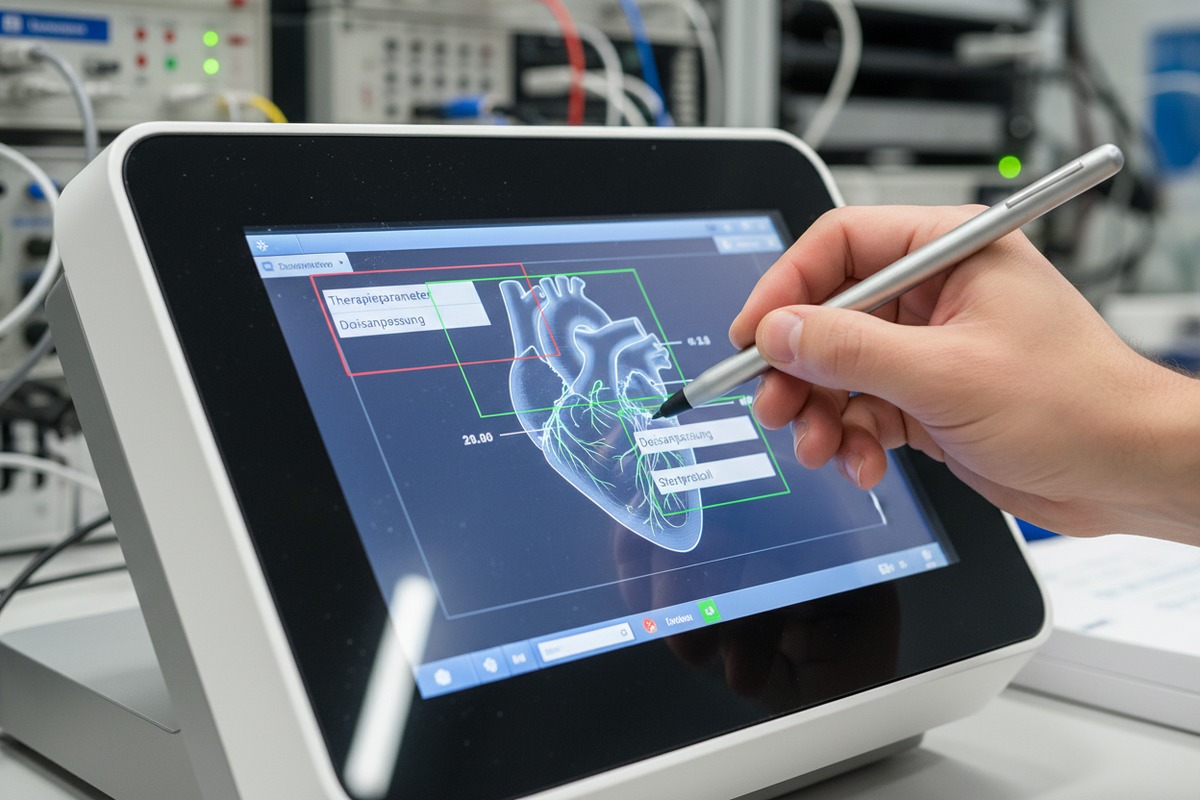
Language Support by Manufacturer Category
The number of pre-installed languages often correlates with the manufacturer's target market and price point.
Chinese manufacturers targeting global export markets tend to offer the most languages. They serve distributors in Europe, South America, the Middle East, and beyond. Supporting multiple languages helps them compete against established European brands.
European manufacturers like Storz Medical, Gymna, and Chattanooga often prioritize clinical features over language variety. Their devices may default to English with regional configurations available through local distributors.
Detailed Language Comparison Table
| Manufacturer Type | Typical Language Count | Languages Usually Included | Price Range |
|---|---|---|---|
| Chinese OEM/ODM (Longest, KMSLASER) | 10 | EN, DE, FR, IT, ES, TR, PT, PL, NL, RU | $2,000-$8,000 |
| European Premium (Storz, Gymna) | 1-3 | EN, DE, regional options | $15,000-$40,000 |
| Korean Mid-Range | 5-7 | EN, KO, JP, CN, ES, RU, FR | $5,000-$12,000 |
| Budget Chinese | 2-3 | EN, ES, RU | Under $2,000 |
Regional Distribution Considerations
When selecting a shockwave therapy machine for international distribution, consider your primary markets.
For European Union distribution, you need at minimum English, German, French, Spanish, and Italian. Portuguese adds Brazil and Portugal. Polish covers a growing market in Eastern Europe.
For Latin America, Spanish and Portuguese are essential. Some clinics prefer English software with Spanish user manuals.
For the Middle East, English is often acceptable for professional medical staff. However, Turkish is important for Turkey and surrounding regions.
How to Verify Language Support Before Purchase
Always request the following before placing an order:
- Complete language list in writing
- Screenshots of the UI in each claimed language
- Video demonstration of language switching
- Confirmation of future language updates via USB
Some manufacturers list "multi-language support" in their specifications without providing details. This vague claim can mean anywhere from 2 to 15 languages. Get specifics.
USB Update Capabilities
Many modern shockwave therapy machines support firmware updates via USB. This can include new languages added post-purchase.
However, there are limitations. Not all manufacturers actively develop new language packs. Some charge extra for language updates. Others only provide updates for the first 2-3 years after purchase.
Our devices support free lifetime USB updates, including new languages when they become available. This is not universal across the industry.
Our product designers spend significant time observing how salon staff interact with our equipment during training sessions. We've noticed that even with the right language selected, some interfaces confuse users. Others feel intuitive from the first touch.
Yes, modern shockwave therapy machines feature intuitive touchscreen interfaces designed for easy navigation regardless of language. The best systems combine translated text with universal icons, anatomical images, and color-coded treatment zones. Most salon staff can operate the device confidently within 15-30 minutes of training.
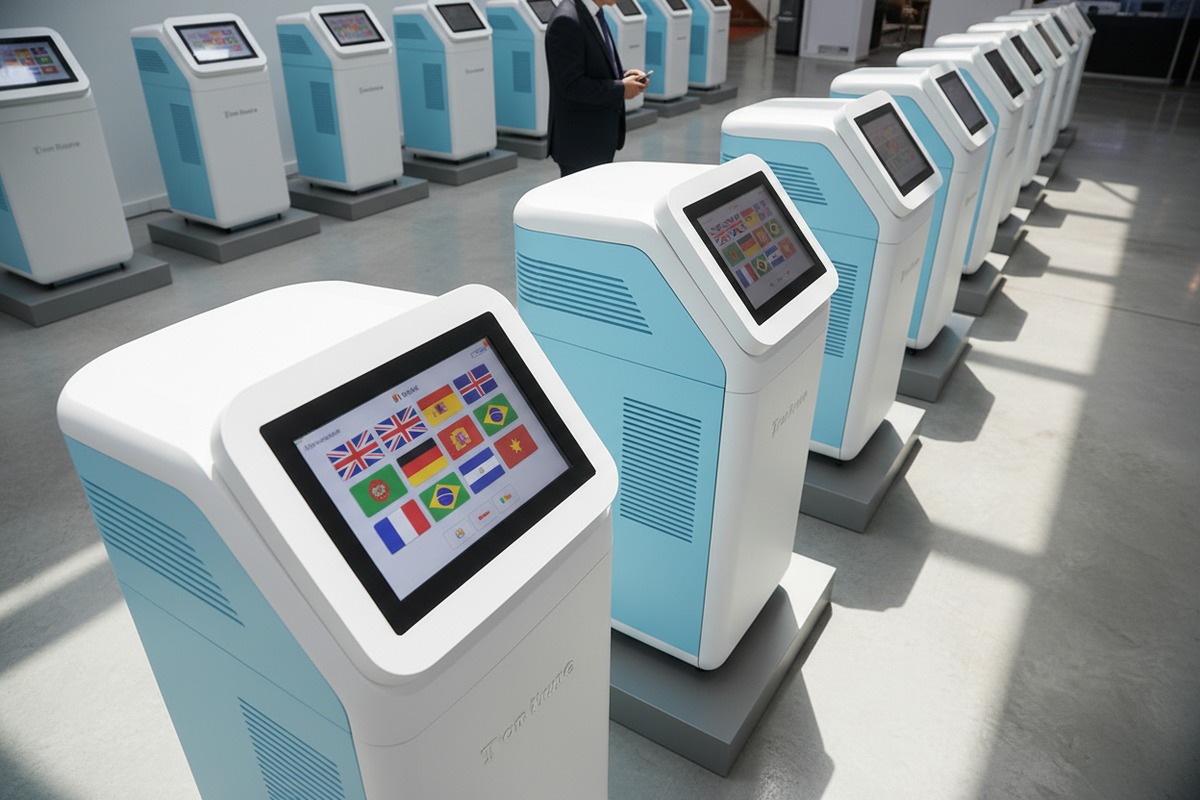
What Makes an Interface Easy to Use
Language translation alone doesn't guarantee usability. The interface design matters just as much.
The most user-friendly shockwave therapy machines share several features:
- Large, high-contrast buttons
- Anatomical diagrams 6 showing treatment areas
- Step-by-step protocol guidance
- Minimal text, maximum icons
- Consistent menu structure across all languages
Interface Design Elements Comparison
| Design Element | User-Friendly Approach | Problematic Approach |
|---|---|---|
| Button size | 50mm+ touch targets | Small text links |
| Protocol display | Visual body map + parameters | Text-only lists |
| Language switching | Settings icon on home screen | Buried in sub-menus |
| Treatment guidance | Real-time visual feedback | No confirmation indicators |
| Error messages | Clear icons + brief text | Technical codes only |
The Role of Visual Guidance Systems
Advanced shockwave therapy machines include visual guidance systems 7. These reduce dependence on language comprehension.
For example, our devices display anatomical diagrams with highlighted treatment zones. Staff can tap on a body part to load the appropriate protocol. This works regardless of the language setting.
Color coding also helps. Green indicators show optimal pressure. Yellow shows acceptable ranges. Red alerts to problems. These universal signals transcend language barriers.
Training Time by Interface Type
In our experience providing training to distributors worldwide, the interface design dramatically affects learning speed.
Devices with image-based interfaces take 15-20 minutes for basic operation training. Text-heavy interfaces require 45-60 minutes for the same competency level.
This matters for busy salons. Staff turnover means frequent retraining. The easier your equipment is to learn, the less disruption your customers experience.
Real-World Navigation Scenarios
Consider a typical treatment scenario:
- Staff member turns on device (universal power symbol)
- Selects body area from anatomical image
- Adjusts intensity using slider or dial
- Monitors treatment progress via visual counter
- Ends session when graphic indicator shows completion
At no point does the staff member need to read complex text. The language setting affects menu labels and protocol names, but the core workflow relies on visual elements.
Accessibility Features
Some shockwave therapy machines include additional accessibility features:
- Adjustable font sizes
- High contrast display modes
- Audio feedback for button presses
- Tutorial modes with animated guides
These features benefit users with visual impairments or those less comfortable with technology. They also make the device more accessible across language backgrounds.
Can I request a custom translation to ensure the software terms are accurate for my market?
We learned this lesson the hard way when a distributor in Brazil complained about our Portuguese translation. The medical terms were technically correct—but they used European Portuguese conventions unfamiliar to Brazilian clinicians. Accurate translation means more than word-for-word conversion.
Yes, reputable manufacturers accept custom translation requests to ensure terminology accuracy for specific markets. This service involves reviewing your market's preferred medical vocabulary, local regulatory terms, and regional language variations. Expect 2-4 weeks for translation review and integration, often included with OEM partnership agreements.
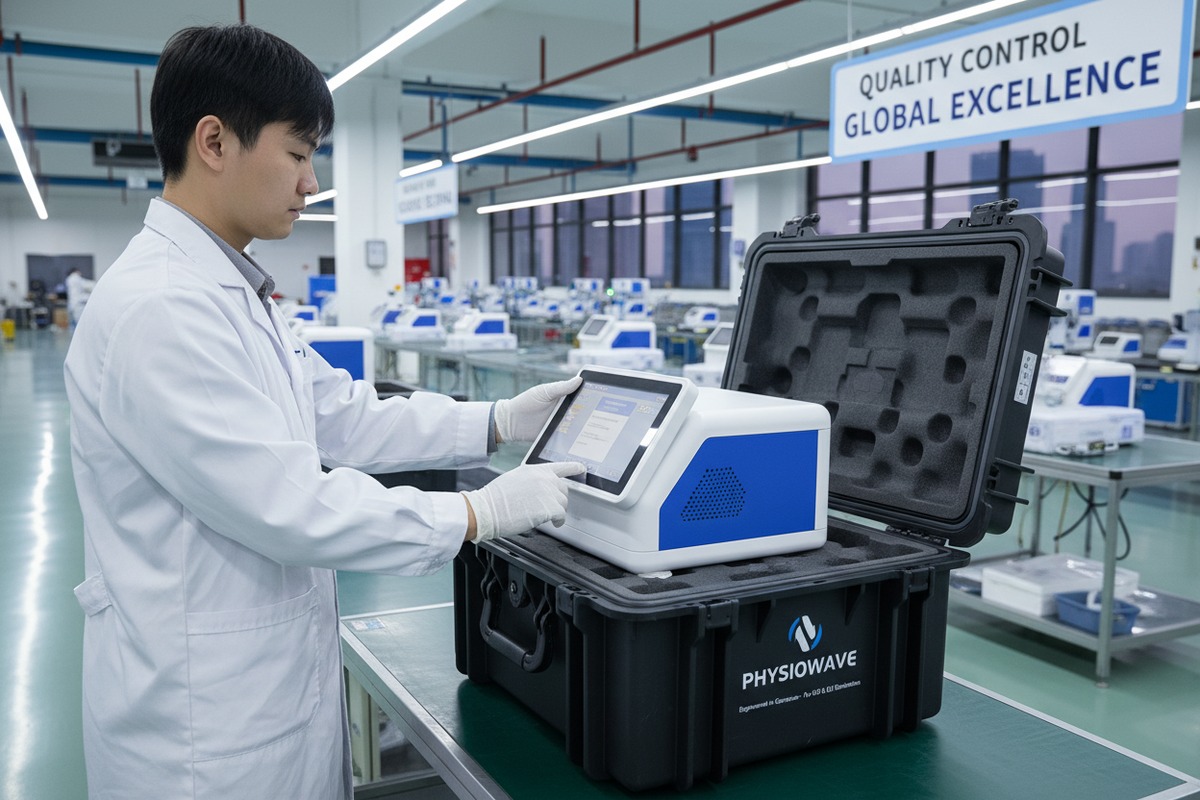
Why Standard Translations May Not Work
Factory-default translations come from general translation agencies. These agencies may not understand medical device terminology specific to your market.
Problems we've encountered include:
- European Spanish vs. Latin American Spanish differences
- Simplified Chinese terms unfamiliar in Taiwan
- British English medical terms confusing American users
- Generic translations missing local regulatory language
The Custom Translation Process
When you request a custom translation review, the process typically involves:
Step 1: Export current translation file
The manufacturer provides a spreadsheet with all current text strings and their translations.
Step 2: Your team reviews and edits
Your local medical advisors, regulatory specialists, or native speakers review each term. They mark corrections and preferred alternatives.
Step 3: Engineering integration
The manufacturer's software team implements your changes into the firmware.
Step 4: Verification testing
You receive a test unit or beta firmware to verify all changes display correctly.
Step 5: Final approval and production
Once approved, the custom translation becomes standard for your orders.
Common Terminology Issues by Region
| Region | Common Issue | Example |
|---|---|---|
| Brazil vs. Portugal | Vocabulary differences | "Terapia por ondas de choque" variations |
| Mexico vs. Spain | Medical term preferences | "Presión" vs. "Fuerza" usage |
| US vs. UK | Spelling and terminology | "Orthopedic" vs. "Orthopaedic" |
| Taiwan vs. Mainland China | Character preferences | Traditional vs. Simplified scripts |
| Gulf States vs. North Africa | Arabic dialect variations | Technical term translations |
Regulatory Terminology Requirements
Some markets have specific regulatory requirements for medical device software language.
In the European Union, the Medical Device Regulation 8 requires that instructions and interfaces be in the official language of the member state where the device is used.
In the United States, the FDA 9 recommends but does not mandate specific language for device interfaces. However, clear and accurate terminology prevents misuse and liability issues.
Your custom translation should account for these requirements. Include regulatory terms exactly as they appear in local guidelines.
Working with Professional Medical Translators
For best results, involve professional medical translators in your custom translation review.
General translators may not understand:
- Anatomical terminology
- Treatment protocol names
- Contraindication warnings
- Regulatory compliance language
Medical translation services cost more but prevent costly errors. A mistranslated warning could create liability issues. A confusing menu could lead to improper treatments.
Cost and Timeline Expectations
Custom translation services vary in cost:
- Minor corrections (under 50 text strings): Often free
- Moderate revisions (50-200 text strings): $200-$500
- Complete language overhaul: $500-$1,500
- New language creation: $1,000-$3,000
At our facility, we include one round of custom translation review free for orders over 20 units. Additional revisions or new languages follow a negotiated pricing structure based on complexity and volume.
Conclusion
Multilingual software support is standard in modern shockwave therapy machines, but quality varies significantly between manufacturers. Choose a partner who offers pre-installed languages for your markets, supports custom translations, and provides intuitive visual interfaces that minimize language barriers for salon staff.
Footnotes
1. Provides a comprehensive overview of shockwave therapy machines, their technology, and benefits. ↩︎
2. Clearly defines and differentiates OEM and ODM manufacturing models and their applications. ↩︎
3. Explains the concept of firmware and its critical role in medical device functionality. ↩︎
4. Provides a comprehensive definition and explanation of quality assurance in the medical device industry. ↩︎
5. Emphasizes the critical importance of accuracy and specialized knowledge in medical terminology translation. ↩︎
6. Discusses the various uses and importance of technical illustrations, including anatomical diagrams, in healthcare. ↩︎
7. Provides tips for designing clinical device interfaces, including visual cues and guidance for users. ↩︎
8. Replaced HTTP 404 with an official European Commission page providing an overview of new Medical Device Regulations, from the same authoritative domain. ↩︎
9. Official FDA guidance on general labeling requirements for medical devices in the United States. ↩︎

 English
  Español de México
  Deutsch
  Français
  العربية
  Русский