
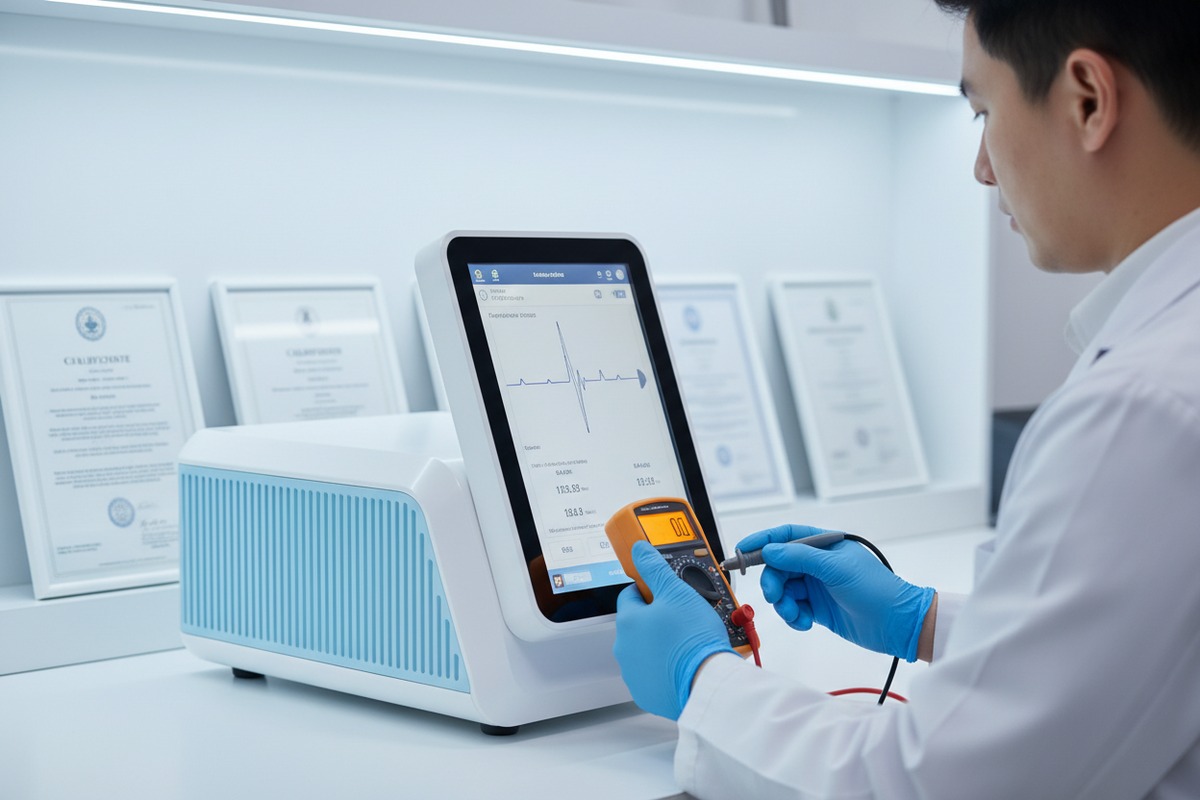
Every week, our production floor sees shockwave therapy machines 1 heading to clinics across three continents. Yet we still encounter buyers who skip independent quality checks—only to face returns, complaints, and regulatory nightmares months later.
Yes, you should absolutely require third-party quality inspection reports for imported shockwave therapy machines. These independent assessments verify device safety, confirm regulatory compliance, detect manufacturing defects before shipment, and protect your brand from costly recalls, customs delays, and patient safety incidents that could destroy your business reputation.
The decision to invest in third-party inspection is not just about quality—it is about protecting your entire operation IEC 61260 energy calibration standards 2. Let me walk you through the critical reasons why independent verification matters for your imported beauty equipment.
How do third-party inspection reports protect my brand from receiving defective shockwave therapy machines?
When our engineers calibrate machines before export, they catch issues that visual inspection alone cannot reveal. But what happens after the device leaves our facility? Shipping damage, component degradation, and even counterfeit parts can compromise any unit during transit.
Third-party inspection reports protect your brand by providing objective verification of device functionality, safety features, and manufacturing quality before you accept delivery. Independent inspectors use specialized testing equipment to identify defects, calibration drift, and non-conformities that internal manufacturer checks may miss or underreport.
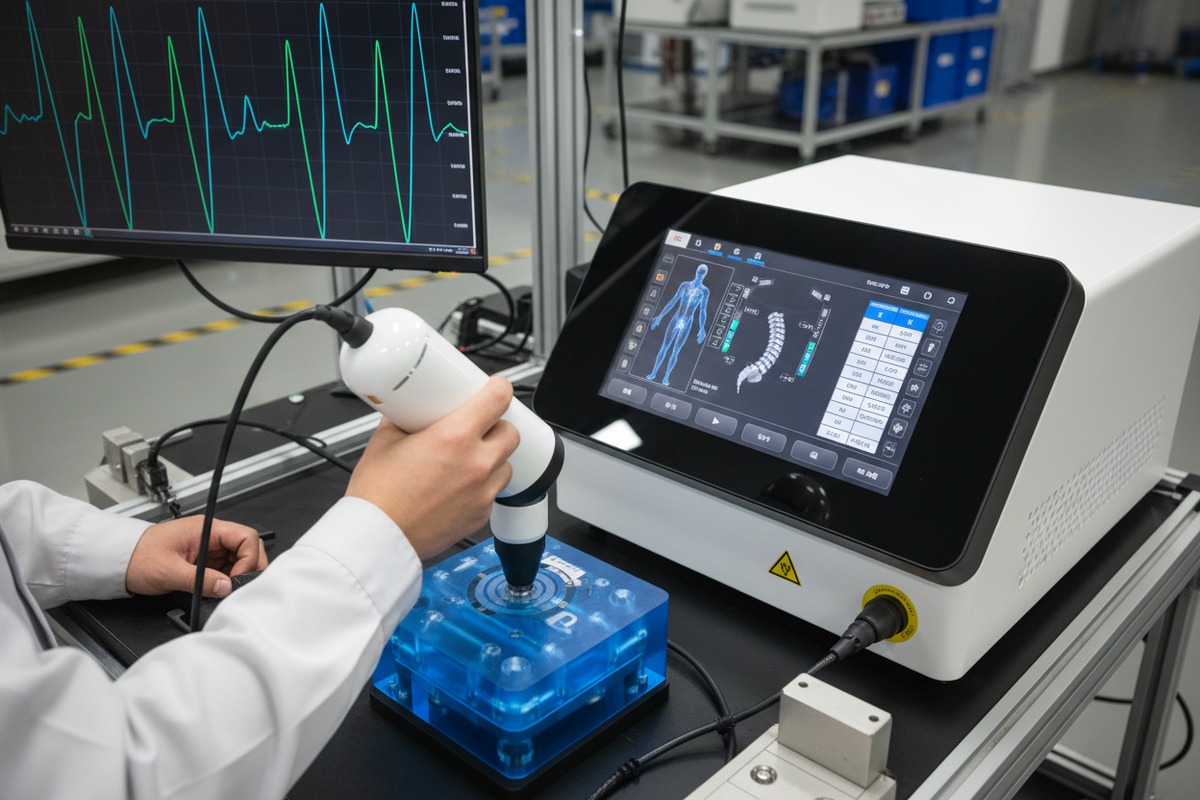
The Reality of Manufacturing Defects
Even the best manufacturers have defect rates. The question is whether those defects reach your customers. When we audit our own production lines, we find issues in approximately 2-3% of units before final QC. However, manufacturers have financial incentives to minimize reported problems. This is where independent inspection becomes invaluable.
Third-party inspectors operate under ISO/IEC 17025 testing competence standards 3. They face external audits and must maintain accreditation. Their reputation depends on accurate reporting—not on making sales.
What Independent Inspectors Actually Test
Professional inspection goes far beyond visual checks. Here is what accredited labs examine:
| Test Category | Specific Checks | Why It Matters |
|---|---|---|
| Power & Safety | Power-up sequence, emergency stop, electrical safety per IEC 60601 4 | Prevents electrical hazards and ensures fail-safe operation |
| Energy Output | Acoustic energy density (mJ/mm²), pulse frequency (Hz) | Confirms therapeutic effectiveness and consistency |
| Thermal Performance | Temperature monitoring under continuous use | Prevents overheating risks during treatment sessions |
| User Interface | Control responsiveness, display accuracy, software function | Ensures operators can safely control the device |
| Physical Integrity | Housing damage, cable connections, accessory condition | Identifies shipping damage and manufacturing flaws |
Protecting Your Brand Reputation
A single defective unit can trigger a cascade of problems. One clinic reports inconsistent treatment results. Another experiences a device malfunction during a patient session. Word spreads through professional networks. Suddenly, your brand faces questions about quality that take years to overcome.
Before recommending any inspection partner to our clients, we always suggest verifying their APLAC accreditation 5 or equivalent credentials. This ensures the inspector has the technical competence and impartiality your brand deserves.
The cost of inspection—typically a few hundred dollars per shipment—pales against the cost of a single product recall 6 or brand reputation crisis. Our experience shows that buyers who invest in pre-shipment inspection report 60% fewer warranty claims in the first year.
Will requiring independent quality checks help me avoid customs delays and regulatory issues in the US?
Our export team has witnessed countless shipments held at US ports because buyers lacked proper documentation. The resulting delays cost far more than any inspection fee—storage charges accumulate daily, and your customers grow impatient.
Yes, independent quality checks significantly reduce customs delays and regulatory issues. Third-party inspection reports serve as documented evidence that your shockwave therapy machines meet FDA requirements, international safety standards, and import specifications—providing customs officials with the verification they need to expedite clearance.

Understanding FDA Classification Requirements
The regulatory landscape for shockwave therapy machines is more complex than many importers realize. True therapeutic shockwave systems require FDA Class II 510(k) clearance 7—not just basic Class I registration. Devices lacking proper classification face immediate detention at the border.
| FDA Classification | Requirements | Allowed Uses |
|---|---|---|
| Class I (Registration) | Basic safety review, minimal documentation | General therapeutic massage only |
| Class II (510(k) Clearance) | Safety and performance evaluation | Medical indications including connective tissue activation, circulation improvement |
| Unclassified | No FDA review | Cannot be legally marketed for medical purposes |
How Inspection Reports Support Customs Clearance
When customs officials examine an imported medical device, they look for evidence of compliance. A comprehensive third-party inspection report demonstrates several critical points:
First, it confirms the device matches its regulatory documentation. Manufacturing defects, shipping damage, or component substitutions can cause a device to deviate from its 510(k) specifications. Inspection catches these discrepancies before they become customs problems.
Second, inspection reports reference recognized international standards. When our clients provide reports citing ISO 17020 inspection principles 8 and IEC 61260 energy calibration standards, customs officials have the documentation framework they need.
The Hidden Cost of Customs Delays
Many importers underestimate delay costs. Beyond obvious storage fees, consider the business impact:
- Lost sales: Your customers cannot sell treatments with equipment stuck in customs
- Damaged relationships: Distributors lose confidence in unreliable supply chains
- Emergency shipping: Rush alternatives to meet commitments cost 3-5x normal rates
- Regulatory scrutiny: Repeated delays flag your company for enhanced inspection
One US importer we work with calculated that a single two-week customs delay cost their business over $15,000 in direct and indirect expenses. Their pre-shipment inspection would have cost $350.
Documentation Best Practices
Before deciding on your procurement process, ask your supplier whether they provide software interface support in your local language. If not, inquire whether they accept additional payment to provide this customization service. This kind of proactive communication prevents issues that could complicate your import documentation.
When requesting inspection reports, ensure they include:
- Reference to specific international standards (ISO 17020, IEC 61260, ISO/IEC 17025)
- Detailed functional test results with measurements
- Inspector accreditation credentials
- Clear pass/fail determination with supporting data
Can I rely on my manufacturer's internal QC, or should I hire my own inspector for my shockwave machine orders?
When we conduct final quality checks at our facility, we genuinely want every unit to perform perfectly. Our reputation depends on it. Yet I must be honest: internal QC has inherent limitations that third-party inspection addresses.
You should hire your own inspector rather than relying solely on manufacturer internal QC. While reputable manufacturers conduct thorough quality checks, independent inspection provides unbiased verification using specialized equipment, eliminates conflicts of interest, and gives you documented evidence that protects your business if disputes arise.

The Conflict of Interest Problem
Every manufacturer faces a fundamental tension. We want to ship products and collect payment. We also want to maintain quality standards. These goals usually align—but not always.
When a production deadline looms and a marginal unit sits on the line, internal QC must make difficult decisions. Will this slight calibration variance affect clinical performance? Probably not. Does it technically meet specifications? Just barely. Does it ship? Often, yes.
Third-party inspectors have no stake in your shipment timing. Their only job is accurate assessment. This independence produces more reliable quality data.
Specialized Equipment Requirements
Proper shockwave therapy device testing requires equipment most manufacturers—and certainly most importers—do not possess. Acoustic calibration alone demands:
| Equipment | Function | Typical Cost |
|---|---|---|
| Hydrophone system 9 | Measures acoustic energy output | $5,000-15,000 |
| Calibrated pressure sensors | Verifies pulse characteristics | $2,000-8,000 |
| Thermal imaging equipment | Monitors heat generation patterns | $3,000-10,000 |
| Electrical safety analyzer | Tests per IEC 60601 requirements | $4,000-12,000 |
Third-party labs amortize these equipment costs across many clients, making comprehensive testing economically accessible for individual importers.
When Manufacturer QC Is Sufficient
For established relationships with proven suppliers, manufacturer QC may suffice for routine orders of familiar products. However, independent inspection becomes essential when:
- Starting a new supplier relationship
- Ordering customized or modified products
- Importing high-value shipments where defects would cause significant losses
- Facing regulatory audits requiring documented quality verification
- Experiencing previous quality issues with a supplier
Building a Complementary Approach
Smart importers combine manufacturer QC with strategic third-party inspection. During our production runs, we document internal quality checks at multiple stages. Then, before shipment, an independent inspector verifies our findings.
This layered approach catches issues that either party alone might miss. Manufacturer QC understands the product intimately but may overlook developing problems. Third-party inspection brings fresh eyes and standardized methodology but lacks product-specific expertise.
The inspection results also provide negotiating leverage. If inspectors identify defects, you can negotiate price adjustments, request corrective actions, or reject shipments entirely—all before taking ownership of problematic inventory.
What are the financial risks to my business if I skip third-party inspections for my imported beauty equipment?
Our finance team has tracked warranty claims, returns, and customer complaints across thousands of shipments. The data tells a clear story: skipping inspection is false economy that exposes your business to significant financial risk.
Skipping third-party inspections exposes your business to substantial financial risks including product recalls costing $50,000-500,000+, handpiece replacement expenses of $1,395-8,490 per unit, customs detention fees, regulatory fines, customer refunds, reputation damage, and potential liability claims from patient injuries caused by defective equipment.

Direct Cost Exposure
When defective equipment reaches your customers, the financial impact hits multiple areas simultaneously:
| Risk Category | Potential Cost Range | Likelihood Without Inspection |
|---|---|---|
| Product recall | $50,000 – $500,000+ | Moderate |
| Handpiece replacement | $1,395 – $8,490 per unit | High |
| Customs detention | $500 – $5,000+ per incident | Moderate |
| Customer refunds | Full purchase price | Moderate to High |
| Expedited replacement shipping | 3-5x normal shipping cost | High after issues arise |
| Regulatory fines | $10,000 – $100,000+ | Low to Moderate |
The Maintenance Cost Multiplier
Poorly manufactured devices require more frequent maintenance, creating ongoing cost exposure. Radial pressure wave devices typically need component replacement after 1,000,000 pulses. However, low-quality units may require service at far lower thresholds.
Devices requiring complex daily maintenance—manual degassing, frequent water changes, wrench-based part replacements—introduce operational risks that inspection can identify before purchase. Well-designed systems with closed water systems and auto-degas technology reduce long-term maintenance burden significantly.
Hidden Costs of Quality Failures
Beyond direct expenses, quality failures create hidden costs that compound over time:
Customer acquisition cost waste: You spend marketing dollars to win customers. When quality issues drive them away, that investment disappears. Acquiring replacement customers costs 5-7x more than retaining existing ones.
Support burden: Your team spends hours troubleshooting problems, arranging replacements, and managing unhappy customers. This time has real cost.
Opportunity cost: While handling quality issues, you cannot pursue growth initiatives. Every hour spent on damage control is an hour not spent building your business.
Calculating Your Risk-Adjusted Investment
Consider this framework for evaluating inspection investment:
A typical pre-shipment inspection costs $300-600 per shipment. The inspection identifies defects that would otherwise cost you thousands in returns, repairs, and reputation damage. Even if inspection catches problems in only 1 of every 10 shipments, the return on investment is substantial.
When we advise clients on inspection strategy, we recommend calculating their "quality failure cost exposure"—the total potential loss if a shipment contains defective units. If this exposure exceeds 10x the inspection cost, independent verification makes clear financial sense.
Building Inspection Into Your Procurement Budget
Forward-thinking importers treat inspection as a standard procurement cost rather than an optional expense. Include inspection fees in your landed cost calculations from the start. This approach ensures you never face the temptation to skip inspection to save short-term costs—a decision that almost always proves expensive in the long run.
Conclusion
Third-party quality inspection reports are essential protection for any business importing shockwave therapy machines. The investment in independent verification safeguards your brand, streamlines customs clearance, supplements manufacturer QC, and prevents financial losses that far exceed inspection costs.
Footnotes
1. Provides an overview of extracorporeal shockwave therapy and its medical applications. ↩︎
2. Specifies performance requirements for electroacoustic filters used in sound and vibration measurements. ↩︎
3. Explains ISO/IEC 17025 for laboratory technical competence, ensuring accurate and reliable results. ↩︎
4. Details the global standard IEC 60601 for medical electrical equipment safety and essential performance. ↩︎
5. Describes APLAC’s role in mutual recognition arrangements for accreditation bodies in the Asia-Pacific region. ↩︎
6. Explains the FDA’s process for medical device recalls, corrections, and removals to ensure public health. ↩︎
7. Explains the FDA 510(k) clearance process for medical devices, particularly Class II devices. ↩︎
8. Outlines requirements for inspection bodies to demonstrate competence, impartiality, and consistency in activities. ↩︎
9. Describes hydrophones as underwater devices that detect acoustic signals by converting pressure into electrical signals. ↩︎

 English
  Español de México
  Deutsch
  Français
  العربية
  Русский