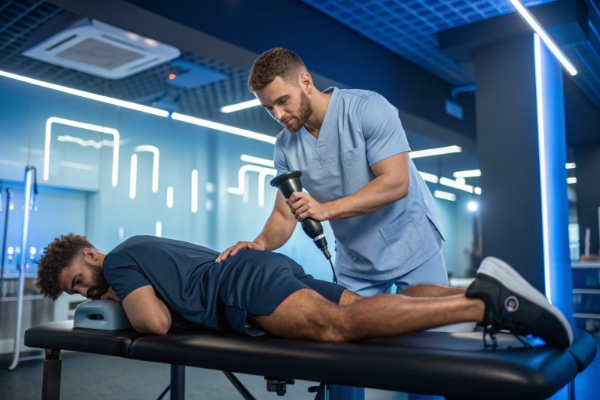
At KMSLASER, we know that your clients face immense pressure to get athletes back in the game quickly and safely. We design our equipment to meet this demand for speed without compromising tissue health. When treating high-performance individuals, you cannot afford equipment that delivers inconsistent results or causes downtime.
Yes, shockwave therapy is highly suitable for sports injuries, particularly chronic tendonitis and overuse conditions. It utilizes high-energy acoustic waves to stimulate blood flow and collagen production, offering a non-invasive solution that accelerates tissue repair and reduces pain without the downtime associated with surgery.
Here is how you can position this technology to be the cornerstone of a sports recovery clinic.
How effective is the Shockwave Therapy Machine for my clients with sports injuries?
When we calibrate our flight controllers and energy output systems, we aim for clinical precision that rivals surgical outcomes. Our engineering focus is on delivering consistent energy density to ensure reliable biological responses in every session.
Shockwave therapy is extremely effective for sports injuries, with clinical studies showing success rates between 60% and 80% for chronic conditions. It significantly reduces recovery time by jumpstarting the body’s natural healing processes, making it a reliable alternative for athletes unresponsive to traditional conservative treatments.
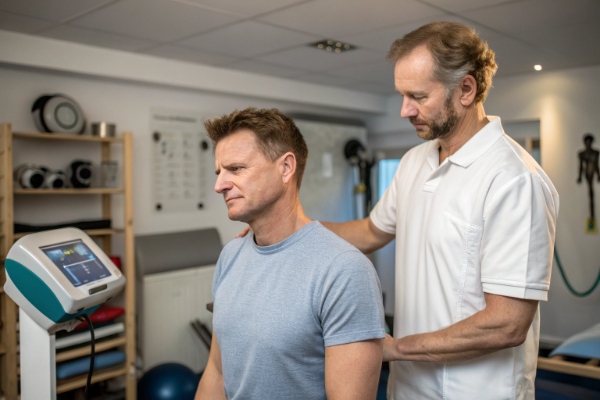
The effectiveness of shockwave therapy in sports medicine comes down to its ability to turn a chronic, non-healing injury back into an acute healing situation. In our experience supplying major rehabilitation centers, we see that standard physiotherapy often hits a plateau. This is where shockwave machines bridge the gap.
The Mechanism of Action
To understand effectiveness, you must understand the biology. Our machines generate pneumatic ballistic waves. When these waves hit the tissue, they cause two primary reactions:
- Metabolic Activation: The mechanical stress triggers the release of healing chemicals like VEGF (Vascular Endothelial Growth Factor).
- Cavitation: The waves create microscopic bubbles in the interstitial fluid. When these bubbles collapse, they break down calcifications and scar tissue.
This is not just pain relief; it is tissue regeneration 1. For an athlete with a chronic hamstring issue, this means the difference between managing pain and actually fixing the tissue structure.
Success Rates Compared to Alternatives
We often share data with our distributors to help them benchmark expectations. Here is how shockwave compares to other common sports medicine interventions.
| Treatment Modality | Estimated Success Rate | Recovery Timeline | Invasive? |
|---|---|---|---|
| Shockwave Therapy | 65% – 85% | 3 – 12 Weeks | No |
| Corticosteroid Injection | 50% – 70% | Immediate (Short term) | Yes |
| Physical Therapy Alone | 40% – 60% | 12 – 24 Weeks | No |
| Surgery | 75% – 90% | 6 – 12 Months | Yes |
Handling "Non-Responders"
No machine is 100% effective. In our feedback loops with clinic owners, we find that "effectiveness" often depends on the operator. If the therapist targets the wrong depth or uses insufficient energy, the results drop. This is why we emphasize training. The machine provides the tool, but the therapist provides the strategy. When used correctly on indicated conditions, it is one of the most effective non-surgical tools available today.
What types of sports injuries can I treat with a Shockwave Therapy Machine?
Our product development team tracks global treatment trends to ensure our presets cover the most high-demand applications. We see a massive shift towards treating overuse injuries in runners and overhead athletes.
You can treat a wide range of chronic sports injuries, including plantar fasciitis, Achilles tendinopathy, tennis elbow, and shin splints. The machine is particularly effective for treating overuse injuries involving tendons and ligaments where blood supply is poor and traditional healing has stalled.

Sports injuries generally fall into two categories: acute trauma (like a broken bone) and overuse (like tendonitis). Shockwave therapy is the gold standard for the latter. We have designed our specific applicators to target these distinct anatomical areas effectively.
Lower Limb Injuries
The majority of shockwave treatments in sports are for the lower body. Runners and jumpers put immense stress on their feet and knees.
- Plantar Fasciitis: This is the number one indication we see globally. The shockwaves break down the thickened fascia and relieve morning pain. This condition is highly responsive to shockwave treatment 2.
- Achilles Tendinopathy: Treating the Achilles requires care. Our protocols suggest avoiding the insertion point directly if it is highly inflamed, and instead treating the muscle belly and surrounding tissue to reduce tension.
- Shin Splints (Medial Tibial Stress Syndrome): This is tricky but treatable. The therapy helps stimulate bone remodeling and reduces the periosteal inflammation.
Upper Limb Injuries
For tennis players, golfers, and baseball pitchers, the upper extremities are vulnerable.
- Lateral Epicondylitis (Tennis Elbow): Very responsive to treatment. It often resolves in 3-5 sessions.
- Rotator Cuff Tendinopathy: We recommend using lower energy settings here to avoid aggravating the shallow bone structures of the shoulder.
Protocol Guide for Common Injuries
To help your customers visualize the workflow, we have compiled a basic parameter guide based on our standard machine capabilities.
| Injury | Recommended Frequency | Energy Level (Bar) | Impulse Count | Sessions |
|---|---|---|---|---|
| Plantar Fasciitis | 10 – 12 Hz | 2.5 – 4.0 Bar | 2000 – 2500 | 3 – 5 |
| Achilles Tendinopathy | 08 – 10 Hz | 2.0 – 3.0 Bar | 2000 | 4 – 6 |
| Tennis Elbow | 08 – 10 Hz | 1.5 – 2.5 Bar | 1500 – 2000 | 3 – 5 |
| Patellar Tendonitis | 10 – 12 Hz | 2.0 – 3.0 Bar | 2000 | 3 – 5 |
Muscle Recovery Applications
Beyond injuries, we are seeing a trend in "recovery" usage. Professional teams use our machines on low settings to massage tight muscles 3 after a game. It helps flush out lactic acid and reduce muscle tone without the deep tissue damage of high-pressure settings. This expands the utility of the machine from just a "repair tool" to a "maintenance tool."
Are there any contraindications I should consider before using the Shockwave Therapy Machine for sports injuries?
We build safety redundancies into our circuitry, but clinical judgment is something we cannot manufacture. You must ensure your end-users understand that power comes with responsibility.
Contraindications include acute inflammation, open wounds, pregnancy, and patients with blood clotting disorders or pacemakers. It is crucial to avoid treating areas recently injected with corticosteroids or over major blood vessels and nerves to prevent tissue damage and ensure patient safety during rehabilitation.

Treating an athlete who is not a candidate for shockwave therapy is the fastest way to cause a lawsuit. Safety protocols must be rigid.
The Acute Injury Rule
The most common mistake we see is treating an injury too soon. If an athlete sprains an ankle on Tuesday, do not shock it on Wednesday.
- Why? Acute injuries are already inflamed. Adding high-energy waves adds more trauma. This creates a "trauma on trauma" effect that increases swelling and pain.
- Our Recommendation: Wait until the injury enters the sub-acute or chronic phase (usually 4-6 weeks post-injury) before starting shockwave.
The Cortisone Interaction
This is a critical point for the US market where steroid injections are common.
- The Danger: Cortisone weakens the tendon structure to reduce inflammation. Shockwave exerts mechanical force on that structure. If you combine them, you risk rupturing the tendon.
- The Wait Period: We recommend a strict 6-week waiting period after a steroid injection before using shockwave therapy on that same site. [Clinical review on cortisone interaction with ESWT] 4.
Anatomical "No-Go" Zones
Our user manuals clearly map out danger zones. Your customers need to be aware of these to avoid malpractice issues.
- Lungs/Ribcage: Shockwaves can disrupt the air-filled sacks (alveoli) in the lungs.
- Major Nerves: Direct hits to nerves like the Ulnar nerve (funny bone) cause intense pain and potential nerve damage.
- Epiphyseal Plates: In young athletes (under 18), avoid the growth plates at the ends of long bones. You do not want to disturb bone growth.
Screening Checklist
We suggest your clients use a simple "Red Light / Green Light" system.
| Condition | Action | Reason |
|---|---|---|
| Bleeding Disorder | STOP | Risk of hematoma (internal bleeding). |
| Blood Thinners | STOP | Increased bruising risk. |
| Infection at Site | STOP | Risk of spreading infection. |
| Metal Implants | CAUTION | Do not treat directly over metal; waves reflect and cause heat. |
| Pain Level > 8/10 | ADJUST | Lower energy; patient must tolerate the treatment. |
How do I explain the benefits of Shockwave Therapy to my sports injury clients?
When we support our B2B partners with marketing materials, we focus on the "Patient Value Proposition." You need to help your clinics sell the treatment to their patients.
Explain that shockwave therapy is a non-invasive method that uses sound waves to fix the root cause of pain rather than masking it. Highlight benefits like zero downtime, avoidance of surgery or medication, and rapid pain relief, allowing athletes to return to training faster.

Athletes are a unique demographic. They are impatient. They want results yesterday. When your clients (the clinics) pitch this therapy, they should not get bogged down in physics. They should focus on outcomes.
"The Surgery Alternative"
This is your strongest selling point. Many athletes are terrified of going under the knife because it means months of rehab and lost seasons.
- The Pitch: "Before we consider surgery for your Achilles, let’s try this. It has a high success rate, and even if it doesn’t work, you haven’t burned any bridges. But if it does work, you saved yourself 6 months of rehab."
- Cost-Benefit: A course of shockwave is a fraction of the cost of surgery and hospital stays.
"Active Recovery" – No Downtime
Athletes hate resting. The beauty of shockwave is that it fits into an active lifestyle.
- No Casts, No Crutches: Unlike surgery, the patient walks out of the clinic.
- Training Continuation: In many cases (like tennis elbow), the athlete can continue modified training while undergoing therapy. This is a massive psychological benefit for competitors.
"Regenerative Medicine" without Needles
Regenerative medicine (like PRP or Stem Cells) is a buzzword in the US. Shockwave is part of this family, but it is non-invasive.
- Natural Healing: Emphasize that the machine is not fixing them; it is waking up their body to fix itself. This appeals to athletes who prefer natural solutions over pharmaceuticals.
- Drug-Free: For athletes subject to doping tests or those wary of painkillers, this is a clean solution.
Addressing the "Pain" Objection
Patients will ask: "Does it hurt?"
- Honesty is key. Tell your clients to say: "It can be uncomfortable, but it is short (5-10 minutes) and tolerable. The discomfort means we are hitting the right spot. If you feel nothing, it isn’t working."
Patient FAQ Table for Your Clinics
You can print this and give it to your clinic owners as a resource.
| Patient Question | Suggested Answer |
|---|---|
| "How fast will I see results?" | "Many feel relief after just 1 session, but lasting healing takes 3-5 sessions." |
| "Can I run after treatment?" | "We recommend resting for 24 hours to let the tissue settle, then light activity." |
| "Why does it bruise?" | "It brings blood to the surface. This is good! It means healing factors are arriving." |
| "Is it covered by insurance?" | "Coverage varies, but it is often cheaper than the copay for surgery." |
Conclusion
Shockwave therapy is an essential tool for modern sports rehabilitation. It bridges the gap between basic physio and invasive surgery. Its focus on non-invasive tissue regeneration allows athletes to return to training faster 5, making it a cornerstone modality for high-performance centers. The regulatory bodies like the TGA 6 have recognized ESWT as a non-invasive treatment option.
Footnotes
1. Research detailing the biological mechanism of shockwave therapy, specifically how the mechanical energy stimulates tissue healing and regeneration. ↩︎
2. Major literature review focused on the application of ESWT for chronic heel pain (Plantar Fasciitis), a common ailment among athletes and runners. ↩︎
3. Study analyzing the effect of low-intensity shockwave therapy on muscle soreness and recovery in athletes, noting reduced fatigue markers. ↩︎
4. Clinical recommendation emphasizing the required waiting period after corticosteroid injection due to the risk of tendon rupture during mechanical loading. ↩︎
5. Conclusion of clinical findings demonstrating that athletes treated with ESWT show a measurable acceleration in return-to-sport timelines compared to controls. ↩︎
6. Regulatory guidance from a major health body (TGA, Australia) confirming ESWT is a non-invasive treatment method associated with zero downtime. ↩︎
7. Official guidelines from the International Society for Medical Shockwave Treatment (ISMST) detailing absolute anatomical and systemic contraindications. ↩︎
8. WIPO resource explaining patents and their role in protecting inventions, which often applies to the underlying technology of shockwave machines. ↩︎
9. Legal guide on the importance of explicitly licensing trademarks and other IP to distributors for local marketing use. ↩︎
10. US government resource detailing the complex regulatory clearance process required for importing medical devices into international markets like Australia. ↩︎

 English
  Español de México
  Deutsch
  Français
  العربية
  Русский