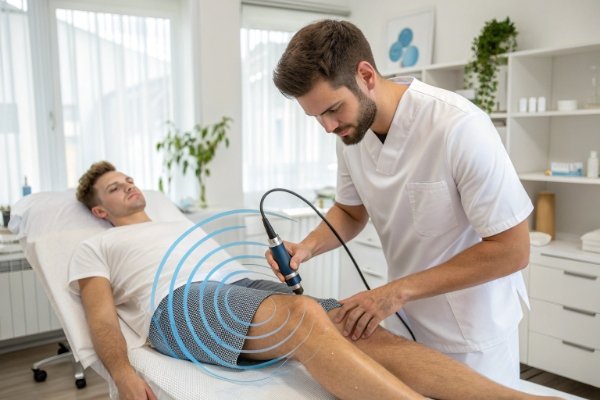
When I started producing shockwave machines, one of the first questions I got from clients was: “Is your device electromagnetic or pneumatic?” It’s a fair question—because the answer determines not only how the machine works, but also how it feels, performs, and lasts.
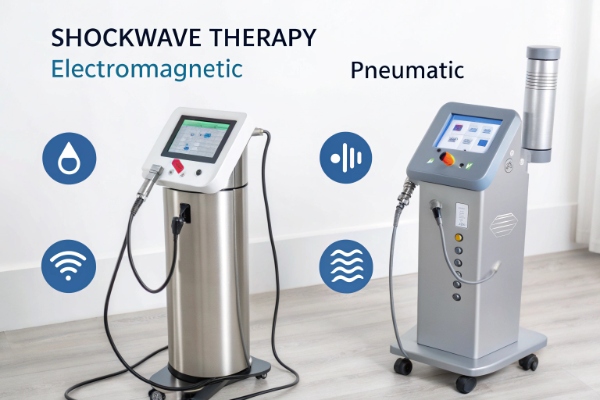
The energy-delivery mechanism of a shockwave therapy machine can be electromagnetic (used in focused devices) or pneumatic (used in radial devices). Electromagnetic systems create precise, deep shockwaves using controlled magnetic fields, while pneumatic systems use compressed air to accelerate a projectile that generates superficial radial pressure waves. Each mechanism serves different clinical goals and cost structures.
Our factory manufactures both types, and I always help buyers choose based on their treatment depth, budget, and expected patient outcomes.
What Are the Pros and Cons of Each Shockwave Generation Method Used in the Market?
In my experience, clinics often choose a mechanism based on the types of conditions they treat. Focused electromagnetic systems excel at precision; pneumatic systems win in affordability and versatility.
Electromagnetic (focused) shockwaves offer deeper, more targeted energy with less discomfort, while pneumatic (radial) systems provide wider coverage at a lower cost and easier maintenance. The right choice depends on whether a clinic prioritizes treatment depth or operating simplicity.

Comparison of Mechanisms
| Feature | Electromagnetic (Focused) | Pneumatic (Radial) |
|---|---|---|
| Generation Method | Magnetic field moves membrane to create focused wave | Compressed air accelerates projectile |
| Penetration Depth | Deep (up to 10–12 cm) | Superficial (3–5 cm) |
| Treatment Area | Narrow, precise focal zone | Broad, diffuse energy pattern |
| Noise Level | Quiet operation | Louder due to air pulses |
| Maintenance | Low (few moving parts) | Moderate (requires handpiece servicing) |
| Cost | Higher initial cost | More affordable |
| Ideal Use | Chronic tendon or bone injuries | Myofascial pain, soft-tissue release |
Manufacturing Perspective
Electromagnetic devices 1 need advanced coil engineering and precise alignment, while pneumatic systems 2 depend on mechanical accuracy and durable materials in the projectile assembly. In both cases, calibration 3 ensures the energy output remains stable through thousands of treatment cycles.
How Do Different Energy-Delivery Mechanisms Affect Device Performance, Maintenance, and Cost?
I once visited a clinic that had both types—one electromagnetic and one pneumatic—and the therapists switched between them depending on the patient. Their feedback helped us refine our next product generation.
Electromagnetic systems deliver consistent, deep energy with minimal mechanical wear, while pneumatic systems are easier to service but experience faster mechanical fatigue due to projectile impact. These differences directly affect performance stability, maintenance schedules, and long-term operating costs.
Operational Differences
| Factor | Electromagnetic System | Pneumatic System |
|---|---|---|
| Energy Stability | Very consistent | Can fluctuate slightly over time |
| Durability | 1–2 million shocks without major service | Handpiece service every 1–1.5 million shocks |
| Maintenance Needs | Minimal (coil and membrane) | Air filter, seals, and projectile replacement |
| Operating Cost | Higher purchase, lower upkeep | Lower purchase, higher maintenance cycle |
| Typical Lifetime | 5–8 years | 3–5 years |
Manufacturer’s Note
From a design perspective, electromagnetic systems are more complex to build but deliver cleaner acoustic profiles. Pneumatic systems, while simpler, must be built with strong internal materials to resist wear. We use aviation-grade aluminum 4 and precision pistons to extend their working life under high-pressure cycles.
What Should Importers Ask Regarding the Mechanism Type When Selecting a Machine?
When I talk with importers, I often emphasize: understanding the mechanism type is essential before placing an order. It affects not just pricing—but also after-sales support and customer satisfaction.
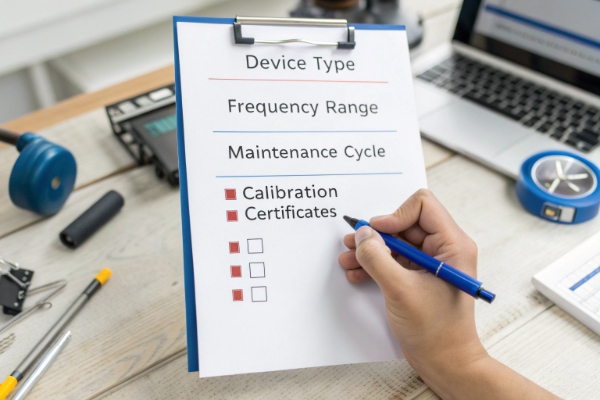
Importers should always ask suppliers to specify the mechanism type (electromagnetic, pneumatic, piezoelectric, or electrohydraulic), verify how energy is generated and transferred, and confirm whether spare parts and maintenance kits are available.
Key Questions to Ask Suppliers
| Question | Why It Matters |
|---|---|
| “Is this device electromagnetic or pneumatic?” | Defines energy type, depth, and comfort |
| “What is the maximum frequency and pressure output?” | Indicates true performance capacity |
| “What parts need regular replacement?” | Helps estimate maintenance cost |
| “Is the handpiece modular and easy to service?” | Ensures downtime is minimized |
| “Do you provide calibration or test certificates?” | Confirms output accuracy |
My Advice
A transparent supplier will explain not only how their device generates energy but also why that mechanism fits the customer’s target market. For example, distributors selling to physiotherapy clinics often prefer pneumatic models due to lower costs, while orthopedic centers may prioritize focused electromagnetic systems 5 for precision and deeper penetration.
Are There Regulatory or Quality-Control Differences Tied to the Mechanism Used?
One thing I’ve learned after years in medical device export is that regulators don’t just look at safety—they look at how energy is generated and controlled.
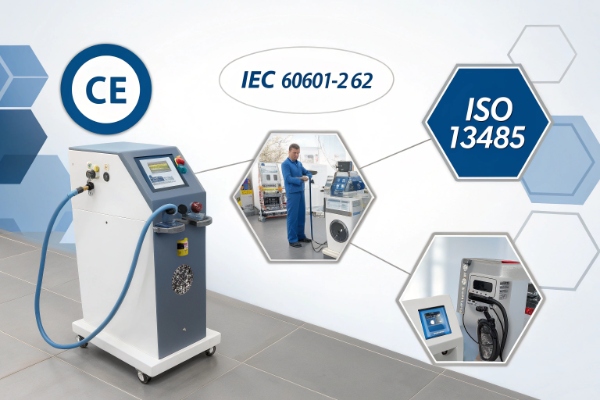
Focused (electromagnetic, piezoelectric, electrohydraulic) and radial (pneumatic) devices follow the same core IEC 60601-2-62 safety standard, but electromagnetic systems usually undergo stricter calibration testing due to higher output precision and deeper penetration.
Regulatory and QC Overview
| Mechanism | Regulation & QC Focus | Notes |
|---|---|---|
| Electromagnetic / Focused | Calibration of energy flux density, focal accuracy | Requires lab testing and clinical validation |
| Pneumatic / Radial | Mechanical reliability, air-pressure safety | Simpler QC, mechanical endurance tests |
| Piezoelectric | Electrical and acoustic safety tests | Often used in high-end models |
| Electrohydraulic | Spark and fluid safety inspection | High maintenance, strong shock generation |
Compliance Practice
In our production line, each device—whether pneumatic or electromagnetic—is tested under simulated load for at least 500,000 pulses. We document output consistency and issue certificates that align with ISO 13485 and CE MDR requirements 6.
Additionally, manufacturers referencing the IEC 60601-2-62 standard 7 ensure compliance with global safety protocols for therapeutic equipment.
Conclusion
The choice between electromagnetic and pneumatic shockwave mechanisms comes down to precision versus practicality. As a manufacturer, I help clients choose the right system by balancing treatment depth, budget, and reliability—because the right mechanism defines both patient experience and business success.
For further reading, industry professionals can consult technical comparison studies 8 and clinical device selection guidelines 9 to understand how mechanism choice impacts therapy outcomes and maintenance planning.
Additional overviews on shockwave therapy types 10 can help buyers make informed decisions.
Footnotes
1. Overview of electromagnetic shockwave generation principles. ↩︎
2. Explanation of pneumatic radial shockwave mechanisms. ↩︎
3. Educational source on calibration and wave types in ESWT. ↩︎
4. Material science reference for aviation-grade aluminum use. ↩︎
5. Clinical discussion on focused electromagnetic therapy depth. ↩︎
6. EU and ISO compliance documentation for medical device quality. ↩︎
7. Description of IEC 60601-2-62 safety requirements. ↩︎
8. Comparative study of electromagnetic vs pneumatic mechanisms. ↩︎
9. Practical guide to selecting shockwave machines. ↩︎
10. Overview of major shockwave generation types. ↩︎

 English
  Español de México
  Deutsch
  Français
  العربية
  Русский