

When our engineering team developed our latest shockwave therapy line, one question kept coming from US buyers: “Will this clear customs?” The confusion around FDA requirements costs importers thousands in seized goods, legal fees, and lost business opportunities every year.
Yes, imported shockwave therapy machines require US FDA clearance or approval when marketed as medical devices. Most devices need 510(k) clearance as Class II medical devices. Without proper FDA authorization, customs can seize shipments, and importers face significant legal penalties and business risks.
Understanding these requirements before placing an order can save your business from costly mistakes US FDA clearance or approval 1. Let’s break down exactly what you need to know about FDA compliance for imported shockwave equipment.
How do I confirm if my imported shockwave therapy machines meet US FDA regulatory standards?
Our export team receives this question weekly from new US partners Class II medical devices 2. Many buyers assume a CE mark from Europe means automatic US approval. This misconception has caused countless shipment delays and financial losses for importers who didn't verify compliance beforehand product liability lawsuits 3.
To confirm FDA compliance, search the FDA's 510(k) database for your device's clearance number, verify the manufacturer's establishment registration, and check that the device listing matches your intended use. Your supplier should provide the 510(k) summary document and establishment registration number upon request.

Understanding FDA Device Classification
The FDA classifies medical devices 4 into three categories based on risk level. Your shockwave machine's classification determines the regulatory pathway required for legal US import.
| Classification | Risk Level | Regulatory Pathway | Examples |
|---|---|---|---|
| Class I | Low | General Controls (often exempt) | Basic electric massagers |
| Class II | Moderate | 510(k) Premarket Notification | Radial shockwave devices, lithotripters |
| Class III | High | Premarket Approval (PMA) | Focused shockwave for specific treatments |
Most shockwave therapy devices fall under Class II. This means they need 510(k) clearance 5 showing substantial equivalence to a legally marketed predicate device.
Step-by-Step Verification Process
First, ask your supplier for the 510(k) clearance number. This is a "K" followed by six digits, like K072809. Then visit the FDA's 510(k) database 6 at accessdata.fda.gov. Enter the clearance number and verify these details match your device:
- Device name and product code
- Manufacturer name and address
- Cleared indications for use
- Date of clearance
Checking Manufacturer Registration
Beyond 510(k) clearance, the manufacturer must register their establishment with the FDA. manufacturer's establishment registration 7 Our facility maintains active FDA registration, which we renew annually. You can verify any manufacturer's registration status through the FDA's establishment registration database.
The device itself must also be listed under that registration. Each specific model needs individual listing. A manufacturer might have registration but not list every model they produce.
What Documentation Should Your Supplier Provide?
When we prepare shipments for US buyers, our compliance team assembles a complete documentation package. Request these items from any supplier:
| Document | Purpose | Why It Matters |
|---|---|---|
| 510(k) Summary | Proves FDA clearance | Required for customs clearance |
| Establishment Registration | Shows FDA-registered facility | Mandatory for US import |
| Device Listing | Confirms specific model approval | Prevents model mix-ups |
| Indications for Use | Defines approved applications | Limits legal marketing claims |
| Quality System Certificate | Demonstrates QSR compliance | Ensures manufacturing standards |
Red Flags to Watch For
Some suppliers claim FDA compliance without proper documentation. Watch for these warning signs:
- Only providing CE or ISO certificates
- Refusing to share 510(k) numbers
- Vague answers about US registration
- Marketing claims beyond cleared indications
- Pricing significantly below market rates
A legitimate FDA-cleared device from China typically costs $15,000 to $50,000. Suspiciously cheap units often lack proper clearance and will face customs issues.
What are the risks to my business if I import shockwave equipment without proper FDA 510(k) clearance?
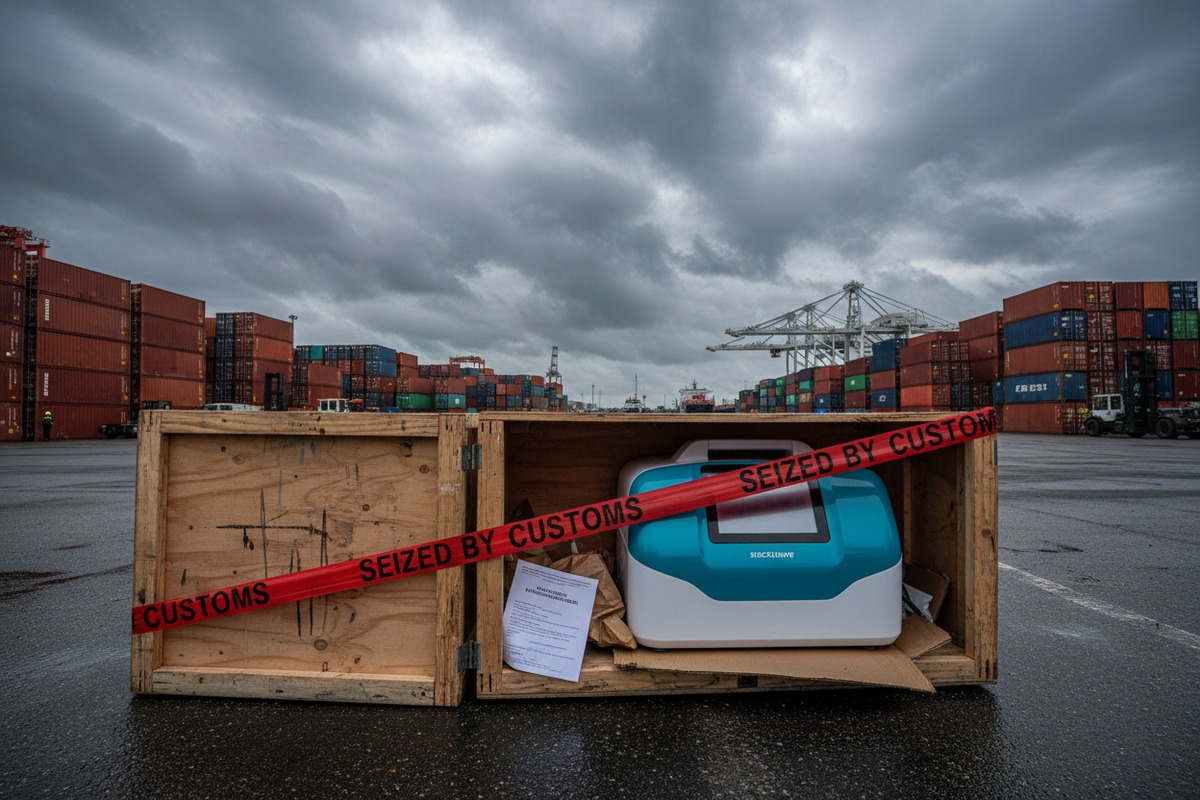
We've seen US partners lose entire container shipments at ports. One buyer ignored our warnings about a competitor's uncertified device. Three months later, they faced customs seizure, a $50,000 loss, and an FDA warning letter that damaged their business reputation.
Importing shockwave equipment without FDA clearance exposes your business to customs seizure, civil penalties up to $15,000 per violation, criminal prosecution for repeat offenses, product liability lawsuits, insurance claim denials, and permanent damage to your professional reputation in the medical device industry.
Immediate Import Consequences
When non-compliant devices arrive at US ports, FDA and Customs work together to identify them. The FDA maintains import alerts listing manufacturers and products flagged for detention without physical examination.
Your shipment may face:
- Automatic detention at port
- Physical inspection and testing
- Refusal of admission to the US
- Mandatory re-export or destruction
- Additional storage and handling fees
These fees accumulate daily while your goods sit in customs. Storage costs at major ports run $50-200 per day. A month-long hold can add thousands to your losses.
Legal and Financial Penalties
The FDA has strong enforcement authority over medical device imports. Penalties escalate based on violation severity and history.
| Violation Type | Potential Consequences |
|---|---|
| First-time import violation | Warning letter, product seizure |
| Marketing unapproved devices | Civil penalties up to $15,000 per violation |
| Continued violations | Injunctions, consent decrees |
| Criminal violations | Up to $250,000 fines, imprisonment |
| False statements to FDA | Additional federal charges |
Beyond FDA penalties, state medical boards may take action against healthcare providers using unapproved devices. Professional licenses can be suspended or revoked.
Product Liability Exposure
Without FDA clearance, you lose critical legal protections. Cleared devices benefit from preemption doctrines that limit certain lawsuits. Unapproved devices have no such protection.
If a patient suffers injury from your uncertified device, you face:
- Full liability for device defects
- No manufacturer indemnification
- Difficulty obtaining legal defense
- Potential punitive damages
- Personal asset exposure
Product liability insurance often excludes coverage for unapproved medical devices. Read your policy carefully. Many importers discover this exclusion only after incidents occur.
Business and Reputation Damage
The FDA publishes warning letters and enforcement actions online. A single violation becomes permanent public record. Future business partners, investors, and customers can find these records through simple searches.
Our US distribution partners tell us that FDA warning letters effectively end business relationships. Healthcare facilities won't purchase from companies with compliance issues. Insurance networks exclude suppliers with regulatory problems.
The "Wellness Device" Loophole Risk
Some importers try marketing shockwave machines as "wellness" or "massage" devices to avoid FDA oversight. This strategy carries significant risks.
If your marketing materials, website, or sales representatives make any medical claims, the FDA considers it a medical device regardless of how you label it. Common triggers include:
- Claiming to treat pain conditions
- Referencing clinical studies
- Showing anatomical diagrams
- Using terms like "therapy" or "treatment"
- Targeting healthcare practitioners
The FDA has issued warning letters to companies attempting this misrepresentation. Penalties are often harsher because the agency views it as intentional deception.
Can I use my supplier's existing FDA certification for my private-labeled shockwave machines?
Many buyers ask our sales team this question when planning private-label projects. They assume our FDA clearance automatically covers their branded version. The reality is more complex, and misunderstanding this has caused serious compliance issues for several partners.
You cannot simply use your supplier's FDA 510(k) clearance for private-labeled devices. The original clearance covers only the specific manufacturer and device configuration. For private-label distribution, you must either become a specification developer with proper establishment registration or work with your supplier to add your brand to their clearance through a supplement.

Understanding Private Label Regulations
The FDA has specific rules for private-label medical devices. Your obligations depend on how much you modify the device and how you market it.
| Relationship Type | Your FDA Obligations | Supplier's Obligations |
|---|---|---|
| Distributor Only | Register establishment, list device | Maintain clearance, provide labeling |
| Specification Developer | Register, list, maintain QMS | Manufacture to your specifications |
| OEM with New Clearance | Submit own 510(k), full compliance | Manufacturing only |
The Specification Developer Route
When you private-label a device, you typically become a "specification developer." This means you control the device specifications even though you don't manufacture it.
As a specification developer, you must:
- Register your establishment with FDA
- List the device under your registration
- Ensure labeling meets FDA requirements
- Maintain quality system elements
- Report adverse events
- Handle recalls if needed
Your supplier handles manufacturing but you share regulatory responsibility. This arrangement works well when we collaborate closely with US partners on compliance.
Adding Your Brand to Existing Clearance
Some buyers ask if we can simply add their brand name to our existing 510(k). This requires filing a "510(k) supplement" or "Special 510(k)" depending on the changes involved.
Name changes alone may qualify for the simpler Special 510(k) process. However, adding a new legal manufacturer requires more documentation. The FDA reviews whether the change affects device safety or effectiveness.
Processing times for supplements typically run 30-90 days. Plan accordingly when launching private-label products.
Labeling Requirements for Private-Label Devices
FDA labeling rules apply regardless of who holds the clearance. Your private-label device must include:
- Your company name and address as legal manufacturer
- Indications for use matching the clearance
- Instructions for use meeting FDA standards
- Unique Device Identifier (UDI) with your information
- All required warnings and precautions
Our technical writing team helps US partners develop compliant labeling. We've seen FDA warning letters issued for simple labeling errors that proper review would have caught.
Quality System Responsibilities
Even as a specification developer using our manufacturing, you have quality system obligations 9. The FDA expects you to maintain:
- Design controls (if you modify specifications)
- Supplier controls (monitoring our manufacturing)
- Complaint handling procedures
- Medical device reporting systems
- Corrective action procedures
Many private-label companies underestimate these requirements. Building a compliant quality system costs $20,000-50,000 initially, plus ongoing maintenance.
Working With Your Supplier on Compliance
Before finalizing any private-label agreement, clarify these points with your supplier:
- Who holds the 510(k) clearance?
- Will you be added to existing clearance or need your own?
- Who handles adverse event reporting?
- How are field corrections and recalls managed?
- What quality agreements are required?
- Who maintains device master records?
We establish formal quality agreements with all private-label partners. These documents define responsibilities clearly and prevent compliance gaps.
What specific documentation do I need from my Chinese manufacturer to clear FDA inspections at the US border?
Our shipping department prepares hundreds of US-bound medical device shipments annually. We've learned exactly what documentation customs and FDA inspectors require. Missing even one document can delay your shipment for weeks.
To clear FDA inspections at the US border, you need the manufacturer's 510(k) clearance letter, establishment registration number, device listing number, commercial invoice with FDA product codes, entry bond documentation, and the US Agent designation form. Additionally, prepare labeling samples, quality system certificates, and any applicable testing reports.

Essential Documentation Checklist
The following documents should accompany every shockwave device shipment to the US:
| Document | Purpose | Where to Obtain |
|---|---|---|
| 510(k) Clearance Letter | Proves FDA marketing authorization | Manufacturer |
| FDA Establishment Registration | Shows registered facility | FDA database printout |
| Device Listing Printout | Confirms specific product approval | FDA database printout |
| Commercial Invoice | Declares value and contents | Freight forwarder |
| Packing List | Details shipment contents | Manufacturer |
| Certificate of Conformity | Attests to specifications | Manufacturer |
| US Agent 10 Designation | Names FDA contact person | Manufacturer's US Agent |
Understanding the Prior Notice Requirement
FDA requires Prior Notice for all imported foods and some devices. While shockwave machines don't typically require Prior Notice filing, certain components might. Check whether your device contains any regulated materials.
Your customs broker handles most entry documentation. However, providing complete information prevents delays. Incomplete entries trigger FDA review flags.
US Agent Requirements
Every foreign manufacturer importing medical devices to the US must designate a US Agent. This person or company serves as FDA's contact point for all communications.
The US Agent must:
- Be located in the United States
- Be available during normal business hours
- Forward FDA communications to the manufacturer
- Respond to FDA inquiries
- Assist with registration and listing
Our company maintains a designated US Agent specifically for this purpose. We provide their contact information with every shipment.
What Triggers FDA Inspection at Port
Not every shipment receives physical inspection. However, certain factors increase inspection likelihood:
- First-time importers
- Products from manufacturers on import alerts
- Incomplete documentation
- Discrepancies between documents and declarations
- Random selection for compliance verification
When FDA does select your shipment, inspectors verify:
- Labeling matches cleared indications
- Device appears as described in listing
- No evidence of adulteration or misbranding
- Documentation supports claims
Preparing for Potential Holds
If FDA places your shipment on hold, you typically receive a "Notice of FDA Action." This document explains the issue and your options.
Common responses include:
- Providing additional documentation
- Requesting FDA reconsideration
- Agreeing to relabeling under FDA supervision
- Re-exporting the goods
- Requesting destruction
Response deadlines are strict. Missing them results in automatic refusal. Work with an experienced customs broker who handles medical devices regularly.
Building Long-Term Import Success
After several successful shipments, your import history builds credibility. FDA focuses enforcement resources on higher-risk importers. Consistent compliance creates smoother future entries.
We recommend US partners:
- Use the same customs broker consistently
- Maintain organized documentation files
- Respond promptly to any FDA inquiries
- Keep clearance documents current
- Monitor FDA import alerts for their product category
Some clients request that we ship sample documentation packages before placing large orders. This allows customs brokers to prepare entries accurately.
Conclusion
FDA compliance for imported shockwave therapy machines isn't optional—it's essential for protecting your business and patients. By verifying 510(k) clearances, understanding your regulatory obligations, and working with compliant manufacturers, you can build a successful import operation without risking seizures or penalties.
Footnotes
1. Explains FDA’s process for device approvals and clearances. ↩︎
2. Explains the classification system for medical devices, including Class II. ↩︎
3. Defines product liability and its application, relevant to medical devices. ↩︎
4. Provides an overview of device regulation, including a definition of what constitutes a medical device. ↩︎
5. Details the 510(k) premarket notification process for medical devices. ↩︎
6. Provides direct access to the FDA’s searchable 510(k) premarket notification database. ↩︎
7. Explains the requirements for medical device establishment registration with the FDA. ↩︎
8. Authoritative EU page providing an overview of the medical devices sector, which includes information on CE marking. ↩︎
9. Outlines the quality system requirements and obligations for medical device manufacturers. ↩︎
10. Details the requirements and responsibilities of a US Agent for foreign medical device establishments. ↩︎

 English
  Español de México
  Deutsch
  Français
  العربية
  Русский