

When our R&D team first designed our pressotherapy systems 1, choosing between wave and squeeze modes was a top concern from salon owners worldwide. Clients want results. But they also want comfort. Picking the wrong mode leads to disappointed customers and wasted investment.
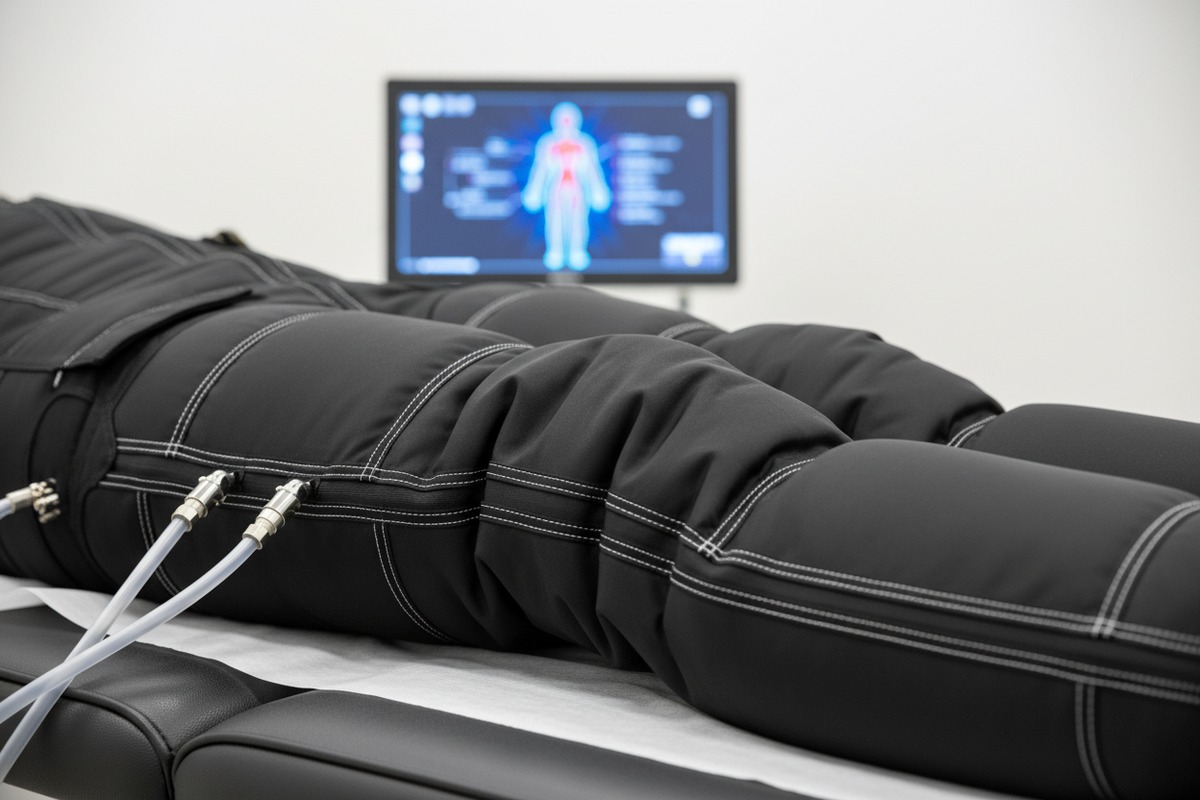
Wave mode uses rhythmic, flowing pressure that inflates a few chambers at a time in a gentle, pulsating motion. Squeeze mode applies sequential or simultaneous compression that holds pressure longer and moves fluid more aggressively. Wave suits relaxation and sensitive clients. Squeeze targets intensive lymphatic drainage and muscle recovery.
This guide breaks down every detail you need to know. We will cover clinical results, engineering differences, customization options, and which mode your high-end salon clients will prefer. Let’s get started.
How do wave and squeeze modes impact the clinical results for my salon clients?
From our experience working with salon owners across the US and Europe, mode selection directly affects treatment outcomes. Choose wrong, and your clients leave unsatisfied. Choose right, and they book repeat sessions.
Wave mode delivers gentle, rhythmic stimulation ideal for relaxation, post-workout recovery, and sensitive clients. Squeeze mode provides stronger, directional compression that accelerates lymphatic drainage, reduces swelling faster, and suits clients seeking intensive therapeutic results. Both improve circulation, but squeeze mode moves lymphatic fluid up to three times faster.
Understanding Wave Mode Results
Wave massage operates through rhythmic, pulsating pressure that mimics natural circulatory movement. Rather than applying uniform compression, wave mode creates a flowing sensation. It feels like a gentle massage rolling up the limbs.
This mode works well for:
- Post-workout recovery 2 acceleration
- General wellness and relaxation
- Clients with sensitive tissues
- Early-phase post-operative patients
- Preventative circulation enhancement
The pressure in wave mode stays moderate. Most machines run wave programs at 30–100 mmHg. This keeps the experience comfortable while still stimulating blood flow.
Understanding Squeeze Mode Results
Squeeze modes use direct, sustained compression. The garments inflate chamber by chamber in a programmed sequence. This pushes lymphatic fluid toward drainage points, then releases to allow fresh blood circulation.
Clinical applications include:
- Post-operative swelling reduction
- Cellulite treatment
- Edema elimination
- Muscle toning
- Deep vein thrombosis prevention 3
Squeeze mode typically uses higher pressure levels—often 150–260 mmHg for intensive applications.
Clinical Comparison Table
| Factor | Wave Mode | Squeeze Mode |
|---|---|---|
| Pressure Range | 30–100 mmHg | 150–260 mmHg |
| Chamber Inflation | Few at a time, rolling | Sequential or all at once |
| Primary Benefit | Relaxation, gentle stimulation | Intensive drainage, swelling reduction |
| Ideal Clients | Sensitive skin, wellness-focused | Athletes, post-surgery, medical needs |
| Session Duration | 15–30 minutes | 30–45 minutes |
| Comfort Level | Very comfortable | Moderate to firm pressure |
What the Research Shows
Lymphatic drainage 4 massage via pressotherapy can reduce cellulite appearance and release fluid that builds up after surgery or certain cancer treatments. Sequential compression 5 in squeeze mode moves lymphatic fluid three times faster than self-massage.
Both modes enhance overall circulation. But squeeze mode achieves more dramatic results in shorter timeframes. Wave mode suits clients who prioritize comfort and relaxation over aggressive treatment.
What engineering differences should I expect between wave and squeeze cycles in a high-end machine?
When our engineers design clinical-grade pressotherapy systems, the internal mechanics differ significantly between modes. Understanding these differences helps you evaluate equipment quality and durability.
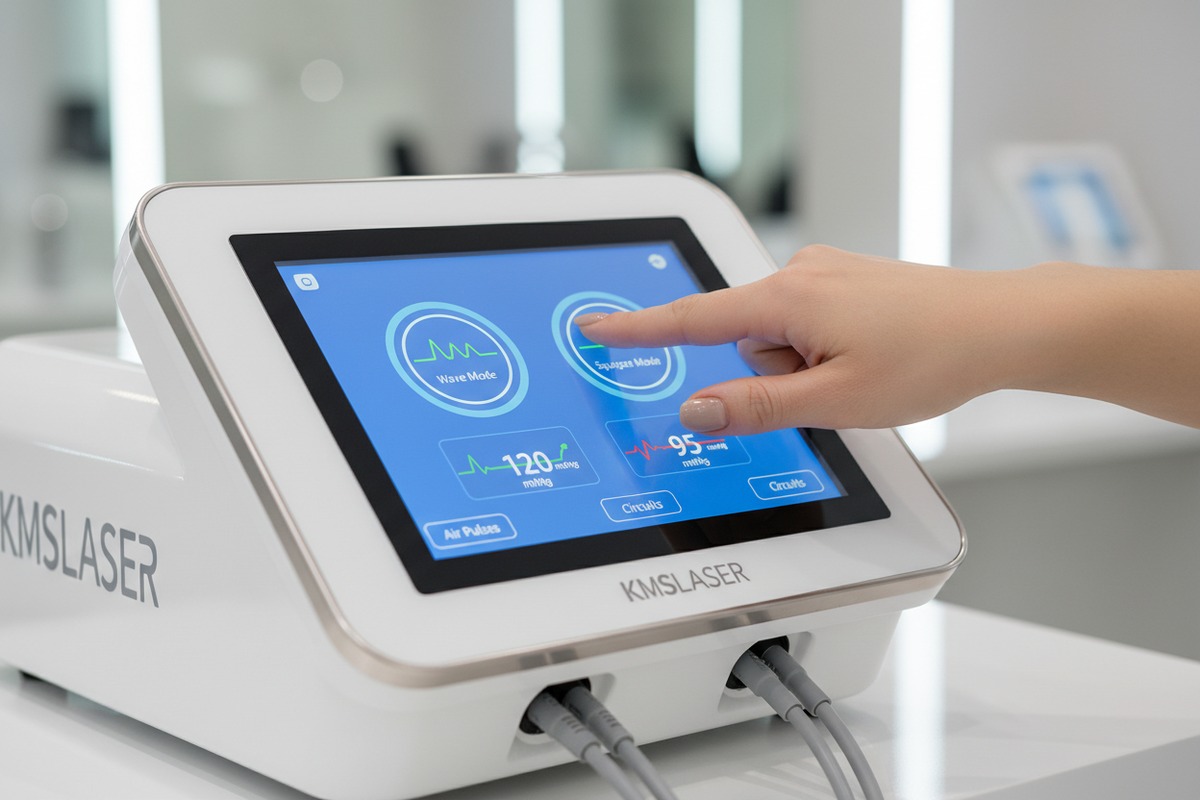
Wave cycles use smaller, faster air pulses across fewer chambers simultaneously, creating gentle rolling pressure. Squeeze cycles require larger air volumes, higher pressure capacity, and precise timing for sequential chamber inflation. High-end machines feature separate pressure circuits, medical-grade sensors, and touchscreen controls to manage both modes effectively.
Air Compressor and Pump Specifications
The compressor is the heart of any pressotherapy machine. Wave mode requires quick, light pulses. Squeeze mode demands sustained pressure output.
High-end machines typically feature:
- Dual-stage compressors for consistent pressure
- Medical-grade air valves 6 for precise control
- Noise reduction systems for client comfort
- Emergency pressure release mechanisms
Power specifications vary. Clinical systems often run at 500W with 230V input. Portable units may use lithium batteries offering 360 minutes of operation.
Chamber Configuration
The number of independent air chambers 7 directly affects treatment precision. More chambers mean finer gradient control.
| Chamber Count | Typical Application | Mode Compatibility |
|---|---|---|
| 4 chambers | Basic home use | Limited wave/squeeze |
| 6 chambers | Entry-level professional | Both modes |
| 8 chambers | Standard professional | Full wave/squeeze |
| 12+ chambers | Advanced clinical | Hybrid programs |
| 24 chambers | Full-body professional | All modes + customization |
Our full-body garments feature 24 chambers across legs, arms, and abdomen. This allows practitioners to apply different modes to different body areas simultaneously.
Sequential vs. Simultaneous Inflation
Sequential squeezing inflates chambers one by one from distal to proximal. The pressure wave travels continuously along the limb.
All-squeezing mode inflates all chambers simultaneously. This delivers uniform, intense pressure across the entire treatment area.
Wave mode inflates only a few chambers at a time in a progressive, wave-like motion. The pumping effect feels gentler and more natural.
Intelligent Pressure Management
Advanced machines incorporate sensors that continuously monitor pressure levels. These systems automatically adjust to maintain therapeutic effectiveness while ensuring safety.
Key engineering features include:
- Pressure gradient functions for graduated compression
- Hold functions to maintain pressure at specific levels
- Interval settings for rest periods between cycles
- Individual chamber pressure adjustment
- Emergency stop functions
Build Quality Indicators
When evaluating machines, check for:
- Medical-grade materials in garments
- Reinforced seams on air chambers
- Durable connectors between suit and control unit
- Self-diagnostic routines
- Modular design for easy maintenance
Can I customize the pressure sequences for both modes when ordering my private-label machines?
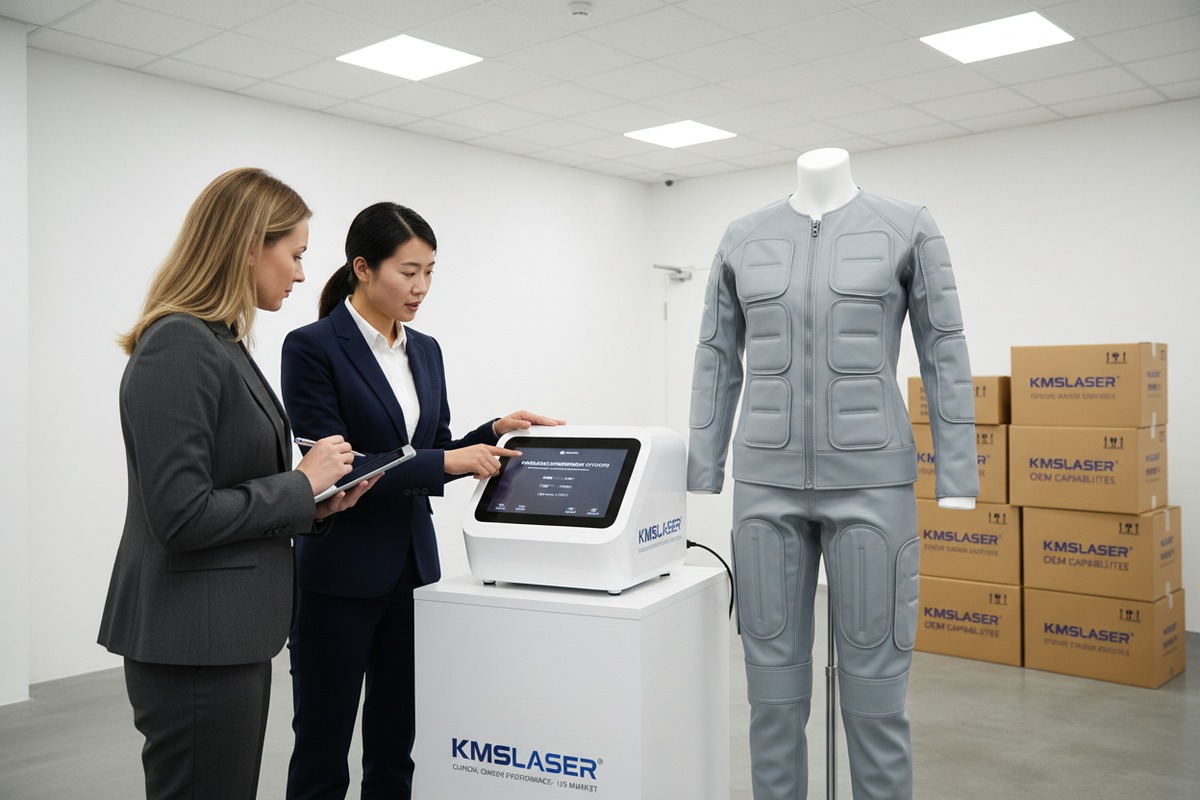
Our OEM clients frequently ask about customization options. The answer is yes—but the level of customization depends on the machine tier and your specific requirements.
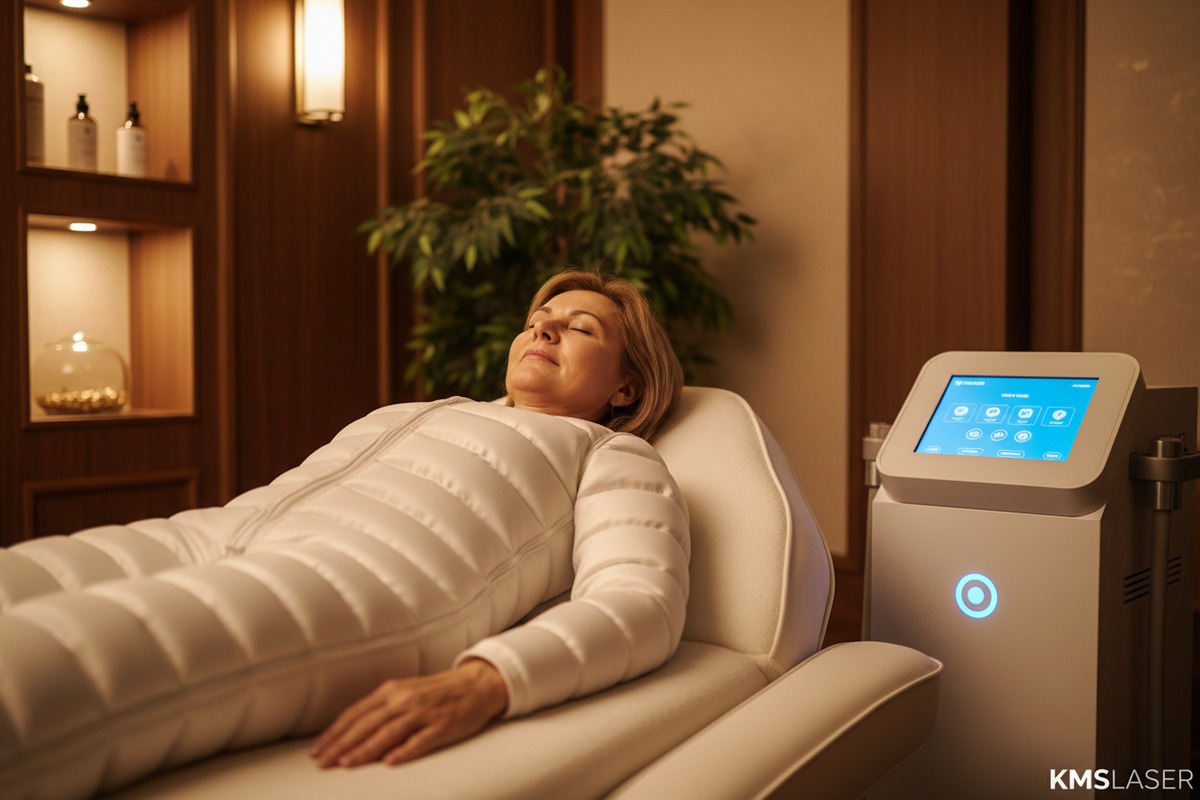
High-end clinical machines offer extensive pressure sequence customization for both wave and squeeze modes. You can adjust pressure levels, chamber timing, inflation sequences, hold durations, and interval settings. Private-label orders can include pre-programmed custom protocols, branded interfaces, and specialized treatment algorithms designed for your target market.
Standard Customization Options
Most professional machines ship with 6–13 pre-programmed compression modes. These cover common clinical applications. But practitioners need flexibility.
Adjustable parameters typically include:
- Pressure range (30–260 mmHg)
- Session duration (10–90 minutes)
- Chamber inflation sequence
- Gradient function settings
- Interval and hold times
- Individual chamber pressure levels
Some machines let you program your own treatment algorithms. This allows practitioners to save custom protocols for specific client needs.
Private-Label Customization for Brand Owners
When you order private-label machines from our factory, we offer deeper customization:
| Customization Area | Standard OEM | Advanced OEM |
|---|---|---|
| Logo placement | ✓ | ✓ |
| Color schemes | Limited | Full custom |
| Interface language | ✓ | ✓ |
| Pre-set programs | Standard | Custom protocols |
| Pressure ranges | Standard | Adjustable limits |
| Timer settings | Standard | Custom ranges |
| User interface design | Standard | Custom layout |
| Training materials | Generic | Branded |
Creating Custom Treatment Protocols
Hybrid modes 8 represent the cutting edge of pressotherapy technology. These combine wave and squeeze functions within a single session.
Example protocol flow:
- Start with wave massage at 50 mmHg (5 minutes)
- Transition to sequential squeeze at 120 mmHg (15 minutes)
- Apply all-squeeze at 180 mmHg (10 minutes)
- Finish with gentle wave at 40 mmHg (5 minutes)
This approach delivers both relaxation and intensive treatment benefits.
Technical Requirements for Custom Orders
When requesting customized machines, provide:
- Target client demographics
- Specific clinical applications
- Preferred pressure ranges
- Desired session durations
- Interface language requirements
- Branding assets and guidelines
Minimum order quantities typically apply for advanced customization. Standard models accept private labeling at lower quantities.
Quality Control for Custom Units
Our factory implements strict quality control throughout production:
- In-production inspections at each assembly stage
- Pressure calibration testing
- Safety system verification
- Pre-shipment functional testing
- Packaging integrity checks
Custom orders receive the same quality standards as our standard production runs.
Which compression mode will my high-end salon customers find more effective for lymphatic drainage?
Our export partners in the US and Europe consistently report that client preferences vary by treatment goal. Understanding your target market helps you select the right machine configuration.
For pure lymphatic drainage effectiveness, squeeze mode delivers superior results by moving fluid directionally through sequential compression. However, high-end clients often prefer hybrid machines that offer both modes. Wave mode provides the comfortable, spa-like experience luxury clients expect, while squeeze mode handles intensive drainage needs. The best approach combines both for comprehensive treatment protocols.
Lymphatic Drainage Effectiveness Comparison
Sequential compression in squeeze mode achieves more effective lymphatic drainage by directing fluid movement in a controlled, progressive manner. The squeeze, hold, release, repeat cycle pushes lymphatic fluid toward drainage points.
Clinical observations show:
- Squeeze mode reduces swelling faster
- Sequential compression prevents fluid backflow
- Higher pressure enhances drainage efficiency
- Directional movement mimics natural lymph flow
Wave mode still stimulates lymphatic circulation. But the gentler approach works more slowly.
Client Comfort and Experience
High-end salon clients expect both results and comfort. Wave mode creates a flowing, massage-like sensation that many users find more relaxing.
| Experience Factor | Wave Mode | Squeeze Mode |
|---|---|---|
| Comfort level | Very high | Moderate |
| Relaxation effect | Excellent | Good |
| Pressure sensation | Gentle rolling | Firm squeezing |
| Client anxiety | Minimal | May concern some |
| Repeat booking likelihood | High | Varies |
The squeezing sensation in squeeze mode should feel like pressure, not pain. But excessive settings can cause discomfort. Redness or slight skin irritation where garments meet skin may occur.
Matching Modes to Client Types
Different client segments prefer different approaches:
Wellness-focused clients: Prefer wave mode for relaxation and general circulation enhancement.
Post-treatment clients: Need squeeze mode after body contouring procedures to eliminate released fat cells.
Athletes: Favor squeeze mode for accelerated muscle recovery and soreness reduction.
Post-operative clients: Early recovery suits wave mode; later stages benefit from squeeze.
Cellulite treatment: Squeeze mode provides more intensive results.
The Hybrid Advantage
Machines offering both modes maximize your service flexibility. A single investment serves diverse client needs.
Hybrid treatment benefits:
- Start sessions gently with wave mode
- Progress to intensive squeeze mode
- Finish with relaxing wave patterns
- Customize each session to individual preferences
- Build treatment packages combining both approaches
Pricing and Revenue Considerations
High-end clients typically pay premium prices for effective treatments. Squeeze mode delivers visible results that justify higher session fees. But wave mode encourages relaxation-focused repeat visits.
Session pricing ranges from $75 to $175 depending on market and duration. Offering both modes lets you create tiered pricing structures.
Conclusion
Choosing between wave and squeeze modes depends on your salon's target clients and treatment goals. Wave mode suits relaxation-focused services. Squeeze mode delivers intensive lymphatic drainage. Hybrid machines offering both modes provide maximum flexibility and ROI for professional settings.
Footnotes
1. Explains what pressotherapy is, its benefits, and how the machine works. ↩︎
2. Offers expert-approved tips and strategies for effective post-workout recovery. ↩︎
3. Provides information on preventing and treating venous thromboembolism, including DVT. ↩︎
4. Describes lymphatic drainage massage, its purpose, and health benefits. ↩︎
5. Replaced with an authoritative source explaining how compression pumps work, including sequential inflation and pressure gradients. ↩︎
6. Replaced with an authoritative source discussing medical air valves, their standards, and selection criteria. ↩︎
7. Replaced with an authoritative source that directly explains how the number of chambers affects air compression therapy, including sequential compression, gradient pressure, and customization. ↩︎
8. Describes professional pressotherapy machines with multiple massage modes and customizable settings for varied treatments. ↩︎

 English
 Español de México
 Deutsch
 Français
 العربية
 Русский
