

When our production team prepares shockwave therapy machines for the US market, we often hear alarming stories from buyers who chose the wrong supplier. One buyer received a batch that failed UL testing, losing six months and thousands of dollars. Another faced a clinic recall because their machine lacked proper electrical safety certification 1.
To properly vet suppliers for UL certification cooperation, you should verify their UL marks through official databases, review their ISO 13485 quality management systems, audit their production lines in person, request complete technical documentation including IEC 60601 test reports, and assess their engineering expertise for custom development and ongoing compliance support.
This guide breaks down the exact steps you need to take. We will cover how to verify UL authenticity, evaluate engineering capabilities, audit production quality, and ask the right questions. Let’s dive in.
How can I verify that a supplier's UL certification for shockwave therapy machines is authentic and covers my specific model?
Our export team sees this problem regularly. A supplier shows a UL certificate, but when the buyer checks deeper, the certificate belongs to a different product line. Or worse, the certificate is fake. This mistake costs time and money.
To verify UL certification authenticity, cross-check the supplier's UL file number directly on UL's Product iQ database, confirm the certificate covers the exact model and all components including generators, cables, and applicators, and ensure the testing scope includes IEC 60601-1 for basic safety and IEC 60601-1-2 for electromagnetic compatibility.
Use the Official UL Database
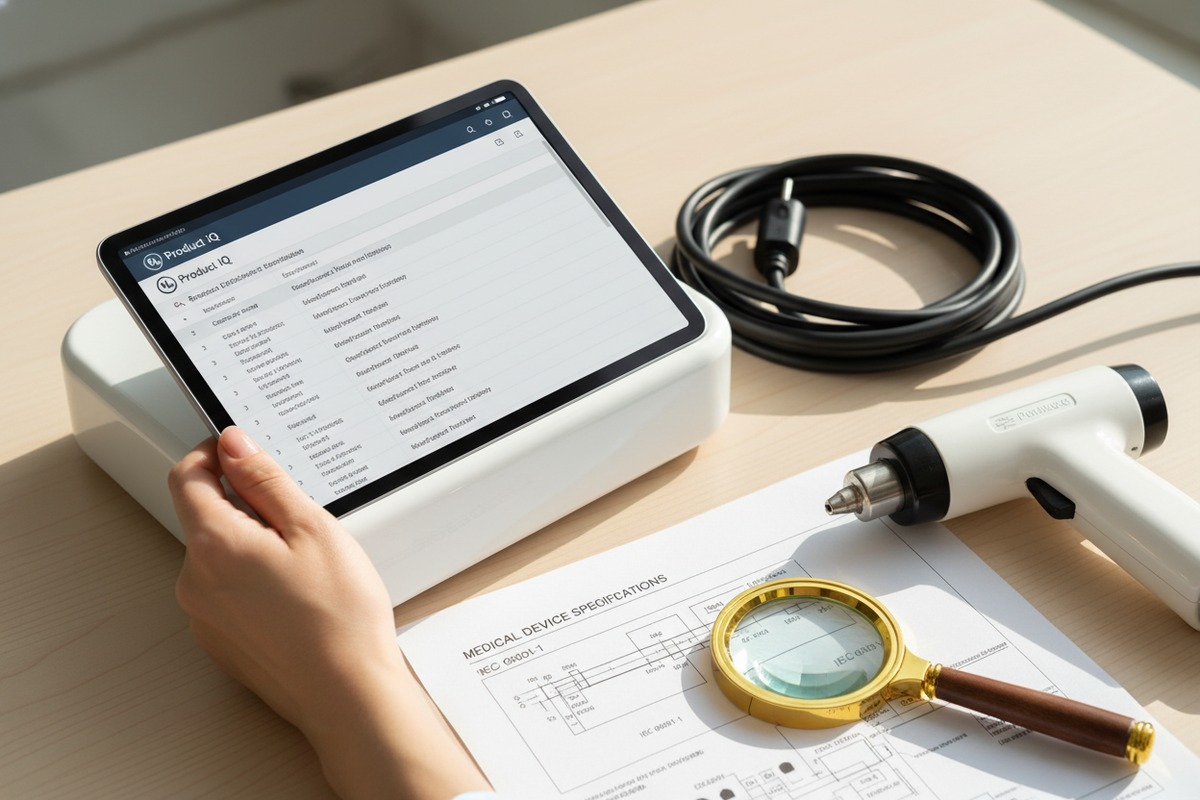
Never trust a supplier's PDF certificate alone. Go to UL's Product iQ database 2 and search for the file number. The database shows exactly which products and standards are covered. If the supplier cannot provide a file number, that is a red flag.
When we prepare UL documentation for our clients, we always provide the file number upfront. Legitimate suppliers do the same.
Check the Full Scope of Testing
Shockwave therapy machines have multiple components. The UL certificate must cover the entire system, not just the main unit. This includes:
- The generator or base unit
- Handpieces and applicators
- Power cables and connectors
- Software if the device is network-connectable
A certificate for just one component does not protect you. Ask for documentation showing the full system passed testing.
Understand the Relevant Standards
| Standard | What It Covers | Why It Matters |
|---|---|---|
| IEC 60601-1 (UL 60601-1) | Basic safety and essential performance | Prevents electrical shocks and fires |
| IEC 60601-1-2 | Electromagnetic compatibility (EMC) | Stops interference with other medical equipment |
| UL 2900 | Cybersecurity for connected devices | Protects patient data and device integrity |
| ISO 10993 | Biocompatibility | Ensures applicators are safe for skin contact |
If a supplier claims UL certification but cannot show compliance with IEC 60601-1 and IEC 60601-1-2, their certificate may not apply to medical electrical equipment.
Watch for Red Flags
Some suppliers show UL marks that apply to non-medical products. For example, UL 1449 covers surge protectors, not medical devices. Others use generic "UL listed" claims without specifics.
Ask direct questions:
- What is your UL file number?
- Which standards does your certificate cover?
- Does the certificate include the specific SKU I am ordering?
A trustworthy supplier answers these questions immediately with documentation.
What engineering expertise should I expect from a factory when developing a custom, UL-compliant shockwave device for my brand?
Our engineering team has developed dozens of custom shockwave devices over the years. The difference between a capable factory and an incapable one shows up during UL testing. Poor engineering leads to test failures, redesigns, and delays.
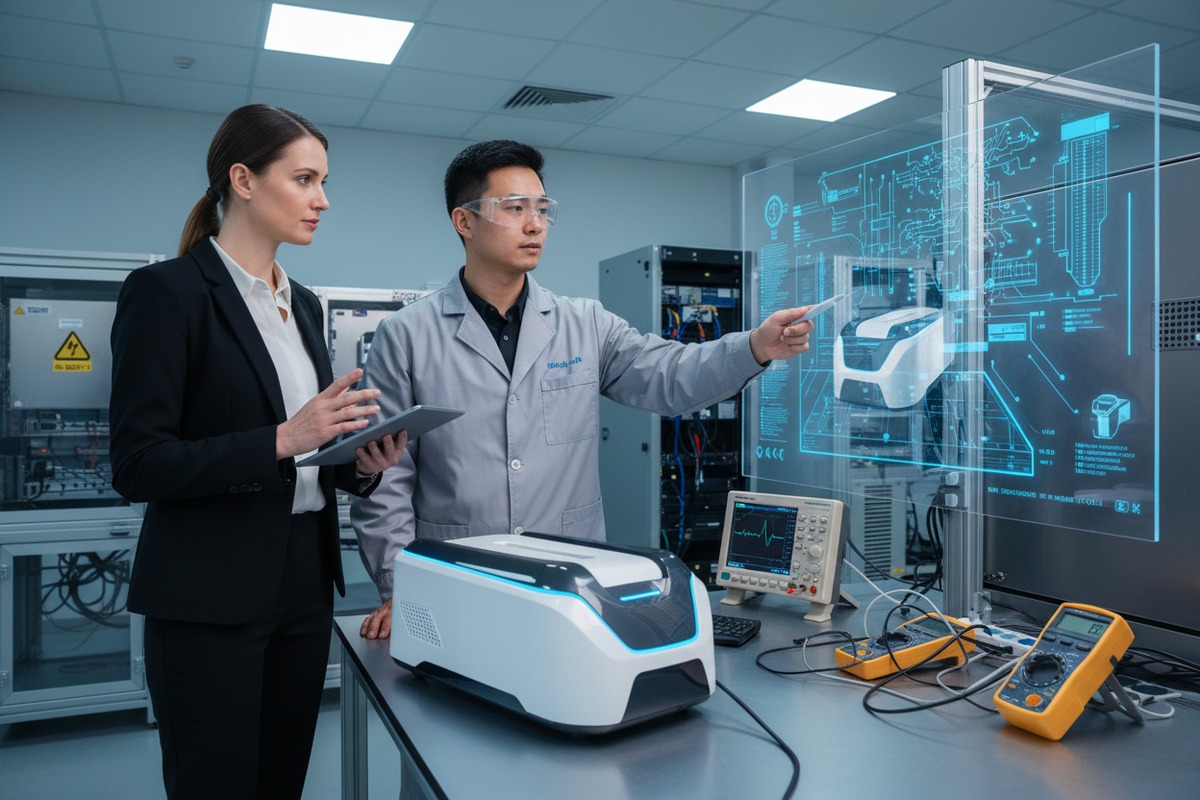
Expect your factory to demonstrate expertise in electrical safety design per IEC 60601-1, EMC engineering for IEC 60601-1-2 compliance, risk management following ISO 14971, software development lifecycle documentation for SaMD, and experience navigating the full UL testing submission process from initial design through final certification.
Electrical Safety Design Capabilities
A factory developing UL-compliant devices must understand creepage and clearance distances, insulation coordination, and grounding requirements. These are not optional details. They are fundamental to passing UL 60601-1 testing.
When our engineers design a new shockwave machine, they calculate these parameters before building the first prototype. A factory that waits until testing to discover problems will waste your time and money.
EMC Engineering Experience
Shockwave therapy machines generate high-energy acoustic outputs. This creates electromagnetic noise 3. Without proper EMC engineering, the device will fail IEC 60601-1-2 testing or interfere with other equipment in clinical settings.
Ask potential suppliers:
- Do you have an in-house EMC engineer?
- Can you show test reports from previous products?
- What shielding and filtering techniques do you use?
Risk Management Documentation
UL testing requires evidence of proper risk management 4. This means documentation following ISO 14971 throughout the design process. A factory should show you:
| Document Type | Purpose | When Created |
|---|---|---|
| Risk Management Plan | Defines approach and acceptance criteria | Beginning of project |
| Hazard Analysis | Identifies all potential hazards | Design phase |
| Risk Evaluation | Assesses severity and probability | Throughout development |
| Risk Control Records | Shows mitigation measures implemented | Design and production |
| Residual Risk Assessment | Confirms remaining risks are acceptable | Before market release |
If a supplier cannot explain their risk management process, they are not ready for UL certification cooperation.
Software Development Lifecycle
Modern shockwave machines often include software for treatment protocols, data logging, or network connectivity. The FDA and UL now scrutinize software as a medical device component 5.
Our development team follows IEC 62304 for software lifecycle processes. This standard defines how to document requirements, design, implementation, verification, and maintenance. Without this documentation, UL certification becomes much harder.
Pre-Submission Testing Capability
A capable factory runs pre-compliance testing before submitting to UL. This catches problems early when fixes are cheap. Ask if the supplier has access to EMC chambers, electrical safety test equipment, and environmental testing facilities.
How do I audit a supplier's production line to ensure consistent quality control for my UL-certified equipment?
Passing UL testing once is not enough. Every unit that ships must meet the same standards. Our quality team has seen suppliers pass initial certification then let quality slip on production units. This creates liability for you.
When auditing a supplier's production line, verify their ISO 13485 quality management system certification, inspect incoming material controls and component traceability, observe in-process testing procedures, review final inspection protocols, and confirm they maintain UL Follow-Up Services access allowing ongoing production monitoring.

Verify ISO 13485 Certification
ISO 13485 is the quality management system 6 standard for medical devices. A supplier without this certification lacks the foundation for consistent quality.
During our factory tours, we show clients our ISO 13485 certificate first. Then we demonstrate how the system works in practice. Ask to see:
- The quality manual
- Documented procedures for key processes
- Training records for production staff
- Corrective action logs
Incoming Material Controls
Quality starts with components. The supplier must verify that incoming parts meet specifications before they enter production. incoming material controls 7
| Control Point | What to Check | Red Flags |
|---|---|---|
| Supplier qualification | Approved vendor list, audit records | No documented vendor approval process |
| Incoming inspection | Test procedures, acceptance criteria | Parts go straight to production |
| Component traceability | Lot tracking, documentation | No way to trace components to finished units |
| Non-conforming material | Quarantine area, disposition records | Rejected parts mixed with accepted ones |
Walk through the incoming inspection area. Ask how they handle components that fail testing.
In-Process Quality Checks
Production lines need checkpoints at critical stages. For shockwave machines, these typically include:
- PCB assembly verification
- Electrical safety tests (ground continuity, leakage current)
- Acoustic output calibration
- Functional testing of all modes
- Cosmetic inspection
Ask to see the inspection checklist for each station. Observe operators performing tests. Look for calibration stickers on test equipment.
Final Inspection and Testing
Before any unit ships, it must pass final inspection. This should mirror the tests performed during UL certification. Request the final inspection procedure and sample a few completed units to verify compliance.
UL Follow-Up Services
UL offers a program where their inspectors periodically visit certified factories to verify ongoing compliance. Suppliers enrolled in this program face unannounced audits. This gives you additional assurance that production quality remains consistent.
Ask your supplier: "Are you enrolled in UL Follow-Up Services 8?" If yes, request records of recent inspections.
Document Everything
Take photos during your audit. Request copies of procedures and sample inspection records. A supplier who refuses documentation access may be hiding problems.
What are the key questions I should ask to confirm a manufacturer can handle the complex UL testing process for my private label order?
Before we take on a new private label project, our sales team assesses whether the client understands what UL certification involves. The process is complex. The wrong supplier will fail testing repeatedly, delaying your market entry.
Ask potential manufacturers these key questions: What UL-certified medical devices have you previously produced? Can you provide your UL file numbers for verification? Who manages the testing submission process? What is your typical timeline from design freeze to certification? How do you handle test failures and redesigns?

Experience Questions
Start by understanding the supplier's track record with UL certification. Inexperienced suppliers underestimate the complexity and timeline.
| Question | Good Answer | Warning Sign |
|---|---|---|
| How many UL-certified medical devices have you produced? | Specific number with product categories | Vague responses or only non-medical examples |
| Can you share UL file numbers from past projects? | Provides file numbers for verification | Refuses or cannot provide documentation |
| What was your first-time pass rate on UL testing? | Honest percentage with explanation | Claims 100% pass rate (unrealistic) |
| Have you handled FDA 510(k) alongside UL? | Describes integrated process | Treats them as completely separate |
Process Questions
UL certification requires coordinated effort between design, testing, and documentation teams. Ask how the supplier manages this complexity.
Key questions:
- Who is your designated UL project manager?
- How do you coordinate between engineering and the UL testing lab?
- What internal testing do you perform before UL submission?
- How do you maintain documentation throughout the process?
Timeline Questions
Realistic timeline expectations matter. A supplier promising UL certification in six weeks for a new design is either inexperienced or dishonest.
Typical timeline for a new shockwave device:
- Design and prototyping: 8-12 weeks
- Internal pre-compliance testing: 2-4 weeks
- UL submission and testing: 8-16 weeks
- Fixes and retesting if needed: 4-8 weeks
Total: 6-10 months for a new design. Modifications to existing certified products take less time.
Failure Handling Questions
Test failures happen. What matters is how the supplier responds. Ask:
- What is your process when a UL test fails?
- Who leads the root cause analysis?
- How quickly can you implement design changes?
- Do you have examples of resolving past test failures?
A good supplier describes a systematic approach with specific examples. A poor supplier becomes defensive or claims failures never happen.
Cost Questions
UL testing costs vary by product complexity. Get detailed quotes that separate:
- Engineering time for design modifications
- Pre-compliance testing fees
- UL application and testing fees
- Potential retesting costs
- Ongoing UL Follow-Up Services fees
Beware of suppliers who quote artificially low testing costs. They may be hiding fees or planning to pass costs through later.
Post-Certification Support
UL certification is not the end. Ask about ongoing support:
- How do you handle component changes that affect certification?
- What is your process for UL annual renewal?
- Can you support additional country certifications using CB Scheme?
Conclusion
Vetting suppliers for UL certification cooperation requires systematic verification, direct questions, and in-person audits. Use official databases to verify certifications. Assess engineering capabilities before committing. Audit production quality controls thoroughly. Ask the hard questions upfront. Your due diligence now prevents costly problems later.
Footnotes
1. Essential for preventing recalls and ensuring patient safety. ↩︎
2. Replaced HTTP 403 with an accessible descriptive page for UL’s Product iQ database on the official UL Solutions website. ↩︎
3. Explains the source of potential interference in medical devices. ↩︎
4. Systematic process for identifying, evaluating, and controlling risks. ↩︎
5. Highlights the regulatory focus on software in medical devices. ↩︎
6. Essential framework for consistent quality in medical device manufacturing. ↩︎
7. Crucial for ensuring quality starts with components. ↩︎
8. Program for ongoing verification of production quality for UL certified products. ↩︎

 English
  Español de México
  Deutsch
  Français
  العربية
  Русский