

We know the pressure of the pre-holiday rush. When our production lines in Guangzhou ramp up for the Q4 peak, we see firsthand that delaying orders is not an option for clients targeting the specific summer season in Brazil or Colombia.
To vet suppliers for South American holidays, audit their production scalability three months pre-peak and verify ANVISA or local compliance early. Ensure they offer door-to-door logistics with DDP terms to handle complex customs, and test their prototype speed to guarantee branded units arrive before the summer beach season begins.
Here are the critical checkpoints you need to clear to ensure your holiday inventory arrives on time and fully compliant.
How can I verify that a pressotherapy machine manufacturer has the production capacity for my holiday order volume?
We often see buyers panic in November when stock runs low. When we schedule our assembly shifts, we prioritize clients who booked production slots based on verified daily output data rather than empty promises.
Verify capacity by requesting a live video tour of the assembly line during peak hours to see real-time throughput. Ask for their daily output records for pressotherapy units specifically, and check if they have reserve raw materials like pneumatic pumps and control chips stocked for sudden holiday rush orders.
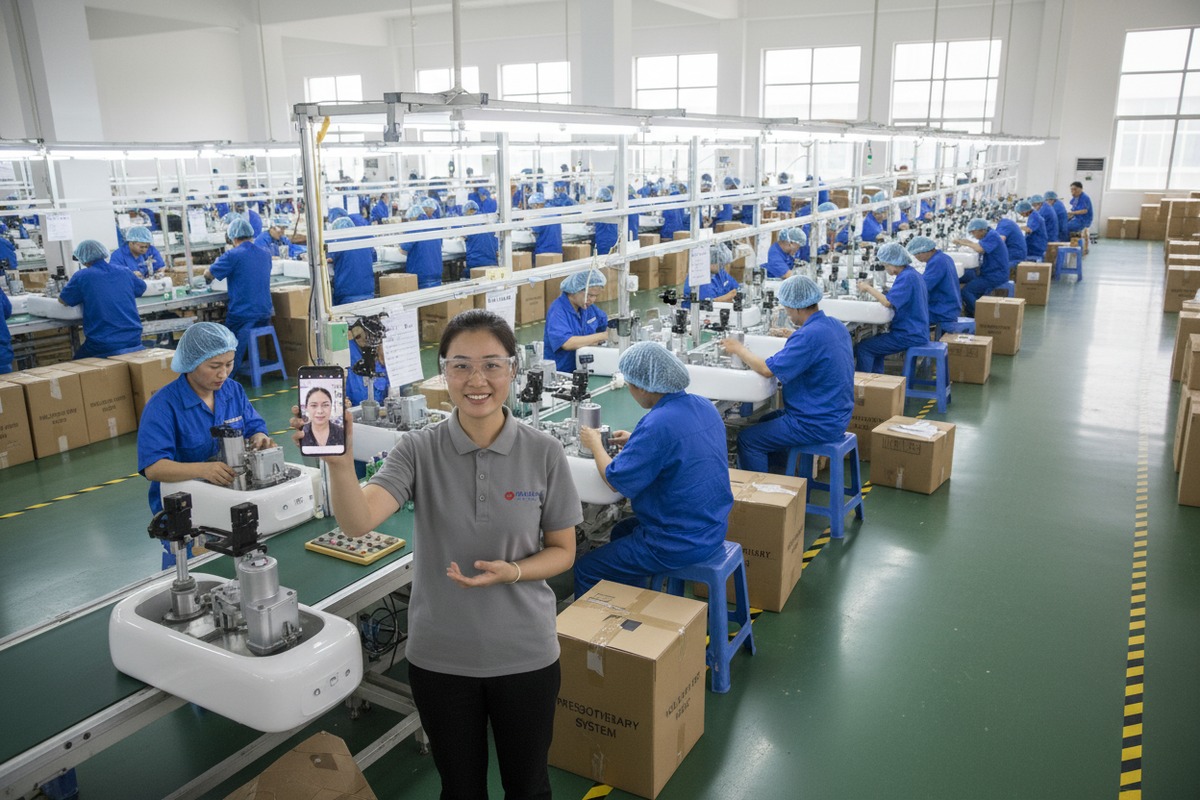
The South American holiday cycle is unique because Christmas coincides with the start of the summer beach season. This creates a "double peak" in demand for body contouring and lymphatic drainage devices 1. To ensure your supplier can handle this volume, you must look beyond their marketing claims and audit their actual manufacturing bandwidth.
The "Ghost Shift" Danger
Many suppliers on B2B platforms 2 claim to be large factories but are actually small trading companies with no control over production schedules. During the holiday rush, real factories prioritize their own direct clients first. If you are buying through a trader, your order gets pushed to the back of the queue. You can identify this by asking for a live video call. Ask the sales representative to walk onto the production floor immediately. If they make excuses or say they need to "schedule a visit" for next week, they likely do not own the facility.
Analyzing Production Line Data
A professional manufacturer operates based on data, not guesses. When vetting a partner for high-volume orders, ask for their "Daily Output Rate" specifically for air compression systems. A standard assembly line should be able to produce 50-100 units per day per line. If their numbers are lower, a sudden holiday spike will cause bottlenecks.
Raw Material Buffers
Capacity is not just about labor; it is about parts. The most critical components in a pressotherapy machine are the pneumatic pump 3 and the TPU material for the air chambers. We always keep a buffer stock of these components. You should ask your potential supplier: "What is your current inventory level for 12-chamber solenoid valves?" If they have to order parts after you place your deposit, they will miss your Carnival deadline.
Critical Capacity Indicators
Use this table to score your potential partners:
| Indicator | Real Factory Standard | High-Risk Trader/Workshop |
|---|---|---|
| Video Audit | Available immediately upon request | "Requires appointment" or static photos only |
| Daily Output | >50 units per line (documented) | Vague estimates ("We can do whatever you need") |
| Component Stock | Pumps/Chips in warehouse (>500 sets) | Order-on-demand (Zero stock) |
| Lead Time | 15-25 days for 100+ units | 7 days (Unrealistic) or 45+ days (Outsourced) |
What specific quality control benchmarks should I demand from my supplier to prevent product failures during peak sales?
A returns crisis during Christmas kills profit margins faster than shipping delays. In our testing lab, we run pressure cycles continuously because we know that a single leaking air chamber can ruin a spa’s reputation and lead to chargebacks.
Demand specific stress tests where the air pressure is sustained at maximum 187mmHg for 48 hours without leakage. Require validation of the connection points between the control unit and the 12-chamber suit, as these are the most common failure points under the high-frequency usage typical of busy aesthetic clinics.
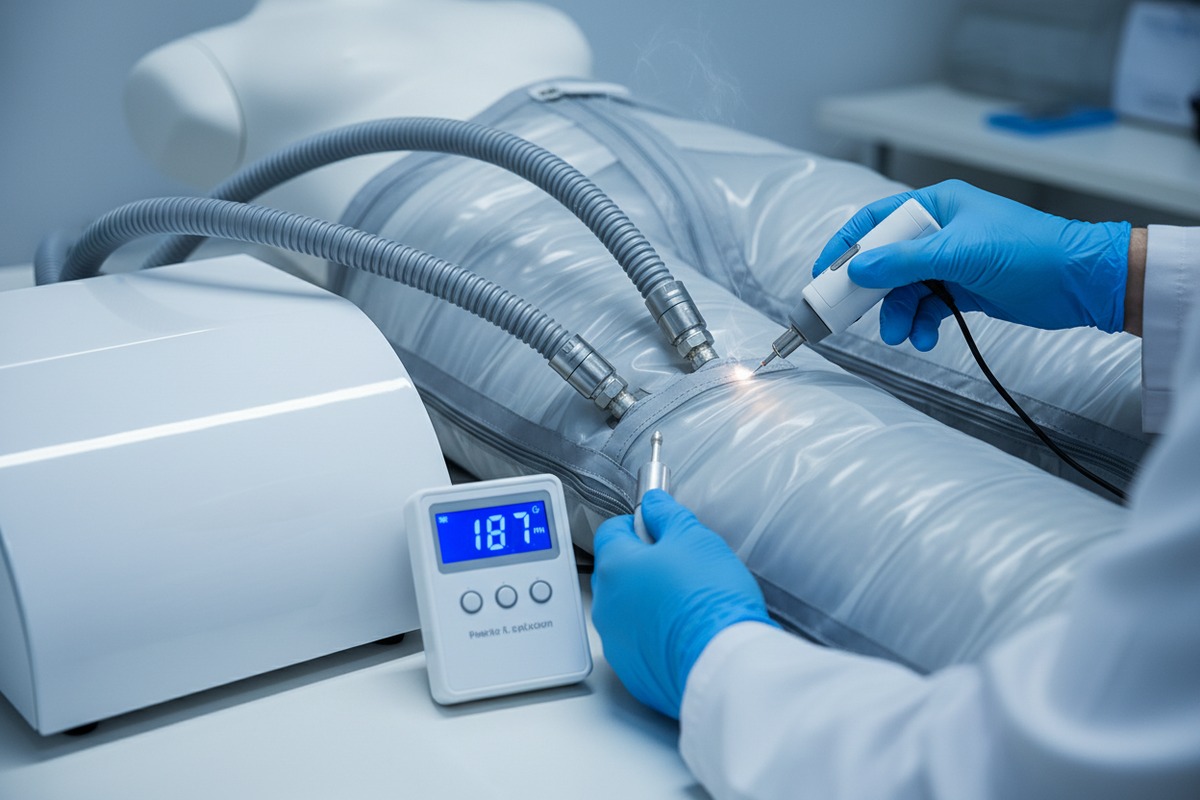
South American clinics often run machines 10 to 12 hours a day during peak season. A machine that works fine for a 20-minute home session might fail under professional workloads. You need a supplier who tests for "clinic-grade" durability.
The Pressure Consistency Test
The core function of pressotherapy is precise pneumatic compression. The industry standard range is 20mmHg to 180mmHg (or up to 187mmHg on high-end models). Cheap units often fluctuate or fail to reach the top pressure. You should require a "Pressure Holding Test" report. This verifies that when the machine is set to 120mmHg, it holds that pressure exactly for the duration of the inflation cycle. Fluctuations indicate cheap valves that will wear out in months.
Air Chamber Material: TPU vs. PVC
The material of the suit determines its lifespan. PVC is cheaper but brittle; it cracks after repeated folding. TPU (Thermoplastic Polyurethane) 4 is flexible, durable, and resistant to the oils and creams used in body treatments. For the South American market, where humidity and heat can affect materials, TPU is non-negotiable. Ask your supplier to send a sample swatch of the air bag material. If it smells like a cheap pool float, it is PVC.
Electronic Stability for Voltage Variations
Power grids in some South American regions can be unstable, and voltage standards vary (e.g., Brazil uses both 127V and 220V depending on the state). A robust power supply unit (PSU) is essential. We install PSUs that can handle voltage fluctuations of ±10% without burning out the motherboard.
QC Checklist for Holiday Orders
| Component | Test Required | Failure Risk |
|---|---|---|
| Air Pump | 48-hour continuous aging test | Overheating during back-to-back clinic sessions |
| Suit Connections | 10,000 insertion cycle test | Air leaks at the junction, loss of pressure |
| Chamber Seams | High-frequency welding inspection | Bursting under max pressure (180mmHg) |
| Screen Interface | Touch responsiveness test | Freezing software during mode selection |
Shipping to Brazil, Argentina, or Chile is notoriously complex. We have spent years building relationships with forwarders who understand that a single missing NCM code 5 or document can hold your stock at the port until after the Carnival season ends.
Secure a supplier who uses logistics partners experienced with South American 'Red Channel' inspections and specific document requirements like NCM codes. Insist on DDP (Delivered Duty Paid) terms where possible to transfer the risk of customs delays and unexpected duties from your business back to the exporter's logistics network.
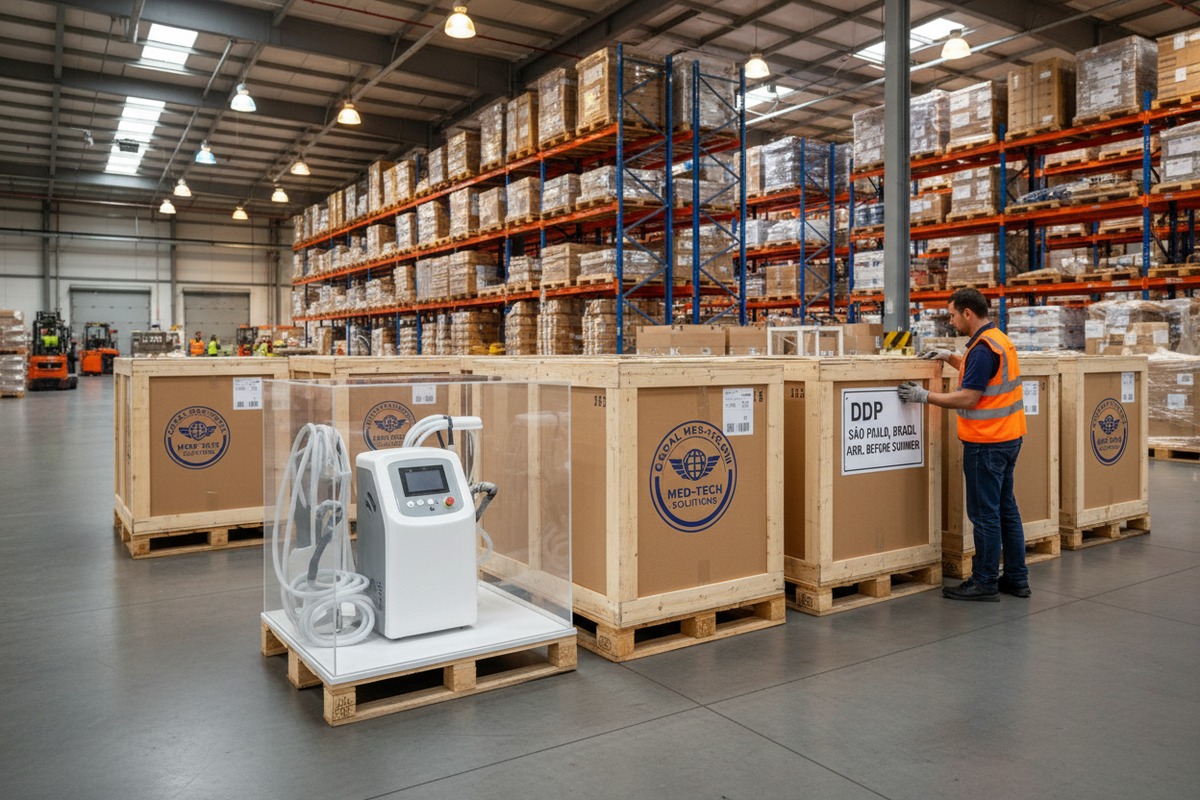
The biggest bottleneck for South American trade is not the ocean crossing; it is the customs clearance. During the holiday season, ports like Santos or Valparaíso are congested, and customs officers heighten inspections.
The "Red Channel" Reality
In countries like Brazil, imports are categorized by risk. New importers or generic descriptions often trigger the "Red Channel" (Canal Vermelho), requiring physical inspection that delays goods by weeks. Experienced suppliers know how to declare goods correctly to minimize this risk. We ensure that every machine is labeled with the exact HS Code (Harmonized System) 6 that matches the Commercial Invoice.
Documentation Accuracy is Vital
A small error in paperwork results in massive fines or seizure. Your supplier must provide:
- Commercial Invoice: Must show the true value and detailed description.
- Packing List: Must match the invoice exactly.
- Certificate of Origin: Crucial for trade agreements (e.g., China-Chile FTA) to reduce duties.
- Formal Product Registration: For medical-grade devices, proof of ANVISA (Brazil) 7 or equivalent registration is mandatory.
Timing the Shipment
Sea freight from China to South America takes 35-50 days. If you want goods for December sales, they must leave the China factory by mid-October at the latest. Air freight is an option for urgent restocking, but it costs 5-10 times more. We recommend a hybrid strategy: ship the bulk of your order via sea in Q3, and keep a budget for emergency air shipments if demand spikes in January.
Common Logistics Pitfalls
| Issue | Consequence | Prevention Strategy |
|---|---|---|
| Missing NCM Code | Customs hold + Fines | Verify HS/NCM codes on draft invoice before shipping |
| Voltage Mismatch | Product useless in specific city | Map target cities (e.g., Rio 127V vs. Santos 220V) |
| Wooden Pallet Issues | Rejected entry (Fumigation) | Use plywood or plastic pallets (Non-wood packing) |
Can I trust my OEM partner to deliver the custom packaging and branding I need for my seasonal marketing campaign?
Branding builds value and justifies higher margins. When we configure the software interface for a client, we know that a generic "Welcome" screen looks cheap compared to a custom logo greeting the user, and this detail matters immensely for high-end spa positioning.
Trust is established by requesting a physical pre-production sample of the branded packaging and interface software before mass production begins. Verify their ability to print logos on the control unit casing and the compression suit fabric, ensuring the ink quality withstands the friction and cleaning chemicals used in professional spa environments.
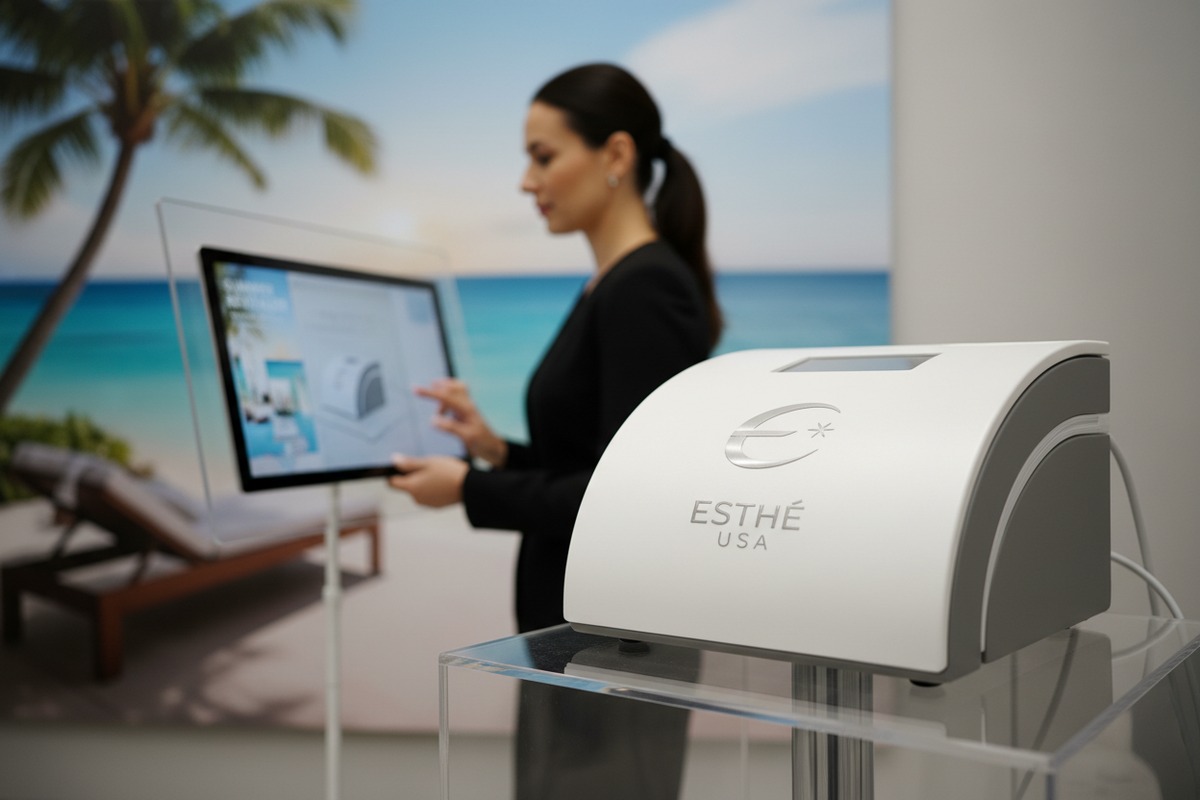
For the holidays, packaging is not just protection; it is part of the "unboxing" experience. Whether you are selling to clinics or directly to consumers, the visual presentation drives the perceived value.
Software Customization
Modern pressotherapy machines use touch screens. Customizing this is the easiest win. A capable OEM partner can upload your startup logo and even change the language to Portuguese or Spanish within the firmware. This usually takes 1-3 days for our engineers. Ask for a video of the screen operation with your logo before you approve the bulk order.
Hardware Branding Durability
Putting a logo on the machine casing seems simple, but quality varies. Cheap stickers peel off after a few months of heat and cleaning. You want "Silk Screen Printing 8" or "Laser Engraving" directly onto the chassis. For the suit, the logo must be printed on the fabric before sewing. If a supplier says they can "add logos later," they are likely using stickers.
Packaging for Retail vs. Transport
If you are running a holiday promo, you might want a glossy gift box. However, shipping to South America is rough. We recommend a "Double Box" strategy: a beautiful, branded inner retail box protected by a thick, unbranded 7-layer corrugated outer carton. This ensures the pretty box arrives without dents.
Customization Levels & Timelines
| Customization Type | Description | Added Time to Production |
|---|---|---|
| Software Logo | Your brand on the boot-up screen | +1-2 Days |
| Chassis Logo | Silk-screen print on the machine body | +3-5 Days |
| Custom Color | Changing the plastic casing color | +15-20 Days (MOQ usually higher) |
| Suit Branding | Logo printed on leg/arm cuffs | +5-7 Days |
Conclusion
Vetting a supplier for the South American holiday rush requires looking beyond the price tag. You must audit their real-time production capacity, insist on TPU materials and rigorous pressure testing, and secure experienced logistics for complex customs. By validating these pillars early, you ensure your brand is ready to capture the peak season demand.
Footnotes
1. Explains how pneumatic compression devices aid lymphatic drainage and treat lymphedema. ↩︎
2. Defines B2B platforms and their role in connecting businesses for goods and services. ↩︎
3. Describes the working principle and industrial applications of pneumatic pumps. ↩︎
4. Replaced HTTP 404 with an authoritative Wikipedia page on Thermoplastic Polyurethane. ↩︎
5. Explains the Mercosur Common Nomenclature (NCM) and its importance for Brazilian imports. ↩︎
6. Describes the Harmonized System (HS) codes for international trade classification and customs. ↩︎
7. Explains ANVISA’s role as the Brazilian health regulatory agency for medical devices. ↩︎
8. Provides a comprehensive overview of the silk screen printing technique and its process. ↩︎

 English
  Español de México
  Deutsch
  Français
  العربية
  Русский