
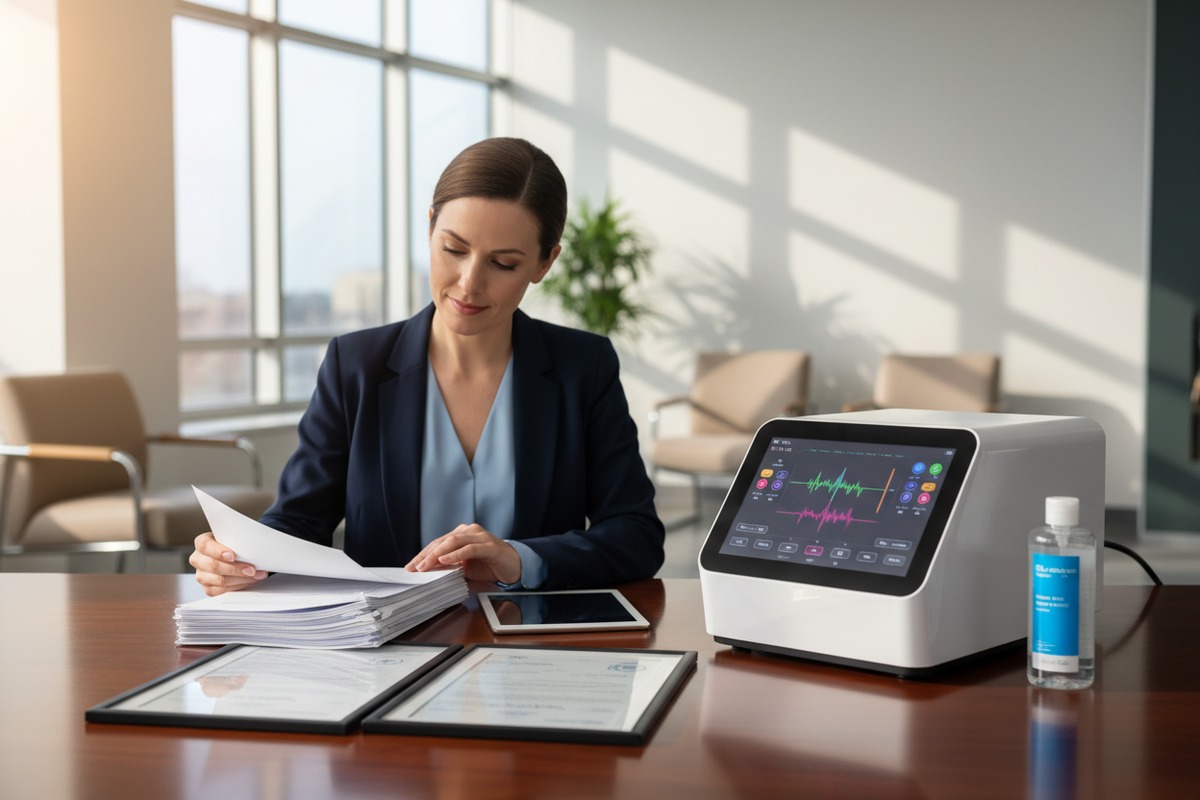
When our engineering team first developed shockwave therapy machines for the US market, we faced a confusing web of environmental regulations EPA RCRA criteria 1. Many importers struggle with the same problem. They receive products from overseas suppliers but have no clear path to verify environmental compliance.
To verify US environmental compliance for shockwave therapy machine media and lubricants, request FDA biocompatibility documentation per ISO 10993, obtain Safety Data Sheets showing non-hazardous waste classification under EPA RCRA criteria, and confirm California Proposition 65 compliance through third-party testing certificates from accredited laboratories.
This guide breaks down the exact steps you need to take. We will cover certification requirements, California-specific rules, supplier verification methods, and chemical composition checks. Let’s dive into each area.
What safety certifications should I request to ensure my shockwave therapy lubricants meet US environmental standards?
Our quality control team reviews dozens of certification requests each month from US buyers. Many purchasing managers ask for documents that don't exist or miss critical ones entirely. This creates compliance gaps that surface later during inspections.
Request ISO 10993 biocompatibility test reports, EPA RCRA-compliant Safety Data Sheets, FDA 510(k) clearance documentation for the parent device, and third-party environmental testing certificates confirming biodegradability and aquatic toxicity levels for all coupling gels and lubricants.

Understanding the Certification Landscape
The US regulatory framework for shockwave therapy consumables involves multiple agencies. The FDA oversees medical device safety. The EPA handles environmental protection. State agencies add their own requirements. You need documents from all relevant bodies.
Shockwave therapy devices fall under FDA Class II medical device classification. This means the device itself requires 510(k) clearance demonstrating substantial equivalence to predicate devices. The media and lubricants that contact patients must show biocompatibility under ISO 10993 2 standards.
Key Certifications to Request
| Certification Type | Issuing Standard | What It Covers | Why You Need It |
|---|---|---|---|
| ISO 10993 Biocompatibility | ISO | Patient-contacting materials | FDA submission requirement |
| Safety Data Sheet (SDS) | OSHA/EPA | Chemical hazard information | Workplace safety and disposal |
| EPA RCRA Classification | EPA | Waste hazard status | Proper disposal procedures |
| IEC 60601 Compliance | IEC | Electrical safety | FDA clearance support |
| ISO 14971 Risk Management | ISO | Risk assessment documentation | FDA quality system requirement |
SDS Review Checklist
When you receive a Safety Data Sheet from your supplier, check these specific sections. Section 2 should list hazard classifications. Look for phrases like "not classified as hazardous" under OSHA and EPA criteria. Section 12 covers ecological information including biodegradability data. Section 13 explains disposal considerations.
Your lubricants should not contain materials classified under RCRA as ignitable, corrosive, reactive, or toxic. If any component triggers these classifications, you face hazardous waste disposal requirements that significantly increase costs and regulatory burden.
Third-Party Testing Requirements
Independent laboratory testing adds credibility to supplier claims. Ask for test reports from labs accredited under ISO 17025 3. The reports should include aquatic toxicity data showing low harm to fish and invertebrates. Biodegradability tests should demonstrate breakdown within reasonable timeframes.
Our production team works with three accredited testing laboratories. We provide these reports proactively because we understand US importers need verification beyond supplier statements. This approach has helped our partners avoid costly port delays.
How can I verify that the media and lubricants in my machines are compliant with California Proposition 65?
In our experience shipping to California distributors, Proposition 65 creates the most confusion. The warning requirements seem straightforward but involve detailed chemical analysis. Many importers discover compliance issues only after products reach US ports.
Verify California Proposition 65 compliance by obtaining analytical test reports from accredited laboratories screening for all 900+ listed chemicals, requesting supplier declarations confirming no listed substances exceed safe harbor levels, and checking coupling gel formulations against the current OEHHA chemical database.

What Proposition 65 Actually Requires
California Proposition 65 4, officially the Safe Drinking Water and Toxic Enforcement Act of 1986, requires warnings for products containing chemicals known to cause cancer or reproductive harm. The list includes over 900 substances. Any product sold in California must either prove it contains no listed chemicals above safe harbor levels or carry warning labels.
For shockwave therapy consumables, the most relevant chemicals include certain phthalates, heavy metals like lead and cadmium, and specific preservatives. Coupling gels may contain polymer compounds that require screening.
Testing Protocol for Prop 65 Compliance
| Test Category | Chemicals Screened | Safe Harbor Level | Testing Method |
|---|---|---|---|
| Heavy Metals | Lead, Cadmium, Mercury | 0.5 μg/day Lead | ICP-MS Analysis |
| Phthalates | DEHP, DBP, BBP | 410 μg/day DEHP | GC-MS Analysis |
| VOCs | Formaldehyde, Benzene | 40 μg/day Formaldehyde | Headspace GC |
| Preservatives | Certain parabens | Varies by compound | HPLC Analysis |
Working with Your Supplier on Prop 65
Send your supplier the current OEHHA chemical list. Ask them to cross-reference their formulation ingredients. Request a signed declaration stating either no listed chemicals are present or levels fall below safe harbor thresholds.
At our facility, we maintain Prop 65 compliance files for all US-bound products. Our chemists review each formulation against the updated list. When we introduce new components, we run screening tests before production begins. This prevents surprises during import.
Documentation Package for California
Build a complete Prop 65 compliance file including analytical test reports dated within the past two years, supplier declarations with specific chemical confirmations, formulation ingredient lists with CAS numbers, and safe harbor level calculations if any listed chemicals are present.
Keep records of the OEHHA list version you used for compliance checks. The list updates regularly. Document your due diligence process to demonstrate reasonable efforts if questions arise later.
What steps should I take to confirm my Chinese supplier's environmental testing matches US regulatory requirements?
When we audit our own testing protocols against US standards, we find gaps that many suppliers overlook. Chinese testing laboratories sometimes use different methodologies. The results may look similar but fail to meet specific US agency requirements.
Confirm your Chinese supplier's environmental testing matches US requirements by verifying laboratory accreditation under ISO 17025 with ILAC recognition, cross-checking test methods against EPA and FDA specified protocols, requesting split-sample testing at US-based labs, and auditing the supplier's quality management system against ISO 13485 standards.

Laboratory Accreditation Verification
Not all test reports carry equal weight. US regulators expect testing from laboratories accredited under recognized frameworks. Check if your supplier's lab holds ISO 17025 accreditation from a body recognized by the International Laboratory Accreditation Cooperation.
Request the lab's scope of accreditation document. Verify the specific tests performed fall within their accredited scope. A lab may hold general accreditation but lack specific approval for the tests your products need.
Test Method Alignment
| US Requirement | Specified Method | Chinese Equivalent | Acceptable? |
|---|---|---|---|
| EPA Toxicity | OPPTS 850.1010 | GB/T 21854 | Requires correlation study |
| Biodegradability | OECD 301B | GB/T 21856 | Generally acceptable |
| Heavy Metals | EPA 6010D | GB/T 5009 | May need retest |
| Biocompatibility | ISO 10993-5 | ISO 10993-5 | Acceptable if lab accredited |
Split-Sample Testing Strategy
For critical products, implement split-sample testing. Send identical samples to your supplier's laboratory and a US-based accredited lab. Compare results to identify any systematic differences. This approach costs more upfront but prevents costly rejections later.
Our team conducts split-sample testing quarterly for our key product lines. We have found minor variations in heavy metal detection limits between Chinese and US labs. By understanding these differences, we adjust our internal specifications to ensure US results pass every time.
Supplier Audit Checklist
Visit your supplier's facility or hire a third-party auditor. Check their quality management system against ISO 13485 for medical devices. ISO 13485 standards 5 Review their raw material qualification process. Examine how they validate their testing equipment calibration.
Ask to see their environmental testing standard operating procedures. Compare these against FDA guidance documents and EPA test methods. Look for documented evidence of method validation studies proving their procedures produce equivalent results to US-specified methods.
Building a Verification Protocol
Create a written protocol for ongoing verification. Include quarterly review of test reports, annual split-sample testing, periodic supplier audits, and monitoring of regulatory updates. Document everything. This paper trail demonstrates due diligence if regulators question your compliance.
How do I ensure the chemical composition of my shockwave therapy consumables won't lead to US import or environmental violations?
Our regulatory affairs team tracks US import rejections in our product category. Chemical composition issues cause a significant percentage of these problems. The violations often stem from undisclosed ingredients or contamination rather than intentional non-compliance.
Ensure chemical composition compliance by obtaining complete formulation disclosure with CAS numbers for all ingredients, screening against FDA prohibited substance lists and EPA TSCA inventory, testing for common contaminants like heavy metals and phthalates, and implementing incoming material verification at your supplier's facility.
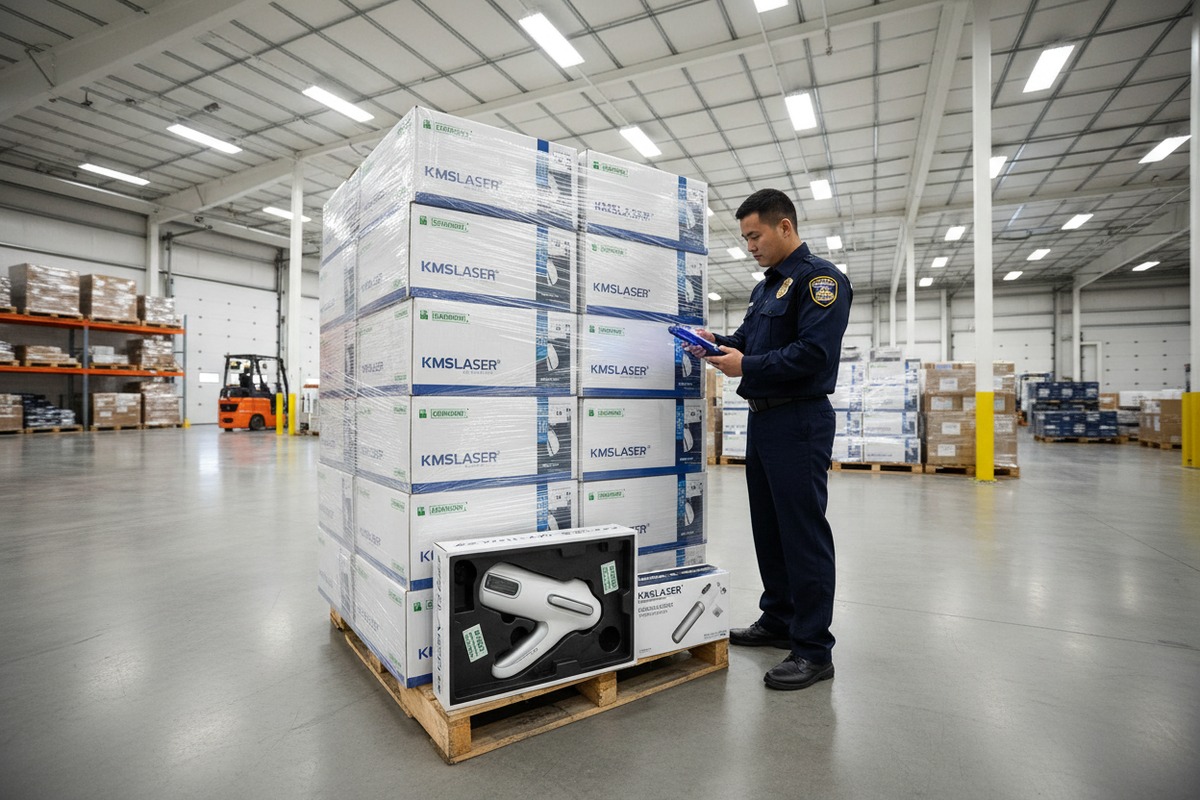
Full Formulation Disclosure
Request complete ingredient lists from your supplier. Each component should include its Chemical Abstracts Service number, concentration range, and function in the formulation. Proprietary concerns may limit some disclosures, but you need enough detail to verify regulatory compliance.
Compare all CAS numbers against the EPA TSCA inventory 6. Chemicals not listed may require pre-manufacture notification before import. Check FDA databases for any prohibited substances in medical device applications.
Common Chemical Compliance Issues
| Issue Category | Problematic Substances | Testing Method | Regulatory Consequence |
|---|---|---|---|
| Heavy Metal Contamination | Lead, Cadmium, Mercury | ICP-MS | Import rejection, Prop 65 violation |
| Restricted Phthalates | DEHP, DBP in polymers | GC-MS | CPSIA violation, Prop 65 warning |
| Unlisted Chemicals | Novel polymer additives | TSCA review | Import hold, PMN requirement |
| Microplastic Content | Non-biodegradable polymers | Filtration analysis | Future regulatory risk |
Implementing Incoming Material Controls
Work with your supplier to establish incoming material verification. Each raw material batch should undergo identity testing and purity verification. Certificate of Analysis documents should accompany every shipment. Retain samples from each batch for traceability.
At our production facility, we test every incoming material batch against specifications. Our quality team rejects materials that fail any parameter. This prevents contamination issues from reaching finished products. We share batch test data with our customers upon request.
Wastewater and Disposal Considerations
Consider the full lifecycle of your consumables. Coupling gels washed off during treatment enter wastewater systems. If these contain non-biodegradable polymers, you may face future microplastic regulations. Evaluate biodegradability data and consider switching to environmentally preferable alternatives.
Digital Traceability Implementation
Modern supply chains benefit from digital traceability. QR codes on packaging can link to batch-specific compliance documentation. Blockchain-based systems provide tamper-proof records of testing results and material origins. These tools help demonstrate compliance during regulatory audits.
Our latest products include QR codes linking to complete compliance packages. Customers can access SDS documents, test reports, and certification copies instantly. This transparency builds trust and simplifies their record-keeping requirements.
Building Long-Term Compliance
Environmental regulations evolve continuously. The 2025 trends show increasing scrutiny on biodegradability, microplastic content, and sustainable sourcing. Position your supply chain for these changes by selecting suppliers who prioritize environmental performance beyond minimum requirements.
Conclusion
Verifying US environmental compliance for shockwave therapy media and lubricants requires systematic attention to multiple regulatory frameworks. Request proper certifications, verify Proposition 65 compliance, audit supplier testing methods, and control chemical composition throughout your supply chain.
Footnotes
1. Official EPA information on the Resource Conservation and Recovery Act for waste management. ↩︎
2. Replaced with the current FDA guidance document on the use of ISO 10993-1 for biological evaluation of medical devices. ↩︎
3. Official ISO standard for the competence of testing and calibration laboratories. ↩︎
4. Official overview of California’s Safe Drinking Water and Toxic Enforcement Act of 1986. ↩︎
5. Official ISO standard for quality management systems specifically for medical devices. ↩︎
6. Official EPA information on the Toxic Substances Control Act chemical inventory. ↩︎
7. Explains the EPA’s process for reviewing new chemicals before manufacture or import. ↩︎
8. Replaced with the official FDA page providing an overview of the Premarket Notification (510k) process. ↩︎

 English
  Español de México
  Deutsch
  Français
  العربية
  Русский