

When our production team finishes assembling a shockwave therapy unit, the packaging journey has just begun. Every custom box, foam insert, and protective wrap must pass US environmental standards before reaching your warehouse. One compliance misstep can trigger costly recalls, hefty fines, or damaged business relationships.
To verify US environmental compliance for shockwave therapy machine packaging, manufacturers must confirm TPCH heavy metal limits, request third-party testing certificates for restricted substances, audit packaging materials against state PFAS bans, and ensure California Prop 65 compliance through documented supplier certifications and chain-of-custody records before shipment.
This guide walks you through each verification step. We cover the specific regulations, testing requirements, and practical actions you can take today. Let’s dive into what you need to know.
What specific US environmental regulations apply to my shockwave therapy machine packaging?
Our engineering team often fields calls from US buyers confused about which rules actually apply. The regulatory landscape mixes federal requirements, state laws, and industry standards. Missing even one can create serious problems at customs or after delivery.
US environmental regulations for shockwave therapy packaging include the Toxics in Packaging Clearinghouse (TPCH) model legislation adopted by 19 states, EPA TSCA chemical restrictions, state-specific PFAS bans, California SB 343 labeling rules, and Prop 65 warning requirements. Medical device packaging gets EPR exemptions but not chemical compliance exemptions.

Federal vs. State Regulatory Framework
Understanding the split between federal and state authority helps you prioritize your compliance efforts. Federal agencies set baseline chemical safety rules. States add their own restrictions on top.
The EPA administers the Toxic Substances Control Act (TSCA) 1. This law restricts harmful chemicals in products sold in America. Your packaging materials must not contain TSCA-banned substances. The FDA also regulates medical device packaging under 21 CFR Part 820 2. This covers design controls and manufacturing processes.
At the state level, the picture gets more complex. Nineteen states have adopted TPCH legislation. This restricts heavy metals in packaging. California leads with additional requirements like SB 54, SB 343, and Prop 65. California Prop 65 compliance 3
The TPCH Heavy Metal Standard
The Toxics in Packaging Clearinghouse sets the most widely adopted standard. Here's what you need to verify:
| Heavy Metal | TPCH Limit | Common Sources in Packaging |
|---|---|---|
| Lead | 100 ppm combined total | Inks, pigments, stabilizers |
| Mercury | 100 ppm combined total | Pigments, preservatives |
| Cadmium | 100 ppm combined total | Colorants, stabilizers |
| Hexavalent Chromium | 100 ppm combined total | Coatings, corrosion inhibitors |
The 100 ppm limit applies to the combined total of all four metals. This means if your packaging contains 50 ppm lead and 60 ppm cadmium, you exceed the limit. Our quality control team tests every batch of incoming packaging materials against this standard.
State-Specific PFAS Restrictions
Per- and polyfluoroalkyl substances 4 pose special challenges. These "forever chemicals" appear in moisture barriers and protective coatings. Multiple states now ban them. state PFAS bans 5
As of 2025, states with packaging PFAS restrictions include:
- Maine (effective 2023 for food packaging, expanding)
- California (various product categories)
- New York (expanding restrictions)
- Vermont (comprehensive ban phasing in)
- Washington (food packaging and broader)
For shockwave therapy machine packaging, check if your moisture barriers contain PFAS. Many water-resistant coatings use these chemicals. You need PFAS-free alternatives that still protect devices during ocean shipping.
Medical Device Exemptions: What They Cover
Here's where confusion often arises. Medical device packaging is exempt from state Extended Producer Responsibility (EPR) programs 6. This exemption appears in California's SB 54, Washington's WRAP Act, and other state laws.
However, this exemption only removes you from EPR fees and reporting. It does NOT exempt you from:
- TPCH heavy metal limits 7
- PFAS bans
- California Prop 65 requirements
- TSCA chemical restrictions
- FDA packaging safety standards
When we prepare compliance packages for US customers, we clearly document which requirements apply despite the EPR exemption.
How do I verify that my Chinese manufacturer is using TPCH-compliant materials for my custom boxes?
During our factory audits, we've seen buyers struggle with verification. They receive verbal assurances but lack documentation. Without proper records, you cannot prove compliance if regulators ask questions.
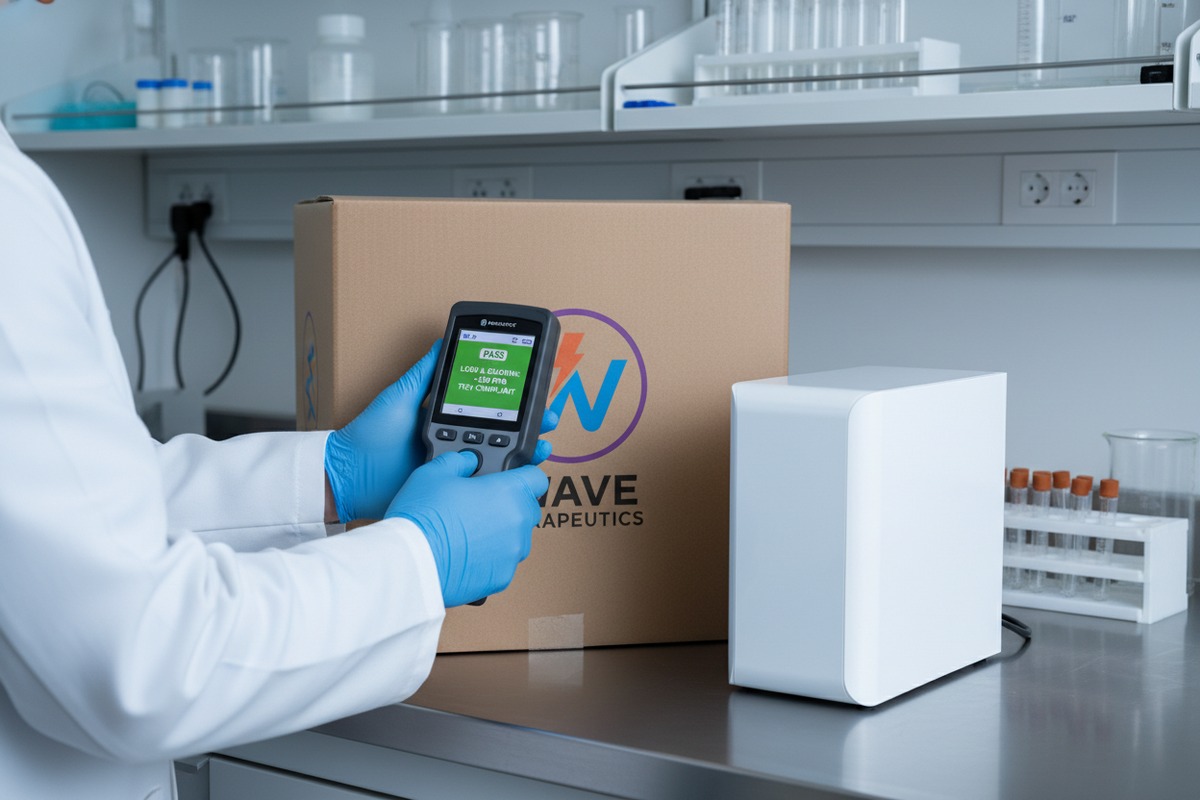
Verify TPCH compliance from Chinese manufacturers by requesting Certificate of Compliance documents for each packaging material, third-party lab test reports showing heavy metal levels below 100 ppm combined, material Safety Data Sheets listing all chemical additives, and annual audit records of the packaging supplier's quality management system.
Essential Documents to Request
Before placing your packaging order, create a compliance document checklist. Our procurement team uses this standardized list:
| Document Type | What It Should Show | Who Issues It |
|---|---|---|
| Certificate of Compliance | Statement of TPCH compliance | Packaging manufacturer |
| Heavy Metal Test Report | Pb, Hg, Cd, Cr(VI) levels | Accredited third-party lab |
| Material Safety Data Sheet | Chemical composition | Raw material supplier |
| Ink/Coating Specifications | Pigment and additive details | Ink/coating supplier |
| Chain of Custody Record | Material source tracking | Packaging manufacturer |
Request these documents before production starts. Verify that test reports come from ISO 17025 accredited laboratories 8. Check that reports are dated within the past 12 months.
Conducting Supplier Audits
Document requests alone don't guarantee compliance. You need verification through audits. Here's our approach:
First, request a virtual facility tour. Watch how packaging materials are stored and handled. Look for segregation between compliant and non-compliant materials.
Second, ask about incoming material inspection procedures. A reliable supplier tests raw materials before production. They should show you their testing equipment and calibration records.
Third, verify traceability systems. Each roll of cardboard, bottle of ink, and container of adhesive should have lot numbers. Your supplier should trace any packaging component back to its source.
Red Flags in Supplier Documentation
Our quality team has identified common warning signs:
- Test reports without laboratory accreditation numbers
- Certificates dated more than 18 months ago
- Generic compliance statements without specific standards referenced
- Refusal to provide raw material supplier information
- Inconsistent lot numbers across documentation
- Test reports showing results exactly at the limit (suggests manipulation)
When you spot these issues, ask for clarification. Legitimate suppliers welcome questions about compliance. Those who resist often have something to hide.
Building Ongoing Verification Systems
One-time verification isn't enough. Materials change. Suppliers switch raw material sources. You need continuous monitoring.
Establish annual re-certification requirements in your supplier contracts. Require notification before any material or supplier changes. Include the right to conduct random testing at your expense.
Our standard practice includes quarterly document reviews and annual on-site audits for critical packaging suppliers. This catches problems before they affect your shipments.
Which third-party testing reports should I request to prove my packaging is environmentally safe?
When our export documentation team prepares shipments, they include specific test reports that US customs and buyers expect. The right reports demonstrate due diligence. The wrong ones waste money and provide false confidence.
Request four essential third-party testing reports: heavy metal analysis (ICP-MS or ICP-OES method) for TPCH compliance, PFAS screening tests using EPA Method 533 or equivalent, material composition analysis confirming no restricted substances, and California Prop 65 compliance testing for any chemicals on the Prop 65 list present above safe harbor levels.

Heavy Metal Testing Requirements
Heavy metal testing forms the foundation of your compliance package. The test must cover lead, mercury, cadmium, and hexavalent chromium. Here's what to look for in the report:
| Report Element | What to Check | Why It Matters |
|---|---|---|
| Testing Method | ICP-MS or ICP-OES | Industry-standard accuracy |
| Detection Limits | Below 10 ppm for each metal | Can detect levels well below 100 ppm limit |
| Sample Description | Matches your actual materials | Proves the test covers your packaging |
| Results Format | Individual metals plus total | Shows combined total against 100 ppm limit |
| Lab Accreditation | ISO 17025 number listed | Legally defensible results |
Ask your testing lab to test composite samples representing all packaging components. This includes outer boxes, inner cushioning, instruction manuals, and any plastic wrapping. A single failed component can make your entire package non-compliant.
PFAS Testing Protocols
PFAS testing requires specialized methods. Not all environmental labs have the equipment. Our recommended approach includes:
Total organic fluorine screening first. This catches any fluorinated compounds. If positive, follow up with targeted PFAS compound testing.
For targeted testing, EPA Method 533 9 or equivalent identifies specific PFAS compounds. Request testing for at least the 18 PFAS compounds listed under current state restrictions. Keep in mind that state lists continue expanding.
Test any components with water-resistant properties. This includes coated cardboard, moisture barriers, and protective films. These materials most commonly contain PFAS.
Prop 65 Chemical Screening
California Prop 65 lists over 900 chemicals known to cause cancer or reproductive harm. Your packaging may contain trace amounts of listed chemicals. Testing determines if levels exceed safe harbor thresholds.
Focus testing on:
- Inks and printed materials (may contain lead, toluene, styrene)
- Plastic components (may contain phthalates, BPA)
- Adhesives (may contain formaldehyde, various solvents)
- Foam cushioning (may contain flame retardants)
The test report should compare detected levels against Prop 65 safe harbor levels. Levels below safe harbor generally don't require warnings. Levels above require Prop 65 warning labels.
Creating a Testing Schedule
Testing everything for every shipment isn't practical. Establish a risk-based testing schedule:
Initial qualification testing covers all materials when you start with a new supplier. Annual re-testing verifies ongoing compliance. Random spot-testing catches mid-year changes.
Test immediately after any material changes. Even small formula adjustments can affect compliance. Your supplier should notify you before changes occur.
Interpreting Test Results
Test reports contain technical data. Understanding what matters helps you make decisions.
For heavy metals, the combined total is what counts. Individual metals may be low, but together they could exceed 100 ppm. Always calculate the sum.
For PFAS, look at both detection and quantification limits. "Not detected" at a 50 ppm detection limit doesn't guarantee absence. It means the lab's method couldn't find it at that level.
For Prop 65, compare against Maximum Allowable Dose Levels (MADLs) for reproductive toxins and No Significant Risk Levels (NSRLs) for carcinogens. Reports should clearly state which safe harbor level applies.
How can I ensure my private-label packaging meets California Prop 65 standards before it ships to the US?
Our compliance team has guided hundreds of private-label orders through Prop 65 requirements. This regulation trips up many buyers because it applies broadly and penalties are severe. Private-label means your brand takes responsibility.
Ensure Prop 65 compliance before shipping by requiring supplier declarations listing all Prop 65-listed chemicals in packaging materials, obtaining test reports comparing chemical levels to safe harbor thresholds, adding compliant warning labels if any chemical exceeds safe harbor levels, and maintaining documentation showing you exercised reasonable diligence.

Understanding Prop 65 Exposure Requirements
Prop 65 requires warnings when products cause "exposures" to listed chemicals. For packaging, exposure happens when someone handles or contacts the package. This includes your warehouse staff, shipping carriers, and end users.
The key question: Does your packaging expose people to listed chemicals above safe harbor levels?
Safe harbor levels provide protection. If chemical levels stay below these thresholds, no warning is required. Exceeding them triggers warning obligations.
Common Prop 65 Chemicals in Packaging
Certain chemicals appear frequently in medical device packaging:
| Chemical | Common Source | Safe Harbor Level | Required Action |
|---|---|---|---|
| Lead | Inks, pigments | 0.5 μg/day | Test printed areas |
| Di(2-ethylhexyl)phthalate (DEHP) | Plastic films, tubing | 8.7 μg/day | Test flexible plastics |
| Styrene | Foam cushioning | 27 μg/day | Test EPS/XPS foams |
| Formaldehyde | Adhesives | 40 μg/day | Test glued joints |
| Toluene | Inks, coatings | 7,000 μg/day | Test printed finishes |
When we develop packaging for US-bound shipments, we screen materials against this list first. Avoiding problematic materials costs less than testing and relabeling later.
Implementing Compliant Warning Labels
If testing shows chemicals above safe harbor levels, you need warnings. California specifies exact warning requirements:
The warning must be "clear and reasonable." For packaging, this typically means a label visible before handling. The warning must identify at least one chemical causing the warning.
Current warning format requires specific language. Use the word "WARNING" in capitals. Include the California Office of Environmental Health Hazard Assessment website. Name at least one chemical.
Example compliant warning:
"WARNING: This product can expose you to chemicals including [Chemical Name], which is known to the State of California to cause [cancer and/or birth defects or other reproductive harm]. For more information go to www.P65Warnings.ca.gov"
Documentation for Due Diligence Defense
Even with compliant warnings, you should document your compliance efforts. This protects you in enforcement actions or lawsuits.
Maintain files showing:
- Supplier certifications and declarations
- Test reports with dates and methods
- Material specifications and safety data sheets
- Records of any warnings applied
- Correspondence about compliance questions
Our document retention policy keeps these records for seven years minimum. Prop 65 lawsuits can surface years after a product ships.
Pre-Shipment Verification Checklist
Before each private-label shipment leaves our facility, we complete this verification:
- Confirm supplier compliance declarations are current
- Verify test reports cover actual production materials
- Check that any required warnings appear correctly on packaging
- Document the batch numbers covered by compliance verification
- Photograph warning labels as shipped
- File all documentation with the order record
This systematic approach catches problems before they become expensive mistakes.
Conclusion
Verifying US environmental compliance for your shockwave therapy machine packaging requires systematic attention to multiple regulations. Request proper documentation, test critical materials, and maintain records that prove due diligence. Your compliance effort protects your brand and your business relationships.
Footnotes
1. Official EPA page providing a summary and details of the Toxic Substances Control Act. ↩︎
2. Direct link to the official eCFR (Electronic Code of Federal Regulations) for 21 CFR Part 820, an authoritative government source. ↩︎
3. Official California Office of Environmental Health Hazard Assessment site for Proposition 65. ↩︎
4. Official EPA overview page providing comprehensive information on Per- and Polyfluoroalkyl Substances (PFAS). ↩︎
5. Provides a comprehensive list of state-specific PFAS bans in consumer products, including packaging. ↩︎
6. Found an authoritative .gov source from CalRecycle providing a general overview of Extended Producer Responsibility (EPR) programs. ↩︎
7. Official site for Toxics in Packaging Clearinghouse, detailing heavy metal restrictions. ↩︎
8. Official ISO page for the ISO/IEC 17025 standard for testing and calibration laboratories. ↩︎
9. Official EPA page detailing Method 533 for determining PFAS in drinking water. ↩︎

 English
  Español de México
  Deutsch
  Français
  العربية
  Русский