
Having shipped dozens of pressotherapy systems to the United States, our engineering and compliance teams know that FDA verification is the single most overlooked step in supplier selection FDA Establishment Registration & Device Listing database 1. The consequences of skipping it are severe—detained shipments, refused entries, and costly recalls. When your product sits at a U.S. port because the FDA database shows no matching registration, you lose time, money, and customer trust.
To verify a supplier’s FDA registration for a pressotherapy machine, search the FDA Establishment Registration & Device Listing database using the supplier’s company name or FEI number. Cross-check their device listing, confirm any required 510(k) clearance in the 510(k) database, and ensure annual registration is current.
This guide walks you through each verification step FDA 510(k) Premarket Notification database 2. You will learn how to search FDA databases, confirm 510(k) coverage, spot trading companies posing as manufacturers, and identify documentation red flags.
How do I use the FDA database to verify my supplier's registration status?
Our export documentation team runs these checks for every new U.S. customer inquiry. It often surprises buyers how simple the public database search is—yet many skip it entirely.
Use the FDA's Establishment Registration & Device Listing database at accessdata.fda.gov. Enter your supplier's company name or FEI number. The results will show the establishment's registration status, physical address, activities performed, and listed devices. This database updates weekly and is publicly accessible.

Step-by-Step Database Search Process
The primary tool for verification is the FDA's public database. This searchable database contains establishments engaged in the manufacture, preparation, propagation, compounding, assembly, or processing of medical devices 3 intended for human use and commercial distribution, including listings of medical devices by both domestic and foreign manufacturers.
Here is how to conduct your search:
- Navigate to accessdata.fda.gov/scripts/cdrh/cfdocs/cfrl/rl.cfm
- Select "Establishment Registration" or "Device Listing"
- Enter the supplier's company name exactly as provided
- Review the results for matching addresses and registration status
Understanding What You Will Find
Registration refers to the business, which the FDA calls the establishment, and informs FDA where the establishment is located. Listing is about the activities that the establishment performs on a specific medical device.
| Search Field | What It Shows | Why It Matters |
|---|---|---|
| Company Name | Legal entity registered | Confirms exact business identity |
| FEI Number 4 | Unique FDA Establishment Identifier | Permanent tracking number |
| Address | Physical facility location | Verifies actual manufacturing site |
| Registration Status | Active or Inactive | Shows current compliance |
| Device Activities | Manufacturer, Importer, etc. | Confirms business type |
Key Data Points to Verify
Every manufacturer, both foreign and domestic, that makes or distributes medical devices in the US must register its facility within 30 days of beginning device distribution and before importing products to the US.
Pay attention to these details:
- Registration dates: Establishment registration and listing must be renewed yearly between October 1 and December 31.
- FEI number: After the FDA accepts your first establishment-registration submission, it generates a unique seven-digit Facility Establishment Identifier.
- Activities listed: Match these to what your supplier claims to do.
Limitations of Public Database Searches
Medical device listing numbers are not available publicly. Medical device listing numbers can only be released to the owner/operator contact person or official correspondent of a registered establishment.
This means you may need to request documentation directly from your supplier to verify specific device listings.
How can I confirm my specific pressotherapy model is covered under their 510(k) clearance?
When we prepare shipments for the U.S. market, our quality control team always cross-references the specific device model against 510(k) documentation. A registration without corresponding device clearance is incomplete.
Search the FDA 510(k) Premarket Notification database using the supplier's company name or K-number. Verify the cleared device name matches your pressotherapy model. Check that the intended use, indications, and technological characteristics align with your specific product configuration.

What is 510(k) Clearance and Why Does It Matter?
A 510(k) is a premarket submission made to FDA to demonstrate that the device to be marketed is as safe and effective, that is, substantially equivalent, to a legally marketed device that is not subject to premarket approval.
Medical devices that are deemed to have a moderate risk to patients generally cannot go on the market until they are cleared through the FDA 510(k) process.
Most pressotherapy machines fall under Class II medical devices 5. This classification typically requires 510(k) clearance 6 before U.S. market entry.
How to Search the 510(k) Database
To determine if a medical device has received FDA clearance, you can search for the device in the FDA's public database called the 510(k) Premarket Notification Database. This database allows you to look up specific devices and view their clearance status and relevant information.
Follow these steps:
- Go to accessdata.fda.gov/scripts/cdrh/cfdocs/cfpmn/pmn.cfm
- Search by company name or 510(k) number
- Review the clearance letter and summary
Matching Your Specific Model
The device is made outside the U.S. and you are an importer of the foreign made medical device. A 510(k) is not required if a 510(k) has been submitted by the foreign manufacturer and received marketing clearance. Once the foreign manufacturer has received 510(k) clearance for the device, the foreign manufacturer may export his device to any U.S. importer.
| Element to Verify | Where to Find It | What Should Match |
|---|---|---|
| Device Name | 510(k) Summary | Product marketing name |
| Intended Use | 510(k) Summary | Clinical application claims |
| Product Code | 510(k) Summary | FDA product category |
| Predicate Device | 510(k) Summary | Reference device used |
| Manufacturer Name | Clearance Letter | Supplier company name |
Understanding Device Classifications
Your device is exempted from 510(k) by regulation. That is, certain Class I or II devices can be marketed for the first time without having to submit a 510(k). A list of the Class I and II exempted devices can be found on Medical Device Exemptions 510(k) and GMP Requirements.
Some pressotherapy devices may be classified as Class I exempt. In this case, registration and listing are still required, but a 510(k) submission is not. Always verify the specific classification for your device type.
There is no expiration assuming that the device has not changed. However, changes must be assessed, on a case-by-case basis and in accordance with specific FDA guidance, to determine if the change(s) warrant a new 510(k) submission to the FDA.
How do I distinguish between a manufacturer's FDA listing and a trading company's registration?
In our experience working with U.S. distributors, this confusion causes more problems than any other verification issue. Trading companies often present themselves as manufacturers, but their FDA registration tells a different story.
Check the "Establishment Type" or "Activities" field in the FDA database. Manufacturers show activities like "Manufacture Medical Device" while trading companies appear as "Foreign Exporter" or "Specification Developer." Request device listing documentation—trading companies cannot list devices they did not manufacture.
Understanding Establishment Types
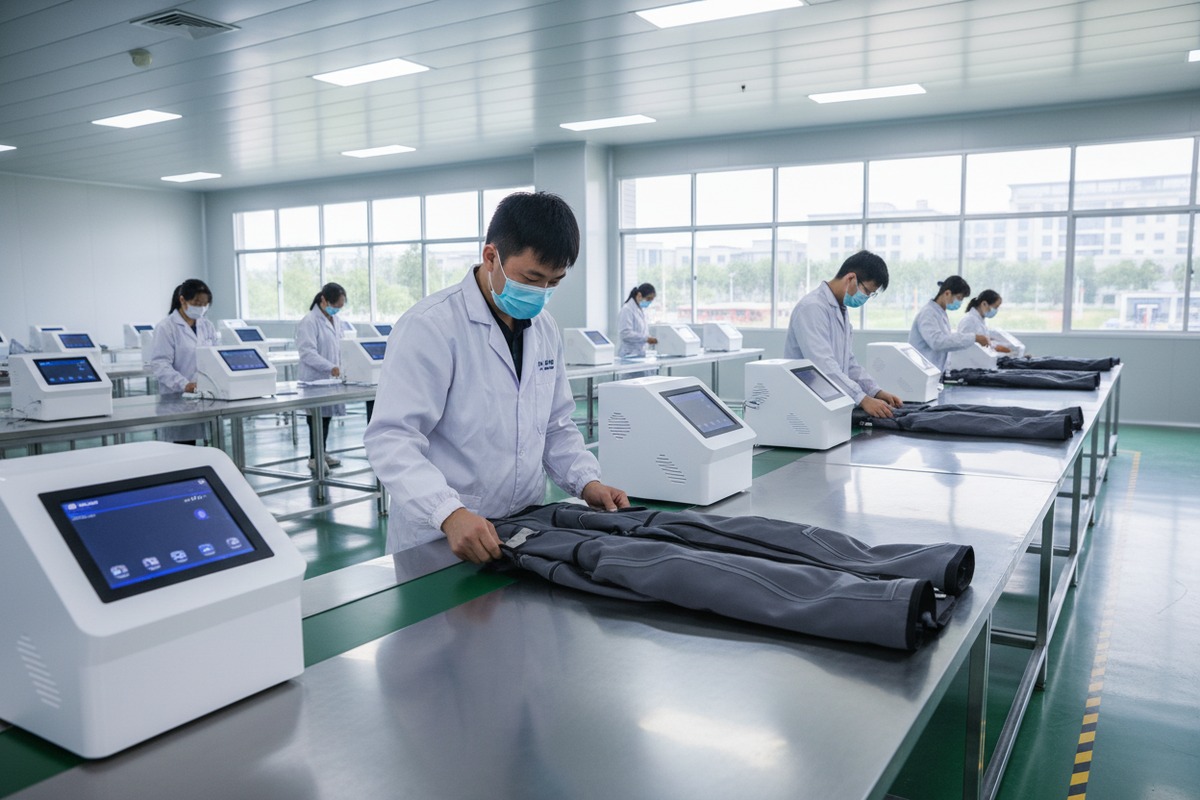
The FDA categorizes establishments by the activities they perform. Contract Manufacturer manufactures a finished device to another establishment's specifications. Foreign Exporter exports or offers for export to the United States a device manufactured in a foreign country. A foreign exporter must have an establishment address outside the U.S.
Specification Developer develops specifications for a device that is distributed under the establishment's own name but performs no manufacturing. This includes establishments that, in addition to developing specifications, also arrange for the manufacturing of devices labeled with another establishment's name by a contract manufacturer.
Key Differences Between Manufacturers and Trading Companies
| Characteristic | True Manufacturer | Trading Company |
|---|---|---|
| FDA Activity Type | Manufacture Medical Device | Foreign Exporter or Specification Developer |
| Device Listing | Can list their own devices | Cannot list—must reference manufacturer |
| 510(k) Holder | Usually holds their own clearance | Relies on manufacturer's clearance |
| Quality System | Required to maintain 21 CFR 820 | May not have QMS obligations |
| Facility Address | Manufacturing site | Office or warehouse only |
Why This Distinction Matters
Third-party trading companies that purchase medical devices from foreign suppliers—commonly referred to as foreign exporters—are also required to register with the FDA and pay the annual fee. However, this registration does not exempt the original manufacturer from registering and listing its devices with the FDA.
If your supplier is a trading company, you need to verify:
- The actual manufacturer's FDA registration
- The manufacturer's device listing
- The manufacturer's 510(k) clearance (if required)
Red Flags Indicating a Trading Company
Watch for these warning signs:
- Registration shows only "Foreign Exporter" activity
- No device listing appears under their registration
- Address does not match claimed manufacturing facility
- Cannot provide Device Master Record access
- Refuses to disclose actual manufacturing source
Establishment Registration refers to the facility itself. It identifies who and where regulated device operations are occurring. Device Listing identifies the what: the specific products being manufactured, processed, or distributed.
What red flags should I look for when reviewing my supplier's FDA documentation?
Our regulatory affairs team has seen every documentation trick in the industry. When we evaluate a new component supplier, we look beyond what the documents say to verify what they actually mean.
Red flags include expired or missing annual registration renewals, "FDA compliant" claims without registration numbers, registration certificates not issued by the FDA directly, device listings that do not match the product offered, and no designated U.S. Agent for foreign manufacturers.

Common Documentation Red Flags
Listing a device is not an indication of FDA approval or clearance. Companies may not promote a device as "FDA approved" simply because it has been listed.
| Red Flag | What It Means | How to Verify |
|---|---|---|
| "FDA Approved" claims | Likely misleading—registration is not approval | Search 510(k) or PMA database |
| Expired registration | Cannot legally import | Check registration date against current fiscal year |
| Third-party certificates | FDA does not issue registration certificates | Verify directly in public database |
| Mismatched addresses | May indicate trading company | Compare registration address to factory address |
| No U.S. Agent 7 listed | Foreign manufacturer out of compliance | FDA requires a US Agent, which must have a permanent US-based operation |
Warning Letters and Enforcement History
Before finalizing any supplier relationship, check for FDA enforcement actions. By reviewing relevant FDA warning letters 8, manufacturers can better understand areas of frequent concern related to quality management systems and regulatory affairs. This can allow companies to focus on areas of highest risk.
Receiving a warning letter from the FDA is a serious event for any medical device company. The FDA issues warning letters for serious violations, particularly after a company provides an inadequate Form 483 response. These public letters can trigger severe penalties like product seizures and fines.
Common violations cited in warning letters include:
- Failing to establish and maintain adequate CAPA procedures. Companies often receive citations for not properly analyzing quality data from sources like complaints, service records, and internal audits.
- Failure to investigate complaints involving potential device malfunctions or adverse events. The regulations require that any complaint involving a death, serious injury, or an event that could lead to one must be promptly reviewed.
Verifying U.S. Agent Information
All medical device firms outside the U.S. must appoint a U.S. agent as the FDA's primary point of contact. The owner or operator of a medical device establishment must also appoint an official correspondent for the company.
Request and verify:
- U.S. Agent company name and contact information
- Confirmation that the agent has accepted the designation
- Agent's physical U.S. address (P.O. boxes are not acceptable)
Annual Renewal Compliance
Updates are mandatory within 30 days of any change, and annual renewal must be completed between 1 October and 31 December to avoid automatic invalidation, which could disrupt the importation of your device.
All medical device establishments that develop, manufacture, pack, assemble, label, export, or import medical devices into the United States are required to register with the FDA and pay an annual user fee 9 of $11,423 (FY 2026). Additionally, registered establishments must list each of their medical devices individually before distributing them commercially. Without a valid establishment registration and device listing number, medical devices cannot be legally marketed in the United States.
Documentation Checklist
Use this checklist when reviewing supplier documentation:
| Document | Status Check | Verification Method |
|---|---|---|
| FDA Registration | Current fiscal year | Public database search |
| Device Listing | Matches offered product | Request listing screenshot from FURLS |
| 510(k) Clearance | Valid for device type | 510(k) database search |
| U.S. Agent Designation | Active and responsive | Direct contact verification |
| Warning Letter History | None or resolved | FDA warning letter database |
| Quality System Certification | ISO 13485 or MDSAP | Request certificate copy |
Conclusion
Verifying your pressotherapy supplier's FDA registration requires checking multiple databases and documents. Search the Establishment Registration database for active status. Confirm 510(k) clearance if required. Distinguish actual manufacturers from trading companies. Watch for common red flags in documentation. Taking these steps protects your business from costly import delays and compliance failures.
Footnotes
1. Official FDA database for establishment registration and device listing. ↩︎
2. Official FDA database for searching 510(k) premarket notifications. ↩︎
3. Official FDA portal for medical devices. ↩︎
4. Explains what an FDA Establishment Identifier (FEI) number is and its purpose. ↩︎
5. Provides a comprehensive overview of FDA Class II medical devices. ↩︎
6. Official FDA page for 510(k) Premarket Notification. ↩︎
7. Official FDA page detailing requirements and responsibilities of a U.S. Agent. ↩︎
8. Official FDA page for Warning Letters. ↩︎
9. Explains FDA annual user fees for medical device registration and submissions. ↩︎

 English
  Español de México
  Deutsch
  Français
  العربية
  Русский