
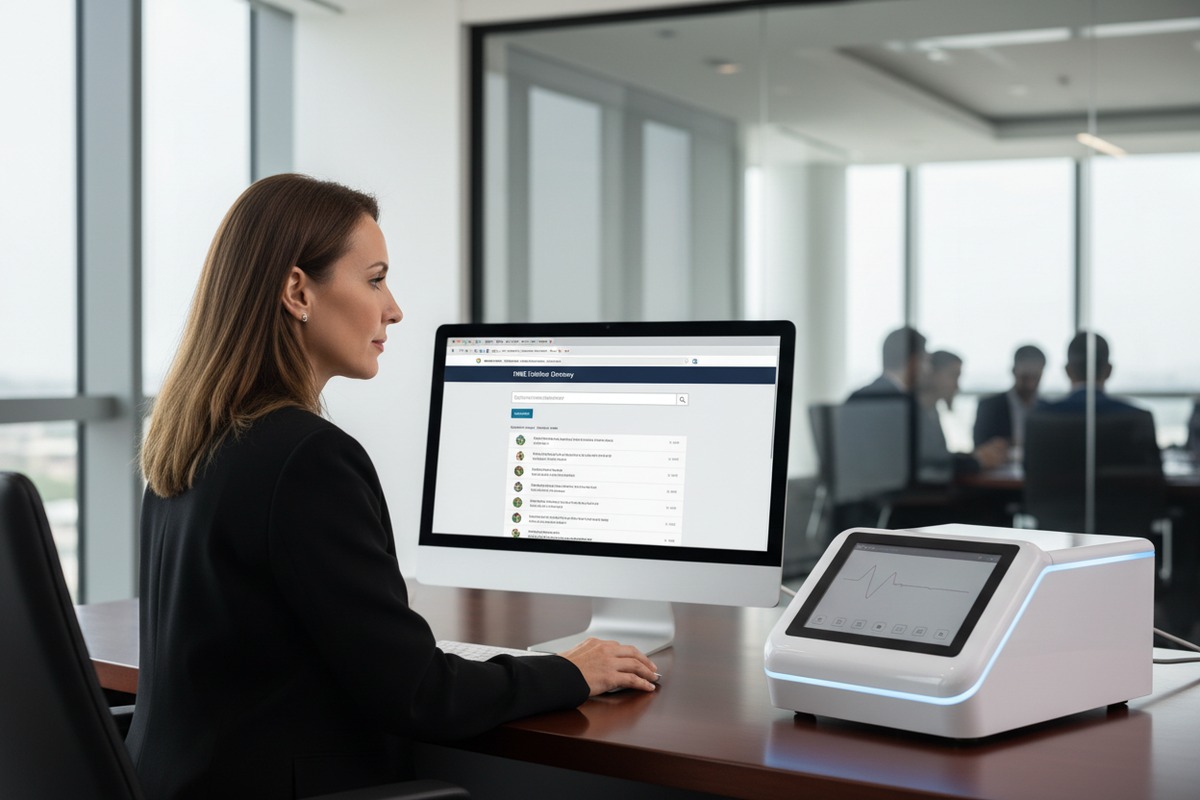
Every year, our sales team receives calls from distributors who got burned by suppliers making false trade show claims. They paid deposits to companies claiming FIME 1 or Medtrade booths—only to discover those suppliers never attended.
To verify if a Chinese shockwave therapy machine supplier exhibited at FIME or Medtrade, access the official exhibitor directories on each show’s website, contact event organizers directly for historical records, request booth photos with timestamps, and cross-reference claims with the supplier’s certifications and export documentation.
This guide walks you through every verification method our team uses when vetting potential partners. Let’s start with the most reliable approach.
How can I verify my Chinese shockwave therapy machine supplier on the official FIME or Medtrade exhibitor lists?
When our company prepares for international trade shows, the registration process takes months. This gives you multiple touchpoints to verify any supplier's participation claims.
You can verify suppliers through official FIME and Medtrade exhibitor directories online, contact Informa Markets for FIME records or Emerald X for Medtrade records, use advanced search filters for "shockwave therapy" product categories, and check third-party aggregators like 10Times.com for archived exhibitor data.

Step-by-Step Directory Verification
The FIME show, held annually in Miami, maintains searchable exhibitor databases. Medtrade 2, hosted in Dallas, offers similar tools. Both allow filtering by company name, product category, and exhibition year.
Start with direct website searches. Type the exact company name into the exhibitor search function. Chinese companies sometimes register under English trade names different from their Chinese legal names. If your initial search fails, try variations.
Next, use product category filters. Select "physical therapy equipment" or "rehabilitation devices" to narrow results. Shockwave machines often fall under these broader categories rather than a specific listing.
Direct Contact Methods
| Verification Method | Contact Information | Response Time | Success Rate |
|---|---|---|---|
| FIME Official Inquiry | Informa Markets 3 customer service | 3-5 business days | High |
| Medtrade Official Inquiry | Emerald X 4 exhibitor services | 3-5 business days | High |
| Third-Party Aggregators | 10Times.com, EventsEye | Immediate | Medium |
| Web Archives | archive.org | Immediate | Variable |
When our quality team verifies competitor presence at shows, we always send formal email requests to organizers. Keep your inquiry specific—include the company name, suspected exhibition year, and product category.
Using Third-Party Platforms
Trade show aggregation websites compile exhibitor data from multiple sources. These platforms often retain historical information after official show websites update their directories.
Cross-reference any findings with Chinese B2B platforms. Alibaba and Made-in-China.com encourage suppliers to list their exhibition history. Check the "Company Profile" and "News" sections. Legitimate exhibitors typically post announcements before shows and recap content afterward.
Social media verification adds another layer. Search LinkedIn for posts tagged with #FIME or #Medtrade during relevant dates. Suppliers who genuinely attend post booth photos, team pictures, and show floor content in real time.
What booth photos or documentation should I ask for to prove my supplier really exhibited at these US trade shows?
Our marketing team documents every trade show thoroughly. We know exactly what authentic exhibition evidence looks like—and what fabricated proof looks like too.
Request timestamped booth photos showing the company name on official signage, event badges with printed dates and attendee names, booth location receipts from show organizers, visitor registration lists or lead scanning reports, and any show catalog pages featuring the company listing.

Essential Documentation Checklist
Authentic exhibitors accumulate specific paperwork throughout the show process. Request these items directly from your supplier.
| Document Type | What It Proves | Red Flags to Watch |
|---|---|---|
| Booth Assignment Letter | Official registration confirmed | Generic templates without show logos |
| Exhibitor Badges | Named personnel attended | Stock photos or digitally altered images |
| Floor Plan with Booth Marked | Specific location assigned | Inconsistent booth numbers |
| Show Catalog Page | Listed in official program | Missing from digital archives |
| Lead Retrieval Reports | Active visitor engagement | Reluctance to share any data |
Analyzing Photo Authenticity
When reviewing booth photos, look for specific details. Official show signage should appear in backgrounds. Carpet patterns match convention center flooring. Badge lanyards display correct show branding.
Check metadata on digital images. Original photos contain timestamp and location data. Edited or stock images often have this information stripped or altered.
Request multiple angles. Authentic exhibitors have dozens of photos from different perspectives. A supplier with only two or three carefully cropped images raises concerns.
Verification Through Show Materials
Trade show catalogs provide permanent records. These printed directories list every exhibitor with booth numbers and product descriptions. Ask your supplier for their catalog page scan.
Our company keeps every show catalog from events we've attended. Many exhibitors do the same. A supplier claiming participation but unable to produce catalog evidence deserves skepticism.
Digital archives sometimes preserve old catalog PDFs. Check the show organizer's resource section or use web archive tools to find historical versions.
Red Flags in Documentation
Watch for these warning signs when reviewing evidence:
Photos showing only products without visible booth structures could be from factory showrooms. Images with blurred or obscured company names might hide the actual exhibitor's identity. Documents with editable text fields instead of official letterhead formats suggest fabrication.
Legitimate manufacturers welcome documentation requests. Our response to such inquiries is always immediate and comprehensive. Suppliers who delay, deflect, or provide excuses likely have something to hide.
Why is it important for my shockwave therapy machine manufacturer to have a physical presence at FIME or Medtrade?
From our experience shipping hundreds of units to American clinics, the manufacturers who invest in US trade show presence deliver better products and service.
Physical presence at FIME or Medtrade indicates a manufacturer's commitment to the US market, willingness to invest in customer relationships, familiarity with FDA requirements, established logistics capabilities for American distribution, and confidence in their product quality for direct customer evaluation.

Investment Signals Commitment
Exhibiting at major US medical trade shows requires substantial investment. Booth fees, shipping, travel, and marketing materials for a single show can exceed $50,000. Manufacturers willing to make this commitment signal long-term market intentions.
This investment creates accountability. Suppliers who meet customers face-to-face must stand behind their claims. Anonymous online sellers face no such pressure.
Market Understanding Benefits
Trade show participation exposes manufacturers to direct customer feedback. We learn what American practitioners actually need—not what we assume they need.
At every show our team attends, we discover improvement opportunities. A therapist mentions a handle grip issue. A clinic owner explains reimbursement code requirements. This feedback directly improves our next product generation.
Suppliers without US show experience miss these insights. Their products may work technically but fail to meet practical American clinic requirements.
Regulatory Familiarity
| Regulatory Aspect | Show-Active Manufacturers | Non-Exhibiting Suppliers |
|---|---|---|
| FDA 510(k) Knowledge | High | Variable |
| CE Marking Understanding | High | Variable |
| UL Electrical Standards | Often Compliant | Often Overlooked |
| US Warranty Requirements | Typically Met | Frequently Inadequate |
Manufacturers who regularly exhibit at US shows understand FDA requirements 5 intimately. They've answered inspector questions. They've seen competitor compliance approaches. This knowledge translates to better-prepared products for your market.
Distribution Network Development
Trade show presence helps manufacturers build American service infrastructure. They meet potential service partners, training providers, and parts distributors.
When our company established US presence at FIME three years ago, we connected with technical service partners who now handle local repairs. Customers benefit from faster response times and domestic support options.
Suppliers who never visit the US market struggle to provide equivalent service levels. Warranty repairs may require international shipping. Technical support operates on inconvenient time zones.
Quality Confidence Demonstration
Bringing equipment to trade shows means subjecting it to direct examination. Customers test functionality. Competitors evaluate build quality. Industry experts assess performance claims.
Manufacturers confident in their products welcome this scrutiny. Those hiding quality issues avoid it. Trade show participation serves as a public quality declaration.
How do I cross-check a supplier's trade show claims against their actual export records and quality standards?
Our quality control team developed this verification framework after encountering numerous misrepresentations in the market. Combining trade show claims with documented capabilities reveals the complete picture.
Cross-check supplier claims by verifying ISO 13485 certification through accredited registrars, confirming FDA registration on the official database, reviewing export records through customs data providers, requesting customer references with verifiable contact information, and comparing claimed manufacturing capacity against actual facility documentation.

Certification Verification Process
Third-party certifications provide independent validation that trade show attendance cannot. ISO 13485 certification 7 proves quality management systems meet medical device standards. FDA registration 8 confirms US market authorization.
Verify certifications directly through issuing bodies. Contact the certification registrar named on certificates. Check FDA's online database for registration status. This takes minutes but prevents major problems.
| Certification | Verification Source | What It Confirms |
|---|---|---|
| ISO 13485 | Accreditation body database | Quality management system |
| FDA 510(k) | FDA database (accessdata.fda.gov) | US market clearance |
| CE Marking | EU EUDAMED database | European compliance |
| GMP Compliance | Manufacturing audit reports | Production standards |
Export Record Investigation
Legitimate exporters leave documentation trails. Trade data providers compile shipping records from customs declarations. These records show actual export volumes, destination countries, and product categories.
Compare claimed export experience against available data. A supplier claiming ten years of US exports should show consistent shipment records. Discrepancies between claims and records demand explanation.
Request references from existing US customers. Verified references should describe actual product performance, service responsiveness, and quality consistency. Contact them independently—don't rely on supplier-provided phone numbers.
Manufacturing Capacity Assessment
Trade show participation means nothing if manufacturing capacity cannot support orders. Request factory documentation including production area photos, equipment lists, and quality control procedures.
Professional manufacturers maintain detailed documentation. Our facility records include equipment calibration certificates, production capacity analyses, and worker training logs. Suppliers unable to provide equivalent documentation may operate trading companies rather than actual factories.
Warning Signs Integration
Combine all verification methods to build a complete picture. A supplier with impressive trade show photos but unverifiable certifications raises concerns. Strong certifications but no export history suggests limited practical experience.
The most reliable suppliers pass every check. Their trade show claims align with exhibitor records. Their certifications verify through official channels. Their export history matches stated experience. Their references confirm quality consistency.
Trust verification over promises. Our team learned this through expensive mistakes with partners who talked well but delivered poorly. Documentation protects both parties and builds lasting partnerships.
Conclusion
Verifying Chinese shockwave therapy machine suppliers requires multiple approaches—official directories, documentation requests, certification checks, and export record analysis. Combine these methods to protect your business and build reliable supply partnerships.
Footnotes
1. Official website for FIME, now branded as WHX Miami, consistently referenced in search results and appears to be the current working URL for the event. ↩︎
2. Official website for Medtrade, a leading home medical equipment trade show. ↩︎
3. Corporate website of Informa Markets, the organizer of FIME. ↩︎
4. Corporate website of Emerald X, the organizer of Medtrade. ↩︎
5. Official FDA guidance on medical device regulatory requirements. ↩︎
6. Wikipedia article explaining extracorporeal shockwave therapy. ↩︎
7. Official ISO page for the quality management system standard for medical devices. ↩︎
8. Official FDA database for searching medical device establishment registrations and listings. ↩︎

 English
  Español de México
  Deutsch
  Français
  العربية
  Русский