We often see brand owners struggle with electrical compliance, risking expensive equipment damage due to simple plug mismatches Type N plugs for Brazil (NBR 14136) 1. When we configure machines for export, ignoring regional voltage nuances can lead to immediate motor failure or regulatory rejection at customs.
To verify compatibility, you must confirm the specific destination country’s standard, such as Type N plugs for Brazil (NBR 14136) or Type I for Argentina. You also need to validate voltage support for either 127V or 220V and ensure the frequency matches 60Hz to prevent motor burnout in air compression pumps.
Let’s examine the exact steps to ensure your imported equipment works safely upon arrival.
How do I determine which specific plug types I need for my Brazilian pressotherapy machine distribution?
Our engineering team frequently adjusts production specs to accommodate the confusing mix of sockets found across Brazilian states Type I for Argentina 2. Without this attention to detail during assembly, your machines might not even fit into the wall outlet at a client’s clinic.
You must identify whether your target market uses the standard 10A Type N plug with 4mm pins or the heavy-duty 20A version with 4.8mm pins. Brazil mandates this standard, though legacy Type C sockets exist in older buildings, they lack the grounding pin required for safe medical device operation.

Understanding the Type N Standard
Brazil is unique in the electrical world. Since 2011, the country has fully adopted the NBR 14136 standard, commonly known as Type N. If you are sourcing pressotherapy machines, which typically use 200W to 400W motors, you will almost certainly need the standard 10A version frequency matches 60Hz 3. This plug features two round pins and a central grounding pin.
However, a trap for many importers is the "heavy usage" socket INMETRO certification mark for Brazil 4. High-power devices (over 20A) use a similar-looking plug with thicker 4.8mm pins. These do not fit into standard sockets. We always ask clients to confirm the amperage rating of the facility where the machine will be used, although standard beauty machines usually fit the 10A profile ANVISA (Brazil's health regulatory agency) 5.
The Voltage Trap: 127V vs. 220V
Brazil does not have a single national voltage. In cities like São Paulo and Rio de Janeiro, you might find 127V. In Brasília or Recife, it is likely 220V. Even within a single building, different phases can offer different voltages.
Region-Specific Configuration
If you distribute nationwide, you have two choices. You can order machines with universal power supplies (110V-240V), or you must stock specific inventory for specific regions. Here is a breakdown of how Brazil compares to its neighbors to help you plan your distribution.
Table: Electrical Standards in Key South American Markets
| Country | Plug Type | Standard Voltage | Frequency | Risk Level |
|---|---|---|---|---|
| Brazil | Type N (Official) | 127V / 220V | 60Hz | High (Dual voltage mix) |
| Argentina | Type I (Flat pins) | 220V | 50Hz | Medium |
| Chile | Type L / C | 220V | 50Hz | Medium |
| Peru | Type A / C | 220V | 60Hz | Low (US/Euro mix) |
| Colombia | Type A / B | 110V | 60Hz | Low (US Standard) |
Can my supplier customize the power cords to meet South American electrical standards for my brand?
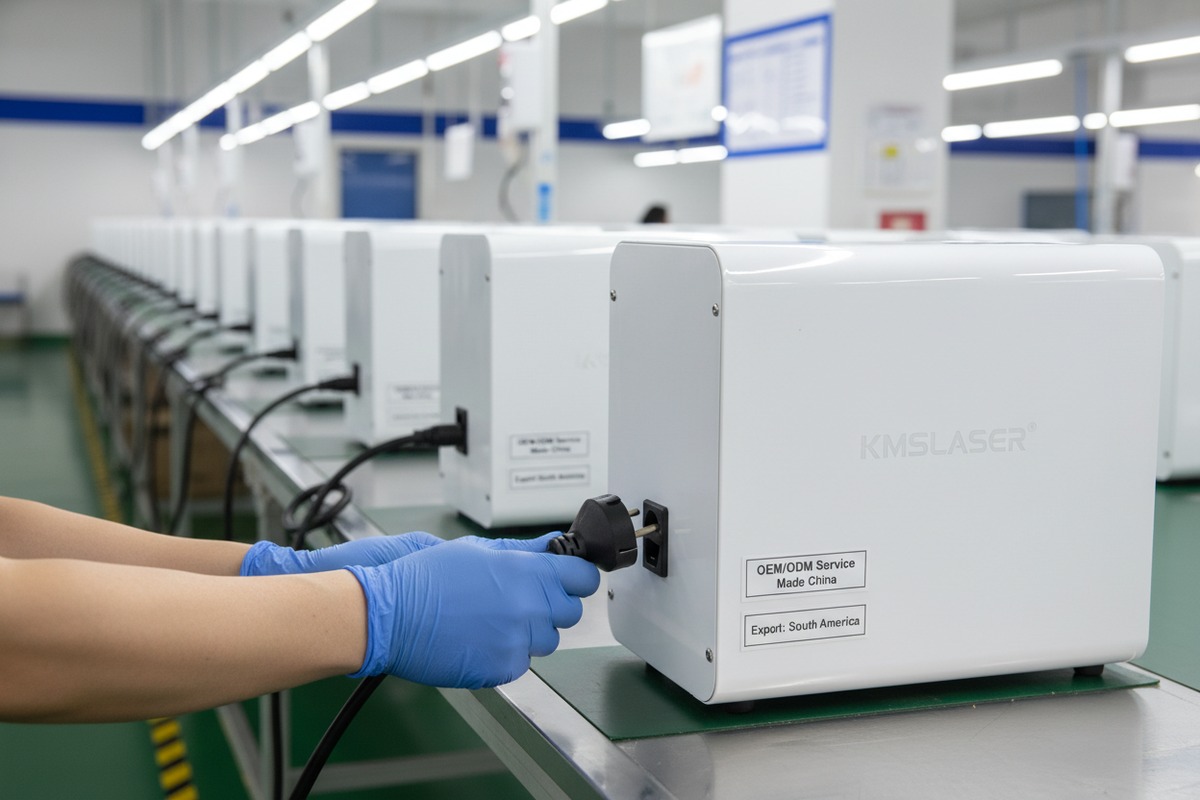
We routinely customize power cords on our assembly lines to save our clients the hassle of dealing with aftermarket adapters. It is much more professional to deliver a machine that works immediately out of the box rather than forcing a spa owner to hunt for converters.
Yes, capable OEM manufacturers can install region-specific molded plugs, such as Type I for Argentina or Type N for Brazil, directly during production. This ensures the entire power assembly, from the internal transformer to the wall plug, is fully certified and compatible with local infrastructure.
The Benefits of Factory Customization
Relying on travel adapters is a bad business strategy for medical beauty equipment. Adapters are often loose, ungrounded, and prone to overheating. When we manufacture machines for the South American market, we swap the standard IEC cable for one terminated with the correct local plug. This is a standard procedure in OEM services.
Modular Power Solutions
Most modern pressotherapy machines use a detachable power cord (IEC C13 or C5 standard) 6. This makes customization easy. We simply source the correct external cable for your target market. However, for machines with fixed cords, you must specify the plug type in your initial Purchase Order (PO).
Specific Country Requirements
South America is not a monolith. If you are selling to a distributor who covers multiple countries, you might need a mix of inventory.
- Argentina: Requires Type I. This looks like the plug used in Australia but with reversed polarity.
- Chile: Often uses Type L (three round pins in a row), similar to Italy.
- Colombia: Uses Type A/B, identical to the United States.
Customization Checklist
When discussing this with your supplier, use a checklist to ensure nothing is missed. Misunderstanding "South American Standard" is common because there is no single standard. Always specify the country.
Table: Plug Customization Options
| Component | Standard Option | Custom Option | Why Customize? |
|---|---|---|---|
| Cable End | IEC C13 (Computer style) | Fixed wiring | Fixed wiring prevents users from losing the cord. |
| Plug Head | US / EU Type | Type N (Brazil) / Type I (ARG) | Mandatory for compliance and safety. |
| Wire Gauge | 0.75mm² | 1.0mm² or 1.5mm² | Thicker wires prevent heating in 110V regions. |
| Length | 1.5 Meters | 3.0 Meters | Longer cords offer better flexibility in large clinics. |
What is the best way to confirm the voltage and plug compatibility before my order leaves China?
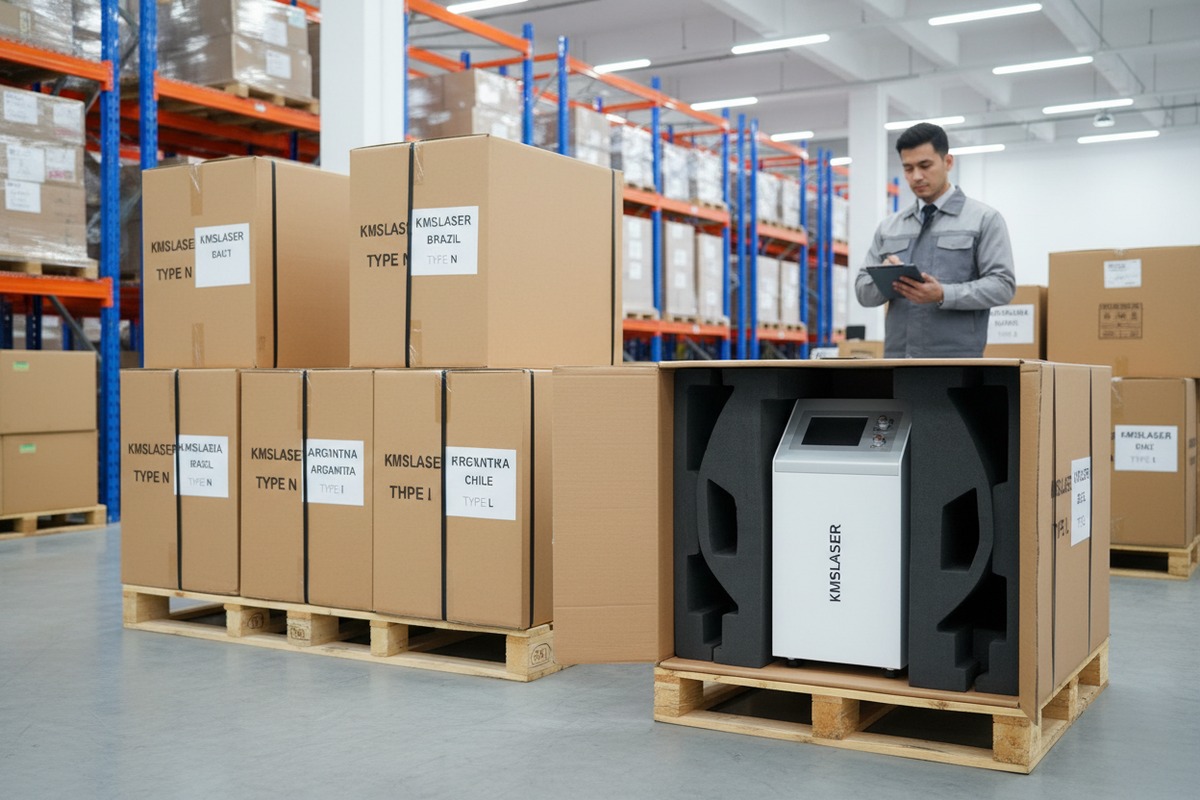
In our warehouse, we have caught potential disasters by double-checking voltage settings just minutes before crating an order. It is heartbreaking to see a high-quality machine returned simply because the sticker said 220V but the internal switch was set to 110V.
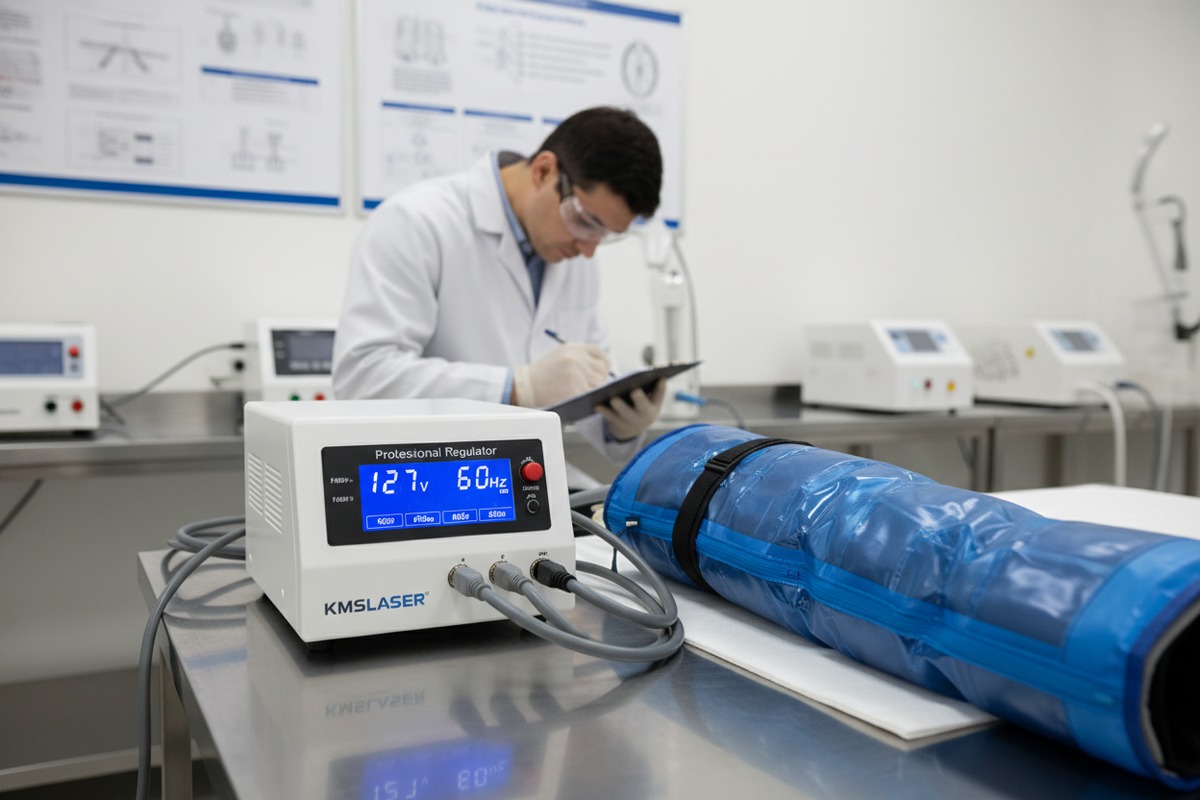
The most effective verification method is to require a live video inspection where the supplier measures the voltage output with a multimeter. You should also request close-up photos of the machine’s spec label and the physical plug pins to ensure they match the specific pin diameter required by your region.
Visual and Functional Inspection
Don't just trust the spec sheet. Verification must happen physically. When we prepare a shipment, we encourage clients to perform a "Virtual Inspection." You should ask your supplier to plug the machine into a variable power source that simulates your local grid.
The Frequency Factor (50Hz vs 60Hz)
Voltage is easy to fix with a transformer, but frequency is harder.
- Brazil uses 60Hz.
- Argentina and Chile use 50Hz.
Pressotherapy machines use air pumps. A pump designed for 50Hz will run 20% faster on a 60Hz grid. This can cause the motor to overheat 7, the pressure to be inaccurate, and the device to fail prematurely. You must verify that the internal components are rated for 50/60Hz (dual frequency) or specifically matched to your destination.
Testing Protocol
Request a testing report that includes:
- Input Voltage Test: Showing the machine running stable at 127V or 220V.
- Pin Measurement: Using calipers to show the pin thickness (e.g., 4.0mm for Type N 10A).
- Ground Continuity: Proving the earth pin is actually connected to the chassis, not just a dummy pin.
Table: Pre-Shipment Verification Checklist
| Checkpoint | Method | Acceptance Criteria |
|---|---|---|
| Plug Shape | Visual / Photo | Matches Type N (Brazil) or Type I (Arg) exactly. |
| Pin Diameter | Caliper Measurement | 4.0mm (Standard) or 4.8mm (Heavy Duty). |
| Voltage Label | Visual | Sticker matches the actual input setting. |
| Frequency | Datasheet / Motor Label | Pump motor label must state 60Hz for Brazil. |
| Power Cord | Certification Mark | Cord must have INMETRO or relevant safety mark. |
How do I ensure the power cables on my imported beauty machines comply with local safety regulations?
Our regulatory experts constantly monitor changing import rules, as customs authorities in South America are becoming increasingly strict about safety certifications. Getting a machine detained at the border because the power cord lacks a stamp is a logistical nightmare we help our clients avoid.
To ensure compliance, you must verify that the power cord and plug carry the INMETRO certification mark for Brazil, which is mandatory for customs clearance. Additionally, the cables should be IEC-standardized, fully grounded, and rated for the device’s specific power draw to satisfy local safety inspectors and ANVISA regulations.
The Importance of INMETRO
For Brazil, INMETRO is the gold standard. It is similar to UL in the US or CE in Europe, but it is mandatory for plugs and sockets. Even if your machine has a CE certificate, if the plug itself does not have the "N" mark or INMETRO logo molded into the rubber, it can be confiscated.
Medical Grade Safety
Pressotherapy is often classified as a medical or aesthetic treatment. This puts it under the scrutiny of ANVISA (Brazil's health regulatory agency).
- Class I Devices: These require a protective earth connection. The Type N plug is designed with a recessed face to prevent contact with live pins.
- Insulation: The cable must be double-insulated. Look for markings like "H05VV-F" on the cord jacket, which indicates standard PVC sheathing suitable for indoor clinical use.
Avoiding Liability
Using non-compliant cables increases the risk of electric shock. In a spa environment, liquids (gels, creams) are present. If a therapist touches a machine with wet hands and the grounding is faulty because of a cheap adapter or non-compliant plug, the shock can be severe. As the importer, you are liable. Ensuring the factory provides certified cords transfers that safety assurance back to the manufacturing standards.
Documentation to Request
Always ask your supplier for the Declaration of Conformity for the power cord component specifically. A good factory purchases cables from certified sub-suppliers and can provide this PDF easily.
Conclusion
Sourcing pressotherapy machines for Brazil and South America requires strict attention to detail regarding power connections. By verifying Type N plug standards, ensuring 60Hz frequency compatibility, and insisting on INMETRO-certified cables, you protect your inventory from technical failures and customs seizures. Always validate these specs with your supplier through physical inspections before shipping to ensure seamless entry into the market.
Footnotes
1. Provides comprehensive information on Brazil’s official Type N plug standard (NBR 14136). ↩︎
2. Details the electrical plug and socket standard, Type I, used in Argentina. ↩︎
3. Confirms that 60Hz is the consistent electrical frequency standard across Brazil. ↩︎
4. Provides essential information on the mandatory INMETRO certification for electrical products in Brazil. ↩︎
5. Explains the role and regulations of ANVISA as Brazil’s health regulatory agency for medical devices. ↩︎
6. Explains the common international standards for detachable power cords like IEC C13 and C5. ↩︎
7. Details the technical reasons why a 50Hz motor can overheat when run on a 60Hz power supply. ↩︎

 English
  Español de México
  Deutsch
  Français
  العربية
  Русский