When we source components for our production lines in Guangzhou, we often encounter suppliers offering “premium” pumps that turn out to be refurbished scrap Certificate of Conformance (CoC) 1. We know that a failing pump allows pressure to drop mid-treatment, causing clinics to lose clients and damaging your brand’s reputation. Nothing frustrates a buyer more than paying for quality and receiving a noisy, underpowered machine.
To verify branded air pumps, you must conduct a physical inspection for mismatched serial numbers and wear marks on the housing. Demand original purchase invoices from the pump manufacturer and perform a pressure retention test to ensure the output remains stable between 20-240 mmHg without fluctuation.
Ensuring you get what you paid for requires a mix of document auditing and physical testing; here is how we handle this process.
How can I verify that the air pumps in my pressotherapy machines are genuine branded components?
We often tell our US clients that the heart of any lymphatic drainage system 2 is the pump, and verifying it requires opening the hood. In our engineering lab, we have seen “new” machines arrive with pumps that have rusted screws or faded labels, clear signs that the component was pulled from old medical waste.
You can verify authenticity by cross-referencing the pump’s serial number with the manufacturer’s database and checking for physical signs of refurbishment like dust in crevices or resoldering marks. Additionally, genuine branded pumps operate with a consistent low-decibel hum, whereas counterfeits often produce irregular rattling noises.
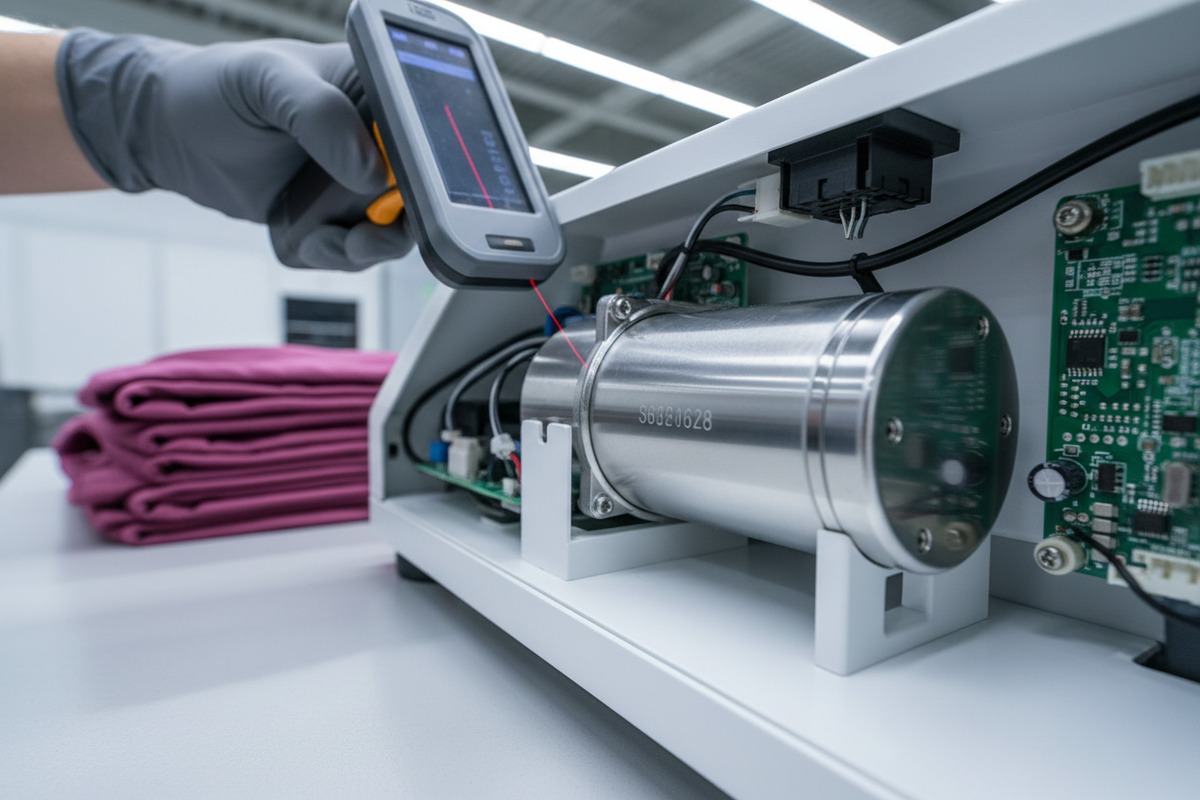
Visual and Auditory Inspection Protocols
Verifying the authenticity of an air pump goes beyond just looking at the logo sticker ISO certifications 3. In the manufacturing world, stickers are the easiest thing to fake. When we inspect incoming raw materials for our assembly line, we look for specific manufacturing footprints that counterfeiters often miss or cannot replicate cheaply Minimum Order Quantities (MOQ) 4.
First, examine the housing and mounting points. A genuine, brand-new pump from a reputable brand like Thomas or Parker will have a pristine casing. There should be no scratches around the screw holes. If you see circular scratch marks around the mounting screws, it indicates the pump was previously mounted, unscrewed, and then placed into your "new" machine. This is a classic sign of a refurbished part being sold as new.
The "Bubble Test" and Pressure Stability
Visuals are important, but performance is the ultimate truth teller. We recommend a "bubble test" for airtightness, but for the pump itself, you need to monitor the pressure gauge. Genuine high-end pumps feature closed-loop sensors. This means if you set the machine to 120 mmHg, it hits 120 mmHg and stays there.
Cheaper or fake pumps struggle to maintain the target. You will see the needle (or digital readout) flutter. It might hit 120, drop to 110, and surge to 125. This inconsistency is not just a nuisance; it is dangerous for clients with specific vascular conditions. A genuine pump provides a smooth, linear ramp-up of pressure.
Distinguishing Branded vs. Generic/Refurbished
We have compiled a comparison table based on our years of tearing down competitor machines and testing our own components. Use this checklist when you open up a sample unit.
| Feature | Genuine Branded Pump | Generic / Refurbished / Fake |
|---|---|---|
| Serial Number | Laser-etched or high-quality print; matches batch documentation. | Sticker is peeling, crooked, or the number does not match the box. |
| Solder Joints | Clean, machine-soldered connections on the motor terminals. | Messy, hand-soldered blobs; signs of wire stripping or patching. |
| Heat Generation | Warm after 30 mins, but touchable (efficient heat dissipation). | Extremely hot to the touch; indicates motor friction or poor winding. |
| Noise Level | Steady hum (<50dB); consistent pitch. | Rattling, grinding, or fluctuating pitch (indicates bearing wear). |
| Vibration | Minimal; typically mounted on high-quality rubber dampers. | Excessive vibration that shakes the machine casing. |
What documentation should I request from my supplier to prove the air pump's origin and quality?
When negotiating with suppliers, we find that many are hesitant to share upstream supply chain details, but transparency is non-negotiable for medical-grade aesthetic equipment. We always keep our procurement records ready because we know that a single piece of paper can differentiate a reliable factory from a middleman selling knock-offs.
You must request the original purchase invoice from the pump manufacturer, a Certificate of Conformance (CoC) linking the batch number to your order, and valid CE or ISO certifications. These documents prove the pumps were sourced through authorized channels rather than the gray market.

The Paper Trail: Invoices and Batch Numbers
It is easy for a supplier to claim they use "German Pumps" or "Japanese Core Components." It is much harder for them to prove it legally. The single most important document you can ask for is the incoming material purchase invoice.
You can redact the pricing information, but you need to see that your supplier (Manufacturer A) actually bought 500 units of Pump Model X from Brand B on a specific date. If they claim to produce 500 machines for you but can only show an invoice for 50 pumps bought three years ago, you have caught them in a lie.
Certificates of Analysis and Calibration
For professional pressotherapy systems, especially those claiming medical benefits (lymphatic drainage), the pump must come with a calibration certificate. This document shows that the pump was tested at the factory and meets specific flow rate (e.g., 100L/min) and pressure (e.g., 20-240 mmHg) standards.
Do not accept a generic "CE Certificate" for the whole machine as proof of the pump's quality. A machine can pass CE safety tests with a cheap pump. You want the specific data sheet and compliance certificate for the pump component itself. This confirms that the component complies with electrical safety and material standards 5 (like RoHS) before it was ever installed in your machine.
Essential Documentation Checklist
To streamline your vetting process, we suggest adding these requirements to your initial Request for Quotation (RFQ) 6. If a supplier refuses to provide these, it is a major red flag.
| Document Name | Purpose | What to Check |
|---|---|---|
| Purchase Invoice (Redacted) | Proof of Origin | Date of purchase (must be recent) and quantity (must match production volume). |
| Certificate of Conformance (CoC) | Quality Assurance | States that the specific batch of pumps meets the brand's official specs. |
| Technical Data Sheet (TDS) | Specification verification | Compare the listed max pressure and flow rate against your machine's claims. |
| ISO 13485 Cert (Supplier) | Medical Standard | Verifies the pump manufacturer follows medical device quality management systems. |
| UL/ETL Component Mark | Safety (North America) | Crucial if you are importing into the US or Canada to ensure electrical compliance. |
How do I ensure my supplier doesn't substitute cheaper air pumps during the mass production of my order?
We understand the sleepless nights that come after approving a perfect sample, worrying if the final 500 units will match that quality. In our years of exporting, we have seen competitors pull the “bait-and-switch” tactic, sending a Golden Sample 7 with a $50 pump and mass-producing with a $10 alternative to pocket the difference.
To prevent substitution, you must seal a “Golden Sample” signed by both parties to serve as the production standard and conduct random pre-shipment inspections via video call. Explicitly penalize unauthorized component changes in your contract to legally bind the supplier to the agreed specifications.
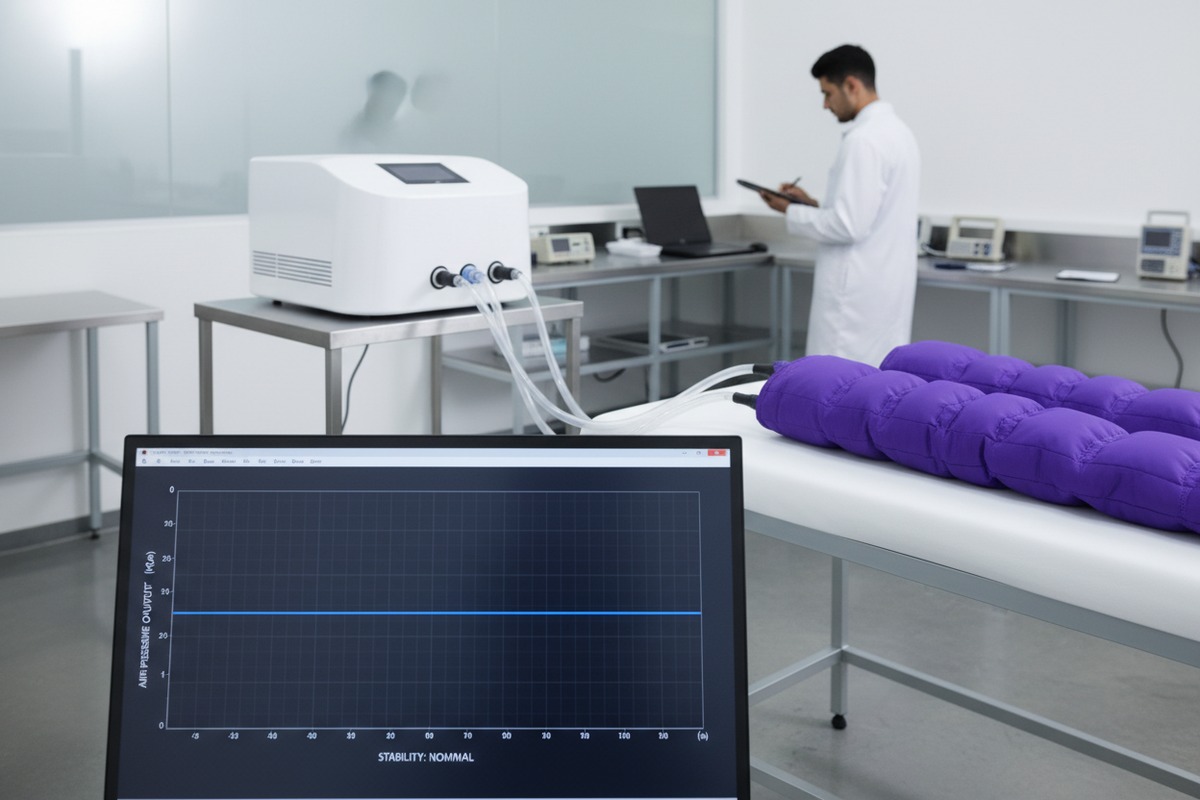
The "Golden Sample" Strategy
The most effective tool in your arsenal is the Sealed Golden Sample. When you approve the prototype, do not just say "yes" via email. You must have two identical samples prepared. You keep one, and the factory keeps one. Crucially, you should sign and date the internal components of the factory's sample (or apply a tamper-evident seal).
If you receive a shipment that performs differently, you can open your Golden Sample and compare the internals immediately. We always encourage our clients to keep a master unit. It resolves disputes instantly. If the mass production unit has a blue pump and the Golden Sample has a black one, the supplier has no defense.
Live Video Audits and Random Sampling
You do not always need to fly to China to verify production. We facilitate live video audits for our clients, and you should demand this from any supplier. Do not let them show you a staged unit. Ask them to walk to the "Finished Goods" area, point to a random box (e.g., "Third row, second box from the left"), and open it on camera.
Ask them to unscrew the casing live. This "surprise inspection" makes it impossible for them to prep a fake unit. You want to see the pump inside that random box. If they refuse or make excuses like "we don't have tools right now," be very suspicious.
QC Protocol for Mass Production
Here is a step-by-step Quality Control (QC) protocol you should enforce. This ensures that the pressure and pump quality remain consistent from the first unit to the last.
- Incoming Material Check (IQC): Ask for photos of the pallet of pumps when they arrive at the factory before assembly begins.
- In-Process QC (IPQC): Request a video of the "aging test." All pressotherapy machines 8 should run for at least 24-48 hours continuously before packing. Ask to see this room.
- Pre-Shipment Inspection (PSI): Use a third-party agency (like SGS or Intertek) or a trusted agent to check 5-10% of the order.
- Contractual Penalties: Your purchase agreement must state: "If internal components differ from the Golden Sample, the buyer has the right to reject the entire shipment at the supplier's expense."
Can I specify a high-end air pump brand for my custom OEM pressotherapy machine development?
In our collaborative development projects, we love it when a client knows exactly what they want, as it simplifies our engineering targets. However, asking for a specific brand like Thomas or KNF requires understanding the technical implications, as it is not always as simple as swapping one part for another.
Yes, you can specify high-end brands for OEM projects, provided you meet the Minimum Order Quantities (MOQ) required to purchase those components. However, be aware that premium pumps may require redesigning the internal layout, power supply, and sound dampening systems to accommodate different dimensions and voltage requirements.
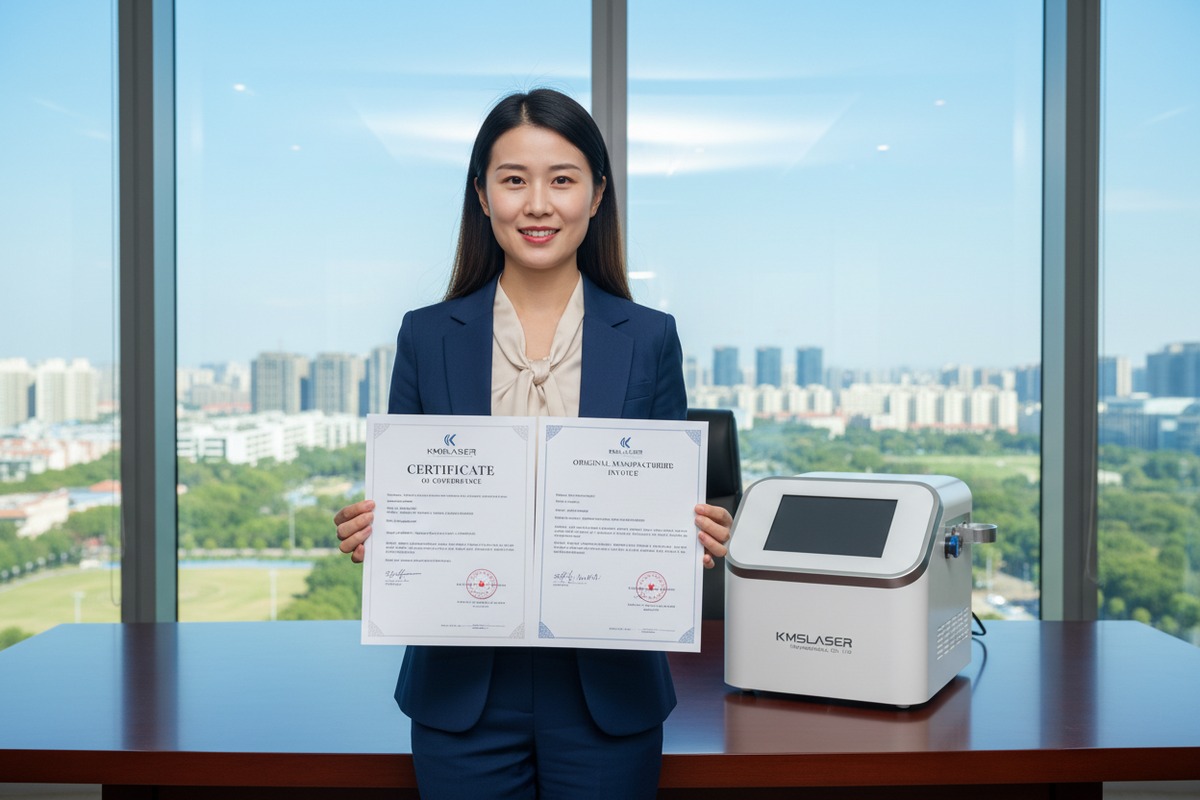
Balancing Performance and Engineering Constraints
When you request a specific top-tier pump, you are upgrading the engine of the car. This often means the rest of the car needs to change too. High-end pumps from Germany or Japan often have different voltage requirements or current draw compared to standard Chinese pumps.
If you specify a pump that draws more power, we might need to upgrade the machine's power supply unit (PSU) to prevent overheating. If the new pump is physically larger, we may need to create a new mold for the plastic casing, which is a significant investment (often $5,000 – $10,000 for tooling). Therefore, while you can specify the brand, you must be prepared for non-recurring engineering (NRE) costs.
The Cost Reality of Branded Components
A standard, reliable domestic pump might cost us around $15-$30 depending on volume. A branded pump from a top global manufacturer can cost $80-$150. This drastically changes your Bill of Materials (BOM).
For a clinic-grade machine retailing at $3,000, this cost absorption is feasible. For a home-use device retailing at $300, it is impossible. You need to analyze your target market. Does your end-user (the salon owner) care about the brand of the pump, or do they just care about the reliability? often, a high-quality domestic pump that has been stress-tested offers better ROI than a name-brand pump that forces the price too high.
Brand Specification Checklist
If you decide to proceed with a specific brand nomination, use this checklist to ensure feasibility with your manufacturer.
- Dimensional Fit: Does the pump fit inside the existing chassis?
- Mounting Footprint: Do the screw holes align, or is a custom bracket needed?
- Vibration Profile: Does the new pump require different rubber dampeners?
- Control Logic: Is the pump compatible with the current PCB (Printed Circuit Board) logic for pressure sensing?
- Lead Time: Branded pumps often have lead times of 8-12 weeks, compared to 2 weeks for local components.
Conclusion
Verifying branded air pumps is the dividing line between a professional medical device and a disposable toy. By inspecting serial numbers, demanding supply chain invoices, and enforcing strict "Golden Sample" protocols, you protect your business from the risks of refurbished or counterfeit parts. Ultimately, a verified, high-quality pump ensures your clients receive effective treatments and your brand builds a reputation for reliability that competitors cannot easily copy.
Footnotes
1. Defines this critical document for product quality and compliance. ↩︎
2. Replaced 404 .gov link with an authoritative NCBI (.gov) resource on lymphatic drainage anatomy. ↩︎
3. Highlights the importance of ISO standards for medical device quality management. ↩︎
4. Defines a common term in manufacturing procurement related to order size. ↩︎
5. Provides information on the RoHS directive for hazardous substances in electrical equipment. ↩︎
6. Replaced 403 Investopedia link with the authoritative Wikipedia page for RFQ. ↩︎
7. Describes a key quality control tool for setting production benchmarks. ↩︎
8. Replaced 404 Wikipedia link with an authoritative health information site explaining pressotherapy. ↩︎

 English
  Español de México
  Deutsch
  Français
  العربية
  Русский