
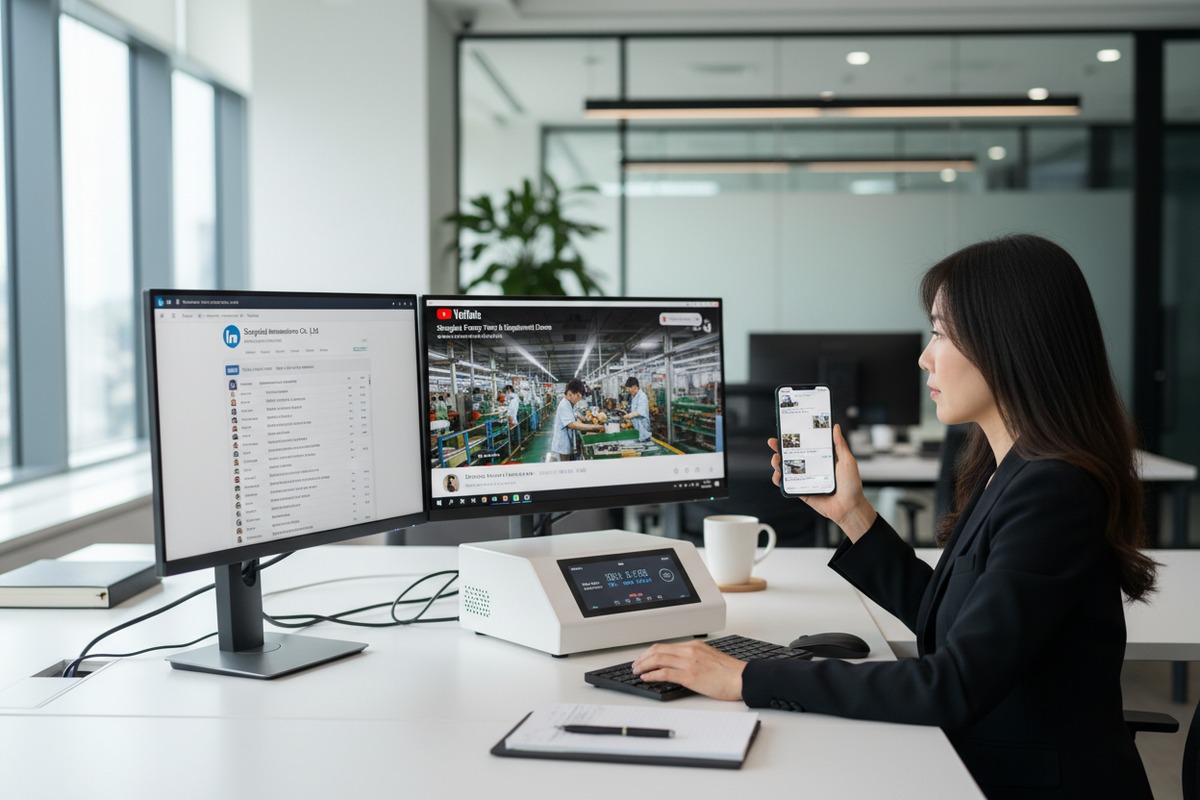
When we finalize a custom design for a client, we often hear stories about their previous sourcing nightmares. You might worry about transferring a large deposit to a company that disappears overnight or receiving a machine that looks nothing like the photos. Our production team understands this anxiety well. Social media has become a powerful, unconventional tool to verify if a partner is legitimate before you sign a contract.
To use social media for supplier background checks, you must cross-reference company profiles on LinkedIn for employee consistency, analyze video demonstrations on TikTok or YouTube for unedited equipment performance, and monitor engagement on platforms like WeChat to verify real-time factory operations. This multi-platform approach reveals hidden red flags and confirms manufacturing authenticity.
Here is how you can use these digital footprints to validate your next supplier.
How can I use LinkedIn to verify the professional credentials of my China pressotherapy machine supplier?
In our experience exporting to the US, serious business discussions often start or are confirmed on professional networks. We encourage our sales managers and engineers to maintain detailed profiles because it builds trust. A lack of professional history usually signals a trading company 1 rather than a committed manufacturer.
You can verify professional credentials by auditing the supplier’s LinkedIn Company Page to check the tenure of key employees, ensuring they have specialized engineers and sales staff with a long-term history in the beauty equipment industry. Cross-referencing these profiles with claimed business licenses helps confirm the company is a stable, legitimate manufacturer.
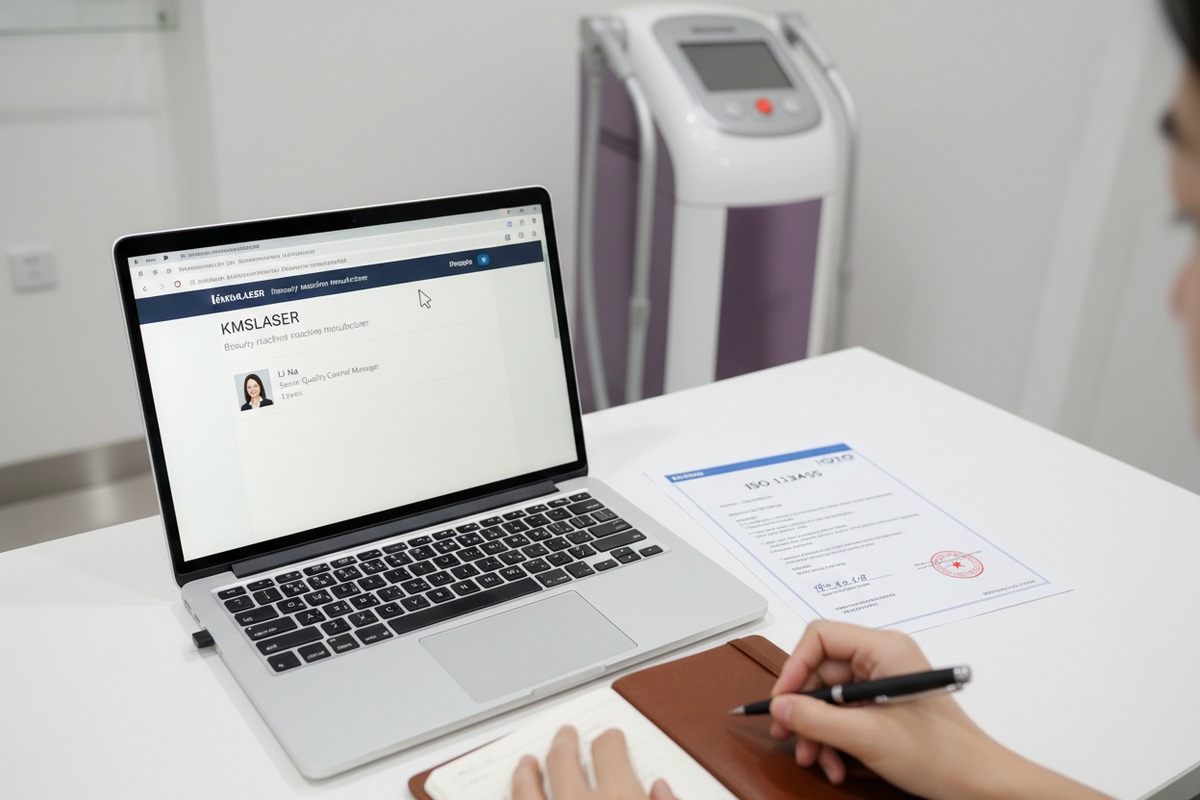
LinkedIn is often the most reliable starting point for B2B vetting. It allows you to see the people behind the brand name. A real factory is not just a logo; it is a team of people.
Analyze Employee Stability and Roles
You should look at the "People" tab on the company's LinkedIn page. You want to see a mix of roles. A legitimate manufacturer will have profiles for sales representatives, mechanical engineers, and quality control managers. If every employee listed is in "Sales" or "Marketing," you are likely dealing with a trading company, not the source factory.
Check the tenure of the staff. If the key contact has been with the company for less than six months, be cautious. High turnover can lead to communication gaps. In our industry, technical knowledge takes time to build. beauty equipment industry 2 A salesperson with 3+ years at the same factory knows the difference between a standard air pump and a high-grade customized one.
Verify Industry Engagement
Look at the content the company posts. Are they sharing photos of their booth at Cosmoprof or Dubai Derma 3? Real manufacturers attend trade shows. Look for photos of the team at these events.
Also, check if they interact with other legitimate industry players. Do they comment on logistics news or component supply trends? This shows they are deeply embedded in the supply chain ecosystem 4.
Distinguishing Factories from Middlemen
You can often tell the business model by the content shared by employees.
| Feature | Legitimate Manufacturer | Trading Company/Middleman |
|---|---|---|
| Employee Roles | Engineers, R&D, Assembly Line Managers, Sales | Mostly Sales, Account Managers, Marketing |
| Content Focus | Production lines, R&D testing, raw materials, certifications | Finished product photos only, viral marketing memes |
| Work History | Employees have backgrounds in manufacturing or engineering | Employees have backgrounds in general cross-border e-commerce |
| Office Photos | Shows factory floors, labs, and warehouses | Shows generic office cubicles or stock photos |
By vetting these details, you reduce the risk of working with a middleman who adds a markup without adding value.
We record our aging tests and pump pressure checks to show clients exactly what they are buying. Photos can be easily retouched to hide gaps in the plastic casing or poor finishing. Video, especially when it is raw and unedited, exposes the true quality of the machine.
You should search for hashtags like #pressotherapyfactory or specific model numbers on YouTube and TikTok to find user-generated content and live-stream recordings that show the machine’s noise levels, interface responsiveness, and material texture. These platforms often host unfiltered videos that reveal build quality issues hidden in professional photos.
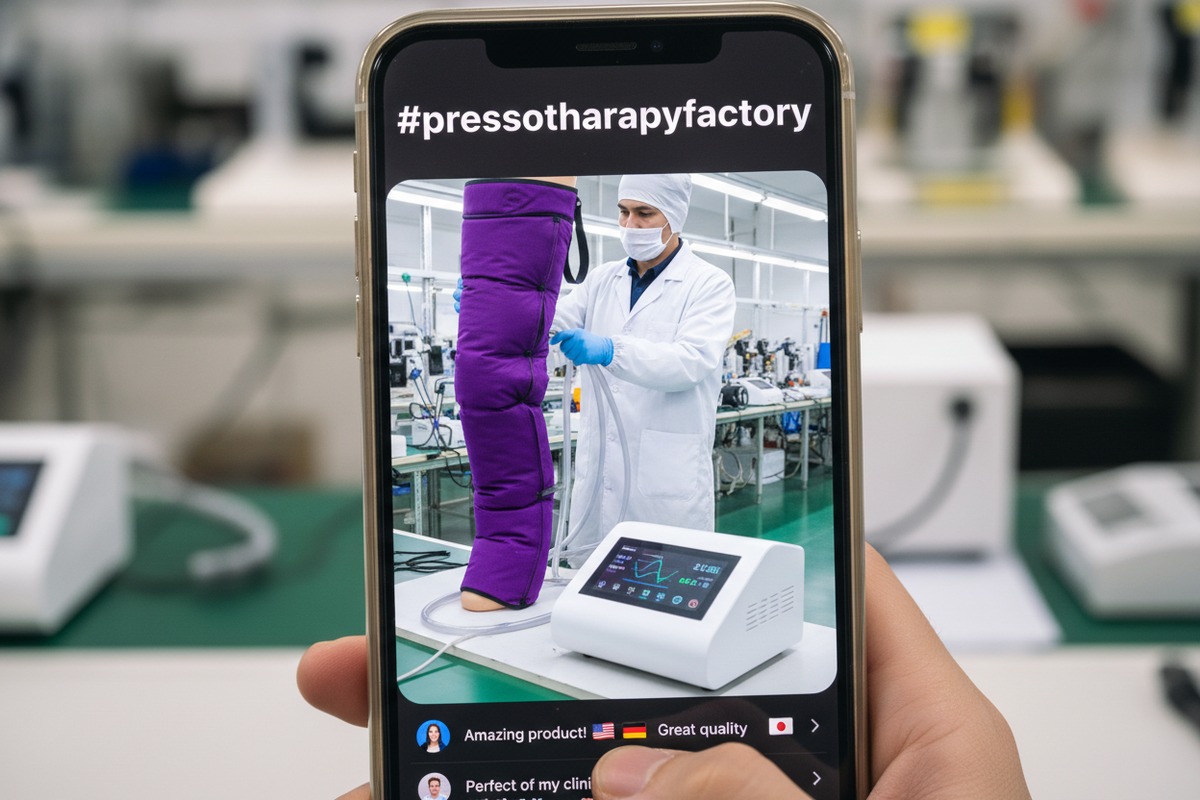
When you are assessing a machine, you need to see it work. Static images on Alibaba 6 or a website are often 3D renders, not real photos.
Evaluating the Control Unit
Search for videos where the user interacts with the screen. Watch the sleek, white matte plastic tabletop control unit.
- Touch Response: Does the screen react instantly, or does the user have to press hard? Laggy screens suggest cheap electronics.
- Material Finish: Look at the way light hits the casing. Matte white plastic should look uniform. If you see shiny, uneven patches, it might be low-quality recycled plastic.
- Sound: Turn your volume up. A high-quality pressotherapy machine should have a rhythmic, low hum. If you hear rattling, high-pitched whining, or vibration noises, the internal pump assembly is likely poor quality.
Assessing the Air Cuffs
The cuffs are just as important as the machine. Look for videos showing the vibrant purple suit inflating.
- Inflation Speed: A professional medical-grade system 7 should inflate chambers sequentially and rhythmically.
- Velcro Quality: Watch videos where they take the suit off. A strong "ripping" sound indicates high-grade heavy-duty Velcro. If it peels away silently, the Velcro will wear out after a few months of salon use.
Platform Specifics
- YouTube: Best for long-form reviews and trade show walkthroughs. Search for "Pressotherapy machine repair" or "maintenance." If you see many videos on how to fix a specific brand, that is a red flag.
- TikTok: Good for seeing the machine in a real salon environment. Look for posts by salon owners, not just the factory. Real usage shows wear and tear.
Video Analysis Checklist
Use this table when watching social media videos to score the supplier's product.
| Video Element | Positive Sign (Pass) | Negative Sign (Fail) |
|---|---|---|
| Audio | Smooth, consistent pump hum; clear beeps from interface | Rattling, vibration noise, distorted speaker audio |
| Visuals | Steady camera showing close-ups of seams and ports | Blurry filters, quick cuts away from the machine, CGI renders |
| Operation | One-touch activation, instant screen response | Multiple taps needed, visible software lag or freezing |
| Environment | Clean factory floor or real salon setting | Messy background, dark room, or completely white background (studio only) |
We constantly monitor market trends and often see competitors vanish or pivot to cheaper industries. It creates a chaotic environment for buyers. If you know what warning signs to look for, you can avoid companies that are on the brink of collapse or are simply scams.
You must look for red flags such as disabled comments on posts, a sudden shift in posted products, inconsistent contact information across platforms, and the use of identical stock images found on other supplier profiles. These signs often indicate a lack of transparency, potential fraud, or operational instability.
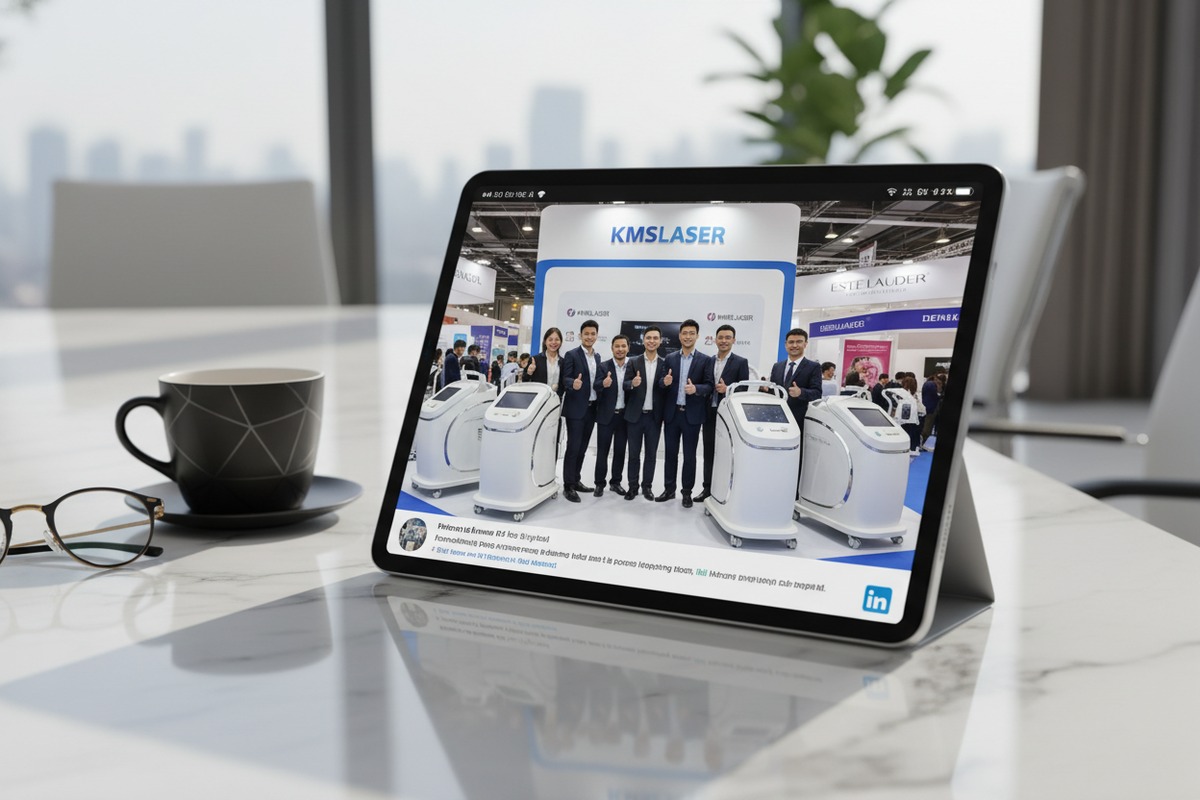
Social media profiles are harder to fake over a long period than a website. A website is static; social media is a timeline. Gaps and inconsistencies in that timeline are your biggest warning signs.
The "Ghost" Factory Signals
A legitimate factory wants to talk to customers.
- Disabled Comments: If a supplier turns off comments on Instagram or TikTok 8, ask yourself why. Usually, it is because they are hiding negative feedback from angry customers who never received their goods.
- Inconsistent Branding: Does the logo on their Facebook page match the logo on the machine in their YouTube video? Scammers often steal video content from real factories. If the machine in the video has a different brand name than the profile posting it, do not engage.
Product Pivoting
Look at the post history. Did they sell professional pressotherapy systems last month, but were selling phone cases or masks six months ago?
Real manufacturers specialize. At our facility, we focus on beauty equipment. A company that jumps between unrelated product categories is likely a trader chasing trends. They will not have the parts or expertise to support after-sales service for a complex medical-grade device.
Generic Content
Be wary of "Perfect" photos.
If every image is a 3D render or a highly polished studio shot, be careful. Real factories post raw photos of crates being packed, machines on the test bench, and team birthday parties. If you see the same generic photo of a "sleek, white tabletop control unit" that appears on ten other supplier pages, it is a public domain image, and the supplier likely holds no stock.
Risk Assessment Table
Here is how to interpret common behaviors on social platforms.
| Behavior | Risk Level | Meaning |
|---|---|---|
| No physical address listed | High | They do not want to be found or audited. |
| Only uses WhatsApp for contact | Medium | Common in China, but should also have a corporate email. |
| Posts political/controversial content | High | Unprofessional; suggests lack of international business awareness. |
| Sudden gaps in posting (3+ months) | Medium | Could indicate financial trouble or factory shutdown. |
| Changing company name frequently | High | Trying to evade bad reputation or legal issues. |
Our daily routine involves sharing live updates with our clients because we know distance creates doubt. We use instant messaging apps not just for chatting, but as a window into our workshop. You can use these tools to virtually step onto the production floor without buying a plane ticket.
You should request to connect via WeChat or WhatsApp to view their "Moments" or "Status" updates, where factory owners frequently post timestamped, behind-the-scenes videos of daily production, inventory stocking, and quality testing. This provides real-time proof of active manufacturing and allows you to verify the specific existence of your order.
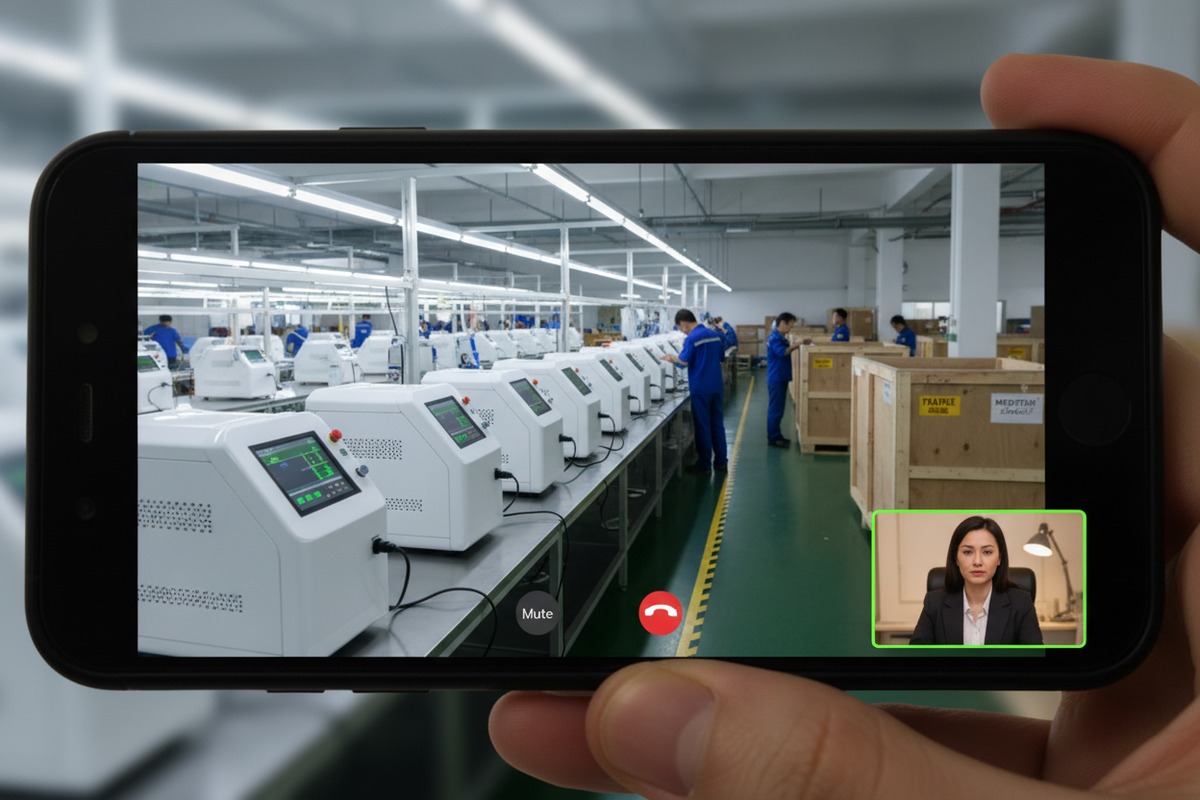
In China, WeChat is more than a chat app; it is a business ecosystem. The "Moments" feature (similar to Instagram Stories) is where business reality happens.
The "Live" Video Call Test
Don't just rely on recorded videos. Ask for a video call now.
During business hours (China time), ask your sales rep: "Can you walk onto the production floor and show me the professional medical-grade pressotherapy system right now?"
- The Reaction: If they say yes and do it immediately, they are likely the manufacturer.
- The Excuse: If they say "I am not at the factory today" or "The signal is bad" three times in a row, they are likely working from a remote office and do not have access to the goods.
Analyzing Background Activity
When you view their stories or status updates, look at the background.
- Inventory: Do you see boxes stacked with the company's logo?
- Workers: Are people wearing uniforms? Are they working on the specific vibrant purple cuffs you are interested in?
- Equipment: Look for aging test racks. Pressotherapy machines need to run for hours before shipping to ensure the pumps don't overheat. If you see a room full of machines plugged in and running, that is a great sign of Quality Control (QC) 9.
Requesting Specific Proof
You can ask the supplier to post a specific photo or video to their social media story. For example, ask them to take a photo of the control unit with a piece of paper showing today's date and your name.
This "Proof of Life" tactic is common in high-value transactions. It costs them nothing but proves they have physical possession of the unit.
Steps for a Social Media Audit
- Add the contact on WeChat or WhatsApp.
- Scroll back through months of history. Do they show consistency in location and product?
- Check timestamps. Are they posting during factory hours?
- Look for shipping photos. Real factories post photos of containers being loaded. Zoom in on the boxes. Do the labels match the product?
Conclusion
Using social media for background checks is a vital layer of modern due diligence. It fills the gaps that formal documents miss. By scrutinizing LinkedIn for professional history, analyzing raw video on TikTok for product quality, spotting red flags like disabled comments, and leveraging WeChat for real-time factory insights, you can paint a true picture of your potential partner. While these methods are powerful, they should complement, not replace, traditional verification methods like factory audits and sample testing.
Footnotes
1. Explains the key differences between trading companies and manufacturers. ↩︎
2. Provides market size, trends, and forecast for the beauty devices industry. ↩︎
3. Official website for Cosmoprof North America, a leading B2B beauty trade show. ↩︎
4. Replaced with a comprehensive article defining and explaining the supply chain ecosystem. ↩︎
5. Replaced with LinkedIn’s official business solutions page for company pages. ↩︎
6. Official overview of Alibaba Group, a global e-commerce and technology company. ↩︎
7. Explains FDA classification for medical devices based on risk levels. ↩︎
8. Authoritative overview of TikTok, its features, and global impact. ↩︎
9. Overview of quality control in manufacturing, including best practices. ↩︎

 English
  Español de México
  Deutsch
  Français
  العربية
  Русский