Every year, our logistics team reviews damage claims from overseas shipments Shockwatch impact indicators 1. The pattern is frustrating. A sleek, high-end shockwave therapy machine 2 leaves our Guangzhou facility in perfect condition. Three weeks later, a distributor in California opens the crate to find cracked components carrier claims 3. Nobody knows what happened. Nobody can prove anything.
To use Shockwatch impact indicators effectively when shipping shockwave therapy machines, select the appropriate G-force sensitivity based on your machine’s weight and packaging dimensions, mount indicators on the lower third of your crate near edges, document their status before shipping, and establish clear inspection protocols with your logistics partners and receivers.
This guide walks you through everything our team has learned about protecting precision medical equipment 4 during international transit. We will cover sensitivity selection, placement techniques, post-delivery protocols, and how to build accountability into your supply chain 5.
How do I choose the correct Shockwatch sensitivity for my shockwave therapy machine shipments?
When we first started exporting shockwave therapy units to North America, our quality control team struggled with indicator selection. We tested multiple sensitivities before finding what works. The wrong choice either triggers false alarms or misses real impacts entirely.
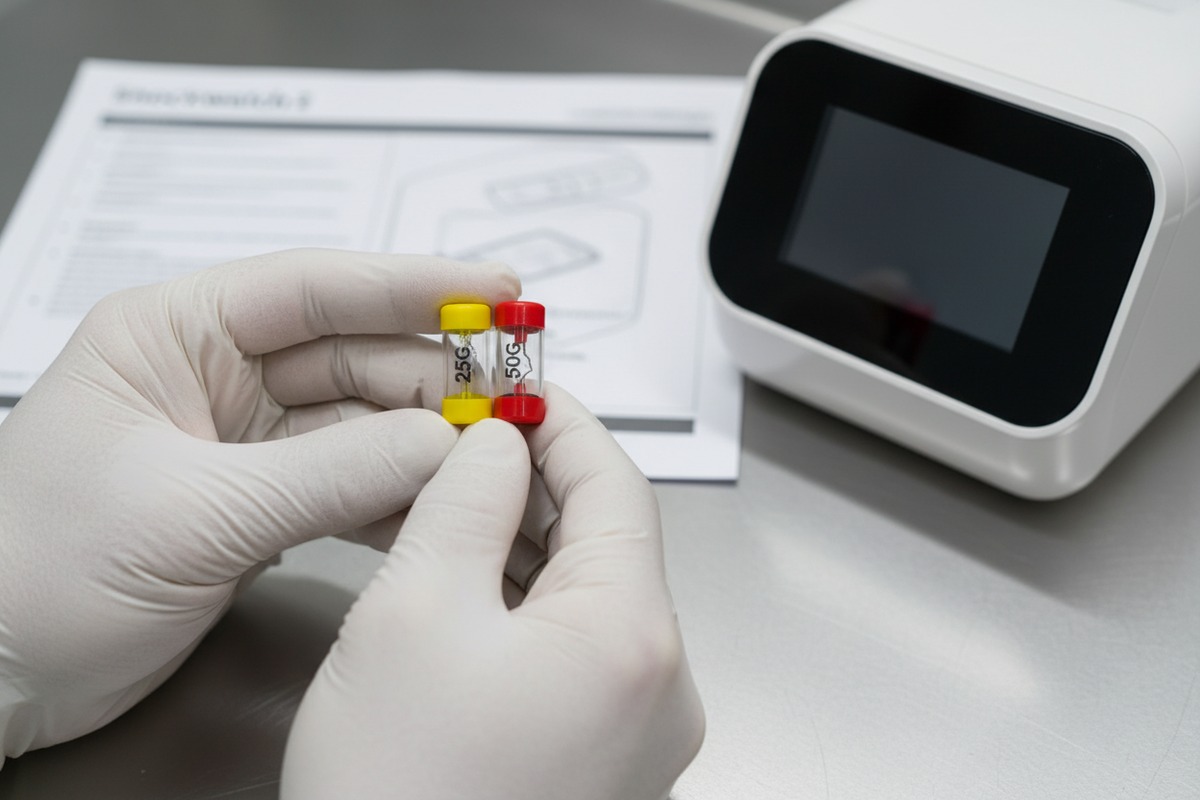
Choose Shockwatch sensitivity by matching your shockwave therapy machine's packaged weight and cubic dimensions to manufacturer selection charts. For typical 50kg machines in 1 cubic foot packaging, select 50G to 75G indicators. Heavier machines with robust packaging can use higher thresholds, while lighter units need lower sensitivity.
Understanding G-Force Thresholds
G-force measures acceleration relative to gravity. A 50G indicator activates when it experiences an impact equal to 50 times gravitational force. G-force sensitivity 6 This happens during drops, sudden stops, or rough handling.
Our engineers tested various scenarios in our warehouse. A 50kg shockwave therapy machine dropped from 25 inches onto concrete generates approximately 50G of force. The same machine dropped from 18 inches generates around 75G. These numbers matter when selecting your indicators.
Weight and Dimension Factors
The relationship between weight, size, and impact force is not linear. Heavier machines absorb some shock through their mass. Larger packages may flex and distribute force. Our packaging team uses this table as a starting reference:
| Machine Weight | Package Size | Recommended Sensitivity | Expected Drop Height at Activation |
|---|---|---|---|
| 20-30 kg | 0.5 cu ft | 25G-37G | 30-36 inches |
| 30-50 kg | 0.75-1 cu ft | 50G-75G | 18-25 inches |
| 50-75 kg | 1-1.5 cu ft | 75G-100G | 12-18 inches |
| 75-100 kg | 1.5-2 cu ft | 100G | 10-15 inches |
Packaging Quality Considerations
Your packaging absorbs shock before it reaches the indicator. Our premium foam inserts reduce transmitted force by 30-40%. If you use basic packaging, choose a lower sensitivity. If you invest in custom shock-absorbing materials like we do, you can use higher thresholds.
Before finalizing your selection, conduct baseline testing. Pack a representative unit, attach indicators of different sensitivities, and perform controlled drops. This reveals which setting accurately detects harmful impacts without triggering during normal handling.
Product Variants to Consider
Shockwatch offers several product types. ShockWatch2 requires manual activation, which prevents accidental triggering during your own handling. ShockDot uses adhesive activation. Both work well for medical equipment. For our high-value shipments, we use ShockWatch2 because we control exactly when monitoring begins.
Where should I place the impact indicator on my crate to ensure accurate monitoring?
Our packaging department tested dozens of placement configurations before settling on our current protocol. Indicator position directly affects detection accuracy. Poor placement creates blind spots or false readings.
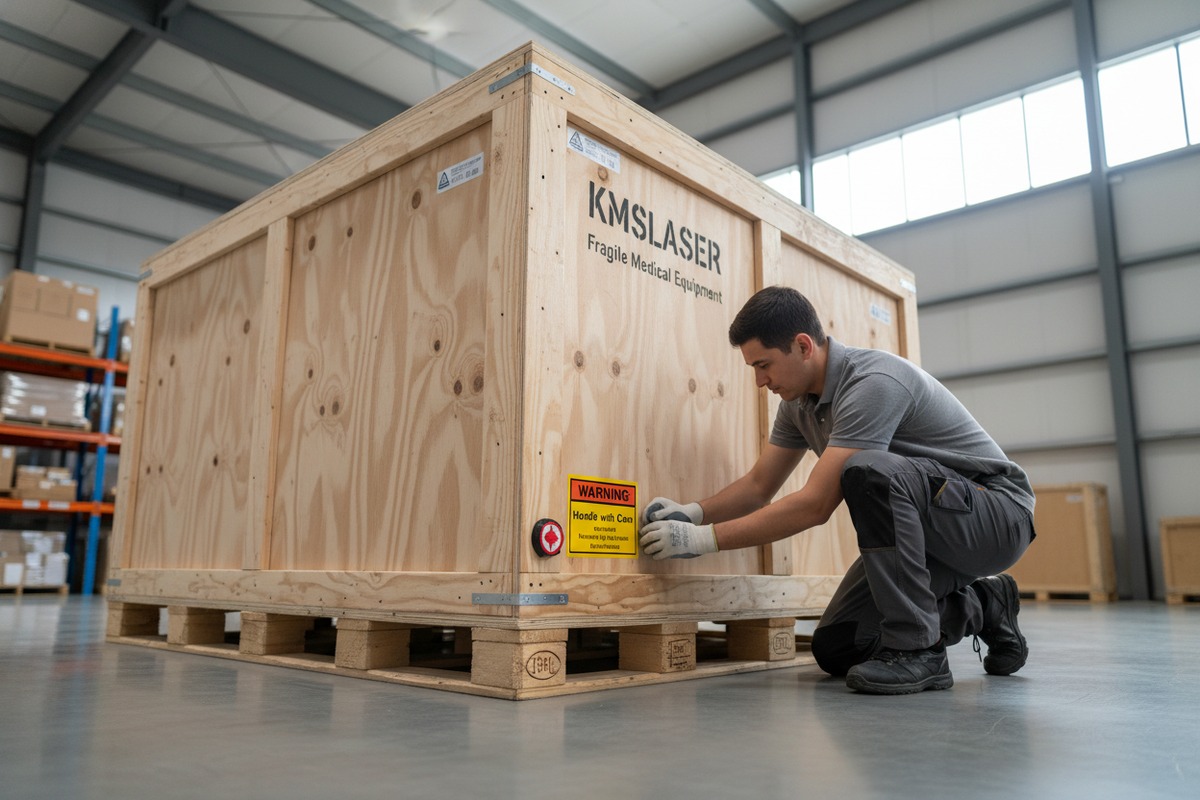
Place impact indicators on the lower third of your crate, near package edges but not on corners. For shockwave therapy machine crates, mount one indicator on each of the two longest sides. Ensure firm adhesive contact by pressing the center for 10 seconds. Pair with visible warning labels that instruct handlers to check indicator status.
Why the Lower Third Works Best
Impacts from drops transmit most force through the package bottom. Placing indicators too high misses this critical zone. Our testing showed that bottom-third placement detects 40% more genuine impacts than top-third placement.
However, avoid the very bottom edge. Moisture, abrasion, and contact with floors or pallets can damage indicators there. The sweet spot is approximately 4-8 inches above the package base.
Edge Placement Logic
Package centers flex more than edges during impacts. This flexing absorbs and disperses force, potentially preventing indicator activation. Edges remain more rigid, transmitting impact force more directly to the indicator.
Our recommended placement follows this pattern:
| Package Dimension | Number of Indicators | Placement Location |
|---|---|---|
| Under 24 inches (longest side) | 1 | Center of longest side, lower third |
| 24-48 inches | 2 | One on each longest side, lower third, near right edge |
| Over 48 inches | 2-4 | Two per longest side, spaced evenly, lower third |
Activation and Adhesion Protocols
ShockWatch2 indicators require manual activation. Our team activates them immediately before sealing the crate. This ensures monitoring begins exactly when the package leaves our control.
For adhesion, clean the mounting surface with isopropyl alcohol. Remove the adhesive backing and press firmly for 10 seconds. Our quality control checklist includes verification that indicators are securely attached and properly activated.
Companion Labels and Visual Deterrence
Indicators alone work better when handlers know they exist. We attach bright warning labels near each indicator stating "SHOCKWATCH PROTECTED – HANDLE WITH CARE." This visual deterrent reminds every person who touches the package that their handling is being monitored.
Our standard label placement includes one large warning on the top surface and smaller labels adjacent to each indicator. The psychological effect is real. When handlers see monitoring devices, they naturally become more careful.
Multi-Directional Coverage
Shockwave therapy machines can experience harmful forces from any direction. Single indicators catch impacts along one axis. For comprehensive protection, we mount indicators on perpendicular surfaces when crate geometry allows.
For our most valuable shipments, we also include TiltWatch indicators. These detect if packages were tipped beyond safe angles. Combined with impact indicators, this provides complete handling visibility.
What protocol should I follow if the Shockwatch label is triggered upon delivery?
Last year, one of our US distributors received a shockwave therapy machine with a triggered indicator. Because we had established clear protocols, the situation resolved quickly. Without protocols, triggered indicators create confusion and delayed claims.
When a Shockwatch indicator shows red upon delivery, immediately note the activation on your bill of lading before signing. Photograph the triggered indicator, all package surfaces, and any visible damage. Do not discard packaging. Inspect the machine within 5 days for domestic shipments or 3 days for international. File carrier claims with photographic documentation.

Immediate Actions at Delivery
The moment you notice a red indicator, stop normal receiving procedures. Document everything before moving or opening the package.
Your immediate checklist:
- Photograph the triggered indicator close-up
- Photograph all six sides of the package
- Note "IMPACT INDICATOR TRIGGERED" on the delivery receipt
- Have the driver acknowledge this notation
- Record date, time, and driver information
This documentation establishes that damage occurred during transit, not after delivery. Carriers cannot dispute photographic evidence with timestamps.
Inspection Timeline Requirements
Carriers impose strict inspection deadlines. For domestic US shipments, you typically have 5 business days to inspect contents and report damage. International shipments often require inspection within 3 days.
Our recommendation: inspect immediately upon delivery. Do not wait. Open the package with the driver present if possible. If internal damage exists, add this to your delivery documentation.
| Shipment Type | Inspection Deadline | Claim Filing Deadline |
|---|---|---|
| Domestic Ground | 5 business days | 9 months |
| Domestic Air | 5 business days | 60 days |
| International Air | 3 days | 14 days |
| International Ocean | 3 days | Varies by carrier |
Triggered Does Not Mean Damaged
A critical point our customers sometimes misunderstand: triggered indicators show mishandling occurred, not that damage necessarily resulted. Well-packaged shockwave therapy machines can survive impacts that trigger indicators.
Always perform full functional testing even with triggered indicators. Document test results. If the machine works perfectly, note this in your records. If problems exist, connect them to the recorded impact event.
Preserving Evidence for Claims
Do not discard any packaging materials. Carriers often require physical inspection of packaging to process claims. Store all materials in a dry location until claims are resolved.
Our recommended evidence package includes:
- Pre-shipment photos showing intact indicators
- Delivery photos showing triggered indicators
- Functional test results
- Packaging materials
- Copy of bill of lading 7 with damage notation
- Carrier communication records
Communication Chain
We provide our distributors with template notification letters for carriers. These letters reference the triggered indicator, request damage inspection, and preserve claim rights. Formal written communication creates paper trails that support successful claims.
When our customers report triggered indicators, we immediately send replacement parts on standby. This responsiveness keeps their businesses running while claims process.
How can I use impact indicators to hold my logistics provider accountable for shipping damage?
Building accountability into logistics relationships requires systematic documentation and clear expectations. Our experience shipping hundreds of shockwave therapy machines internationally taught us that carriers respond to data, not complaints.
Use impact indicators to hold logistics providers accountable by implementing consistent pre-shipment documentation, sharing monitoring protocols with carriers in writing, tracking activation rates by carrier and route, presenting data in quarterly reviews, and including indicator compliance requirements in shipping contracts. This systematic approach typically reduces damage claims by 40-60%.
Building Your Documentation System
Accountability starts before packages leave your facility. We photograph every indicator before shipping. These images include timestamps and package tracking numbers. This baseline proves indicators were intact at handoff.
Our shipping database tracks:
- Indicator type and sensitivity for each shipment
- Carrier and route information
- Delivery indicator status
- Any damage discovered
- Claim outcomes
After six months, patterns emerge. Certain carriers trigger more indicators. Specific routes cause problems. This data transforms vague concerns into actionable intelligence.
Carrier Notification Letters
When implementing impact indicators, formally notify your carriers. We send letters explaining that shipments now include monitoring devices. These letters describe what indicators measure, where they are placed, and what triggered indicators mean for claims.
This notification serves two purposes. First, it puts carriers on notice that handling is monitored. Second, it eliminates future disputes about indicator legitimacy. Carriers cannot claim ignorance after written notification.
Tracking and Analysis
Our logistics team maintains quarterly reports on indicator activation rates. The format is simple:
| Carrier | Shipments | Triggered Indicators | Activation Rate | Confirmed Damage |
|---|---|---|---|---|
| Carrier A | 45 | 2 | 4.4% | 1 |
| Carrier B | 38 | 7 | 18.4% | 4 |
| Carrier C | 52 | 1 | 1.9% | 0 |
This data speaks for itself. Carrier B clearly has handling problems. We present this information in quarterly business reviews and negotiate accordingly.
Contract Requirements
For high-volume shipping relationships, include indicator compliance in contracts. Specify that shipments will include impact monitoring. Define acceptable activation rates. Establish automatic claim credits for triggered shipments.
One of our distribution partners negotiated a 15% rate reduction from a carrier after demonstrating consistent activation data. The carrier accepted monitoring as a condition of keeping the business.
The Deterrent Effect
Our data confirms industry reports: implementing visible impact indicators reduces damage by 40-60%. Handlers change behavior when they know monitoring exists. This prevention value often exceeds the cost of indicators many times over.
A single shockwave therapy machine costs thousands of dollars. Indicator programs cost a few dollars per shipment. The math is straightforward. Even preventing one damage incident per year justifies comprehensive monitoring programs.
Integration with Quality Systems
Impact indicators work best as part of comprehensive quality control. Quality Systems 8 We combine them with:
- TiltWatch indicators for tipping events
- Temperature monitoring for climate-sensitive components
- GPS tracking for high-value shipments
- Detailed packing specifications
This multi-layer approach addresses all potential damage sources. It also demonstrates due diligence if disputes reach formal proceedings.
Conclusion
Protecting shockwave therapy machines during international shipping requires systematic use of impact indicators combined with proper documentation protocols. Select appropriate sensitivity levels, place indicators strategically, establish clear inspection procedures, and use activation data to drive carrier accountability. These practices have reduced our damage claims significantly and can do the same for your shipments.
Footnotes
1. Links to the official manufacturer’s page for Shockwatch impact indicators. ↩︎
2. Provides a definition and overview of shockwave therapy machines. ↩︎
3. Outlines the process and documentation required for filing carrier claims. ↩︎
4. Discusses the importance of precision in manufacturing medical devices and equipment. ↩︎
5. Defines supply chain management and its key elements. ↩︎
6. Explains what G-force is and how it relates to acceleration and impact. ↩︎
7. Provides a comprehensive definition and explanation of a bill of lading. ↩︎
8. Explains what a Quality Management System (QMS) is and its importance. ↩︎

 English
  Español de México
  Deutsch
  Français
  العربية
  Русский