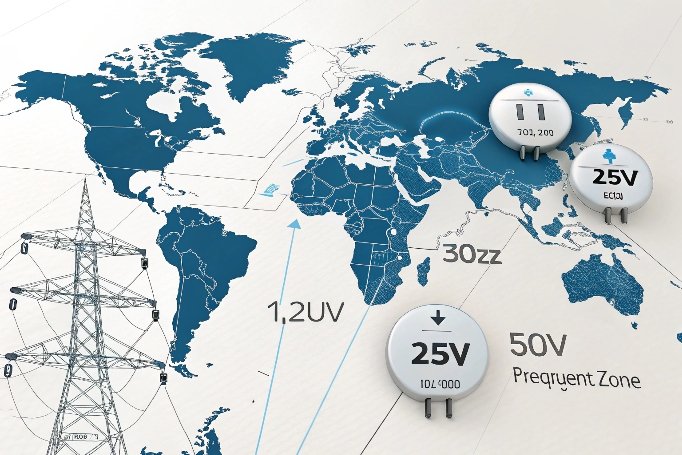
As a beauty equipment supplier, I have learned that even the best technology fails if power compatibility is ignored—it is often the silent cause of equipment issues abroad.
To ensure voltage and frequency compatibility for imported shockwave therapy machines in the U.S., suppliers must confirm the device operates safely on 120 V, 60 Hz mains power. This means checking the nameplate, verifying manufacturer data, using dual-voltage configurations or safe converters, grounding correctly, and testing performance before patient use.
Proper compatibility checks protect both the equipment and the clinic’s reputation. Below, we will walk through what U.S. clinics require, what suppliers should offer, how converters can be used, and how to verify performance before installation.
What voltage do US clinics require?
As a manufacturer exporting beauty devices, I always double-check the clinic’s local power standards before production—no assumption is safe when dealing with global voltage variations.
Most U.S. clinics operate on 120 V, 60 Hz single-phase power, though some facilities offer 208–240 V lines for heavy medical equipment. Knowing the circuit type and outlet specification is the first step before shipping or installation.
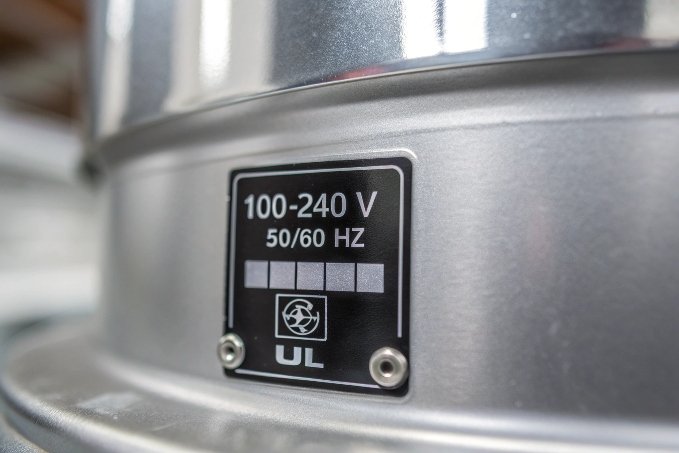
The United States uses a nominal voltage of 120 V and a frequency of 60 Hz—as defined by the U.S. National Electrical Code (NEC) 1.
Most outpatient and salon-type clinics use standard NEMA 5-15 2 or 5-20 receptacles. For larger medical devices, some rooms have 208–240 V receptacles such as NEMA 6-20.
Understanding the circuit capacity is equally important. A 15 A circuit supports around 1,440 watts continuously, while a 20 A circuit supports about 1,920 watts. This means a shockwave therapy machine drawing 600–800 watts can safely operate on a 120 V/15 A outlet, assuming no other high-power devices share the same circuit.
Incorrect voltage matching can lead to poor performance, unstable energy output, or even permanent damage. Clinics should always verify the exact outlet type and circuit capacity before plugging in imported equipment.
Typical U.S. Clinic Power Outlets
| Outlet Type (NEMA) | Voltage | Amperage | Common Use |
|---|---|---|---|
| 5-15R | 120 V | 15 A | Standard exam rooms |
| 5-20R | 120 V | 20 A | Treatment or procedure rooms |
| 6-15R / 6-20R | 208–240 V | 15–20 A | Larger beauty or medical machines |
| L5-20R | 120 V | 20 A | Dedicated equipment lines |
Do suppliers provide dual-voltage options?
In my experience, offering dual-voltage machines prevents delays, warranty issues, and unhappy clients—it’s one of the best design choices for global trade.
Yes, many professional suppliers now provide dual-voltage (100–240 V, 50/60 Hz) shockwave therapy machines. These models can operate safely worldwide without requiring external transformers, provided the correct plug and fuse are used.
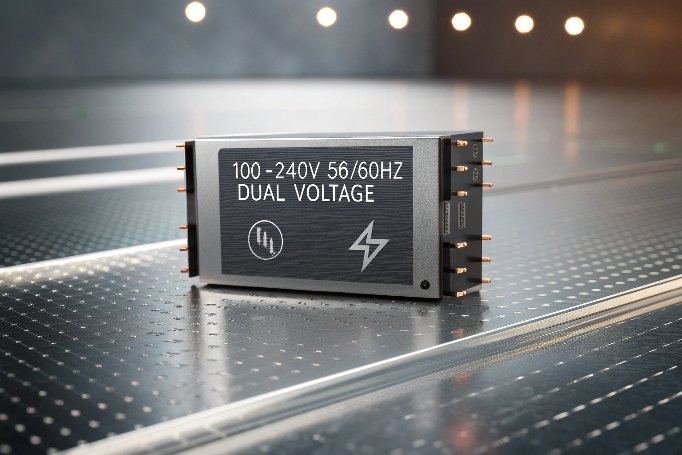
A dual-voltage design uses a switching power supply—similar to those defined under IEC 60950 3—or a multi-tap transformer that automatically adapts to local power conditions. This makes international operation seamless. The supplier should clearly indicate this range on the nameplate or technical sheet.
Machines that are not dual-voltage usually come configured for 220–240 V, 50 Hz. In such cases, the supplier should either provide a U.S.-specific power module or recommend an external converter rated for the machine’s wattage.
Suppliers should also clarify the following details in writing:
- Input voltage and frequency range (e.g., 100–240 V, 50/60 Hz)
- Power draw (watts or amps)
- Plug and cord type (NEMA 5-15P for 120 V use)
- Certification marks (UL, CE, or IEC 60601 compliance)
By confirming these points early, importers avoid the costly mistake of receiving non-compatible machines.
Can converters be safely used?
Whenever a client requests a 230 V model for a 120 V clinic, I explain that converters work fine—if chosen wisely. The danger lies in using undersized or ungrounded converters.
Converters can be used safely if they are properly rated and certified. Step-up transformers can raise 120 V to 230 V, but they must have at least 25–50% higher capacity than the machine’s maximum wattage and include reliable grounding.
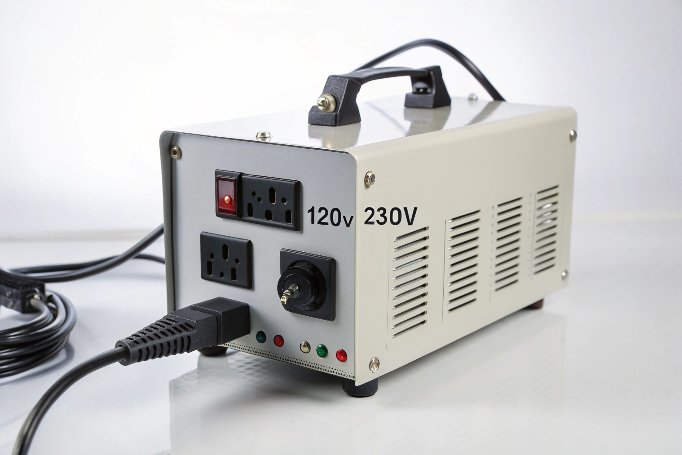
Converters are available in several forms: step-up transformers, isolation transformers, and frequency converters. Isolation types are often required by UL 60601-1 4 for medical-grade electrical safety.
When choosing a converter:
- Size matters. Select one rated at least 1.25× the machine’s wattage.
- Ground properly. Ensure the converter’s chassis is earthed per NFPA 99 Health Care Facilities Code 5.
- Use isolation if possible. This enhances safety and reduces interference.
- Avoid travel adapters. They are not designed for medical-grade loads.
Frequency converters are only necessary when the equipment includes a 50 Hz-only AC motor—see AC motor frequency dependence 6 for more detail.
How to test compatibility before use?
Before shipping out any beauty equipment, I insist on a power test—catching an electrical mismatch early protects both our reputation and the customer’s safety.
To test compatibility before use, clinics or importers should verify supply voltage and frequency with a meter, inspect grounding, perform a no-load power test, and run the machine under supervision for at least 30 minutes while monitoring stability.
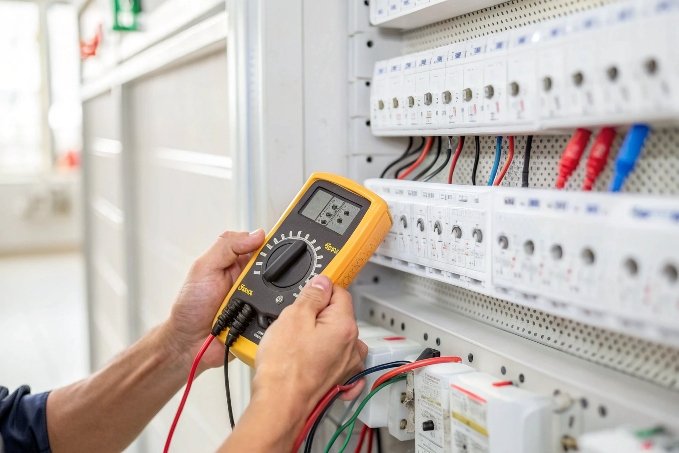
Follow these test steps, referencing IEC 61010 measurement equipment safety 7:
- Visual inspection: Check power cord, plug, and socket condition.
- Voltage measurement: Confirm wall outlet voltage (around 120 V).
- Converter verification: Measure converter output if used (around 230 V).
- Ground check: Use a continuity tester to confirm protective earth connection.
- Operational test: Turn on the machine and monitor performance.
- Run-in test: Operate for 30 minutes to ensure thermal stability.
Additional field verification can follow OSHA electrical testing guidelines 8.
Why grounding and frequency matter
Proper grounding ensures operator safety and stable energy delivery. Incorrect grounding can create leakage currents exceeding IEC 60601-1 limits 9.
Likewise, frequency mismatches affect timing circuits and air compressors in shockwave systems. Most solid-state systems tolerate both 50 and 60 Hz, but motor-driven compressors may need specific tuning—see IEEE Std 519 power quality recommendations 10.
Conclusion
Confirming voltage and frequency compatibility is not complicated but critical. By checking specifications, using correct converters, and testing before use, imported shockwave therapy machines can run safely and reliably in U.S. clinics.
Footnotes
1. U.S. National Electrical Code (NEC) defines 120 V/60 Hz residential and commercial standards. ↩︎
2. NEMA plug and receptacle standards overview. ↩︎
3. IEC 60950 switching power supply safety requirements. ↩︎
4. UL 60601-1 medical-grade isolation and leakage current limits. ↩︎
5. NFPA 99 grounding and wiring codes for health facilities. ↩︎
6. Variable-frequency drive and AC motor speed relationships. ↩︎
7. IEC 61010 instrument safety when using multimeters. ↩︎
8. OSHA electrical safety and testing procedures. ↩︎
9. IEC 60601-1 limits for patient and operator leakage currents. ↩︎
10. IEEE 519 guidance on frequency and harmonic quality in power systems. ↩︎

 English
  Español de México
  Deutsch
  Français
  العربية
  Русский