
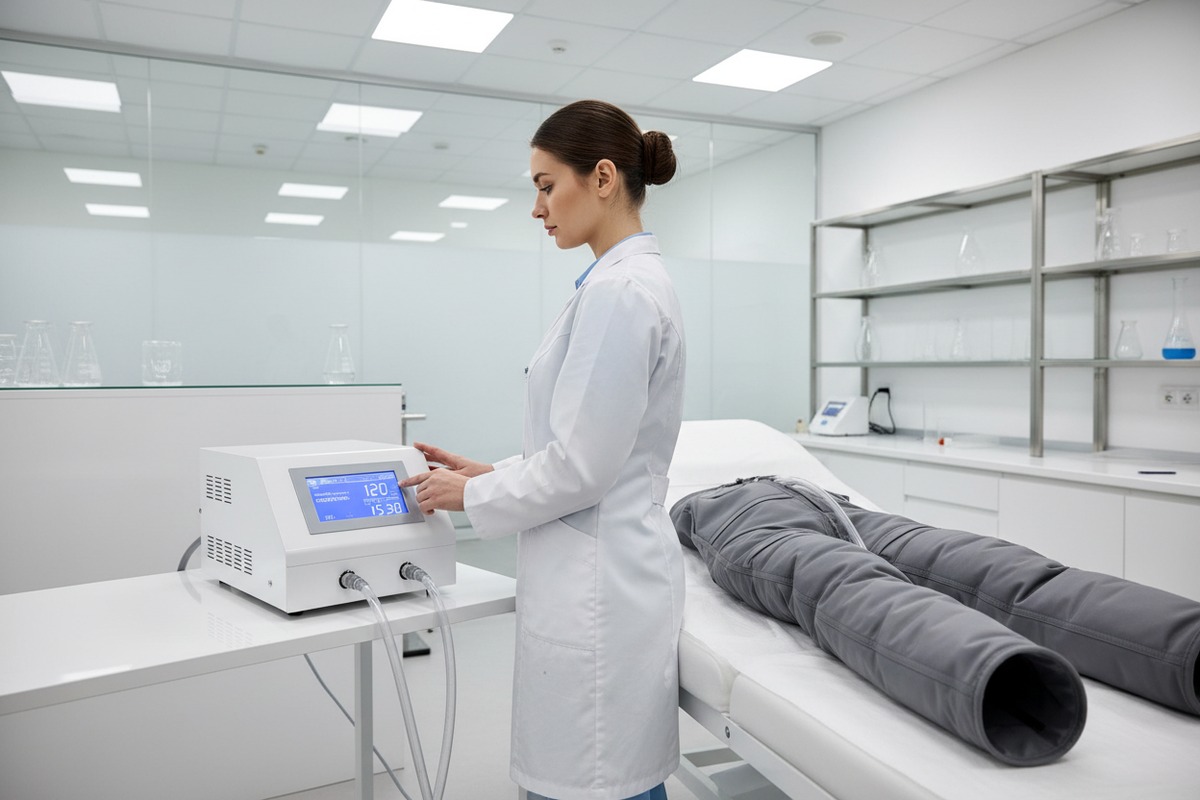
Every year, our production line handles hundreds of pressotherapy units 1. We see too many buyers skip proper mode testing and regret it later. A machine may look perfect on paper but deliver weak wave sequences or uneven squeeze pressure once it reaches your warehouse.
To test pressotherapy machine massage modes before purchasing, run a full hands-on trial of each mode at multiple pressure levels from 40 to 200+ mmHg. Check that wave mode inflates chambers sequentially from foot to thigh without delays, and verify squeeze mode applies even, consistent pressure across all air chambers simultaneously.
This guide walks you through every step. You will learn how to verify pressure consistency, test air valve responsiveness, evaluate performance standards, and even request custom sequences for your private-label brand. Let’s dive in.
How can I verify that the wave and squeeze modes deliver consistent pressure across all air chambers during my inspection?
When we calibrate our machines before export, we pay close attention to chamber-by-chamber pressure uniformity. Many buyers overlook this step and later receive complaints from their downstream customers about uneven massage experiences or weak lymphatic drainage 2 results.
To verify consistent pressure, inflate each mode at your target pressure level (typically 120–200 mmHg) and physically feel each air chamber during operation. In wave mode, check that pressure moves sequentially from the distal to proximal chambers without skipping. In squeeze mode, all chambers should inflate and hold pressure simultaneously with no weak spots.
Understanding Wave Mode Mechanics
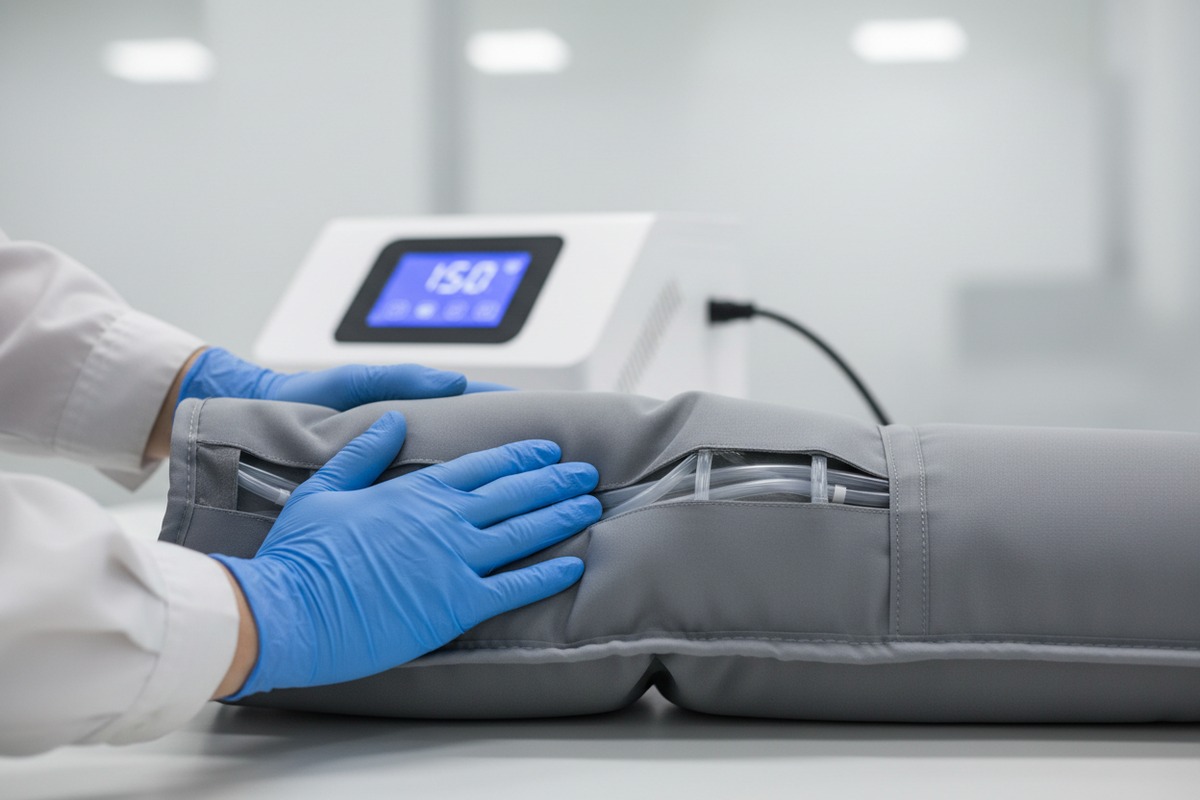
Wave mode is designed for lymphatic drainage. It works by inflating air chambers 3 in sequence, starting from the foot or hand and moving upward toward the torso. This sequential inflation mimics the body's natural lymph flow direction.
When testing wave mode, place your hand inside each chamber section while the machine operates. You should feel a clear progression of pressure. If any chamber inflates late or feels weaker than others, there may be a valve issue or an air leak in the tubing.
Understanding Squeeze Mode Mechanics
Squeeze mode operates differently. All chambers inflate at once, hold pressure for a set time (usually 2–3 seconds), then deflate together. This mode targets muscle stimulation 4 and blood circulation 5.
During your inspection, confirm that the hold phase feels even across the entire suit. Uneven pressure during squeeze mode often indicates faulty air valves or inconsistent pump output.
Pressure Testing Checklist
| Test Step | What to Check | Pass Criteria |
|---|---|---|
| Low pressure test (40–60 mmHg) | Gentle inflation across all chambers | No dead spots, smooth feel |
| Mid pressure test (100–150 mmHg) | Even pressure distribution | All chambers reach target within 1–2 seconds |
| High pressure test (180–220 mmHg) | Maximum output without leaks | No audible air escaping, firm hold |
| Sequential wave timing | Chamber-to-chamber delay | 6–10 second pump cycles, consistent rhythm |
| Squeeze hold duration | Simultaneous hold time | 2–3 seconds, no premature deflation |
Common Pressure Problems and Their Causes
If you detect weak pressure in certain chambers, the issue usually traces back to one of three sources: damaged air valves, kinked tubing, or a failing compressor. Request the supplier to open the machine and show you the internal components. A quality manufacturer will have no issue demonstrating their build quality.
What specific testing steps should I follow to ensure the massage sequences meet my brand's performance standards?
Our engineers have developed a structured testing protocol after years of receiving feedback from brand owners across the US and Europe. Without a clear testing process, you risk approving a machine that underperforms in real salon conditions.
Follow a five-step testing protocol: first, inspect assembly and connections; second, power on and cycle through all modes; third, conduct a pressure calibration test from low to high; fourth, run a full 30-minute simulation session; fifth, perform a noise and vibration audit. This ensures the machine meets professional performance standards.
Step 1: Visual and Assembly Inspection
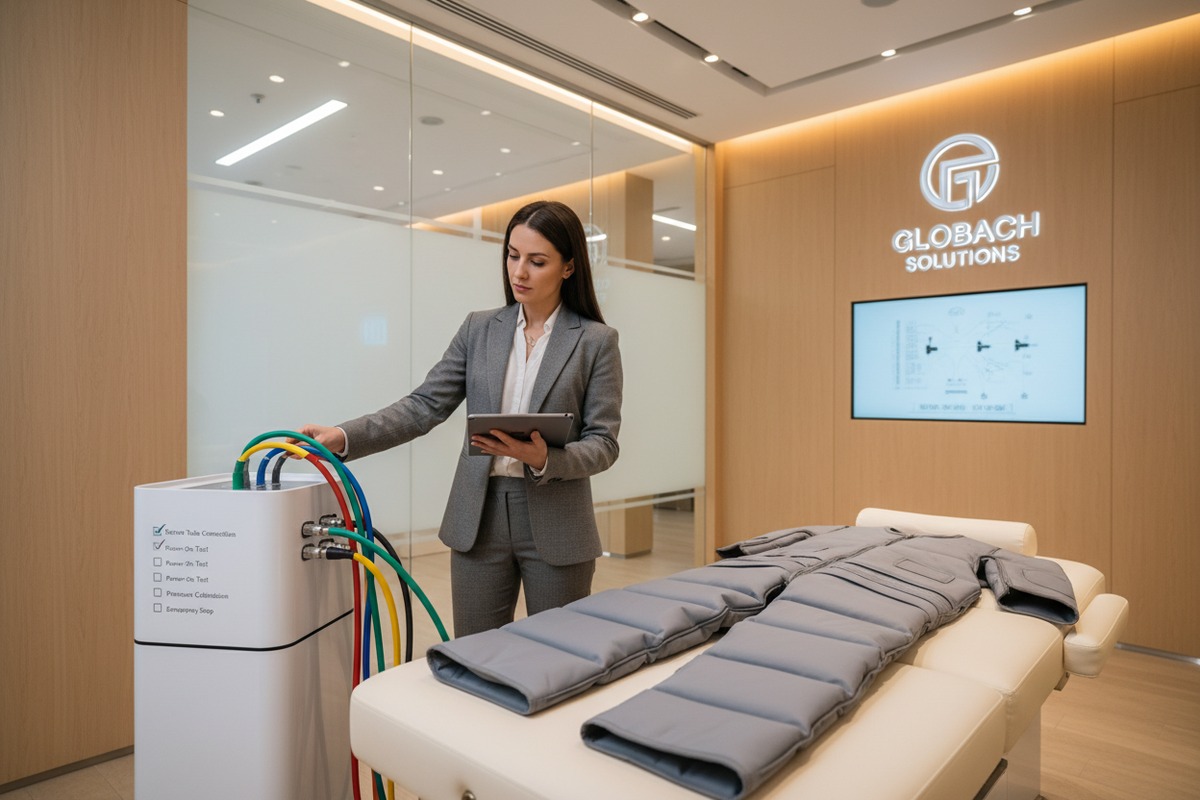
Before powering on, examine all physical components. Check the compression suit for quality stitching, elastic fit, and proper chamber alignment. Inspect air tubes for kinks, cracks, or loose connections. Verify that the control panel buttons or touchscreen respond correctly.
Step 2: Power-On and Mode Cycling
Turn on the machine and cycle through every available mode. Most professional units offer 4–13 pre-programmed modes including lymphatic drainage, weight loss, and manual settings. Confirm each mode activates without error messages or delays.
Step 3: Pressure Calibration Test
Start at the lowest pressure setting (20–40 mmHg) and gradually increase to the maximum (often 200–240 mmHg). At each level, verify that the displayed pressure matches the actual sensation. Use a handheld pressure gauge 6 if available for precise measurement.
Step 4: Full Session Simulation
Run a complete 30–45 minute treatment session wearing the suit yourself or using a test subject. This reveals issues that short tests cannot detect, such as heat buildup, discomfort at seams, or gradual pressure decline.
Step 5: Noise and Vibration Audit
Listen to the compressor during operation. Excessive noise indicates lower-quality pumps or loose internal components. Vibration should be minimal. A quieter machine generally provides a better user experience for salon clients.
Testing Protocol Summary Table
| Step | Duration | Key Focus Areas |
|---|---|---|
| Visual inspection | 10–15 min | Suit quality, tube connections, panel condition |
| Mode cycling | 5–10 min | All modes activate, no errors |
| Pressure calibration | 15–20 min | Low to high range accuracy |
| Full session | 30–45 min | Comfort, heat, pressure consistency |
| Noise audit | 5 min | Compressor volume, vibration level |
Setting Your Brand's Performance Benchmarks
Define clear specifications before testing. For example, your brand may require:
- Minimum pressure range of 20–220 mmHg
- At least 6 pre-programmed modes
- Noise level below 55 dB during operation
- Suit fit accommodating waist sizes up to 48 inches
Document these requirements and share them with your supplier before the inspection.
How do I evaluate the responsiveness of the air valves when switching between different modes during a product trial?
In our experience exporting to the US market, air valve responsiveness separates professional-grade equipment from budget alternatives. Slow or sticky valves cause delays between compression cycles. This frustrates salon operators and reduces treatment effectiveness.
Evaluate air valve responsiveness by switching between wave and squeeze modes rapidly while the machine is running. Quality valves should transition within 1–2 seconds without hesitation. Also test the pause and stop functions mid-cycle to confirm the machine can halt immediately and release air quickly for safety.
What Makes Air Valves Responsive
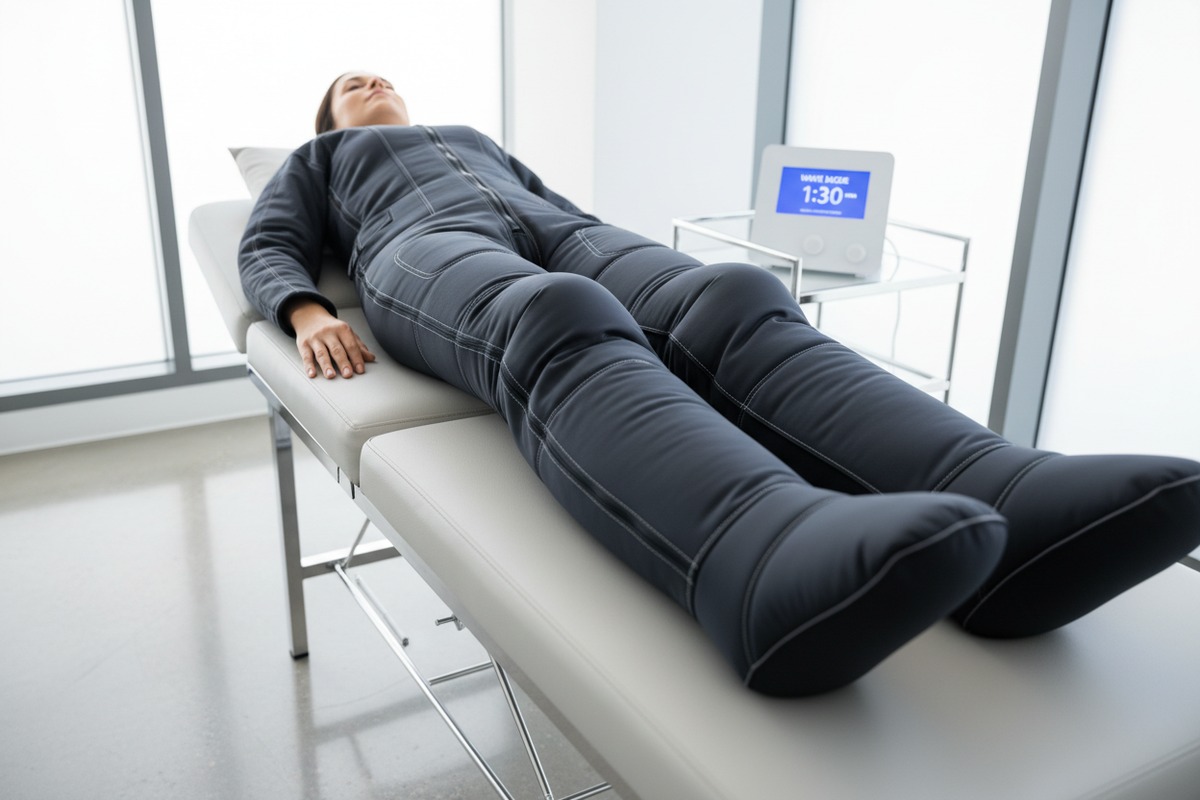
Modern pressotherapy machines use solenoid valves 7 or pneumatic valves to control airflow to each chamber. High-quality solenoid valves open and close precisely, allowing rapid mode changes. Lower-quality valves may stick, creating uneven inflation or slow deflation.
Testing Mode Transition Speed
While the machine runs in wave mode, switch it to squeeze mode using the control panel. Count the seconds until the new mode fully activates. Professional equipment should complete this transition in under 2 seconds. Delays beyond 3–4 seconds indicate valve lag.
Testing Emergency Stop and Air Release
Safety matters. Press the pause or stop button during operation. The machine should immediately halt all compression. Air should release from the chambers within 5 seconds. If chambers remain inflated after stopping, the valves are not responding correctly.
Valve Quality Comparison Table
| Valve Type | Response Time | Durability | Cost Level |
|---|---|---|---|
| Premium solenoid | < 1 second | 50,000+ cycles | High |
| Standard solenoid | 1–2 seconds | 30,000 cycles | Medium |
| Basic pneumatic | 2–4 seconds | 15,000 cycles | Low |
| Budget generic | 4+ seconds | < 10,000 cycles | Very low |
Signs of Faulty Valves
Watch for these warning signs during your trial:
- Clicking sounds without corresponding inflation
- Chambers that inflate out of sequence
- Slow or incomplete deflation
- Air escaping from valve housings
If you detect any of these issues, request a replacement unit or move to a different supplier.
Long-Term Valve Reliability
Ask the supplier about the valve brand and cycle rating. Quality manufacturers use valves rated for 30,000 to 50,000 cycles or more. A busy salon running 10 treatments daily accumulates thousands of cycles monthly. Low-rated valves fail within months, causing costly downtime.
Can I request a custom sequence for these massage modes to differentiate my private-label equipment from competitors?
When we work with brand owners developing their private-label lines, custom mode sequences become a key differentiator. Your competitors may sell the same base machine, but unique programming sets your brand apart in the market.
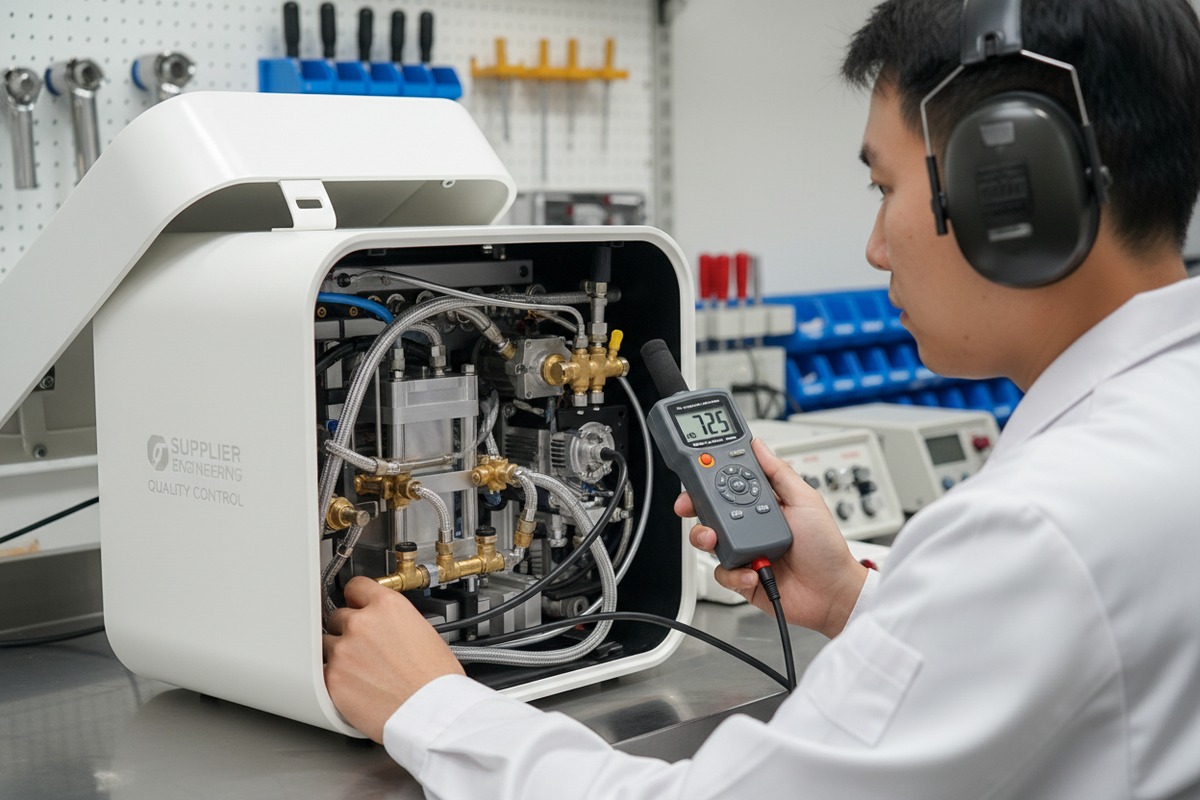
Yes, you can request custom massage sequences from capable OEM manufacturers. This includes unique wave patterns, proprietary squeeze rhythms, custom pressure gradients, and branded mode names. Discuss your requirements with the supplier's engineering team and confirm they have the software capability to implement your specifications.
Types of Customization Available
Most OEM pressotherapy manufacturers offer several customization levels:
| Customization Type | Description | Typical MOQ |
|---|---|---|
| Logo branding | Your logo on machine body and startup screen | 10–20 units |
| Mode naming | Custom names for preset programs | 20–50 units |
| Pressure profiles | Unique pressure curves per mode | 50–100 units |
| Sequence programming | Entirely new chamber inflation patterns | 100+ units |
| Hardware modifications | Different chamber counts, special features | 200+ units |
How Custom Sequences Work
The machine's control board stores program algorithms that dictate when each chamber inflates, how long it holds, and the pressure level. Manufacturers with in-house software teams can modify these algorithms based on your specifications.
For example, you might request:
- A "Deep Tissue" mode that uses higher pressure (180–220 mmHg) with longer hold times
- A "Gentle Lymph" mode that runs slower wave sequences at lower pressure (60–100 mmHg)
- An "Athletic Recovery" mode optimized for post-workout muscle relief
Working with the Engineering Team
Prepare a detailed brief before discussions. Include:
- Target pressure ranges for each custom mode
- Desired inflation sequence (which chambers, in what order)
- Hold duration and deflation timing
- Treatment duration per session
- Any special features (gradients, intervals, pauses)
A capable supplier will review your requirements and provide a technical proposal. Expect 2–4 weeks for software development and testing before production samples are ready.
Protecting Your Custom Programs
Ask about intellectual property protection. Some manufacturers will sign agreements preventing them from offering your custom sequences to other buyers. This protects your competitive advantage.
Cost Considerations
Custom programming adds development costs, typically ranging from $500 to $2,000 depending on complexity. However, this investment pays off through brand differentiation and the ability to command premium pricing in your market.
Conclusion
Testing pressotherapy machine modes before purchase protects your investment and your brand reputation. Verify pressure consistency across all chambers, follow a structured testing protocol, evaluate valve responsiveness, and explore custom sequence options to stand out from competitors.
Footnotes
1. Provides a general overview of pressotherapy machines and their function. ↩︎
2. Authoritative source explaining lymphatic drainage massage, its benefits, and how to perform it. ↩︎
3. Explains how inflatable air chambers function within pressotherapy devices. ↩︎
4. Authoritative source explaining electrical muscle stimulation, its uses, and benefits. ↩︎
5. Highlights how pressotherapy enhances blood flow and its associated health benefits. ↩︎
6. Explains the importance of accuracy and classification in pressure gauges. ↩︎
7. Authoritative source providing a basic explanation of what solenoid valves are and how they work. ↩︎
8. Defines Original Equipment Manufacturers and their role in medical device production. ↩︎

 English
 Español de México
 Deutsch
 Français
 العربية
 Русский
