

When we prepare orders for our US clients at our Guangzhou facility, we know that rigorous verification is the only barrier between a successful launch and a costly recall.
To ensure quality, hire a reputable third-party agency like SGS or Intertek to perform a Pre-Shipment Inspection (PSI). Your checklist must cover functional energy output tests, electrical safety checks, visual inspections for cosmetic flaws, and packaging drop tests to verify the device meets FDA and ISO 13485 standards before shipping.
Here is how you can systematically secure your investment and reputation.
What specific functional tests should I include in my inspection checklist for shockwave therapy machines?
In our experience exporting to North America, checking the software interface is just as critical as testing the mechanical components to avoid user frustration.
Your checklist needs to mandate a full functional run-through, cycling all energy levels and frequencies to match the digital display. Include specific checks for touchscreen responsiveness, foot pedal activation, and cooling system performance under high-stress conditions to ensure the machine operates safely during continuous clinical use.

When defining the scope for your third-party inspector, you must move beyond simple "on/off" checks. third-party inspector 1 Shockwave therapy devices are complex electro-pneumatic systems, and a superficial review often misses the underlying issues that cause breakdowns in a clinical setting. We always advise our partners to provide the inspection agency with a detailed user manual user manual 2 and a specific "Critical Function List" derived from the device's technical specifications.
Interface and Software Logic Verification
The first layer of functional testing involves the user interface (UI). user interface 3 user interface (UI) 4 Since these machines feature a touchscreen displaying a skeletal human figure with anatomical anatomical labels 5 labels, the inspector must verify that selecting a specific body part (e.g., "Elbow" or "Shoulder") automatically adjusts the pre-set parameters to the correct range. We have seen instances where software bugs cause the energy settings to remain static even when the treatment area changes.
The inspector should navigate through every menu option to check for "dead spots" on the touchscreen. They must also look for localization errors—often called "Chinglish"—which can make a high-end device look unprofessional to American doctors. For example, a button labeled "Start Shock" is acceptable, but "Open Shoot" would be a red flag indicating poor firmware translation.
Accessory and Control Integrity
The physical controls are the primary interface for the therapist. The single blue glowing button on the front panel, which typically indicates power status or standby mode, must be checked for consistent illumination. If it flickers or fails to light up when the machine is active, it suggests poor internal wiring.
Furthermore, the foot pedal is a crucial safety component. The inspector must verify that the machine stops firing immediately when the foot pedal is released. Any latency here is a safety hazard. Below is a breakdown of the specific functional checkpoints you should mandate in your inspection protocol.
Comprehensive Functional Checklist
| Component | Test Procedure | Acceptance Criteria |
|---|---|---|
| Touchscreen UI | Navigate all anatomical menus (skeletal figure). | No frozen screens; correct parameter auto-load for each body part. |
| Applicator Handle | Trigger start/stop via handle button 20 times. | Instant response; no sticking buttons; blue light indicator syncs. |
| Foot Pedal | Depress and release while machine is active. | Immediate cessation of shockwave output upon release. |
| Air Compressor | Run machine at max frequency (e.g., 21Hz). | Steady pressure build-up; noise level below 65dB; no rattling. |
| Cooling System | Operate continuously for 15 minutes. | Fans engage automatically; handle temperature remains comfortable (<42°C). |
By enforcing this granular level of testing, you ensure that the device not only looks good but performs reliably for the end-user.
How do I verify the energy output and stability of the handpieces during the pre-shipment check?
Our engineering team uses precision acoustic sensors to calibrate every handpiece acoustic sensors 6, knowing that inconsistent energy delivery renders the therapy ineffective.
Inspectors should use a pressure-mapping sensor or acoustic measurement tool to validate kinetic energy consistency across multiple shocks. They must run the handpiece at maximum frequency for a sustained period to detect power drop-offs and verify the cooling system prevents the applicator handle from overheating.
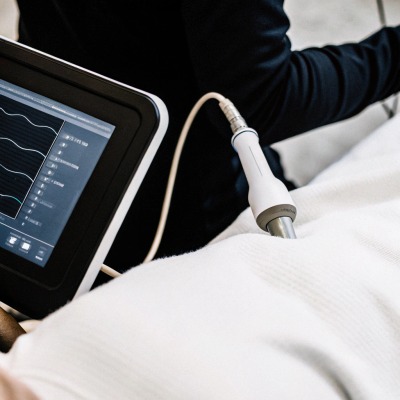
Validating the actual energy output of a pneumatic shockwave device is the most challenging part of a pre-shipment inspection because it requires more than just visual observation. The "bullet" inside the handpiece is accelerated by compressed air to strike the transmitter head, creating the therapeutic shockwave. If the internal seals are weak or the bullet weight is off, the displayed energy (e.g., 180mJ) will not match the actual output.
Using Specialized Measurement Tools
Standard third-party inspectors from generalist agencies may not carry specialized shockwave measurement tools. You must insist that they either bring a laser vibrometer or a pressure mapping sensor, or you must require the factory to provide their internal testing equipment for the inspector to use. The inspector should verify the "shot counter" accuracy. If the machine is set to deliver 2,000 shocks, the output must stop exactly at 2,000.
Stability Under Load (Stress Testing)
A common failure mode in lower-quality machines is "power fade." This happens when the air compressor overheats or loses pressure after a few minutes of high-frequency operation. The inspector needs to perform a stress test: set the machine to its maximum frequency (often 21Hz or higher) and maximum pressure (4 Bar or 5 Bar) and run it for 5 to 10 minutes continuously.
During this test, the inspector should listen for changes in the sound pitch. A dropping pitch usually indicates a loss of pressure. Simultaneously, they must monitor the temperature of the handpiece. The applicator rests on the top of the device, but during use, the friction of the moving bullet generates significant heat. If the handle becomes too hot to hold bare-handed, the internal cooling mechanism is insufficient, which is a critical safety failure.
Energy Output Verification Table
To standardize this process, provide your inspector with the following verification parameters. This ensures they don't just "feel" the output but measure it against a standard.
| Parameter | Standard / Tolerance | Testing Method |
|---|---|---|
| Output Consistency | $\pm$ 10% deviation allowed between shots. | Use a force gauge or impact sensor to measure 50 consecutive hits. |
| Frequency Accuracy | $\pm$ 1Hz tolerance. | Use a tachometer or audio frequency analyzer to verify Hz settings. |
| Thermal Limit | Handle surface < 42°C after 10 min use. | Infrared thermometer reading on the grip area post-stress test. |
| Pressure Stability | No drop > 0.5 Bar during operation. | Monitor internal digital manometer or external pressure gauge. |
Without these specific checks, you risk receiving machines that turn on but fail to provide clinical results, damaging your brand's reputation with doctors and salon owners.
What packaging drop tests are necessary to ensure my equipment arrives safely in the US?
We reinforce our cartons with high-density foam because we have seen how rough handling at Long Beach or New York ports can shatter delicate touchscreens.
Require a standard ISTA 1A drop test where the packaged unit is dropped from a specific height on its corners, edges, and faces. This confirms the foam inserts and outer carton provide sufficient shock absorption to protect the delicate touchscreen and internal air compressor from impact damage during transit.
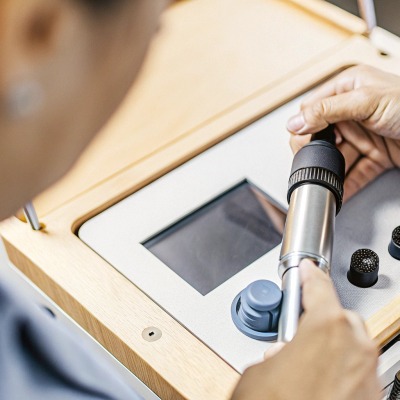
Shockwave therapy machines are heavy due to the internal air compressor and metal chassis, yet they are fragile due to the large touchscreen interface and the precise optics of the handpiece. A standard "visual check" of the box is not enough. You need empirical data that the packaging design can survive the journey from the factory floor in China to your warehouse in the US.
The ISTA 1A Drop Test Protocol
The International Safe Transit Association (ISTA) 1A standard is the industry benchmark International Safe Transit Association (ISTA) 7 for packaged products International Safe Transit Association 8 weighing 150 lbs (68 kg) or less. The test involves dropping the fully packaged product from a height determined by its weight. For most shockwave machines (which typically weigh between 15kg to 30kg), the drop height is usually around 30 inches (76 cm).
The inspector must perform the drops in a specific sequence:
- Face Drop: Flat on the bottom, top, and largest sides.
- Edge Drop: On the longest and shortest edges radiating from a bottom corner.
- Corner Drop: On the most vulnerable bottom corner (usually the one near the screen or heavy compressor).
Post-Drop Inspection
The test isn't over when the box hits the floor. The most critical step is opening the box afterwards. The inspector must look for:
- Internal Shift: Did the machine move significantly inside the foam?
- Foam Integrity: Did the Styrofoam or PE foam crack? If the foam cracked, it means the energy was transferred to the machine rather than absorbed.
- Functional Re-check: The machine must be powered on again. We have seen cases where the exterior looked fine, but the impact dislodged the heavy air compressor inside, snapping internal tubing or unseating the RAM on the motherboard.
Checking Accessories and Branding
Beyond the drop test, the packaging inspection must verify the "unboxing experience." Since the device features a blue and white color scheme, the packaging often reflects this branding. Ensure that the handheld applicator is secured in a custom-molded slot and not just wrapped in bubble wrap. The inspector should verify that the User Manual is in English (not Chinese) and that the power cord has the correct NEMA 5-15 plug for the US market, not a European Schuko or Chinese plug.
How should I proceed if the third-party inspection report identifies critical defects in the batch?
When our internal audits catch a flaw, we halt production immediately; as a buyer, you must be equally decisive to prevent defective goods from leaving the dock.
If critical defects appear, immediately freeze the shipment and demand a detailed root cause analysis from the manufacturer. Require them to rework or replace the defective units at their expense, followed by a re-inspection by the same third-party agency to verify the issues are fully resolved before releasing payment.

Receiving a "Failed" or "Pending" inspection report can be stressful, but it is better than dealing with a recall. The first step is to calmly analyze the defects categorized in the report. Third-party agencies usually classify defects into three tiers: Critical, Major, and Minor. Your reaction should depend entirely on which tier the issues fall into.
Understanding Defect Classifications
- Critical Defects: These render the device unsafe or wholly unusable (e.g., exposed wiring, smoke during operation, or a non-responsive touchscreen). Action: Zero tolerance. The entire batch must be rejected. The factory must manufacture new units or conduct 100% rework, followed by a 100% re-inspection.
- Major Defects: These affect function or saleability but are not dangerous (e.g., the energy output is 15% lower than spec, or the "skeletal figure" on the screen has pixel errors). Action: Negotiate a rework plan. Do not ship until these are fixed.
- Minor Defects: Cosmetic issues that don't affect function (e.g., a small scratch on the bottom of the case, or a slightly misaligned label). Action: You might accept these with a discount, or if the percentage is low (within AQL 4.0), you might approve shipment to avoid delays.
The "Rework and Re-inspect" Loop
If you identify Critical or Major defects, do not simply accept a photo from the supplier showing the "fix." You must arrange a Re-inspection. The supplier should bear the cost of this second inspection if the failure was their fault.
In your communication with the supplier, be firm but professional. Send the inspection report and ask for their "Corrective Action Plan" (CAP). Corrective Action Plan 9 Corrective Action Plan 10 Ask them specifically: "What caused the pressure leakage in the handpiece, and how have you changed the assembly process to ensure the reworked units won't have the same issue?"
Managing Financial Leverage
This is why payment terms matter. If you have only paid a 30% deposit, you have significant leverage. Never release the final 70% balance until you have a "Passed" inspection report in hand. If you release payment on a promise, you lose your ability to enforce quality standards. We always tell our clients that a delayed shipment is inconvenient, but a shipment of bricked machines is a disaster.
Defect Resolution Protocol
| Defect Type | Example | Recommended Buyer Action | Who Pays Re-inspection? |
|---|---|---|---|
| Critical | Electrical shock risk; Device won't power on. | Reject batch. Demand 100% replacement. | Manufacturer |
| Major | Touchscreen insensitive; Low pressure. | Hold shipment. Require rework. | Manufacturer |
| Minor | Paint scratch; Dirty packaging. | Accept if under AQL limit; Negotiate discount if over. | Negotiable / Buyer |
Conclusion
Conducting a thorough third-party inspection ensures your shockwave therapy machines are safe, functional, and market-ready. By enforcing strict checklists and holding manufacturers accountable, you protect your business from liability and secure high-quality inventory.
Footnotes
1. General overview of the role and importance of pre-shipment inspections in trade. ↩︎
2. ISO 13485 requires comprehensive documentation including user manuals for medical devices. ↩︎
3. Background on UI design principles for medical and technical equipment. ↩︎
4. FDA guidance on human factors and usability engineering for medical devices. ↩︎
5. Official reference for anatomical terminology used in medical device interfaces. ↩︎
6. Technical specifications for sensors used in measuring acoustic pressure waves. ↩︎
7. Official website of the organization setting packaging performance standards. ↩︎
8. Official site for the organization that defines the 1A drop test standards. ↩︎
9. ASQ definition of Corrective and Preventive Action (CAPA) in quality management. ↩︎
10. FDA guidance on CAPA (Corrective and Preventive Actions) for medical device manufacturers. ↩︎

 English
 Español de México
 Deutsch
 Français
 العربية
 Русский
