
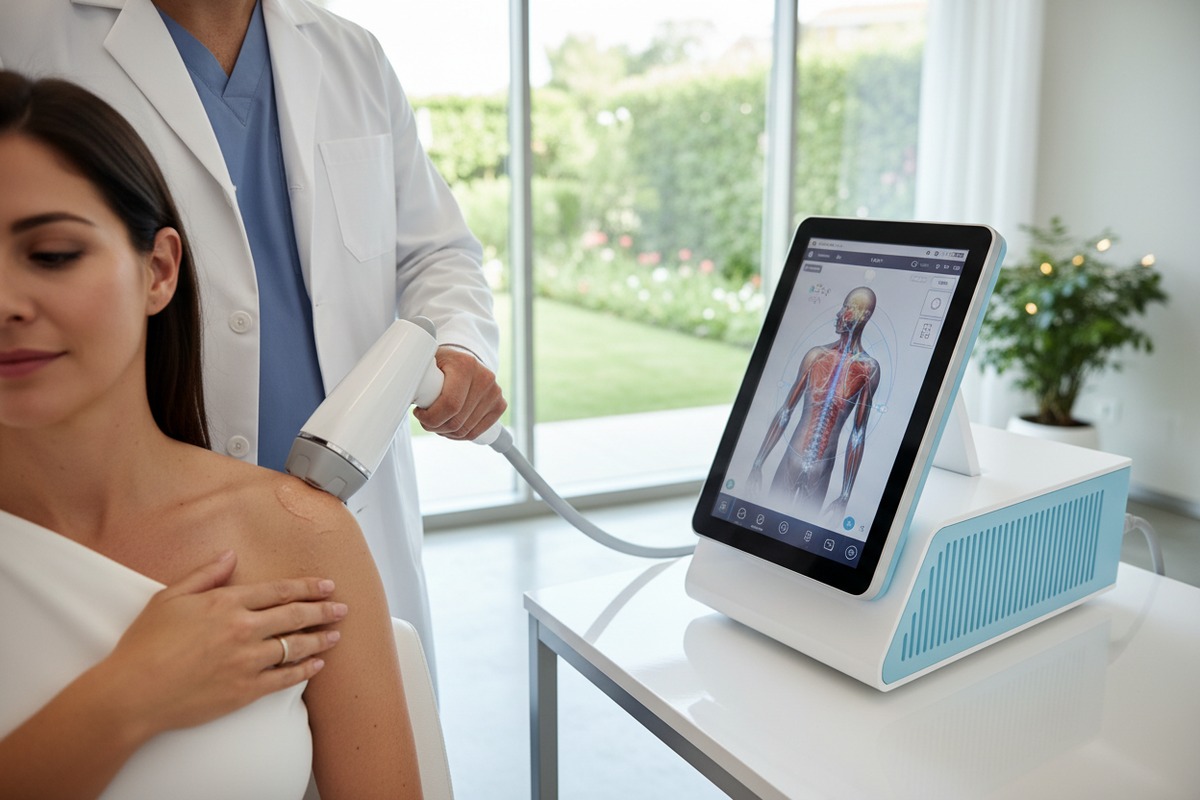
When our engineering team first developed shockwave therapy devices for export, we faced a challenge many distributors share: explaining complex physics to clinic owners who just want results. The confusion around how these machines actually heal tissue creates hesitation among buyers, leaving chronic pain patients without effective treatment options.
Shockwave therapy machines work by generating high-energy acoustic waves that create controlled micro-trauma in targeted tissues. These waves trigger mechanotransduction, stimulate neovascularization, break down calcifications, and activate the body’s natural healing cascade. Therapeutic effects include pain reduction, tissue regeneration, improved blood circulation, and collagen production.
Let me walk you through the science behind these powerful devices and show you exactly what results you can expect for your patients and business.
How does the physics of shockwave therapy actually work to heal my patients' chronic pain?
Our production engineers spend considerable time calibrating wave parameters because the physics behind shockwave therapy determines clinical outcomes. Many distributors receive machines with impressive specifications but lack understanding of why those numbers matter for patient healing.
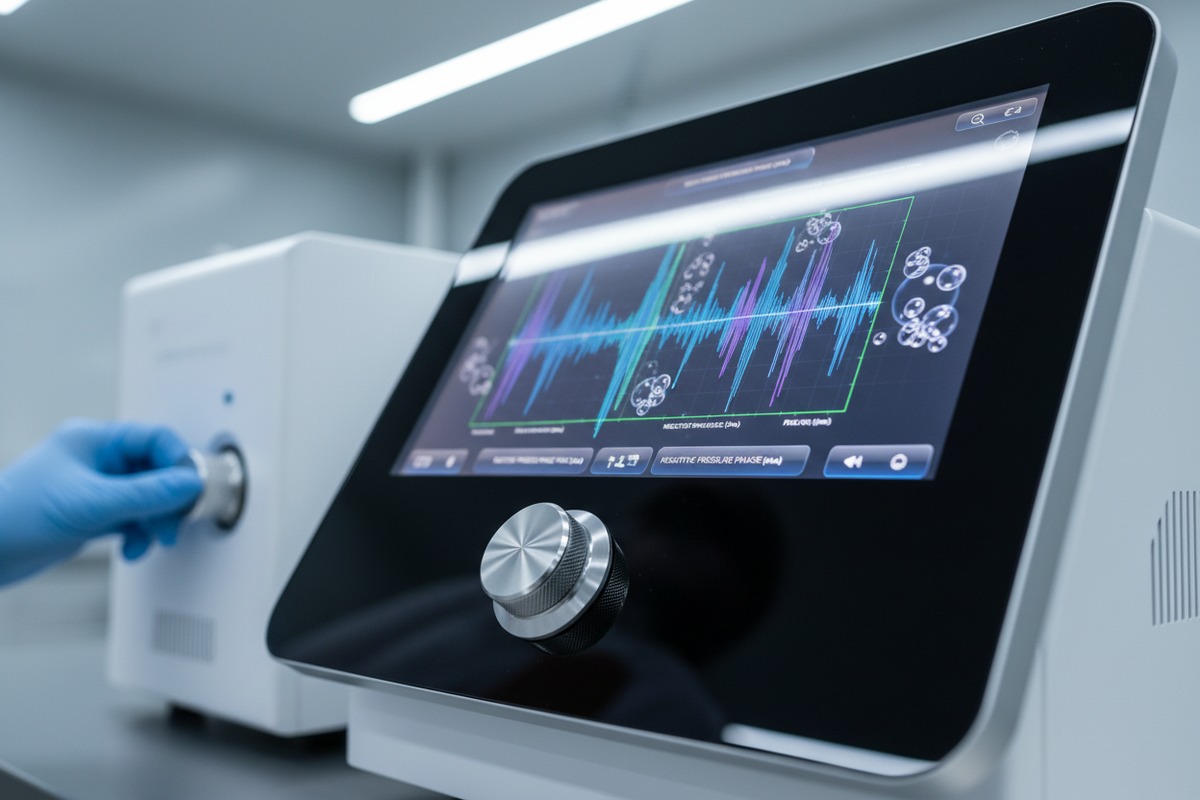
Shockwave therapy physics involves rapid positive pressure phases followed by negative tensile phases, generating peak pressures approximately 1000 times greater than ultrasound. These acoustic waves travel at 1500 m/s through tissue, creating cavitation bubbles that implode to fracture calcifications, stimulate cellular repair pathways, and trigger mechanotransduction for lasting pain relief.
Understanding Wave Generation Methods
The way a shockwave machine generates its waves directly impacts treatment depth and effectiveness. During our quality control testing, we evaluate three primary generation technologies.
Electrohydraulic systems 1 use spark discharge in water to create cavitation bubbles 2. When these bubbles implode, they generate powerful shockwaves. This technology delivers excellent depth penetration but requires more maintenance.
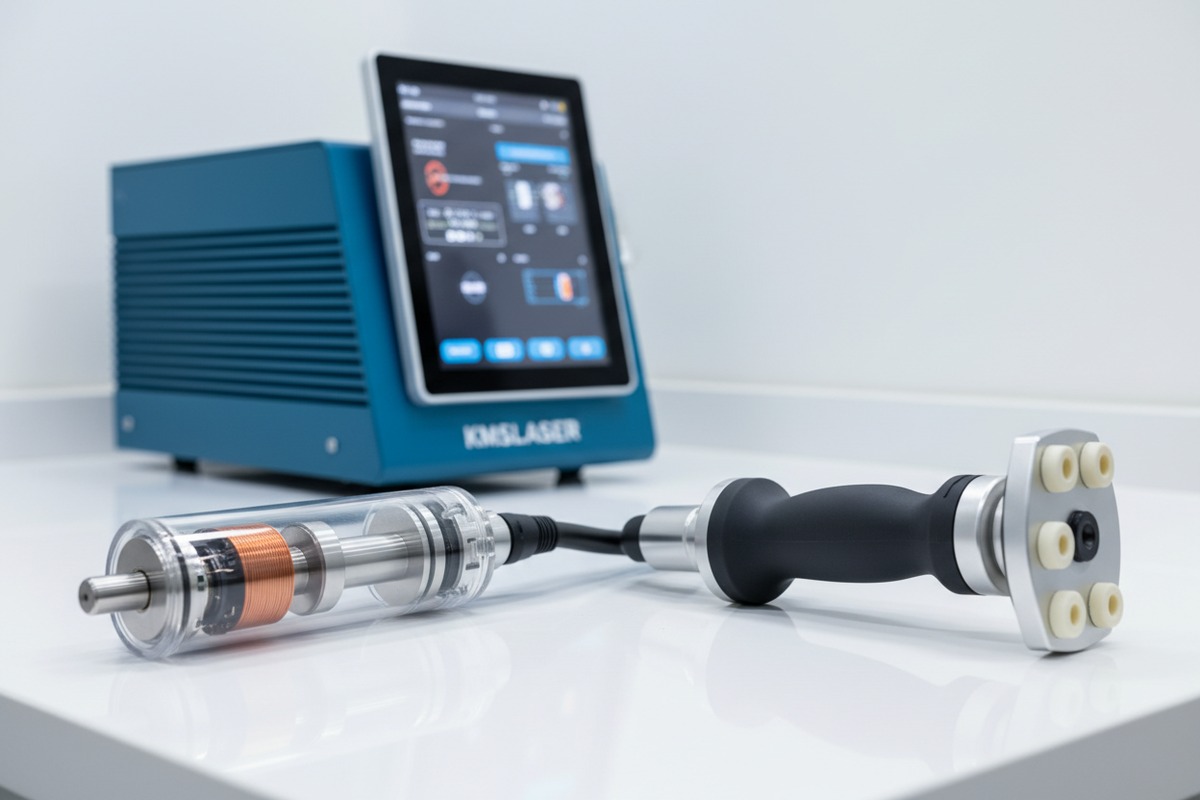
Electromagnetic systems accelerate a membrane using magnetic fields generated by a coil. These systems offer consistent wave output and good reliability. Most hospital-grade devices use this technology.
Piezoelectric systems rely on crystal arrays that deform under electrical voltage. They provide precise wave control and work well for superficial treatments.
| Generation Method | Mechanism | Depth Penetration | Maintenance Level | Best Applications |
|---|---|---|---|---|
| Electrohydraulic | Spark discharge in water | Deep (8-12 cm) | Higher | Bone healing, deep calcifications |
| Electromagnetic | Magnetic coil acceleration | Medium-deep (5-8 cm) | Moderate | Tendinopathies, muscle injuries |
| Piezoelectric | Crystal deformation | Shallow-medium (3-5 cm) | Lower | Superficial conditions, trigger points |
Focused vs. Radial Shockwaves
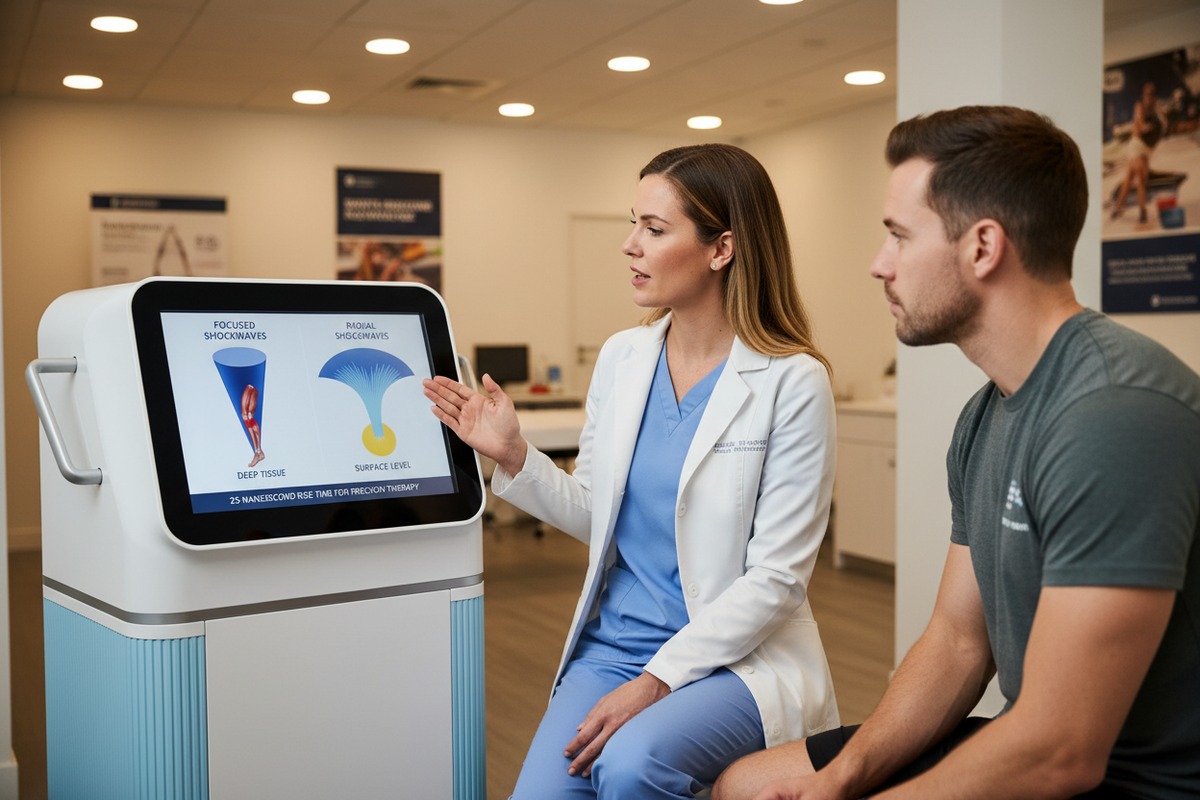
This distinction matters greatly when selecting equipment for your clinic network. Focused shockwaves (FSWT) 3 have rapid rise times of 25-40 nanoseconds, allowing deep tissue penetration with concentrated energy at a specific focal point.
Radial shockwaves (RSWT) use compressed air to accelerate a projectile at 80-90 kilometers per hour against an applicator. The resulting pressure waves diverge as they travel, reaching maximum pressure at the skin surface and penetrating 4-5 centimeters deep.
When we test machines in our facility, we measure these rise times precisely. True focused shockwaves create genuine cavitation effects at depth. Radial waves, while effective for many conditions, technically produce "pressure waves" rather than true shockwaves.
The Four Phases of Tissue Response
Understanding how waves interact with tissue helps you explain treatment to patients. The process unfolds in four distinct phases.
The physical phase involves energy transfer and cavitation bubble formation. Waves create micro-jets traveling at hundreds of meters per second that mechanically break down calcified deposits.
The physicochemical phase sees membrane ionization occur as cell walls respond to pressure changes. This increases cell permeability temporarily.
During the chemical phase, growth factors release from stimulated cells. These signaling molecules recruit repair cells to the treatment area.
The biological phase completes the cycle as fibroblasts, osteoblasts, and other repair cells proliferate. New blood vessels form. Collagen synthesis increases. Tissue rebuilds stronger than before.
What therapeutic results can I realistically promote to my salon and clinic distributors?
When our sales team speaks with distributors in the United States and Europe, they ask about outcomes they can confidently market. We understand that overpromising damages relationships. Our approach focuses on evidence-backed results from clinical data.
Realistic therapeutic results include 70-90% calcification reduction in tendinopathy cases, 60-80% chronic pain relief rates, enhanced tissue regeneration through neovascularization, and accelerated healing times. Studies involving over 20,000 patients across 500+ publications support these outcomes when proper protocols are followed.
Pain Reduction Mechanisms
Pain relief happens through multiple pathways. Hyperstimulation anesthesia occurs when intense sensory input overwhelms nerve fibers, temporarily blocking pain signals. Gate control theory 4 explains how shockwave stimulation recalibrates pain perception at the spinal cord level.
Additionally, treatment triggers endorphin release. These natural pain-killing compounds provide relief lasting beyond the treatment session. Most patients report significant improvement after 3-6 sessions.
| Pain Mechanism | How Shockwaves Work | Duration of Effect | Patient Experience |
|---|---|---|---|
| Hyperstimulation | Overwhelms nerve C-fibers | Immediate, temporary | Numbness during treatment |
| Gate Control | Recalibrates spinal signals | Days to weeks | Gradual pain reduction |
| Endorphin Release | Triggers natural opioids | Hours to days | General well-being |
| Inflammation Reduction | Decreases inflammatory markers | Weeks to months | Reduced swelling, improved function |
Tissue Regeneration Benefits
The regenerative effects make shockwave therapy valuable beyond simple pain management. Neovascularization 5, the formation of new blood vessels, brings oxygen and nutrients to damaged tissue. We have seen this benefit clinic owners building referral networks with sports medicine practices.
Collagen production increases significantly following treatment. Tendons and ligaments heal stronger. Chronic wounds close faster. These effects stem from mechanotransduction 6, where physical forces convert to biochemical signals affecting cell behavior.
Stem cell activation represents another important benefit. Shockwaves stimulate resident stem cells in treated areas, promoting differentiation into needed cell types for repair.
Condition-Specific Outcomes
Different conditions respond with varying success rates. Plantar fasciitis 7 shows excellent response, with most patients achieving significant relief. Calcific shoulder tendinitis often resolves completely after proper treatment protocols.
Tennis elbow and other insertional tendinopathies respond well when treatment combines with appropriate rehabilitation. Chronic wound healing accelerates notably in diabetic patients.
Emerging applications include erectile dysfunction treatment, where improved blood flow produces measurable results. Peripheral neuropathy patients report reduced symptoms. These expanding indications create opportunities for your clinic network.
Setting Realistic Expectations
Honest communication prevents disappointment. Not every patient responds equally. Some require more sessions. Some conditions prove resistant. Setting expectations appropriately builds trust with your downstream customers.
Most protocols involve 3-6 sessions, delivering 2000-4000 pulses per session. Results typically appear after the second or third treatment. Full benefit develops over 8-12 weeks as tissue remodeling completes.
How can I verify that the shockwave machines I source will meet my brand's high-end performance standards?
Quality concerns keep purchasing managers awake at night. When our team works with brand owners, we hear stories of previous suppliers delivering equipment that failed within months. Our QC department developed verification protocols specifically for high-end market requirements.
Verify shockwave machine quality through independent pressure measurements, component sourcing documentation, clinical certification reviews, and production facility audits. Key parameters include actual wave pressure output, rise time specifications, build material quality, software reliability, and after-sales support infrastructure. Request factory testing videos and third-party calibration reports.
Critical Technical Parameters
Not all specification sheets tell the truth. Pressure output claims require verification. Some manufacturers measure peak pressure under ideal laboratory conditions that clinical use never replicates.
Request actual waveform documentation. True shockwave devices produce characteristic pressure profiles with rapid rise times. Slow rise times indicate pressure wave generators marketed as shockwave devices.
Energy flux density measurements matter for treatment efficacy. Low-energy devices may be safer but produce weaker therapeutic effects. High-energy devices require more robust construction and safety features.
| Quality Parameter | Verification Method | Red Flags | Acceptable Standards |
|---|---|---|---|
| Pressure Output | Independent calibration report | Only manufacturer claims | Third-party test certificate |
| Rise Time | Oscilloscope measurement data | No data provided | <100 ns for focused, documented for radial |
| Energy Flux Density | Clinical protocol documentation | Vague specifications | Clear mJ/mm² ratings per applicator |
| Build Materials | Component sourcing audit | Unmarked generic parts | Branded components, traceable supply chain |
| Software Stability | Extended operation testing | Frequent crashes reported | Continuous 8-hour operation certified |
Component Quality Assessment
The applicator handpiece receives the most stress during clinical use. Examine construction materials closely. Metal housings outlast plastic. Quality bearings ensure smooth operation over thousands of treatment cycles.
Internal components determine longevity. Generic capacitors fail faster than branded alternatives. Power supply quality affects both performance consistency and electrical safety.
Touchscreen interfaces should respond accurately and resist repeated cleaning with disinfectants. Our testing protocol includes 10,000 touch cycles and chemical resistance evaluation.
Certification and Compliance
Medical device regulations vary by market. CE marking 8 covers European distribution. FDA registration matters for United States sales. Your target markets determine necessary certifications.
Review the actual certificate documents, not just claims. Some suppliers display certifications they do not actually hold. Contact certification bodies directly when large orders are involved.
Electrical safety certifications like IEC 60601 9 ensure patient and operator protection. These standards require specific construction methods and safety features.
Factory Audit Recommendations
Visit production facilities when possible. Observe assembly processes. Clean, organized facilities typically produce better products. Worker training levels affect assembly quality.
Check calibration equipment. Factories need proper measurement tools to verify their own output. Ask about calibration schedules and traceability.
Review their quality control documentation. Systematic inspection processes catch defects before shipping. Ask about rejection rates and how failed units get handled.
Can I customize the treatment protocols and private-label these shockwave devices for my business?
Private labeling questions come up in nearly every serious inquiry we receive. Brand owners want equipment that looks like theirs, performs to their standards, and supports their market positioning. Our ODM services address these needs comprehensively.
Yes, shockwave devices can be fully customized and private-labeled. Customization options include branded housing colors and logos, proprietary treatment protocols programmed into software, custom applicator designs, tailored user interfaces, branded packaging, and exclusive territory protection. Our OEM and ODM services support complete product development from standard models to ground-up custom designs.
Hardware Customization Options
Physical appearance matters for brand identity. Housing colors can match your corporate palette. Logo placement on the main unit and handpiece reinforces brand recognition during every treatment.
Control panel layouts can reflect your preferences. Some brands prefer minimalist designs with few buttons. Others want comprehensive manual controls alongside touchscreen interfaces.
Applicator designs offer differentiation opportunities. Custom shapes, materials, or grip textures make your product feel distinct. Proprietary applicator connections prevent unauthorized accessory sales.
Software and Protocol Customization
Treatment protocols represent significant intellectual property. When clinics purchase your equipment, they receive your expertise embedded in preset programs.
Our software team can program custom treatment protocols based on your clinical experience or research. Specific parameters for different conditions, treatment durations, and pulse counts become standard on your devices.
User interface customization extends beyond logos. Menu structures, terminology, language options, and help content can all reflect your brand voice and training philosophy.
| Customization Area | Standard Options | Premium Options | Development Timeline |
|---|---|---|---|
| Housing Appearance | Color changes, logo placement | Custom mold shapes | 4-8 weeks |
| Control Interface | Button labels, screen graphics | Completely redesigned UI | 6-12 weeks |
| Treatment Protocols | Parameter presets | Proprietary algorithm development | 8-16 weeks |
| Applicators | Logo engraving | Custom ergonomic designs | 10-20 weeks |
| Packaging | Branded boxes and manuals | Custom carrying cases, accessories | 4-6 weeks |
Private Label Business Model Benefits
Exclusive branding creates value beyond product function. Your distributors and end users associate quality with your name, not a manufacturer's mark.
Territory protection agreements prevent competitors from accessing identical products. When we establish private label partnerships, we can restrict sales of that configuration to your markets only.
Custom documentation includes manuals, training materials, and marketing collateral under your brand. This comprehensive approach supports your sales team without revealing supply chain details.
Development Process Overview
Initial discussions establish your requirements. We review your target specifications, market positioning, and budget parameters. Technical feasibility assessment follows.
Prototype development allows you to evaluate form and function before committing to production quantities. Modifications happen at this stage without production delays.
Production sampling confirms manufacturing consistency. First article inspection compares production units to approved prototypes. Only after approval does full production begin.
Ongoing support includes firmware updates, spare parts supply, and technical assistance for your service team. We train your technicians on maintenance and repair procedures.
Conclusion
Shockwave therapy machines deliver measurable therapeutic results through well-understood physics. For distributors seeking reliable equipment, understanding wave generation, verifying quality parameters, and exploring customization options builds successful partnerships. Our team stands ready to support your brand's growth with high-performance, private-label shockwave devices.
Footnotes
1. This article explains electrohydraulic shockwave generation and its mechanism in ESWT. ↩︎
2. Replaced with an authoritative Wikipedia page explaining the phenomenon of cavitation. ↩︎
3. Performance Health Center provides a clear explanation of Focused Shockwave Therapy (FSWT). ↩︎
4. WebMD offers an accessible explanation of the gate control theory of pain. ↩︎
5. Merriam-Webster Medical Dictionary offers a concise definition of neovascularization. ↩︎
6. Wikipedia provides a comprehensive overview of mechanotransduction, a key biological process. ↩︎
7. The NHS provides comprehensive information on plantar fasciitis, its symptoms, and self-help. ↩︎
8. Elexes explains CE marking requirements for medical devices in the EU market. ↩︎
9. Horizon Electronics details the IEC 60601-1 standard for medical electrical equipment safety. ↩︎

 English
  Español de México
  Deutsch
  Français
  العربية
  Русский