

When our engineering team tests the pressure stability of pneumatic circuits 1, we constantly think about how your salons will monetize this technology. Setting the wrong trial price can kill your return on investment 2 before you even begin.
To price pressotherapy trials effectively, calculate your break-even point by dividing the total machine cost by the trial fee minus consumable expenses. Most successful salons set introductory rates between $50 and $80 for a 30-minute session, ensuring the equipment investment is recovered within the first 20 to 30 client visits.
Let’s examine the financial logic required to turn your new equipment into a profitable asset.
How do I calculate a trial price that balances my machine investment with competitive salon rates?
Our production managers track global component costs daily, so we know exactly where your profit margins can disappear if the math is wrong. You need a formula that accounts for hardware wear and tear, not just immediate cash flow.
Calculate your optimal trial price by factoring in the total machine cost, including shipping and tariffs, against local market averages of $50 to $100 per session. Ensure your introductory rate covers variable costs like disposable suits while recovering the hardware investment within the first two months of operation.
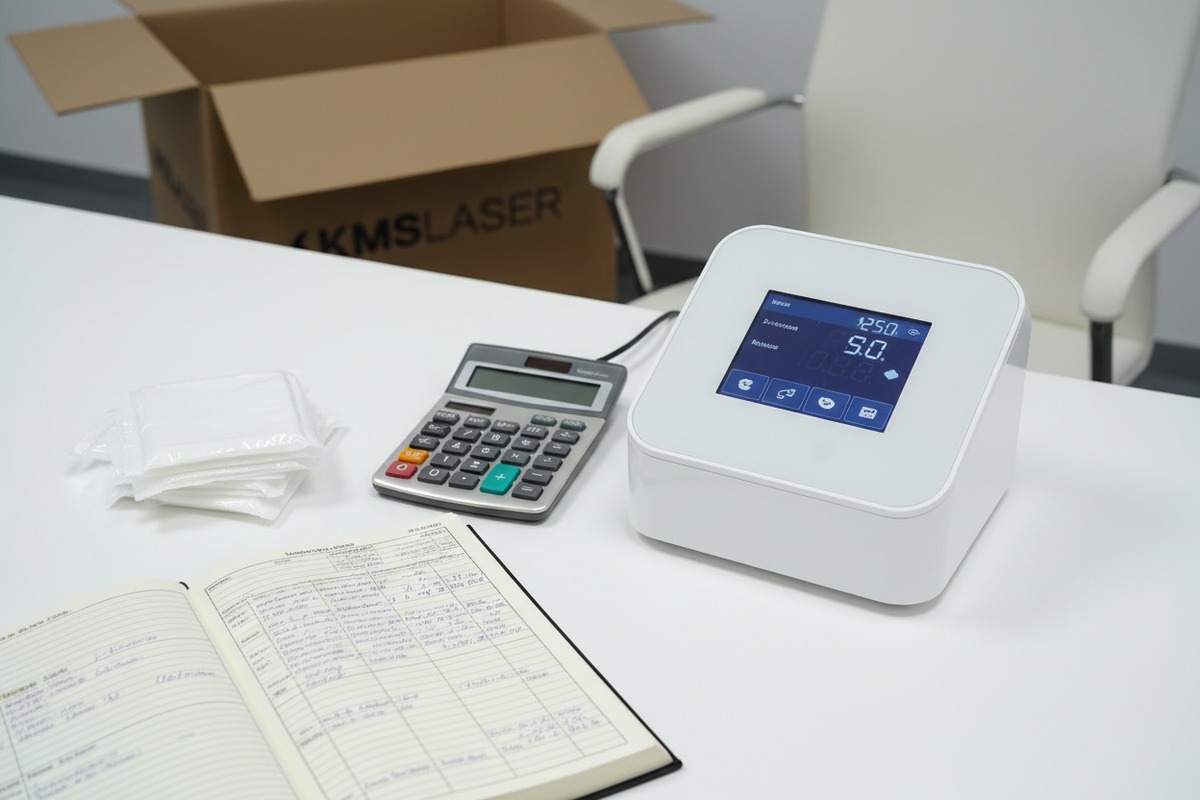
To determine the right price, you must look beyond the sticker price of the machine. When we export units to the United States or Europe, we advise our distributor partners to look at the "Total Cost of Ownership 3" (TCO) over the first six months. This includes the landed cost of the machine, the cost of hygienic consumables 4, and the electricity required to run the compressors.
A professional pressotherapy machine typically costs between $1,500 and $3,000 depending on features like infrared heating or the number of air chambers. If you set your trial price too low, you risk extending your payback period too far into the future. However, if you price it too high, you lose the volume needed to make the machine work for you.
Here is a step-by-step method to calculate your base rate:
1. Determine Fixed and Variable Costs
Your fixed cost is the machine purchase price plus shipping. Your variable cost is the "per session" expense. This includes the disposable plastic pants or suits used for hygiene, a small amount of electricity, and the therapist's time (even if the machine is automated, setup takes time).
2. The Break-Even Formula
Use this formula: Machine Cost ÷ (Trial Price - Variable Cost per Session) = Number of Sessions to Break Even. Break-Even Formula 5
If your machine costs $2,000 and you charge $50 per trial with $5 in costs, you need 44 sessions to break even. If you charge $80, you only need 26 sessions.
3. Competitor Benchmarking
You cannot price in a vacuum. If the salon down the street charges $45 for a basic compression session, you cannot charge $150 unless your machine offers something they do not, such as a 24-chamber suit or integrated EMS.
Below is a calculation model to help you visualize how trial pricing affects your ROI speed.
Table 1: ROI Speed Based on Trial Pricing Strategies
| Machine Cost (Landed) | Trial Price per Session | Variable Cost (Consumables) | Net Profit per Session | Sessions to Break Even | Time to ROI (at 5 sessions/week) |
|---|---|---|---|---|---|
| $2,000 | $40 (Low End) | $5 | $35 | 58 | ~12 Weeks |
| $2,000 | $60 (Mid Range) | $5 | $55 | 37 | ~7.5 Weeks |
| $2,000 | $80 (High End) | $5 | $75 | 27 | ~5.5 Weeks |
| $3,500 | $60 (Mid Range) | $5 | $55 | 64 | ~13 Weeks |
| $3,500 | $100 (Premium) | $5 | $95 | 37 | ~7.5 Weeks |
By using this table, you can see that raising the price by just $20 significantly cuts the time it takes to pay off the machine. We generally recommend aiming for a break-even point under 8 weeks. This allows you to start generating pure profit for your business much sooner.
What factors should I consider when setting my introductory package price to maximize customer conversion?
We notice that clients who order our multi-chamber systems often struggle to convey that value in their pricing, fearing they will scare away customers. However, low prices can unintentionally signal low quality to a discerning client.
Key factors for setting introductory prices include local competitor rates, the visual quality of your equipment, and the specific treatment duration. A price that is too low may devalue your brand, while a rate slightly below the market average encourages trial without sacrificing perceived professional standards.

Pricing is not just about math; it is about psychology and market positioning 6. When we ship a machine with a sleek, matte white plastic casing and a slanted screen (like the unit in View 2), we are providing a device that looks expensive. Your pricing needs to match the visual cues the machine provides.
The "Too Cheap" Trap
If you price a trial session at $29 when the market average is $75, customers might assume your equipment is an old, weak model or a home-use device. Professional clients want to know they are getting a medical-grade or salon-grade treatment. A moderately discounted price (e.g., 20% off standard rate) usually converts better than a "clearance bin" price because it maintains the perceived value of the service.
Geographic and Demographic Factors
In major urban centers like New York or Los Angeles, overhead costs are higher, but clients are also accustomed to paying premium rates for wellness. A $50 trial might be seen as suspicious in Manhattan but expensive in a rural town. You must adjust your baseline based on the disposable income of your specific catchment area.
Machine Aesthetics and Features
Does your machine look clinical and modern? The design described in View 1—a sleek, white tabletop control unit—suggests hygiene and technology. If your machine looks outdated or clunky, you have less leverage to charge premium rates. Features also matter greatly. A machine with simple air pressure is one thing; a machine with infrared heat therapy adds a second modality. You can charge 20-30% more for "Thermo-Pressotherapy" trials than for standard compression.
Session Duration and Add-ons
Standard sessions are 30 to 45 minutes. If you offer a 60-minute extended trial, you should price it higher. Furthermore, consider if you are including manual lymphatic drainage 7 (massage) before or after the machine does its work.
Table 2: Pricing Factors Checklist
| Factor | Description | Impact on Trial Price |
|---|---|---|
| Machine Aesthetics | Sleek, modern design (e.g., matte white, digital screen) | Increase: Allows for premium positioning ($80+). |
| Chamber Count | Higher count (12-24 chambers) vs. standard (4-8 chambers) | Increase: smoother wave motion justifies higher cost. |
| Location | Tier 1 City vs. Suburban/Rural | Variable: Urban areas tolerate higher prices ($100+). |
| Add-On Tech | Infrared heat, EMS, or wrapping included | Increase: Adds tangible value (+20-30%). |
| Competition | Number of nearby salons offering similar services | Decrease: High density may require competitive discounting. |
You must weigh these factors carefully. If you have a high-end machine in a high-income area, do not undercut yourself. Your clients are looking for results, not just the cheapest option.
How can I structure my pressotherapy trial offers to reflect the high-end value of my private-label brand?
When we customize the outer casing for your private label orders, we aim for a premium look that commands higher fees than generic equipment. Your pricing structure must match this aesthetic to build a coherent brand identity.
Structure high-end trial offers by highlighting exclusive features like infrared heating or advanced lymphatic drainage modes found in professional-grade machines. Avoid deep discounts; instead, offer value-added bundles that include a consultation or complementary therapy to justify a premium trial price of $80 to $120.

If you have invested in a private-label machine from us, you are not just selling "pressotherapy"; you are selling your brand's exclusive treatment. The mistake many distributors make is pricing their branded service identically to generic services. This erodes the brand equity we work hard to build during the manufacturing process.
Shift from "Discount" to "Value-Add"
Instead of saying "$50 off," say "Includes Complimentary Body Composition Analysis 8." High-end clients respond better to getting more than paying less. When you discount the price heavily, you attract price-sensitive clients who will leave as soon as the price returns to normal. When you add value, you attract clients who value the comprehensive nature of the treatment.
Highlight Technical Superiority
Use the specifications of the machine to justify the price. A generic home unit might have 4 airbags. A professional unit often has 16 to 24 airbags (chambers) 9. This creates a "wave" of pressure that is much smoother and more effective than the "squeeze" of a cheap machine.
- Marketing Angle: "Experience our exclusive 24-chamber High-Definition Lymphatic Flow."
- Pricing: Because it is "High Definition," it is worth $100 per trial, not $50.
The "Velvet Rope" Strategy
Sometimes, a higher price creates desire. If you position your trial as a "VIP Introduction" rather than a "New Customer Discount," you change the conversation. Use the visual cues of the machine—the square control unit, the robust connectors, the full-body suit coverage—to demonstrate that this is serious clinical equipment.
Integrating Consultation
A high-end trial should always include a 15-minute consultation. This allows you to ask the client about their water retention, heavy legs, or athletic recovery needs. This consultation time justifies a higher trial fee because the client is paying for your expertise, not just the machine time.
H3: Packaging the Experience
Your trial offer should look like a gift.
- Welcome Drink: Detox tea (low cost, high perceived value).
- The Suit: Assist them in putting on the suit (View 3 description: full body coverage). Explain the hygiene liners.
- The Settings: Explain why you are choosing specific pressure (mmHg) and modes.
- Post-Treatment: Ask how their legs feel immediately.
By controlling this narrative, the price becomes secondary to the experience of relief and lightness.
Should I offer a discounted first session or a multi-treatment trial bundle to attract high-value salon clients?
Our export data shows that distributors who order replacement suits frequently—indicating high usage—often use bundling strategies rather than single-session lures. Single sessions rarely create the habit needed for visible physical results.
Multi-treatment bundles are superior to single discounted sessions because pressotherapy requires cumulative treatments for visible lymphatic drainage results. A 3-session trial package creates a habit, builds client trust, and filters for serious customers willing to invest in long-term wellness rather than one-time bargain hunters.
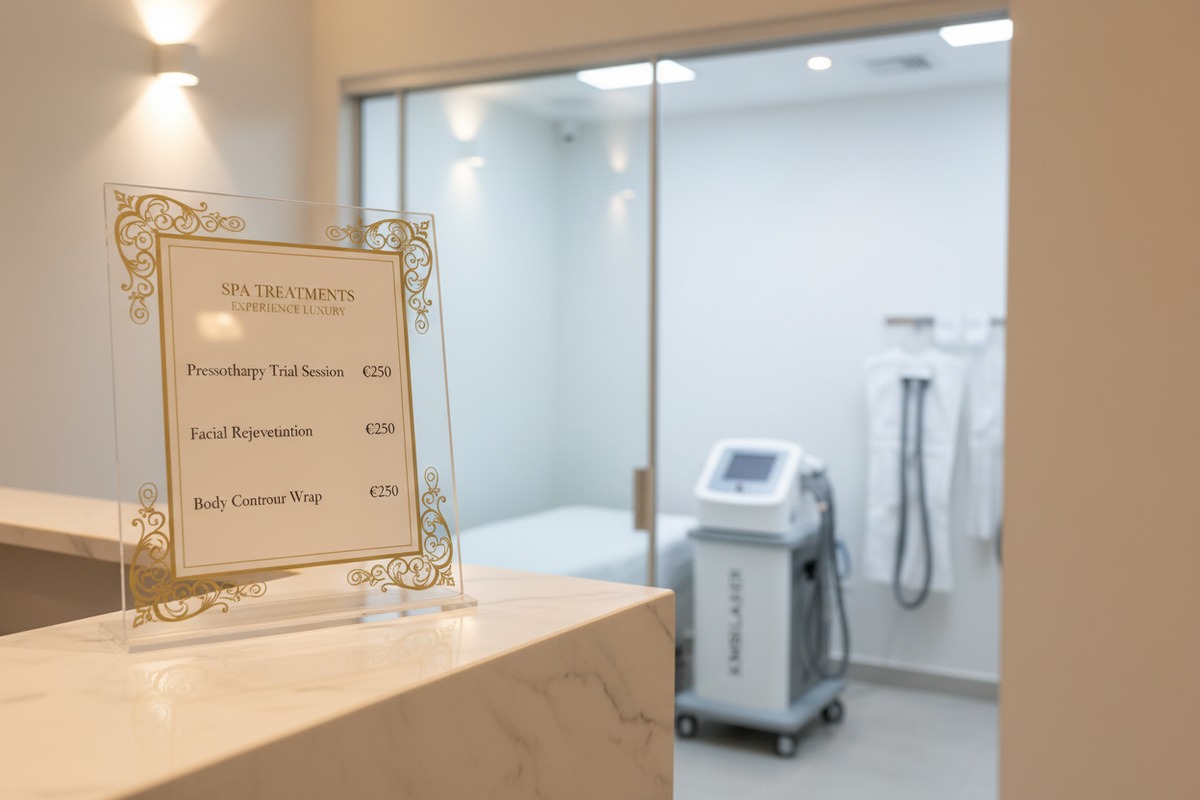
The biology of lymphatic drainage dictates the business strategy. One session of pressotherapy feels good—your legs feel lighter, and you might use the restroom more due to fluid movement—but it does not solve chronic water retention or cellulite issues. If you sell a single trial session, the client may walk away thinking, "That was nice, but I don't look different."
The Power of the 3-Session Bundle
We strongly advocate for a "Mini-Cure" or a "3-Session Discovery Pack."
- Session 1: The client gets used to the sensation of the air pressure.
- Session 2: The body begins to respond, and fluid mobilization improves.
- Session 3: The client starts to see a reduction in swelling or improvement in skin texture.
If you sell this bundle for a price like $199 (averaging $66/session), you get a committed client who visits you three times in two weeks. This provides three opportunities to build a relationship and upsell a 10-session membership.
Filtering Your Clientele
A single session at $40 attracts people who just want to try something cheap. A $199 package attracts people who have a specific problem (edema, recovery, cellulite) and are willing to pay to solve it. These are your ideal customers. They are the ones who will eventually buy your retail products or sign up for recurring monthly memberships.
Calculating the Bundle Discount
You should offer a discount on the bundle compared to the single session price, but not so deep that you lose money.
- Standard Price: $100 per session.
- Trial Bundle: 3 sessions for $180 ($60/session).
- Savings: Client saves $120 total.
This is a compelling offer that still covers your machine overhead and consumables comfortably.
Table 3: Trial Strategy Comparison
| Strategy | Structure | Pros | Cons | Ideal For |
|---|---|---|---|---|
| Single Session Loss Leader | 1 Session @ $39 (60% off) | High volume of leads. Easy to sell. | High churn rate. Low loyalty. Attracts "coupon chasers." | New salons needing quick foot traffic. |
| Single Session Premium | 1 Session @ $79 (20% off) | Maintains brand value. Better margins. | Lower conversion rate for new leads. | Established high-end spas. |
| Discovery Bundle | 3 Sessions @ $199 | Builds habit. Proves results. High retention. | Higher upfront cost for client barrier. | Best for Long-Term Growth. |
| Membership Trial | 1st Month @ 50% off | Guarantees recurring revenue potential. | Complex to sell. Administrative friction. | Franchise models. |
The "Refund" Tactic
Another effective strategy used by successful salon owners is the "Refundable Trial." You charge full price for the trial session (e.g., $100), but if the client buys a 10-session package immediately after, that $100 is credited toward the package. This removes the risk for the client ("If I like it, this was free") and secures a large revenue chunk for you ($800-$1000) immediately.
Conclusion
Pricing your end-customer trial packages is a balancing act between covering the cost of your professional pressotherapy machine and enticing clients to commit to a long-term relationship. By calculating your true break-even point, leveraging the premium aesthetics of your equipment, and prioritizing multi-session bundles over one-off discounts, you can protect your margins while building a loyal client base. Remember, the goal of a trial is not just to fill a slot in your schedule, but to demonstrate the undeniable value of the technology we have built for you.
Footnotes
1. Replaced with a Wikipedia page providing a comprehensive definition and explanation of pneumatic circuits. ↩︎
2. Replaced with a Wikipedia page offering a clear definition and purpose of Return on Investment (ROI). ↩︎
3. Replaced with a Wikipedia page detailing the concept of Total Cost of Ownership (TCO). ↩︎
4. Discusses the importance and types of hygienic consumables in cosmetology and salons. ↩︎
5. Offers a clear explanation and formula for calculating the break-even point. ↩︎
6. Explains market positioning as consumers’ perception of a brand relative to competitors. ↩︎
7. Replaced with a Wikipedia page providing an overview of manual lymphatic drainage. ↩︎
8. Describes body composition analysis methods and their importance in health assessment. ↩︎
9. Explains how air chambers in pressotherapy machines stimulate circulation. ↩︎

 English
 Español de México
 Deutsch
 Français
 العربية
 Русский
