
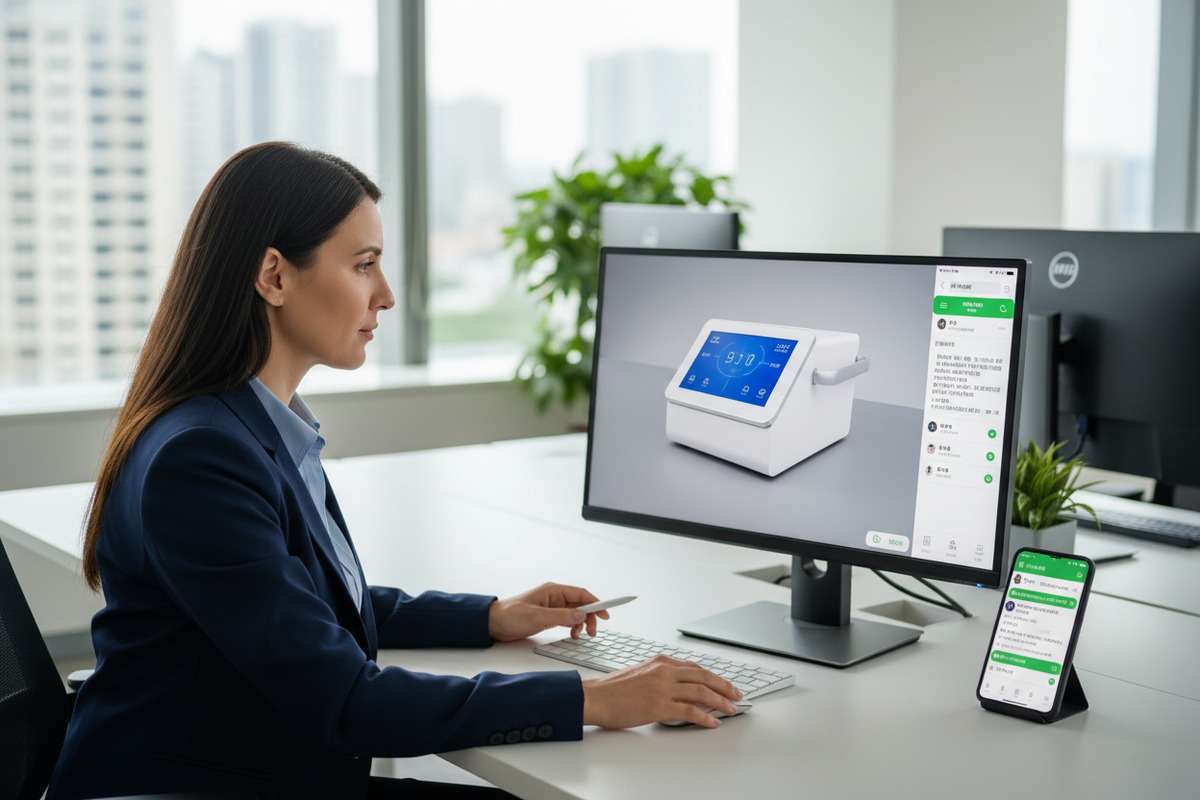
Sourcing pressotherapy machines 1 from our production line has taught us one thing: US buyers lose weeks every year chasing quotes and clarifications across a 13-hour time gap. Technical specs get garbled. Orders stall. The frustration is real.
To overcome time zone and language barriers when sourcing pressotherapy machines from China, work with suppliers who offer dedicated English-speaking account managers, use asynchronous communication tools like WhatsApp and WeChat, schedule overlapping work hours, and request bilingual documentation for all technical specs and contracts.
This guide breaks down exactly how you can solve each barrier SGS certification 2. You will learn practical steps to get faster quotes, clearer specs, and real-time production updates. Let us walk through each challenge one by one.
How can I ensure my pressotherapy machine supplier communicates effectively during my US business hours?
Our team in Guangzhou has worked with hundreds of US salon owners. They all face the same problem: they send an email at 9 AM New York time, but our factory is already closed. Replies come 16 hours later. Deals drag on for weeks.
Choose a pressotherapy machine supplier with a dedicated service team that provides overlapping work hours or extended availability via WhatsApp and WeChat. Many professional Chinese manufacturers now assign English-speaking project managers who respond within four hours during your business day.
Why the 13-Hour Gap Hurts Your Business
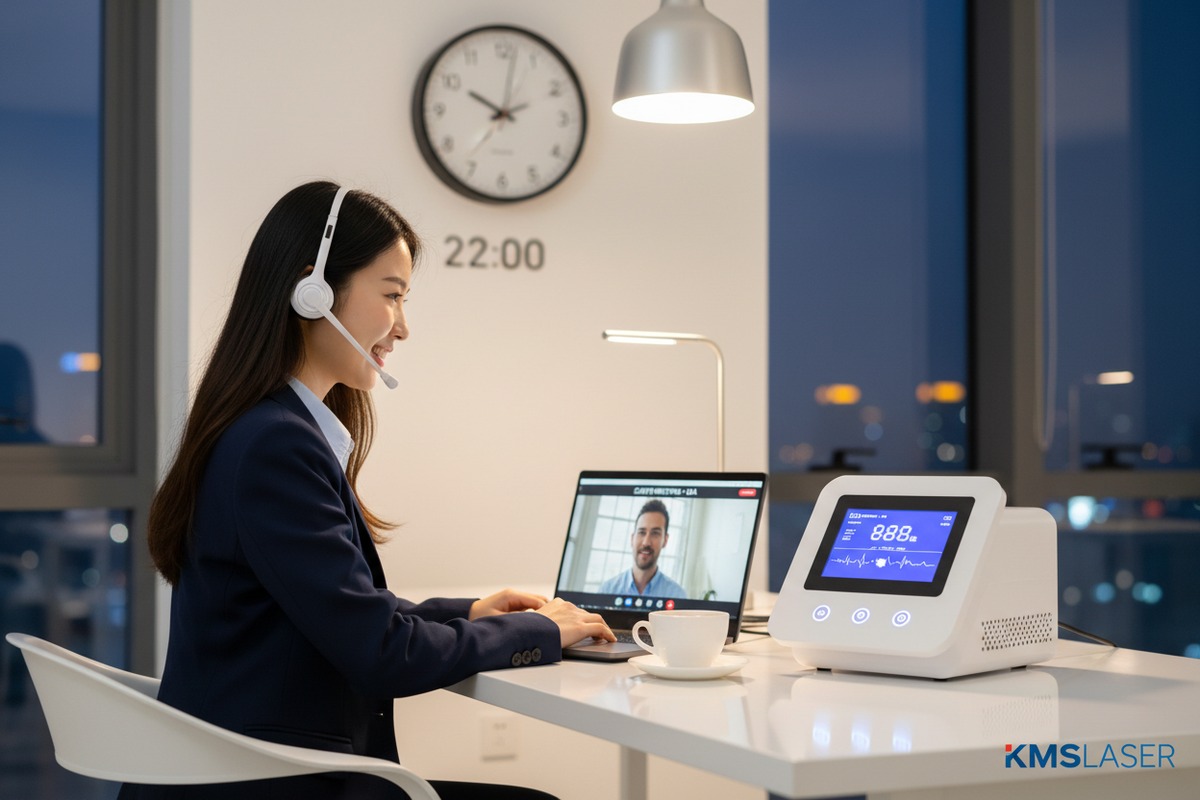
China Standard Time 3 (UTC+8) creates an 8-to-16-hour gap with most US time zones. When it is 9 AM in New York, it is 10 PM in Guangzhou. Most factory staff have gone home. Your urgent email sits in a queue until their next morning.
This delay compounds fast. A simple back-and-forth on airbag counts or infrared temperature settings can take five days instead of one hour. Lost time means lost revenue and frustrated downstream customers.
Practical Solutions That Work
| Strategy | How It Works | Time Saved |
|---|---|---|
| Request Overlapping Hours | Ask your supplier if account managers can work 7-10 PM China time (6-9 AM EST) | 12-24 hours per inquiry |
| Use WhatsApp 4/WeChat | Suppliers check mobile chat more often than email; built-in translation helps | 4-8 hours average |
| World Time Buddy Tool | Plan calls at 8 PM EST = 9 AM China next day | No missed meetings |
| Video Loom Messages | Record product questions; supplier watches and responds asynchronously | Fewer back-and-forth emails |
Build a Communication Protocol
Set expectations from day one. Ask your supplier: "Who is my main contact? When can I reach them? What is the fastest way to get urgent help?" A professional manufacturer will give you a clear answer.
At our facility, every US client gets a project manager 5 who checks WhatsApp twice during extended hours. We also use shared Google Sheets for order tracking. This way, you see updates without waiting for a reply.
The Role of Instant Messaging Apps
WeChat has a built-in translation feature. You type in English. Your supplier sees Mandarin. They reply in Mandarin. You see English. This cuts errors and speeds up small questions.
For bigger decisions—contracts, tech specs—stick to email and video calls so you have a paper trail. Use chat for quick progress checks.
What steps can I take to ensure my technical specifications aren't misunderstood due to language barriers?
When our engineers develop a new 24-airbag pressotherapy jacket, every detail matters—airbag overlap, pressure range (0-360 mmHg), infrared temperature (35-80°C). technical specifications 6 If even one spec gets lost in translation, the final product can fail quality checks.
To prevent technical misunderstandings, use visual aids like labeled diagrams and photos, write specs in short bullet points, request bilingual documentation in English and Mandarin, and ask your supplier to restate key requirements in their own words before production starts.
Why Specs Get Lost in Translation
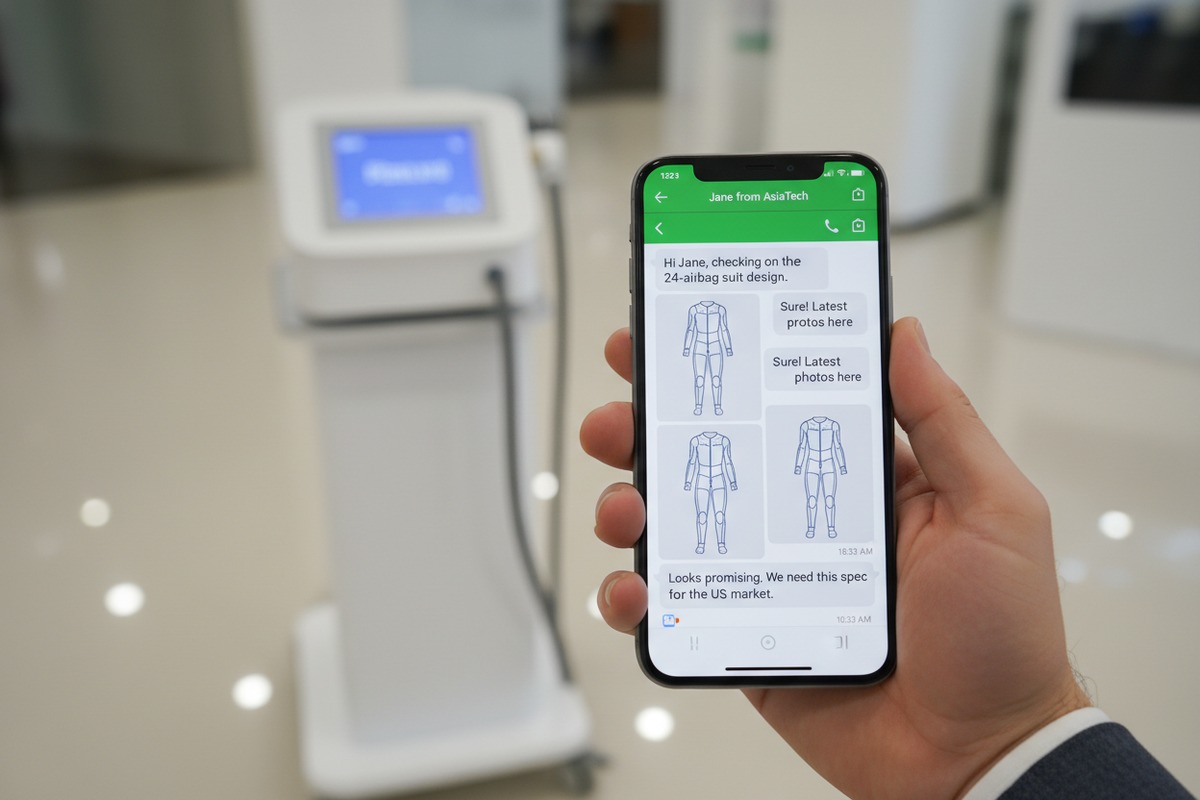
Salespeople in many factories are hired for their English skills, not their technical knowledge. They may translate your email word-for-word, but miss the engineering context. A request for "even pressure distribution" might become "same air" in Mandarin—not the same thing.
Cultural factors also play a role. Saving face is important in Chinese business culture. A sales rep may not admit confusion. Instead, they nod and pass along a half-understood message to the production floor.
Step-by-Step Spec Communication
| Step | Action | Why It Helps |
|---|---|---|
| 1 | Send a one-page spec sheet with bullet points | Short sentences translate more accurately |
| 2 | Include labeled photos or CAD drawings | Visuals cross language barriers instantly |
| 3 | Ask supplier to restate specs in their reply | Catches errors before production |
| 4 | Request bilingual PDF confirmation | Both sides sign off on the same document |
| 5 | Order a sample before bulk production | Physical proof beats written promises |
Use Plain English, Not Industry Jargon
Avoid slang like "plug-and-play" or "state-of-the-art." These phrases do not translate well. Instead, say: "The machine must work with 110V US outlets. No adapter needed."
When you write specs, imagine handing them to someone with basic English skills. If a high school student could understand, your supplier probably will too.
Visual Aids Are Your Best Friend
Pictures beat paragraphs. If you want a specific zipper placement on the pressotherapy leg sleeve, draw a circle around it in a photo. Add a measurement in centimeters. Send both metric and imperial units—factories in China use metric.
For complex features like multi-zone massage programs or infrared heating zones, request a short video call. Share your screen and walk through the spec sheet together.
Translation Tools and Professional Services
Free tools like Google Translate 7 and DeepL work for quick checks. DeepL often handles technical terms better. For contracts and compliance documents (CE marking 8, SGS certification), hire a professional translator. The cost—around $50-$200 per deal—is tiny compared to a failed shipment.
How do I get transparent production updates on my order without dealing with time zone delays?
Once you place an order for 50 pressotherapy machines, the waiting game begins. You want to know: Are airbags being stitched? Is the control unit ready? Will the shipment leave on time? Chasing updates across time zones eats into your workday.
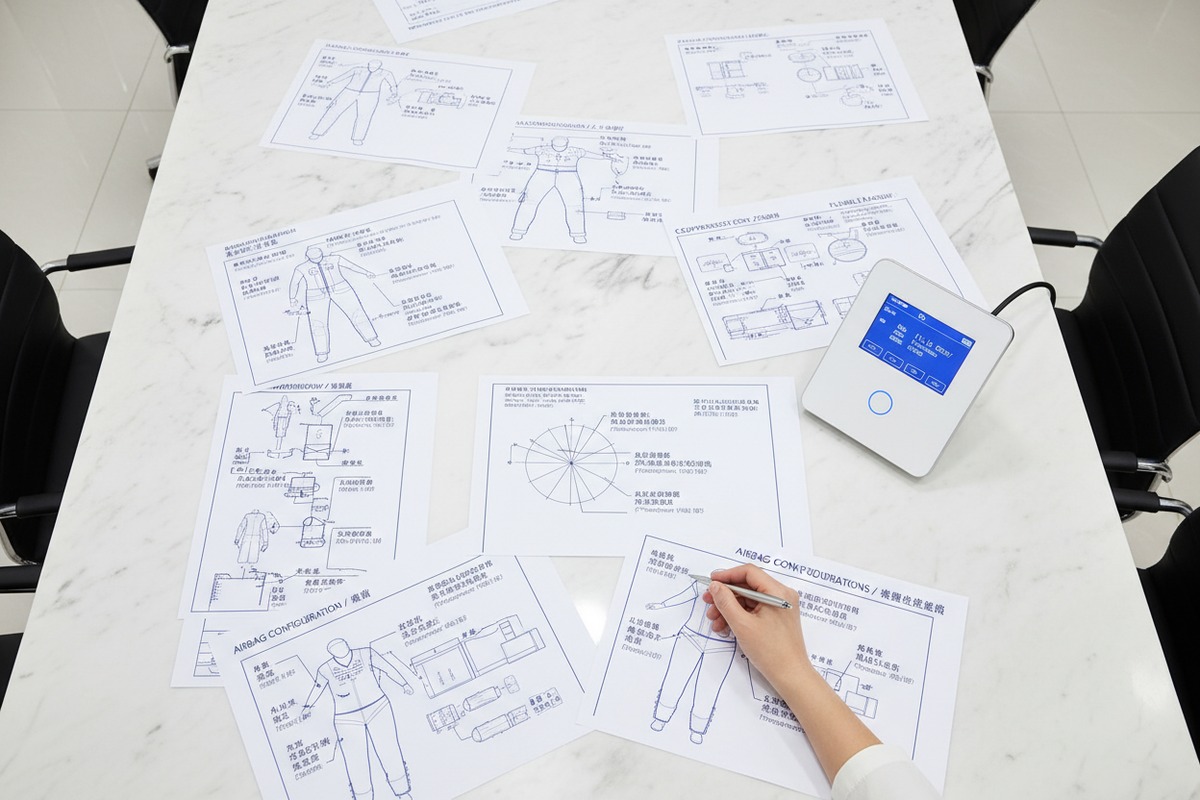
Set up a shared online dashboard or spreadsheet with your supplier that tracks production milestones in real time. Request weekly photo or video updates, and use asynchronous tools like Loom so you can review progress on your own schedule without waiting for live calls.
The Problem With Email-Only Updates
Email works for formal communication, but it is slow for status checks. You ask, "Is my order on track?" Twelve hours later, you get a vague reply: "Yes, everything is fine." That tells you nothing.
Many Chinese factories are not used to Western-style project updates. They may see frequent questions as distrust. Building a transparent system from the start removes friction.
Tools for Real-Time Tracking
| Tool | Use Case | Benefit |
|---|---|---|
| Shared Google Sheet | Milestone tracker with dates and photos | Both parties edit; no waiting |
| Loom Video Updates | Supplier records factory walkthrough | You watch anytime; no scheduling |
| WhatsApp Group | Quick alerts for delays or changes | Instant notifications |
| Trello or Notion Board | Visual project management | Clear status at a glance |
Sample Production Milestone Checklist
A simple tracker might include:
- Week 1: Raw materials ordered—photos of fabric, airbag components.
- Week 2: Airbag stitching complete—video of assembled sleeves.
- Week 3: Control unit assembly—photo of LCD screen test.
- Week 4: Quality inspection—report with pressure test data.
- Week 5: Packing and shipping—carton photos, tracking number.
Ask your supplier to update this sheet every Monday. You wake up Tuesday morning (your Monday night their time) and see fresh data.
On-the-Ground Eyes: Third-Party Inspection
If your order is large or high-stakes, consider hiring a third-party QC company in China. They visit the factory, take photos, and send you a bilingual report. This removes guesswork and holds the factory accountable.
Many inspection firms charge $200-$400 per visit. For a $10,000+ order, that is cheap insurance.
Build a "Follow-the-Sun" Workflow
If you have team members in different regions—say, a logistics coordinator in Europe—assign tasks so someone is always awake to handle updates. When you log off in New York, your colleague in London picks up. When they log off, the factory wakes up. Progress never stops.
How can I find a Chinese partner who provides professional and concise responses to my inquiries?
Busy purchasing managers hate long-winded emails filled with vague promises. You ask a simple question—"What is the MOQ for private-label leg sleeves?"—and get a five-paragraph reply that never answers it.
Look for pressotherapy machine suppliers who demonstrate industry expertise, respond within 24 hours with direct answers, and provide structured documentation like spec sheets and pricing tables. Verified listings on platforms like Made-in-China with Gold or Diamond status indicate audited, reliable partners.
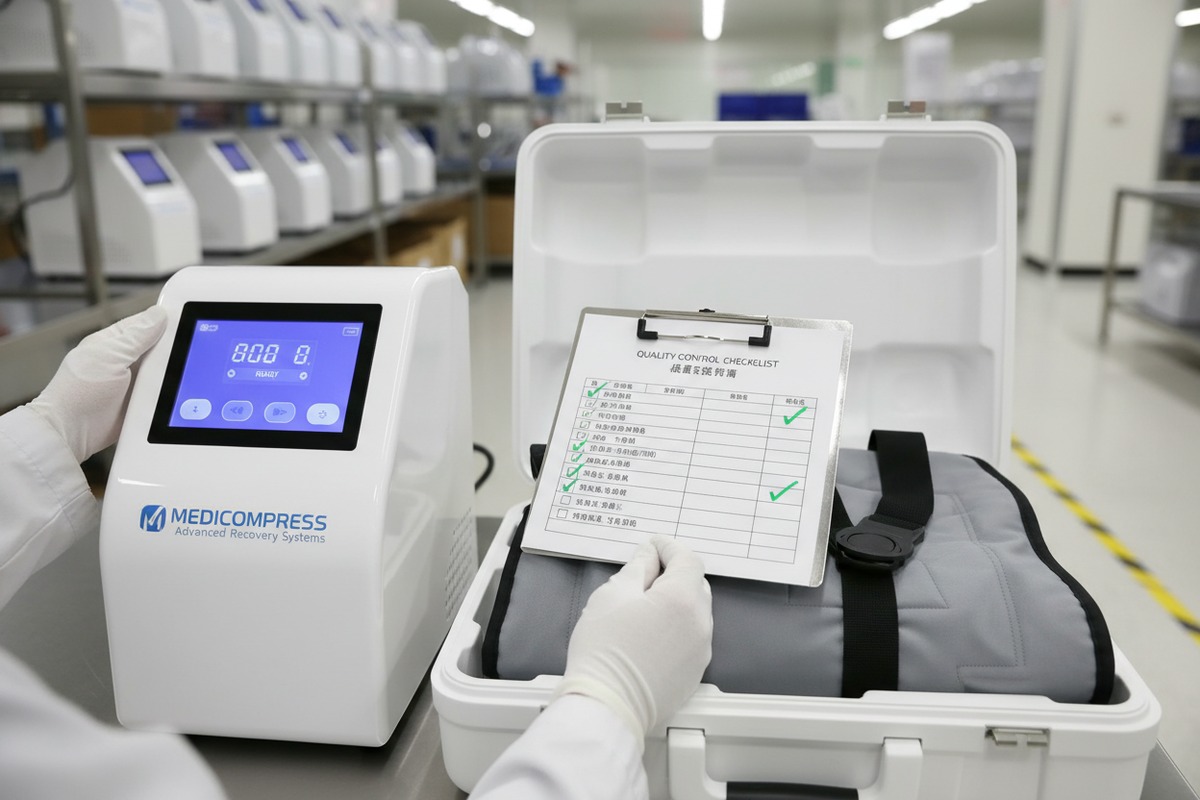
Signs of a Professional Supplier
When you send your first inquiry, pay attention to:
- Response time: Under 24 hours is good. Under 4 hours is great.
- Answer clarity: Did they address your exact question?
- Documentation: Did they attach a spec sheet, not just sales fluff?
- Questions back: A good supplier asks for details—your market, volume, branding needs.
If the reply is copy-paste marketing text, move on.
Vetting Checklist for Pressotherapy Machine Suppliers
| Criteria | What to Check | Red Flag |
|---|---|---|
| Platform Status | Gold/Diamond Member on Made-in-China or Verified on Global Sources | No verification badges |
| Years in Business | 5+ years in beauty equipment | Brand-new company with no history |
| Certifications | CE, SGS, ISO | Cannot provide certificates |
| Communication Style | Concise, direct, English-fluent | Vague, slow, avoids questions |
| OEM/ODM Capability | Offers private labeling, custom development | Only sells generic stock |
Ask the Right Questions Early
Good questions filter out bad suppliers fast. Try:
- "Can you send a detailed spec sheet for your 24-airbag pressotherapy system?"
- "What is your defect rate, and how do you handle returns?"
- "Who will be my main contact, and what are their working hours?"
A professional factory answers these clearly. An amateur dodges or gives generic replies.
The Value of a Dedicated Account Manager
Working with one point of contact saves time. That person learns your brand, your quality standards, your packaging preferences. You do not repeat yourself every order.
At our company, each client works with the same project manager from first inquiry to final delivery. This continuity prevents errors and builds trust over time.
Trial Orders: Test Before You Commit
Before placing a large order, buy one or two sample units. Evaluate:
- Product quality (airbag seams, LCD clarity, pressure accuracy)
- Packaging (branded boxes, protective foam)
- Communication during the process
A supplier who handles a small order well will likely handle a big one well too.
Conclusion
Overcoming time zone and language barriers with Chinese pressotherapy machine suppliers is not hard—it just requires the right systems. Use instant messaging for speed, visual aids for clarity, shared dashboards for transparency, and verified partners for reliability. Start small, build trust, and scale with confidence.
Footnotes
1. Provides a general overview and definition of pressotherapy machines. ↩︎
2. Official website detailing the certification and inspection services offered by SGS. ↩︎
3. Explains the official time zone used in China and its UTC offset. ↩︎
4. Official website for the widely used instant messaging application. ↩︎
5. Provides a definition and overview of the project manager role from a professional institute. ↩︎
6. Information on the role of standards and specifications from a government agency. ↩︎
7. Official website for Google’s widely used machine translation service. ↩︎
8. Official guidance from the European Commission on CE marking requirements. ↩︎

 English
 Español de México
 Deutsch
 Français
 العربية
 Русский
