
When we analyze clinical feedback from our partner clinics, we see that clear treatment plans drive high patient satisfaction. Uncertainty about the treatment course often leads to patient drop-off and lost revenue.
Most standard clinical protocols recommend a course of 3 to 6 shockwave therapy sessions to achieve optimal therapeutic results. These sessions are typically scheduled at weekly intervals, allowing the body sufficient time to regenerate tissue and reduce inflammation between treatments.
Here is exactly how you can structure these treatment courses for your business.
How do I determine the ideal number of Shockwave Therapy sessions for my clients?
Our R&D team calibrates our machine presets based on global medical standards, but every patient’s biology is unique. Relying solely on a fixed number can lead to underwhelming results.
To determine the ideal number of sessions, start with a baseline of three treatments and evaluate the patient’s pain reduction. If the patient reports significant improvement, continue to complete the standard six-session cycle to ensure long-term tissue remodeling and prevent recurrence.

The "3-Session" Evaluation Rule
From our perspective as equipment builders, we see that the most successful operators use a "milestone" approach rather than a blind commitment. We design our software interfaces to track total joules and shock counts, which helps in this tracking.
The industry standard is to book a block of 3 sessions initially. This is because the biological response to shockwaves—specifically neovascularization 1 (formation of new blood vessels)—does not happen overnight. The first session creates the stimulus; the subsequent sessions reinforce it.
If a patient feels absolutely no change after 3 sessions, the diagnosis might be incorrect, or the energy settings might be too low. However, if they feel even 10-20% relief, that is a green light to extend to 5 or 6 sessions.
Acute vs. Chronic Assessment
When you are training your staff or your downstream customers, teach them to categorize the patient immediately. The duration of the injury dictates the duration of the cure. A fresh injury responds faster than a calcified, chronic one.
For a purchasing manager like yourself, this knowledge is key when ordering replacement kits. Chronic conditions burn through more bullets and transmitters because they require more sessions.
Table 1: Baseline Session Guidelines by Injury Type
| Injury Classification | Duration of Pain | Recommended Starting Sessions | Expected Outcome |
|---|---|---|---|
| Acute | < 3 Months | 3 – 4 Sessions | Rapid pain reduction; tissue heals quickly. |
| Sub-Acute | 3 – 6 Months | 4 – 6 Sessions | Moderate progression; requires consistent stimulation. |
| Chronic | > 6 Months | 6 – 8+ Sessions | Slow response; requires breaking down calcification first. |
| Recurrent | Flaring up for years | 6+ Maintenance | Focus is on management rather than a permanent "cure." |
Listening to the Tissue
We often tell our distributors: "The machine delivers the energy, but the body does the work." If you over-treat, you might exhaust the tissue’s healing capacity. If you under-treat, the inflammation returns.
The "ideal" number is rarely just one. While some marketing claims "instant relief," physically rebuilding collagen matrices 2 requires repeated stimulation. Therefore, 6 sessions is the safest, most reliable number to quote for business planning and package selling.
What factors influence the recommended treatment course for different conditions?
In our experience supplying clinics worldwide, we notice that aesthetic clinics use our machines very differently than orthopedic centers. The tissue target changes the rules of the game entirely.
The primary factors influencing the session count are the density of the target tissue, the chronicity of the condition, and the patient’s age. Harder tissues like calcified tendons generally require more sessions than softer tissues like muscle fascia or cellulite.
Tissue Density and Depth
When we engineer our transmitters (the metal tips of the handpiece), we make them in different sizes (15mm, 20mm, 35mm) because different tissues absorb energy differently.
- Soft Tissue (Cellulite/Muscle): Energy disperses easily. These conditions often need more sessions (8-10) but at lower intensity.
- Hard Tissue (Tendons/Bone): Energy is focused. These often resolve in fewer sessions (3-5) but require higher energy density.
For example, treating Plantar Fasciitis involves breaking down tough, fibrous bands in the foot. This is stubborn tissue. It typically adheres to the standard 3-6 session rule.
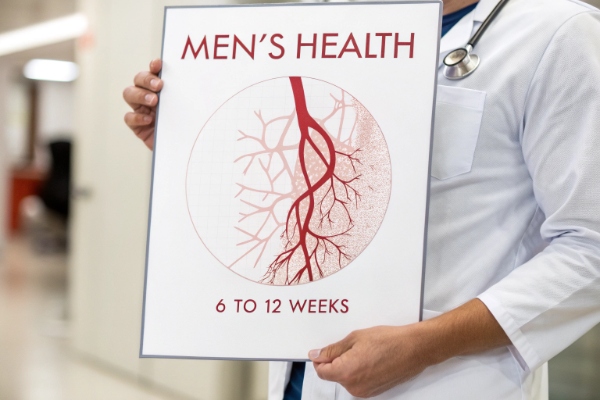
However, treating Erectile Dysfunction (ED) involves soft vascular tissue. The goal is angiogenesis (new blood vessel growth). This biological process is slow and delicate. Consequently, ED protocols often demand 6 to 12 sessions 3, split over several weeks.
Patient Physiology
We cannot ignore the machine’s operator—the human body. Older patients have slower metabolic rates. A 25-year-old athlete might recover from a hamstring strain in 3 sessions. A 65-year-old patient with the same injury might need 8 sessions because their cell regeneration speed is roughly half that of the younger patient.
Table 2: Influence of Condition on Session Count
| Condition Category | Target Tissue | Typical Session Range | Why? |
|---|---|---|---|
| Orthopedic | Tendons, Ligaments | 3 – 6 Sessions | focused on breaking calcification and reducing inflammation. |
| Aesthetics | Fat, Skin, Fascia | 8 – 12 Sessions | Cellulite reduction requires structural remodeling of large areas. |
| Men’s Health (ED) | Blood Vessels | 6 – 12 Sessions | Angiogenesis is a slow, cumulative biological process. |
| Neurological | Spasticity | Ongoing | often requires chronic management rather than a "cure." |
Severity of Calcification
If your client is treating a "Frozen Shoulder" with heavy calcification, the first 2 or 3 sessions are essentially "demolition work." The shockwaves are physically breaking up calcium deposits. No healing is happening yet; just preparation. This adds to the total count. You must explain to customers that severe calcification automatically adds 2-3 sessions 4 to the standard package.
How can I set client expectations regarding the number of sessions needed?
We advise our distributors to educate their buyers on patient communication, as unmet expectations are the leading cause of device returns. You must sell the "process," not just the "procedure."
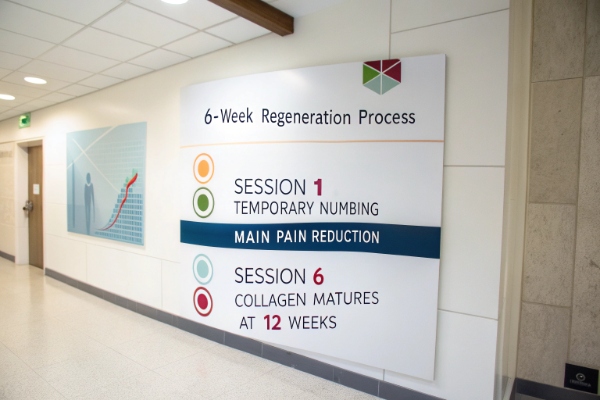
You should inform clients that while some pain relief may be immediate, the true healing is cumulative and peaks weeks after the final session. Frame the treatment plan as a 6-week regeneration process rather than a quick fix to ensure compliance and satisfaction.
The "Cumulative Effect" Concept
When we test the lifespan of our pneumatic components, we look at cumulative wear. Similarly, shockwave therapy relies on cumulative biological signaling.
A major pain point for salons is the patient who quits after 2 sessions because "it’s not 100% better yet." This is a failure of expectation setting. You must explain that shockwave therapy works by pro-inflammation. We are deliberately irritating the tissue to trigger the body’s repair mechanism.
- Sessions 1-2: The body is waking up. Pain might even increase slightly (reactionary pain).
- Sessions 3-4: New blood vessels start forming. Pain signals decrease.
- Sessions 5-6: Tissue remodeling stabilizes. Long-term relief begins.
The 12-Week Timeline
A critical piece of data we share in our training manuals is that collagen maturation takes 12 weeks 5. Even though the treatment stops at Week 6, the healing continues for another 6 weeks.
If a patient knows this, they won’t demand a refund at Week 5. They will understand they are only halfway through the biological timeline. This narrative protects the salon’s reputation and your brand’s credibility.
Managing "One-Hit Wonder" Myths
Some competitors market "Instant Pain Relief!" This is dangerous. While shockwaves do deplete Substance P (a pain neurotransmitter) causing temporary numbing, this is not a cure.
If you position the machine as a "Magic Wand," you will have unhappy customers. If you position it as a "Rehabilitation Tool" requiring a 6-session commitment, you attract serious clients who stick with the program.
Selling Packages vs. Single Sessions
From a business model perspective—which I know is your focus—selling single sessions is inefficient. It requires re-selling the patient every week.
We recommend our distributors encourage their salons to sell "Blocks of 6."
- Financial Security: The revenue is locked in.
- Clinical Adherence: The patient is committed to the full course, ensuring better results.
- Better Data: You get to see the full outcome of the treatment.
Are there guidelines or protocols I should follow for Shockwave Therapy Machine treatment frequency?
Our user manuals emphasize safety intervals to prevent tissue damage, as our machines deliver high-energy acoustic pulses that can cause bruising if overused. Respecting the biological refractory period is non-negotiable.
Standard guidelines dictate that sessions should be spaced 5 to 10 days apart, with a 7-day interval being the gold standard. Treating more frequently than every 4 days does not accelerate healing and may cause excessive inflammation or tissue damage.

The Biology of the Interval
Why 7 days? When we design the pulse frequency of our machines, we can make them go fast, but we can’t make the body heal fast.
When a shockwave hits the tissue, it creates micro-trauma. This is intentional. The body responds by sending inflammatory markers to the site to repair it. This acute inflammatory phase lasts about 3 to 4 days.
- If you treat on Day 2: You are hitting tissue that is already inflamed. This causes excessive pain and damage.
- If you treat on Day 7: The acute inflammation has subsided, and the tissue is ready for the next stimulation cycle. This is aligned with the biological recovery window 6.
Exceptions to the Rule
There are rare cases where protocols shift. High-performance athletes sometimes undergo more compressed schedules (e.g., every 4 days) to speed up return-to-play, but this is done under strict medical supervision. For the average salon client, sticking to the weekly rhythm is safer and easier to schedule.
Table 3: Recommended Frequency Protocols
| Protocol Strategy | Interval | Best For | Risk Level |
|---|---|---|---|
| Standard Weekly | Every 7 Days | 90% of Orthopedic/Aesthetic cases | Low |
| Compressed | Every 3-4 Days | Acute injury in athletes (Doctor supervision) | Moderate |
| Extended | Every 10-14 Days | Sensitive patients / Slow healers | Low |
| Maintenance | Monthly | Chronic pain management / Cellulite | Very Low |
The Role of NSAIDs (Anti-Inflammatories)
This is a critical operational guideline. Since shockwave therapy relies on inflammation to work, taking anti-inflammatory medication (like Ibuprofen/Advil) cancels out the effect.
When your clients (salon owners) are consulting their patients, they must instruct them to stop taking NSAIDs during the 6-week treatment window. If the patient suppresses the inflammation, the machine’s pulses are wasted. It’s like trying to start a fire while pouring water on it. This instruction is vital for ensuring the therapy’s pro-inflammatory mechanism 7 is effective.
Signs of Over-Treatment
We install safety limiters in our software, but we cannot control the operator. If a technician treats the same spot for 20 minutes (instead of 5) or treats every day, the patient will experience:
- Significant bruising (Hematoma).
- Increased pain that doesn’t subside.
- Swelling.
If these signs appear, the protocol says: Stop. Wait 2 weeks for the tissue to recover before resuming.
Conclusion
For the best clinical and financial outcomes, a standard course of 3 to 6 weekly sessions is the industry benchmark. This balances the biological need for recovery with the cumulative stimulation required for healing. This model is recognized by organizations focused on therapeutic efficacy 8.
Would you like me to send you our "Clinical Protocol Guidebook" (PDF), which outlines the exact session counts for the 20 most common conditions 9 treated with our machines? This can improve your clinic’s adherence to professional standards and provide a predictable revenue stream 10.
Footnotes
1. Study focused on the biological effects of ESWT, highlighting its mechanism for stimulating neovascularization (new blood vessel formation). ↩︎
2. Clinical study confirming the efficacy of Extracorporeal Shock Wave Therapy (ESWT) in promoting collagen remodeling and bone healing in orthopedic conditions. ↩︎
3. Clinical review and meta-analysis on the protocols and effectiveness of Low-Intensity Shockwave Therapy (Li-ESWT) for the treatment of Erectile Dysfunction (ED). ↩︎
4. Clinical meta-analysis reviewing the long-term effectiveness and high success rates of ESWT, noting that chronic and calcified conditions often require a higher session count. ↩︎
5. Research analyzing the time required for collagen maturation, emphasizing that the healing process continues for weeks after the final shockwave session. ↩︎
6. Physiopedia resource outlining the general application and necessary recovery intervals for ESWT in musculoskeletal settings. ↩︎
7. Review detailing the primary pro-inflammatory mechanism of shockwave therapy and why anti-inflammatory drugs can negate the therapeutic effect. ↩︎
8. Industry resource confirming the standard 3-6 session protocol for most orthopedic shockwave applications. ↩︎
9. Official guidelines from the International Society for Medical Shockwave Treatment (ISMST) detailing common indications and treatment areas. ↩︎
10. Industry analysis confirming that robust diagnostic features are key factors that support efficient after-sales service and reduce the TCO for distributors. ↩︎

 English
  Español de México
  Deutsch
  Français
  العربية
  Русский