I build shockwave machines for clinics every day. Buyers always ask how many heads they really need, and if more heads actually change results.
Most professional shockwave systems ship with 3–9 applicator heads in the base kit and support 10–20+ variants across optional sets. Small heads concentrate energy for pinpoint work. Large heads spread energy for broad muscle or fascia. A richer catalog means one device fits more protocols and patient types.
I help clinics select a starter set 1, then add specialty heads as their case mix grows. This keeps upfront cost sensible and expands capability over time.
How Many Applicator/Transmitter Head Variants Does the Machine Have?
In product demos, I often see clinics underestimate how many heads they will use after three months of daily treatments.
A typical radial system supports at least 8–15 transmitter options, while focused systems use fewer tips but multiple gel pads to tune depth. Most clinics begin with 5–7 heads and later add specialty shapes for fascia, spine, or sensitive areas as caseloads diversify.
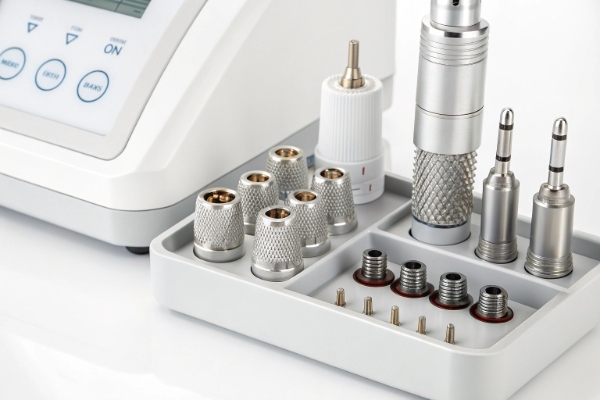
What the numbers look like in practice
We design our radial handpieces around a quick-lock interface 2 that recognizes a wide catalog of heads, from Ø6 mm to Ø35 mm, plus soft tips. Focused handpieces lean on gel pads to shift focal depth 3 while keeping the same output face. This means the true number of variants depends on both hardware and accessories, not just the metal tips in the case.
Typical variant counts by system type
| System Type | Base Kit (in-box) | Optional Variants Supported | How Depth Is Tuned |
|---|---|---|---|
| Radial (pneumatic) | 3–9 heads | 10–20+ | Diameter/material/shape |
| Focused (electromagnetic/piezo) | 1–3 tips | 3–10 gel pads | Focal gel pads & standoffs |
| Hybrid (radial + focused) | 5–9 + pads | 15–25+ | Both methods combined |
If you’re new to the radial vs focused differences 4, understanding them clarifies why variant counts differ across systems.
Why the catalog matters
A clinic that treats only plantar fasciitis can live with three heads. The moment you add gluteal myofascial pain, lateral epicondyle, and paravertebral points, you need more shapes and diameters. I have seen clinics double weekly throughput after adding two larger heads for broad coverage and a soft tip for sensitive bony areas, simply because setup time drops and patient tolerance rises.
Why Do Clinics Prefer Machines With Multiple Head Size Options?
When I observe first-week usage at a new install, therapists swap heads more than they change energy settings. That always surprises new buyers.
Multiple head sizes let clinicians match energy density and contact feel to each anatomical site, which improves comfort, shortens sessions, and raises success rates. With the right mix—small, medium, large, and soft tips—most sessions need fewer parameter tweaks and deliver steadier outcomes.
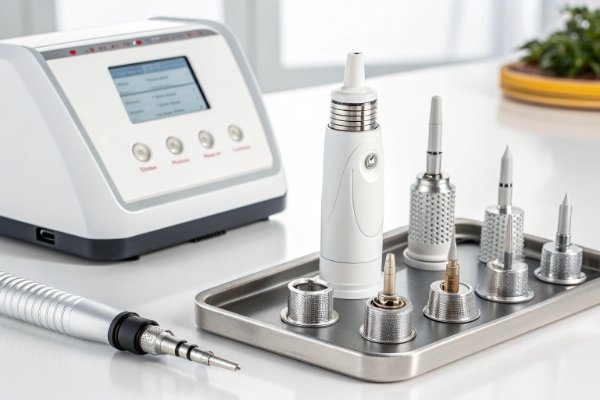
Where the flexibility shows up
In a single lower-limb session, therapists often start with a large head to warm tissue, switch to a 10–15 mm head for tendon work, then finish with a soft tip over bony borders. Each swap changes how energy concentrates, without touching pressure or frequency. This is essentially matching energy density to anatomy 5.
Practical gains you can measure
- Comfort: Larger diameters and soft tips spread contact force, so sensitive patients tolerate treatment better.
- Speed: Broad heads cover big muscle groups in 30–60% less time.
- Consistency: Defined tip geometry makes dose repeatable across visits and operators.
- Revenue: Shorter sessions let clinics book more patients per hour without rushing care.
Common head lineup I recommend
- Precision: Ø6–10 mm, flat/pointed for trigger points and small tendons.
- Standard: Ø15 mm, flat—your daily workhorse.
- Deep-leaning: Ø15 mm “deep impact” material for denser tissue.
- Coverage: Ø20–35 mm, flat/concave for quads, glutes, calves.
- Comfort: Soft silicone for bony edges, cervical, TMJ, hands, feet.
How Do Different Head Diameters or Shapes Correspond to Treatment Zones or Tissue Depths?
During R&D, we map how geometry shifts pressure footprint and perceived depth. The pattern is simple: smaller heads concentrate energy, larger heads disperse it. Shapes refine how energy enters tissue.
Small diameters (Ø6–10 mm) focus energy for tendons and focal lesions; medium (Ø15–20 mm) balance depth and coverage; large (Ø25–35 mm) prioritize broad myofascial release. Flat tips deliver even contact, concave tips add grip on curved surfaces, and soft tips improve comfort on sensitive regions.
For a visual overview of applicator geometry 6, review common tip shapes and their indications.

Diameter-to-zone mapping
| Head Diameter | Typical Zone | Depth Feel | Session Role |
|---|---|---|---|
| Ø6–10 mm | Peroneal tendon, lateral epicondyle, small trigger points | Focused, deeper sensation | Target lesions |
| Ø15 mm | Achilles, patellar tendon, plantar fascia | Balanced | Main workhorse |
| Ø20–25 mm | Calf, hamstrings, forearm flexors | Moderate & wide | Warm-up / coverage |
| Ø30–35 mm | Gluteals, TFL/ITB, paraspinals | Superficial & broad | Rapid myofascial sweep |
Shape and material cues
- Flat metal: Most universal; smooth glide with gel; predictable footprint.
- Concave/ro-crowned: Stays centered on curved anatomy; helps avoid edge slippage.
- Point/“A6” style: Pinpoint trigger points; highest local energy density.
- Soft silicone: Dampens peak contact pressure; best for bony borders and sensitive patients. See medical-grade silicone basics 7.
- Ceramic/titanium/gold-coded: Harder, lower damping; transmits energy more efficiently into denser tissue.
What Should Importers Ask About Head Interchangeability and Spare Part Availability?
I always tell importers: heads are small, but they drive big service conversations. Compatibility and stocking make or break uptime.
Importers should confirm the connection standard, supported catalog, stock levels, and replacement schedule for heads and sleeves. Ask for SKUs, lead times, and a written cross-compatibility chart so you can replenish locally without surprises.

Procurement checklist (copy-paste for your RFQ)
| Topic | Questions to Ask | What a Good Answer Looks Like |
|---|---|---|
| Mounting | Quick-lock or threaded? Torque specs? | Tool-free swap in <10 s; anti-loosen design |
| Compatibility | Which heads fit which handpiece models? | Model-specific list with SKU mapping |
| Stock & Lead Time | Minimum on-hand units? Refill time? | 50–200 units ready; 7–14 days refill |
| Wear Items | Rated shots for heads/sleeves? | Clear counts (e.g., 500k–1M) + usage notes |
| Cleaning | Disinfection materials allowed? | Follow Spaulding classification guidance 8 |
| Docs | IFU + maintenance guide? | Align with EU MDR documentation 9 |
| Warranty | Coverage with OEM vs 3rd-party heads? | Full with OEM; policy spelled out |
My fulfillment advice
- Bundle smart: Ship each device with a clinic-ready set (Ø10, Ø15, Ø20/25, Ø35, soft).
- Forecast spares: For busy sites, plan one revision kit per handpiece per quarter.
- Label clearly: Laser-etch diameter and material 10 on every head to cut errors.
- Train briefly: A 10-minute video on head change, cleaning, and inspection reduces returns by half.
How Important Is Head Variety for Salons or Clinics Purchasing the Machine?
When I support a salon or multi-therapist clinic, head variety becomes a workflow tool, not just a spec. It shapes comfort, throughput, and even marketing packages.
Head variety is critical because it expands indications, improves patient comfort, and accelerates sessions—directly affecting revenue and satisfaction. A thoughtful set lets teams standardize protocols, reduce variability between therapists, and keep treatment consistent across locations.

Where variety pays off
- More indications: Add larger heads for glutes/TFL work, soft tips for cervical/TMJ, small tips for elbows and feet.
- Happier patients: Sensitive clients accept treatment when soft tips are used early, then step up to standard tips as tolerance grows.
- Faster schedules: Large heads cut warm-up time; small heads finish precision work.
- Brand consistency: Protocol cards tied to head geometry keep results similar across staff.
Building a practical starter kit
- Essentials: Ø10 mm (precision), Ø15 mm (daily tendon), Ø25 mm (coverage), soft 15–20 mm (comfort).
- Growth picks: Ø35 mm for myofascial sweep, concave head for calves/forearms, “deep impact” Ø15 mm for dense tissue.
- Focused add-ons: If you operate a focused system, stock shallow/medium/deep gel pads to complement radial heads.
ROI you can model
A two-room clinic that saves 5 minutes per session by using the right coverage head can add one extra booking in a half-day block. Over a month, that pays for an entire accessory set. The long-term gain is steadier results, fewer cancellations, and stronger word-of-mouth.
Conclusion
Head variety turns one shockwave device into a complete toolkit—more comfort, faster sessions, and broader indications with simple, tool-free swaps. For a broad primer on shockwave system types, see this overview of focused and radial mechanisms 11.
Footnotes
1. Practical guide for choosing starter sets and add-ons. ↩︎
2. Overview of devices and quick-lock interfaces in ESWT. ↩︎
3. Explanation of focal depth control using gel pads. ↩︎
4. Technical differences between radial and focused shockwaves. ↩︎
5. Review linking energy density and clinical dosing. ↩︎
6. Visual catalog of common applicator geometries. ↩︎
7. Cleaning/disinfection principles relevant to applicator care. ↩︎
8. CDC Spaulding classification for disinfection choices. ↩︎
9. EU MDR documentation expectations for device IFUs. ↩︎
10. FDA UDI overview supporting clear head labeling. ↩︎
11. Introductory explainer on focused vs radial systems. ↩︎

 English
  Español de México
  Deutsch
  Français
  العربية
  Русский