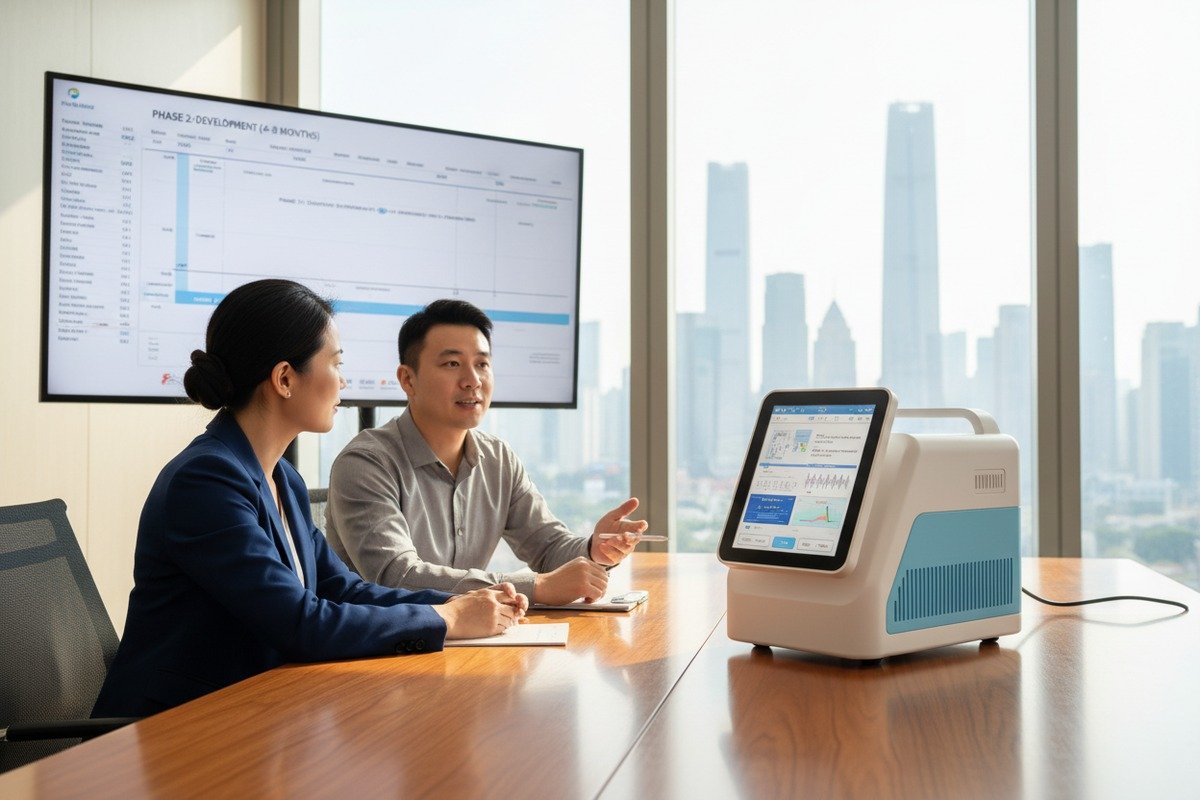
When our engineering team receives a new ODM inquiry for shockwave therapy machines 1, the first question is always about timing. Delays in development mean missed market windows and frustrated distributors.
The typical ODM development cycle for shockwave therapy machines ranges from 4 to 8 months, covering design validation, prototyping, regulatory preparation, and mass production. Timeline variations depend on customization complexity, certification requirements, and component sourcing efficiency.
Let me walk you through each phase so you can plan your project with confidence and realistic expectations.
How long will it take for my custom shockwave machine to go from design to mass production?
Our production floor handles dozens of shockwave projects each year, and timing questions come up in every initial meeting regulatory preparation 2. The uncertainty around development timelines creates real stress for brand owners planning product launches.
From initial design confirmation to mass production readiness, expect 12 to 24 weeks for a standard ODM shockwave therapy machine project. Complex customizations involving new mold tooling, advanced software features, or special certifications can extend this timeline to 32 weeks or more.
Breaking Down the Design-to-Production Timeline
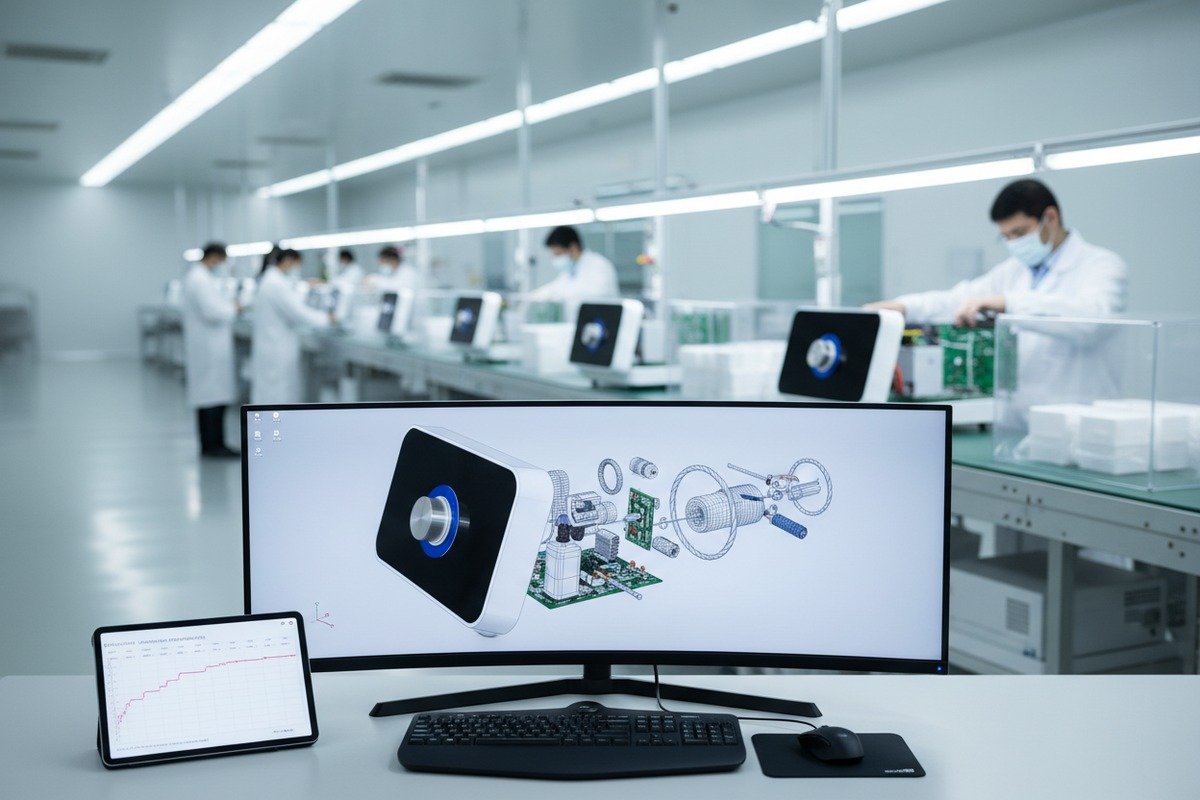
The journey from concept to finished product involves several distinct phases PCB design and validation 3. Each phase has its own requirements and potential delays.
During the initial design phase, our engineers work with your team to finalize specifications. This typically takes 2 to 4 weeks. We review your brand requirements, functional specifications, and aesthetic preferences. At this stage, we create detailed technical drawings and component lists.
The prototyping phase follows immediately. Our workshop produces working samples within 4 to 6 weeks. This includes assembling the main unit, integrating the touchscreen interface, and programming basic software functions. You will receive photos and videos before we ship the prototype for your evaluation.
Key Milestones in the Development Process
| Phase | Duration | Key Deliverables |
|---|---|---|
| Design Confirmation | 2-4 weeks | Technical drawings, BOM finalization |
| Prototype Development | 4-6 weeks | Working sample unit |
| Sample Evaluation | 2-3 weeks | Client testing and feedback |
| Design Revision | 2-4 weeks | Modified prototype based on feedback |
| Pre-Production Validation | 2-3 weeks | Final approval and tooling preparation |
| Mass Production | 4-8 weeks | Finished goods ready for shipment |
After you receive and test the prototype, feedback implementation requires additional time. Simple cosmetic changes take 1 to 2 weeks. Functional modifications or software updates may require 3 to 4 weeks.
Factors That Speed Up Development
Clear specifications from the start eliminate revision cycles. When clients provide detailed requirements upfront, we save 2 to 3 weeks on average.
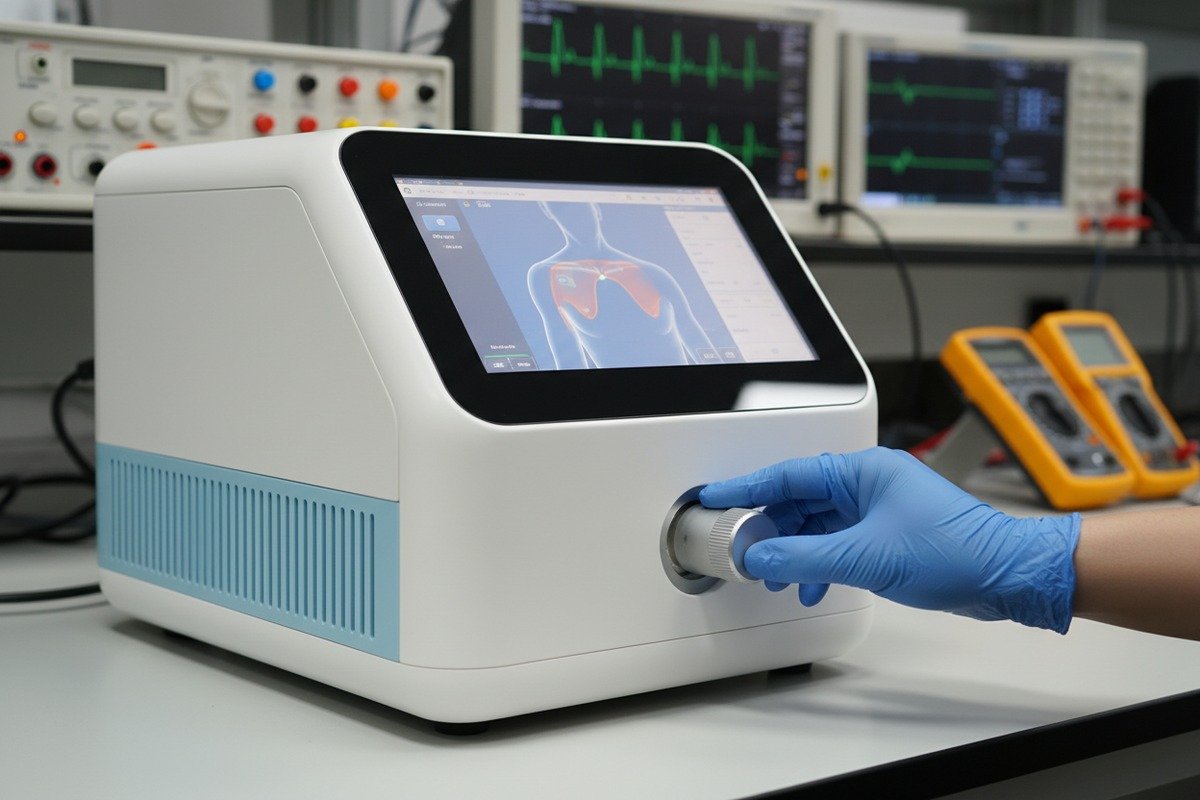
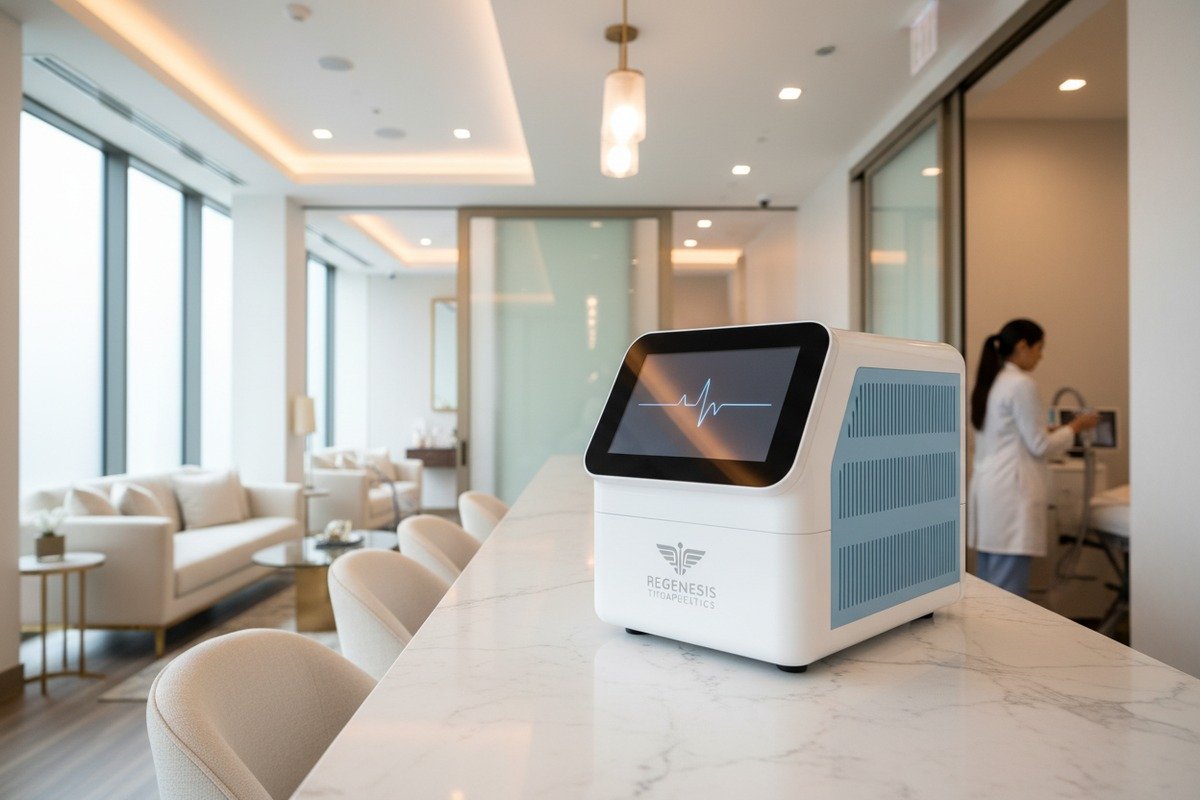
Using our existing platform designs accelerates development significantly. Our tabletop shockwave units with integrated LCD screens and metallic control knobs serve as proven foundations. Customization on these platforms focuses on branding, software interface, and specific treatment parameters rather than ground-up engineering.
Component standardization also helps. When you accept our recommended suppliers for key parts, procurement runs smoothly. Custom component sourcing from new vendors adds 3 to 6 weeks to the schedule.
What specific engineering stages will impact the development timeline for my branded device?
Our engineers often explain that timeline surprises usually trace back to specific technical challenges. Understanding these engineering stages helps you anticipate delays before they happen.
Five engineering stages most significantly impact ODM timelines: mold tooling development, PCB design and validation, software integration, safety testing, and component procurement. Each stage carries inherent lead times that cannot be easily compressed without compromising quality or compliance.
Mold Tooling Development
Custom housings require new molds. This is often the longest single lead-time item in a project.
Standard injection molds take 4 to 6 weeks to manufacture. Complex molds with textured surfaces, like the ribbed side panels on our premium units, require 6 to 8 weeks. Mold modifications after initial sampling add another 2 to 3 weeks.
Our recommendation: accept existing housing designs when possible. The sleek white plastic bodies and glossy black glass front panels in our current lineup suit most branding requirements. Custom colors and textures can be applied without new tooling.
PCB Design and Validation
The main control board requires careful engineering for shockwave therapy applications. Power management circuits must handle high-energy pulses reliably.
New PCB designs require 3 to 4 weeks for layout and simulation. Prototype board production adds 2 weeks. Testing and validation take another 2 to 3 weeks. If issues emerge during testing, redesign cycles add 3 to 4 weeks each.
Software Integration Timeline
| Software Component | Development Time | Testing Time |
|---|---|---|
| Basic UI Interface | 2-3 weeks | 1 week |
| Treatment Protocols | 3-4 weeks | 2 weeks |
| Anatomical Diagrams | 2 weeks | 1 week |
| Safety Interlocks | 2-3 weeks | 2 weeks |
| Data Logging | 1-2 weeks | 1 week |
| Multi-language Support | 1-2 weeks | 1 week |
Modern shockwave devices display anatomical human diagrams and technical data on integrated LCD screens. This requires careful software development. Our touchscreen interfaces support multiple treatment modes, each requiring separate programming and validation.
Safety Testing Requirements
Medical device safety testing cannot be rushed. Electrical safety tests, electromagnetic compatibility assessments, and performance validation each have minimum durations.
Third-party testing laboratories often have 4 to 8 week backlogs. We schedule testing slots early in the development process to minimize waiting time. However, failed tests require fixes and retesting, which can add months to the timeline.
Component Procurement Challenges
Critical components for shockwave therapy machines include piezoelectric transducers 5, high-voltage capacitors, and precision pressure sensors. These specialized parts have long lead times.
Standard components ship within 2 to 4 weeks. Specialized transducers may require 8 to 12 weeks. During global supply chain disruptions, even common components face extended delays.
How can I ensure my supplier meets the strict deadlines for my ODM shockwave therapy project?
We have seen projects derail due to poor planning and communication gaps. The stress of missed deadlines affects both sides of the partnership. Proactive management prevents most delays.
Ensuring deadline compliance requires three key strategies: establishing milestone-based payment terms tied to deliverables, implementing weekly progress reporting with photographic documentation, and building buffer time into your launch schedule for unexpected issues.
Establishing Clear Project Milestones
Break the project into measurable phases with specific deliverables. Each milestone should have a clear completion criteria.
| Milestone | Deliverable | Payment Trigger | Typical Duration |
|---|---|---|---|
| Project Kickoff | Signed specifications | 30% deposit | Week 0 |
| Design Completion | Approved drawings | – | Week 4 |
| Prototype Ready | Working sample shipped | 20% payment | Week 10 |
| Sample Approval | Written confirmation | – | Week 13 |
| Production Start | First article inspection | 30% payment | Week 16 |
| Shipment Ready | QC passed, photos sent | 20% balance | Week 22 |
This structure creates accountability at each stage. Payments tied to deliverables motivate timely completion.
Communication Protocols That Work
Weekly progress reports should include photographs of work in progress. Our project managers send updates every Friday with images from the production floor.
Establish a primary communication channel. WhatsApp works well for quick questions and photo sharing. Email provides documentation for important decisions.
Schedule video calls at key milestones. Seeing the prototype on camera catches issues that photos might miss. Our engineering team joins these calls to answer technical questions directly.
Building Buffer Time
Never plan your product launch for the day after expected delivery. Things go wrong in manufacturing.
Add 2 to 4 weeks of buffer time between expected delivery and your hard deadlines. This accounts for shipping delays, customs clearance 6 issues, and final inspection findings.
For seasonal launches, work backward from your required date. If you need products by October for holiday sales, the project should start no later than February.
Quality Checkpoints That Prevent Delays
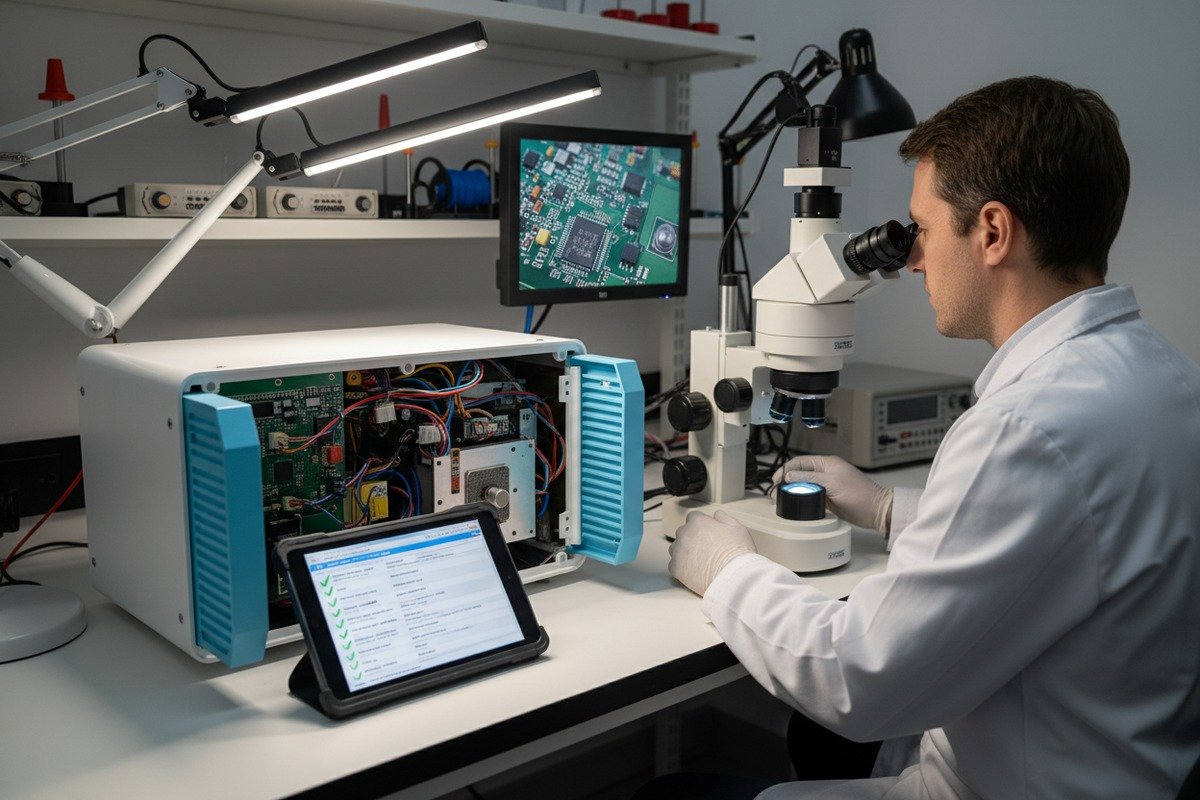
Pre-production inspections catch problems before they multiply. Our quality team checks the first 5 units off the line against specifications.
In-production inspections verify consistency. We pull random samples during the production run for testing.
Pre-shipment inspections confirm the entire order meets standards. Third-party inspection services provide independent verification for clients who prefer external oversight.
When to Consider EC REP Services
If you import through an agency for European markets, confirm they offer EC REP services 7. The European Representative requirement catches many importers off guard. Without this service, your products cannot legally enter the EU market, regardless of how perfect the development timeline was.
What is the total time I should expect for my project to move from prototyping to door-to-door delivery?
Our logistics team coordinates dozens of international shipments monthly. The post-production phase often surprises first-time importers with its complexity and duration.
From prototype approval to receiving goods at your warehouse, budget 8 to 14 weeks total. This includes production lead time of 4 to 8 weeks, quality inspection and packing of 1 to 2 weeks, international shipping of 3 to 5 weeks, and customs clearance of 1 to 2 weeks.
Production Lead Time Variables
Batch size directly affects production duration. Small orders of 50 to 100 units complete in 4 to 5 weeks. Large orders exceeding 500 units require 6 to 8 weeks.
Component availability remains the wildcard. When we maintain stock of key parts, production starts immediately after approval. Special order components add their lead time to the schedule.
Packaging and Final Preparation
Professional packaging for medical devices requires care. Each shockwave unit receives protective foam inserts, accessory organization, and branded box design.
Documentation preparation runs parallel to packing. User manuals, warranty cards, and compliance certificates must accompany each unit. For US markets, we include proper FDA registration documentation 8.
International Shipping Options
| Shipping Method | Transit Time | Cost Level | Best For |
|---|---|---|---|
| Sea Freight (FCL) | 25-35 days | Low | Large orders, flexible timing |
| Sea Freight (LCL) | 30-40 days | Medium | Medium orders |
| Air Freight | 5-7 days | High | Urgent deliveries, samples |
| Express Courier | 3-5 days | Very High | Small quantities, urgent |
Sea freight remains the most economical option for production orders. However, transit times vary by destination port and current shipping lane congestion.
Air freight suits urgent situations but costs 5 to 8 times more than sea freight per unit. We recommend this option only for initial samples or emergency restocking.
Customs Clearance Considerations
Medical devices face additional scrutiny at customs. Proper documentation accelerates clearance.
Required documents typically include commercial invoices, packing lists, bills of lading, certificates of origin, and product compliance certificates. For US imports, FDA establishment registration and product listing numbers are essential.
Working with experienced customs brokers prevents delays. Our logistics partners handle customs clearance in major markets and know the specific requirements for medical devices.
Door-to-Door Service Benefits
Full-service logistics management eliminates coordination headaches. Our team tracks shipments from factory gate to your warehouse door.
This includes booking shipping, preparing export documentation, coordinating with freight forwarders, monitoring transit progress, arranging customs clearance, and scheduling final delivery.
Transparent tracking keeps you informed. We share tracking numbers and milestone updates throughout the shipping process.
Conclusion
Planning your ODM shockwave therapy machine project requires understanding each development phase. From design to delivery, expect 6 to 10 months for most projects. Clear communication, realistic buffers, and milestone tracking keep projects on schedule.
Footnotes
1. Explains the medical application and technology of shockwave therapy. ↩︎
2. Provides context on the importance of regulatory steps in medical device development. ↩︎
3. Describes the critical steps in developing printed circuit boards for devices. ↩︎
4. Details the manufacturing process for creating custom product enclosures. ↩︎
5. Explains the function and application of piezoelectric transducers in medical technology. ↩︎
6. Explains the process and requirements for clearing goods through customs. ↩︎
7. Clarifies the role of an authorized representative for medical devices in the EU. ↩︎
8. Provides information on the necessary documentation for medical device compliance in the US. ↩︎

 English
  Español de México
  Deutsch
  Français
  العربية
  Русский