

We often hear from salon owners who feel stuck with outdated compression units while our factory rolls out advanced 48-chamber models that clients demand original manufacturer 1. You shouldn’t let obsolete inventory stall your business growth or prevent you from accessing the latest lymphatic drainage technology 2.
To inquire about trade-in policies for pressotherapy machine upgrades, contact the original manufacturer or authorized distributor directly. Provide proof of purchase, machine serial numbers, and photos of the current condition. Ask specifically if the trade-in value applies as a credit toward new professional models or custom private-label development.
Here is how you can navigate the inquiry process to maximize your upgrade value and streamline your equipment transition.
What specific details should I include in my inquiry to get a formal trade-in valuation?
When our sales team receives vague requests without specifications, we cannot provide accurate estimates or verify if parts are compatible with our current recycling streams serial number 3. Detailed documentation ensures we can calculate the best possible credit for your aging equipment immediately.
Your inquiry must include the machine’s model number, serial number, and original purchase date to verify age and ownership. Attach clear photos or videos showing the cosmetic condition and operational status. Specify if you possess the original packaging and accessories, as these factors significantly influence the final trade-in valuation.
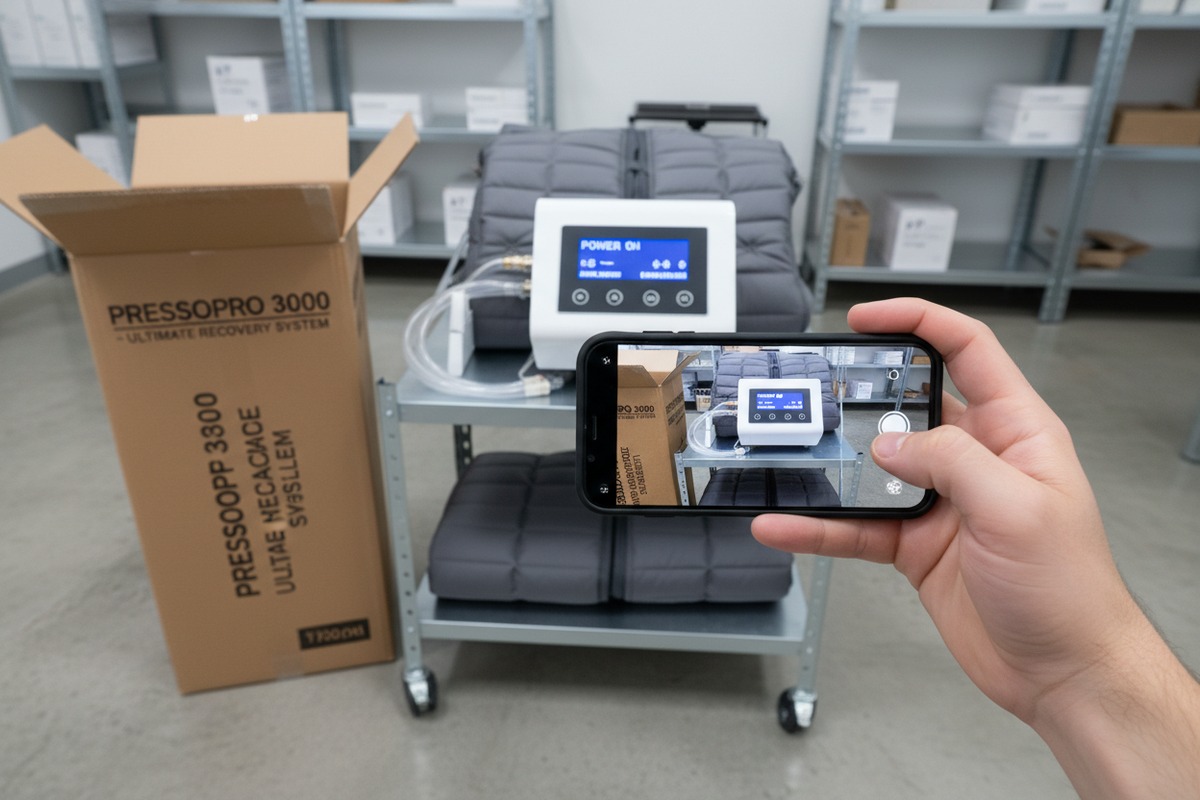
To ensure a smooth valuation process, you need to provide a comprehensive data package that allows our engineering team to assess the residual value of your unit without physically inspecting it first non-recurring engineering (NRE) costs 4. In the international B2B context 5, shipping a unit back to China for evaluation is cost-prohibitive, so your digital inquiry acts as the primary inspection point.
Essential Documentation Checklist
When we review trade-in requests, we look for evidence that the machine has been maintained well enough to be refurbished or stripped for high-value components customs clearance 6. A simple email saying "I have an old machine" is insufficient. We recommend structuring your inquiry with the following data points to speed up the approval process.
The most critical element is the Serial Number Image. This tells us the exact production batch, the internal components used (such as the specific air pump brand and motherboard version), and whether the unit is still within any extended service period. For older models, knowing the firmware version is also helpful, as some older chips cannot support modern pressure modes like "Pre-Therapy" or "Wave."
Visual Evidence and Operational Status
Beyond static images, a short video is incredibly persuasive. We advise recording a 30-second clip showing the machine powering on, the interface responding to touch commands, and the air pump engaging. If the machine is a high-end model, show the pressure gauge holding steady at a specific setting (e.g., 120 mmHg). This proves the compressor is not leaking, which is the most expensive component to replace.
Below is a breakdown of how we classify the condition of trade-in units based on the details you provide:
Table 1: Impact of Machine Condition on Valuation
| Condition Grade | Visual/Functional Criteria | Typical Valuation % (of Original Value) |
|---|---|---|
| Grade A (Excellent) | No cosmetic flaws, original box included, full pressure retention, <2 years old. | 30% – 40% |
| Grade B (Good) | Minor scratches, fully functional, suit connectors intact, 2-4 years old. | 15% – 25% |
| Grade C (Fair) | Visible yellowing of plastic, pressure fluctuates slightly, missing accessories. | 5% – 10% |
| Grade D (Salvage) | Does not power on, cracked casing, or heavy fluid damage. | 0% (Recycling only) |
Providing this level of detail upfront signals to suppliers that you are a professional buyer. It reduces the back-and-forth emails and allows us to approve a credit memo much faster.
Can I apply my trade-in credit toward the development of a new private-label pressotherapy model?
We frequently collaborate with brands wanting to transition from buying standard units to creating exclusive designs that stand out in the US market. Using trade-in value to offset R&D costs 7 is a strategic way to lower your initial investment and leverage your old assets.
Yes, many B2B manufacturers allow trade-in credits to be applied toward the non-recurring engineering (NRE) costs or mold fees for private-label development. This negotiation strategy effectively reduces the upfront capital required to launch a custom branded pressotherapy line while removing obsolete inventory from your warehouse.
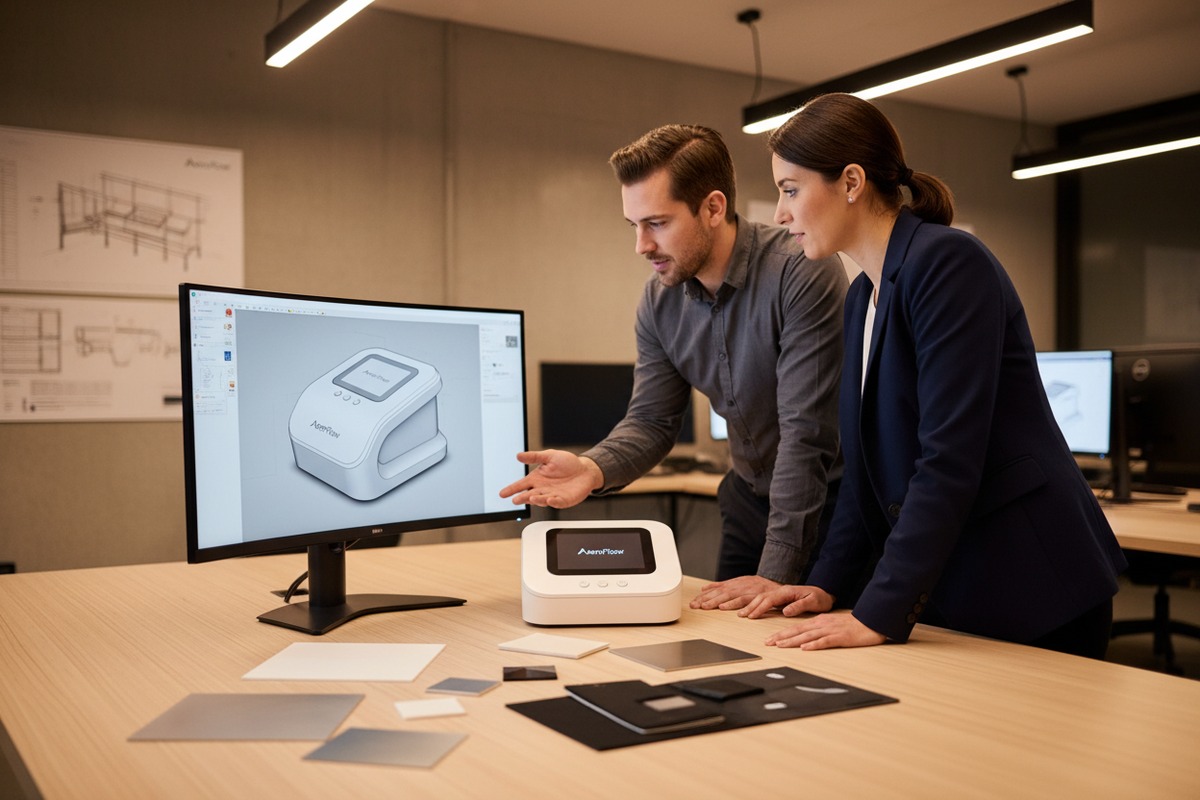
For Purchasing Managers looking to scale, simply swapping one standard machine for another is not always the best growth strategy. A more advanced approach is to utilize the capital locked in your existing inventory to fund the creation of your own brand assets.
Shifting Budget from Hardware to Innovation
When you trade in a fleet of older machines, the credit generated is typically viewed as "cash on account." While most buyers use this to discount the unit price of new stock, you can request that this credit be allocated to Service Fees instead. This is particularly relevant for ODM (Original Design Manufacturing) projects.
Developing a private-label machine involves several upfront costs:
- Industrial Design: Changing the shape of the casing to look unique.
- UI/UX Customization: Programming your logo into the startup screen and customizing the treatment modes.
- Mold Creation: Creating the tooling for plastic injection.
By directing your trade-in credit here, you lower the barrier to entry for creating a proprietary product. For example, if you have 10 units to trade in valued at $200 each, that $2,000 can cover the cost of a custom UI development and logo printing plates.
Negotiating the Credit Allocation
It is vital to clarify this intention early in the negotiation. Some distributors operate on thin margins and can only offer product-for-product swaps. However, as a factory with internal R&D capabilities, we have more flexibility. We can absorb the cost of the old units (using them for parts or training) and offer "service credits" in return.
This approach aligns perfectly with long-term branding goals. Instead of just getting a discount, you are investing in intellectual property (IP) or unique design elements that prevent your competitors from price-shopping your exact model.
Table 2: Allocation Options for Trade-In Credits
| Credit Allocation | Benefit for Buyer | Suitability |
|---|---|---|
| Unit Price Discount | Lowers the landed cost of the next shipment immediately. | Best for simple restocking orders. |
| Mold/Tooling Fees | Reduces the high upfront risk of custom casing development. | Best for launching a new private label. |
| Spare Parts Inventory | Provides a free stock of cuffs, hoses, and connectors. | Best for distributors with high service volume. |
| Sample Development | Covers the cost of producing and shipping a "Golden Sample." | Best for testing a new supplier's capabilities. |
This strategy transforms a simple operational task (disposing of old gear) into a strategic business development move.
How will your team handle the door-to-door logistics for returning my old units and delivering the upgrades?
Managing international freight is complex, and our logistics department handles these global swaps daily to ensure compliance and speed. We aim to prevent downtime by synchronizing the pickup of old units with the arrival of new ones, so your business never stops running.
Our logistics team coordinates the entire process, using freight forwarders to manage customs clearance and door-to-door transport. We typically arrange for the delivery of the new pressotherapy machines first, followed by the pickup of the trade-in units, ensuring your clinic or salon experiences zero downtime during the equipment transition.
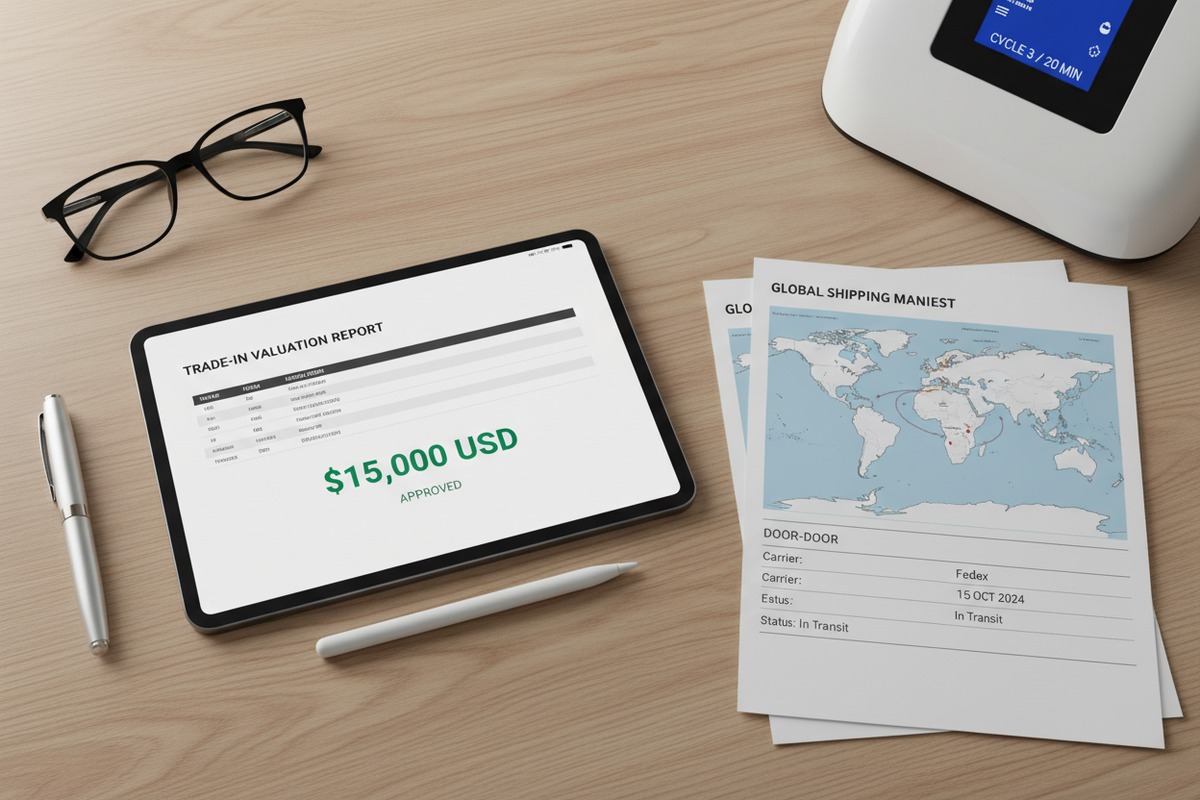
The logistical challenge of an international trade-in is often the biggest hurdle for US buyers. Returning heavy equipment to China can be expensive due to shipping rates and potential customs complications for "used medical equipment." Therefore, we have developed streamlined protocols to handle this.
The Swap Process and "Remote Destruction"
In a standard domestic trade-in, we would ship the new unit and pick up the old one simultaneously. However, for international clients, the cost of return shipping sometimes exceeds the salvage value of the old machine.
In these cases, we often implement a Remote Disable/Destruction Protocol. Instead of physically shipping the old units back to Guangzhou, we may ask you to destroy specific components (like the motherboard or air pump) and provide video proof. Once verified, we release the trade-in credit, and you can dispose of the shell locally. This saves hundreds of dollars in freight and reduces the carbon footprint.
If the units are high-value and must be returned, we utilize DDP (Delivered Duty Paid) terms 8 where possible, but reverse logistics usually falls under different Incoterms. We act as the coordinator, booking the courier (DHL/FedEx for smaller batches, sea freight for pallets) to pick up from your warehouse.
Managing Customs and Duties
When returning goods to China, they must be declared correctly to avoid import taxes on "returned goods." We provide the specific HS Codes and "Return for Repair/Upgrade" documentation to your team. If these documents are not prepared correctly, Chinese customs may charge import duty, which would be deducted from your credit.
Table 3: Shipping Responsibility Matrix
| Logistics Step | Responsible Party | Notes |
|---|---|---|
| Outbound Shipping (New Units) | Manufacturer (Arranger) / Buyer (Payer) | usually DDP (Door to Door) to US warehouse. |
| Return Shipping (Old Units) | Manufacturer (Arranger) / Buyer (Payer) | Cost often deducted from trade-in value. |
| Customs Documentation | Manufacturer | We provide the commercial invoice and HS codes. |
| Local Disposal (If applicable) | Buyer | If "Remote Destruction" is authorized to save shipping. |
By clarifying these roles upfront, we ensure there are no surprise bills from FedEx or Customs brokers.
What criteria must my current pressotherapy machines meet to be eligible for your upgrade program?
Our quality control engineers inspect every returned unit to determine its salvageable value and whether it meets safety standards for refurbishment. Knowing these technical standards helps you decide which machines are worth trading in before you spend time documenting them.
Eligible machines generally must be fully functional, less than five years old, and free from major structural damage. We specifically look for units where the air compression pump is intact and the pressure output remains consistent. Heavily soiled garments or devices with water damage are typically disqualified from trade-in programs.
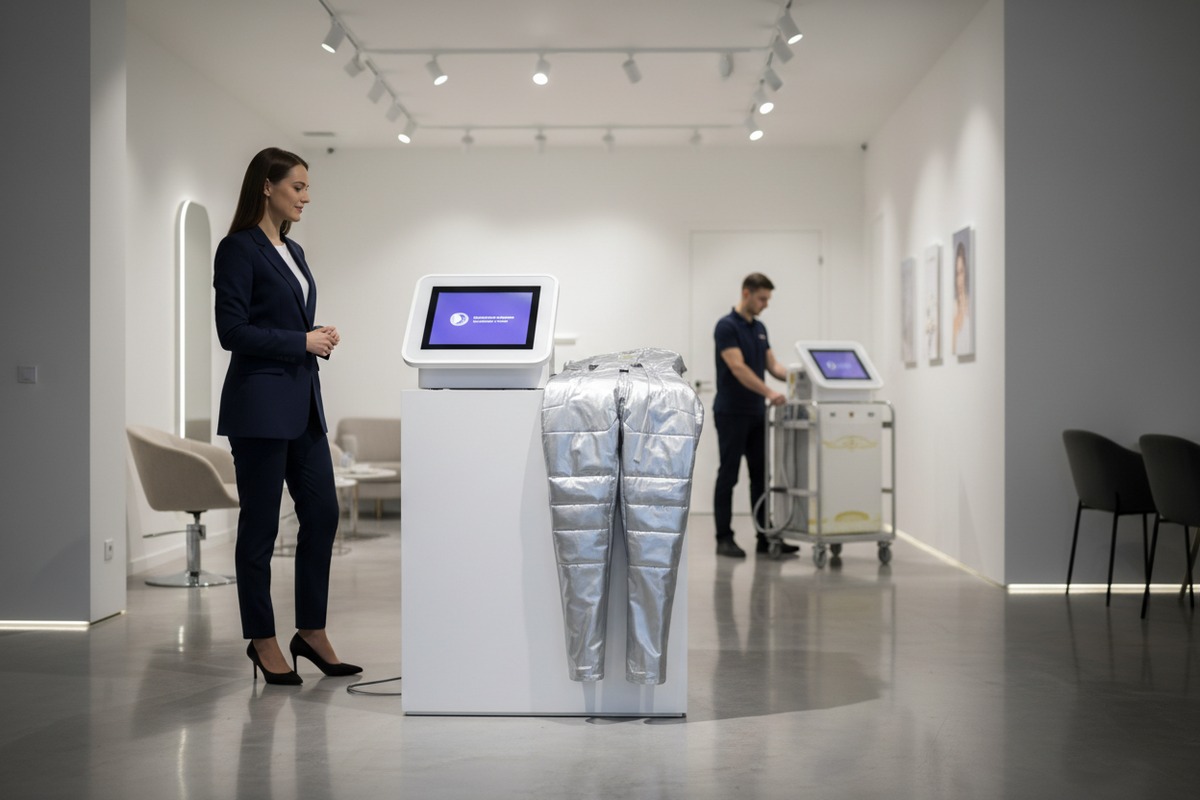
Not all pressotherapy machines are candidates for trade-in. The eligibility criteria are designed to filter out units that have reached the end of their lifecycle or pose a biohazard risk. Understanding these criteria helps you self-assess your inventory.
Age and Technology Generation
The primary criterion is the age of the technology. We generally accept machines that are up to 5 years old. Machines older than this often use obsolete air valves or motherboard architectures that are incompatible with modern repair protocols.
- Eligible: Digital control touchscreens, independent chamber control, pressure range 20-200mmHg.
- Ineligible: Analog dial knobs (unless vintage collector items), fixed-pressure units, or models with discontinued power connectors.
Hygiene and The "Suit" Problem
A critical distinction in pressotherapy trade-ins is the difference between the Control Unit (Machine) and the Garments (Suits/Cuffs).
- The Machine: High trade-in value. We can refurbish the pump, replace the casing, and update the software.
- The Suit: Zero or near-zero trade-in value. Due to hygiene concerns (sweat, skin cells, massage oils), used compression suits are rarely reused. They are difficult to sanitize to medical standards.
Therefore, when we quote a trade-in price, it is almost exclusively for the main control unit. We often advise clients to discard the old suits locally to save on shipping weight, as sending heavy, used fabric back to the factory adds cost without adding value.
Marketability and Voltage
For international buyers, Voltage is also a factor. If you are trading in 110V units (US standard), they are harder for us to resell in 220V markets (Europe/Asia) without modifying the transformer. Universal voltage machines (110V-240V auto-switching) hold their value much better because they can be refurbished and sold into any market globally.
H3: Common Disqualification Factors
- Water Damage: If the internal pump shows signs of fluid ingress/rust.
- Cracked LCDs: Screens are expensive to replace; a broken screen often totals the machine.
- Non-Professional Grades: We generally do not accept low-power "home use" Amazon-style devices for trade-in against professional salon equipment.
Conclusion
Upgrading your salon's technology is a necessary investment, but it shouldn't result in a warehouse full of dead stock. By preparing detailed documentation, leveraging trade-in credits for private label development, and understanding the logistics of international returns, you can significantly reduce your upgrade costs. Contact us today to assess the value of your current equipment.
Footnotes
1. Defines the term ‘original equipment manufacturer’ in a business context. ↩︎
2. Explains the concept and benefits of lymphatic drainage. ↩︎
3. Provides a general definition and purpose of a serial number. ↩︎
4. Explains the concept of non-recurring engineering costs in product development. ↩︎
5. Authoritative source (Wikipedia) providing a comprehensive definition and explanation of Business-to-Business (B2B) transactions, relevant to an international context. ↩︎
6. Defines customs clearance and outlines its process in international trade. ↩︎
7. Explains research and development costs in a corporate financial context. ↩︎
8. Defines Delivered Duty Paid (DDP) as an Incoterm for international trade. ↩︎

 English
 Español de México
 Deutsch
 Français
 العربية
 Русский
