
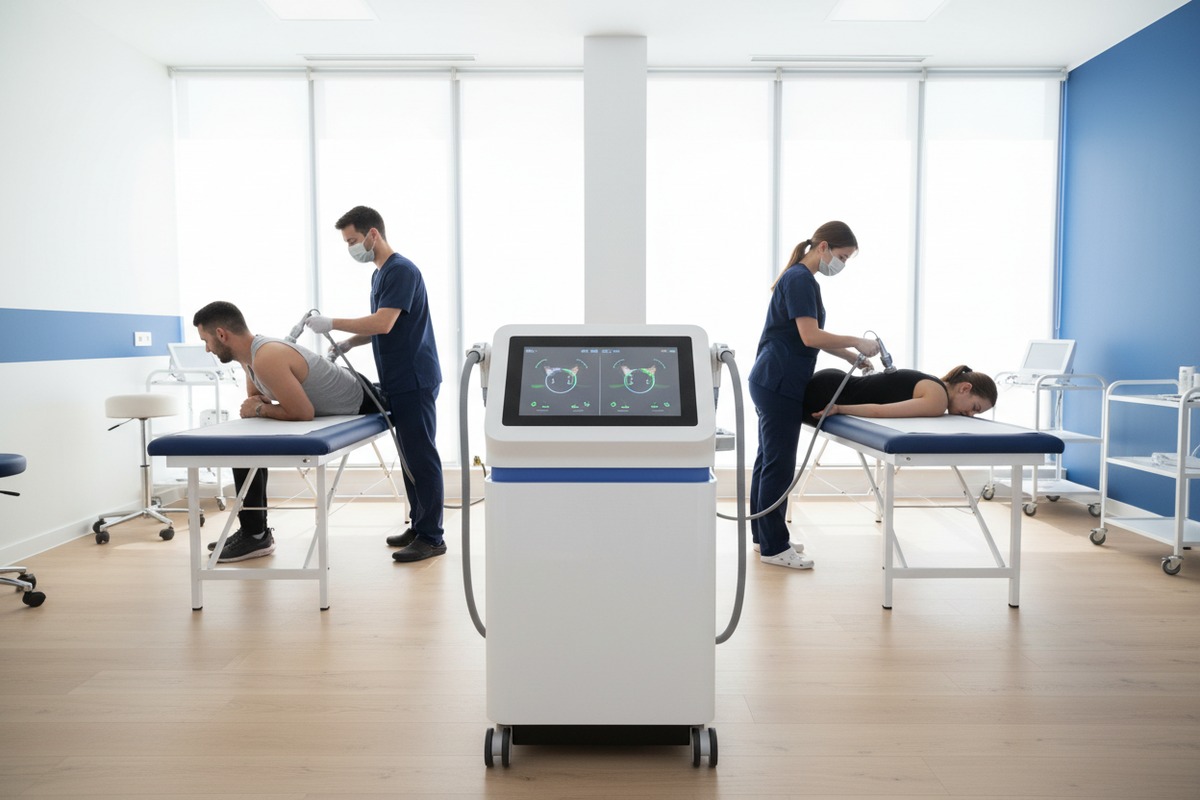
Every week, our sales team receives calls from clinic owners frustrated by misleading product claims independent channel specifications 1. They bought what they thought was a dual-user shockwave machine, only to discover it runs one handpiece at a time. This costly mistake delays treatments and hurts their bottom line.
When buying a shockwave therapy machine, ask if it supports true dual-channel operation with independent settings per handpiece. Confirm separate frequency and energy controls, request live demonstration videos, and verify handpiece durability ratings for simultaneous use to avoid single-channel machines marketed as dual-user systems.
This guide walks you through exactly what to ask manufacturers, what specs matter most, and how to evaluate whether a dual-user system fits your business OEM and ODM services 2. Let’s break down each critical question.
How can I confirm the shockwave machine delivers full energy output during simultaneous two-user operation?
Many buyers assume "dual handpiece" means true simultaneous operation patient throughput 3. dual-channel operation 4 Our engineering team has tested competitor units that claim dual-channel capability but actually split power between handpieces. This creates weaker treatments and unhappy patients.
To confirm full energy output during simultaneous use, request independent channel specifications showing each handpiece maintains 10-190 mJ energy and 1-22 Hz frequency separately. Ask for stress-test documentation proving both channels deliver rated power under continuous operation without energy degradation or automatic power reduction.

Understanding Channel Independence
True dual-channel machines allow two therapists to treat two patients with completely different settings at the same time. Each channel operates like a standalone machine. When our R&D team designs dual-channel systems, we ensure both channels draw from sufficient power reserves.
Single-channel machines with two handpieces work differently. They can only power one handpiece at a time. The second handpiece waits until the first finishes. Some manufacturers call this "dual-handpiece compatible," which misleads buyers.
Key Specifications to Request
| Specification | True Dual-Channel | Single-Channel with Two Handpieces |
|---|---|---|
| Simultaneous operation | Yes, both at full power | No, sequential only |
| Independent frequency control | Yes, 1-22 Hz per channel | N/A |
| Independent energy control | Yes, 10-190 mJ per channel | N/A |
| Power source | Dual power supply or high-capacity single | Standard single power supply |
| Price range | Higher | Lower |
Questions to Ask the Manufacturer
Start with direct questions. Ask: "Can two therapists treat two separate patients at the exact same time with full power?" Request written confirmation, not verbal promises.
Next, ask for demonstration videos showing both handpieces firing simultaneously. Watch for any visible power fluctuation or pause. Our factory creates these videos for every dual-channel model because we understand buyer skepticism.
Ask about burst mode operation 5. Quality dual-channel machines support 4, 8, or 12 pulse bursts on both channels simultaneously. If the machine can only burst on one channel at a time, it's not truly independent.
Finally, request the power consumption specifications. A true dual-channel machine consumes roughly double the power of a single-channel unit when both channels run at maximum settings. If power consumption stays the same, the machine likely splits power between channels.
Can I customize a dual-handle shockwave therapy machine with my own brand and specific technical requirements?
When distributors contact our team about dual-channel machines, branding and customization rank among their top concerns. Your brand identity matters. Generic machines sitting in your warehouse don't build customer loyalty.
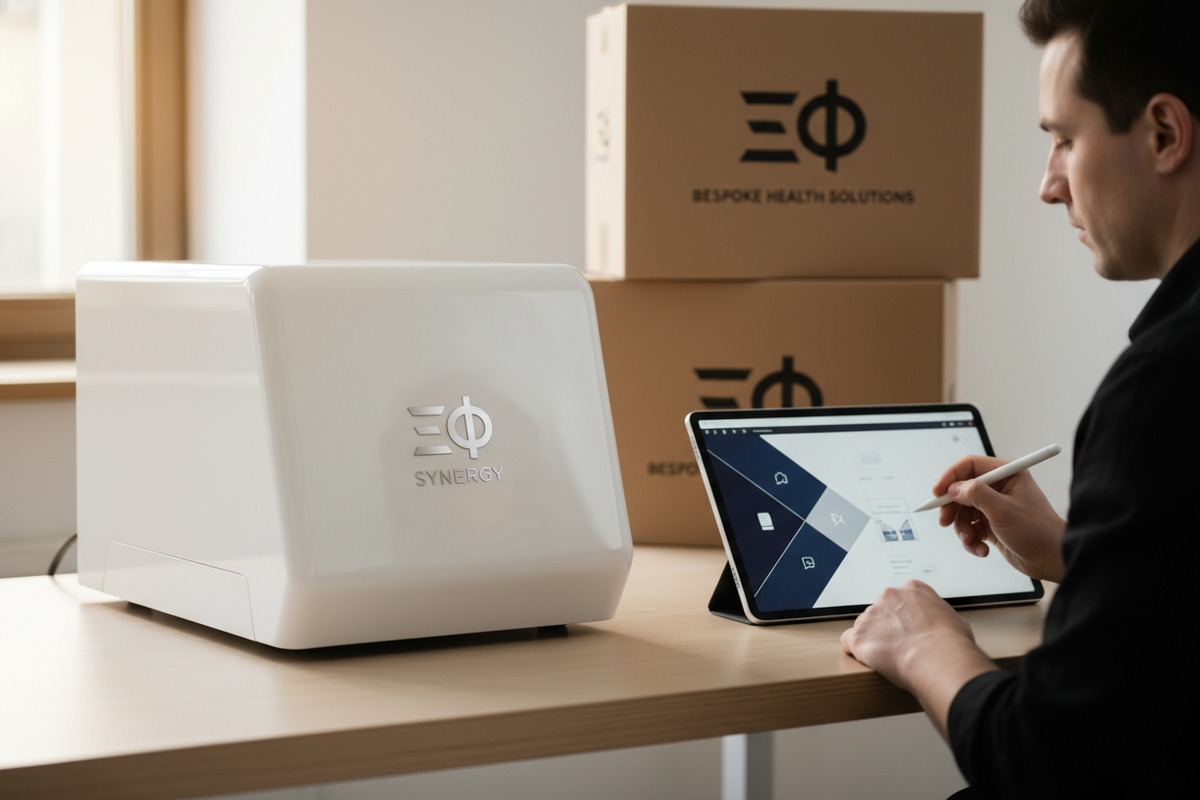
Yes, reputable manufacturers offer full OEM and ODM services for dual-channel shockwave machines. You can customize the exterior design, user interface, software protocols, handpiece colors, packaging, and technical parameters. Request minimum order quantities, development timelines, and sample approval processes before committing.
OEM vs ODM: What's the Difference?
OEM means putting your logo on our existing design. The machine specifications stay the same. Only the branding changes. This costs less and takes less time. Most orders ship within 4-6 weeks after artwork approval.
ODM means developing custom features for your needs. Maybe you want a specific treatment protocol for sports medicine. Perhaps you need a different touchscreen size. ODM projects require engineering time. Expect 3-6 months for development plus testing.
Customization Options Available
| Customization Area | OEM Options | ODM Options |
|---|---|---|
| Branding | Logo, colors, packaging | Complete exterior redesign |
| User interface | Language, logo on screen | Custom software layout, new features |
| Treatment protocols | Pre-loaded standard protocols | Custom protocols, proprietary algorithms |
| Handpieces | Color matching | Custom head sizes, ergonomic changes |
| Documentation | Your brand on manuals | Complete rewrite with your clinical guidelines |
| Certification | CE/FDA under your brand | Full certification support |
Technical Requirements You Can Specify
Energy output range 6 matters for different applications. Standard machines offer 10-190 mJ in 10 mJ steps. Some distributors serving orthopedic clinics request higher maximum energy. Sports medicine applications often need lower minimum settings for sensitive areas.
Frequency range customization helps target specific markets. The standard 1-22 Hz covers most applications. Veterinary distributors sometimes request lower frequency ranges. Aesthetic applications may need higher frequencies for cellulite treatment.
Handpiece design affects daily use comfort. Standard ergonomic handpieces suit most users. You can request lighter materials, different grip angles, or enhanced cooling systems. One of our US partners requested extended-reach handpieces for treating large patients more comfortably.
Minimum Order Quantities
Most factories require minimum orders for customization. Simple logo changes might require only 10-20 units. Full ODM development typically requires 50-100 unit commitments. Our team works with distributors to find practical solutions that balance customization needs with inventory concerns.
Request samples before production. A reputable manufacturer provides production-quality samples for your approval. This prevents surprises when full orders arrive.
What durability standards should I look for to ensure the dual-user system handles my clients' high-volume salon use?
Our quality control team sees returned units from high-volume clinics. The most common failure points are handpiece wear and cooling system breakdown. These failures happen faster when two handpieces run simultaneously all day.
For high-volume salon use, demand handpieces rated for minimum 2 million shots each, continuous operation capacity of 6,000 shots before auto-protection, fan-cooling systems in both handpieces, and titanium-alloy transmitter heads. Request warranty terms that specifically cover dual-channel simultaneous operation wear.

Handpiece Durability Metrics
Shot count rating indicates handpiece lifespan. Quality dual-channel machines rate handpieces at 2 million shots minimum. At 2,000 shots per day (moderate clinic use), that's roughly 1,000 working days or about 4 years. Dual-user operation doubles daily shot counts, halving expected lifespan.
Continuous operation limits protect the machine from overheating. Look for 6,000 continuous shots before auto-protection kicks in. Lower limits mean frequent pauses during busy treatment days.
Cooling System Comparison
| Cooling Type | Pros | Cons | Best For |
|---|---|---|---|
| Fan cooling | Effective, reliable | Adds slight weight | High-volume clinics |
| Passive cooling | Lightweight, quiet | Limited continuous use | Low-volume practices |
| Liquid cooling | Superior performance | Complex, maintenance needed | Industrial applications |
| Hybrid fan/passive | Balanced performance | Moderate cost | Medium-volume clinics |
Transmitter Head Materials
Titanium alloy heads cost more but last longer. They resist deformation under repeated impact. titanium-alloy transmitter heads 8 Cheaper steel heads wear faster and may affect treatment consistency over time.
Head size variety matters for versatility. Quality machines include 6-36 mm diameter options. Smaller heads target trigger points precisely. Larger heads cover broad muscle areas efficiently.
Interchangeable head systems save replacement costs. When one head wears out, you replace only that component. Integrated heads require replacing the entire handpiece assembly.
Warranty Considerations for Dual-User Operation
Standard warranties often exclude "commercial overuse." This vague term can deny claims from busy clinics. Request specific warranty language covering dual-channel simultaneous operation at rated capacities.
Ask about handpiece replacement programs. Some manufacturers offer discounted replacement handpieces for warranty customers. This reduces long-term operating costs.
Inquire about on-site service availability. When machines fail in high-volume settings, shipping for repairs costs treatment time and revenue. Local service networks minimize downtime.
Testing Before Purchase
Request continuous operation test reports. Reputable manufacturers test machines running both channels at maximum settings for extended periods. These stress tests reveal potential weaknesses before products reach customers.
Ask about quality control procedures during production. Our factory tests every dual-channel machine for 4 hours before shipping. Each handpiece fires 1,000 shots during inspection. This catches defects before they become your problem.
How do I evaluate the ROI of adding two-user shockwave machines to my distribution catalog?
When distributors visit our showroom, ROI questions come up in every meeting. They need concrete numbers to justify inventory investments. Our sales data helps illustrate realistic return expectations.
Evaluate ROI by calculating doubled patient throughput against the price premium for dual-channel capability. A clinic treating 20 patients daily with single-channel can treat 40 with dual-channel, potentially doubling revenue while adding only 30-50% equipment cost. Factor in faster breakeven, reduced wait times, and competitive differentiation.

Throughput Multiplication Effect
Single-channel machines treat one patient or one body site at a time. A typical session runs 5-15 minutes. With setup and transition time, clinics manage roughly 4-6 patients per hour per machine.
Dual-channel machines double this capacity. Two therapists can treat two patients simultaneously. Or one therapist can treat bilateral conditions (both knees, both shoulders) in one session. Either approach cuts patient wait times and increases daily revenue potential.
ROI Calculation Framework
| Factor | Single-Channel | Dual-Channel | Advantage |
|---|---|---|---|
| Patients per hour | 4-6 | 8-12 | 2x throughput |
| Equipment cost (relative) | 1x | 1.3-1.5x | Moderate premium |
| Treatment room needed | 1 | 1-2 | Flexible |
| Staff required | 1 therapist | 1-2 therapists | Scalable |
| Breakeven timeline | Standard | Faster | Higher velocity |
| Competitive positioning | Standard | Premium | Market differentiation |
Market Positioning Benefits
Distributors selling dual-channel machines attract different customers. Single-channel buyers often run smaller practices with limited budgets. Dual-channel buyers typically operate multi-room clinics focused on efficiency and growth.
Higher-ticket sales improve margins even with similar percentage markups. A 20% margin on a $15,000 dual-channel machine beats 20% on a $10,000 single-channel unit.
Clinics buying dual-channel machines often become repeat customers. They purchase additional handpieces, replacement heads, and accessories over time. This recurring revenue adds up.
Clinical Efficiency Improvements
Bilateral treatment capability attracts orthopedic and sports medicine clinics. Athletes often need both knees or both ankles treated. Dual-channel machines complete these sessions in half the time.
Chronic pain clinics report significant improvements from shockwave therapy. One study documented 90% improvement rates across 65 chronic pain cases. Faster treatment turnaround means clinics can serve more patients seeking these results.
Staff utilization improves with dual-channel systems. Two therapists working simultaneously maximize labor efficiency. In high-cost labor markets like the US and Europe, this efficiency matters significantly.
Distributor Catalog Considerations
Stock both single and dual-channel options. Different customers have different needs. Solo practitioners rarely need dual-channel capability. Multi-therapist clinics benefit immediately.
Create comparison materials showing clear ROI differences. Help your customers see the math. A clinic owner who understands the throughput multiplication will accept the price premium.
Offer demonstration units for high-potential customers. Let them experience dual-channel efficiency firsthand. Seeing two simultaneous treatments convinces skeptics faster than any brochure.
Consider financing options. The higher upfront cost of dual-channel machines creates purchasing friction. Financing spreads payments while clinics generate revenue from day one.
Conclusion
Asking the right questions prevents costly purchasing mistakes. Focus on true dual-channel capability, customization options, durability for high-volume use, and realistic ROI calculations. Contact manufacturers who provide clear documentation and demonstration evidence.
Footnotes
1. Defines medical device specifications, including performance characteristics and regulatory compliance. ↩︎
2. Explains the differences between OEM and ODM manufacturing models for businesses. ↩︎
3. Defines patient throughput in healthcare and its importance for efficiency and patient flow. ↩︎
4. Explains the use and advantages of dual-channel medical devices in a clinical setting. ↩︎
5. Details the fundamentals of burst mode in medical power modulation, specifically in phacoemulsification. ↩︎
6. Provides technical specifications for energy output and frequency in shockwave therapy devices. ↩︎
7. Wikipedia provides a comprehensive and authoritative overview of extracorporeal shockwave therapy (ESWT), which is the medical term for shockwave therapy, making it a suitable replacement for a general term like ‘shockwave therapy machine’. ↩︎
8. Discusses the key properties and medical applications of titanium alloys. ↩︎

 English
  Español de México
  Deutsch
  Français
  العربية
  Русский