
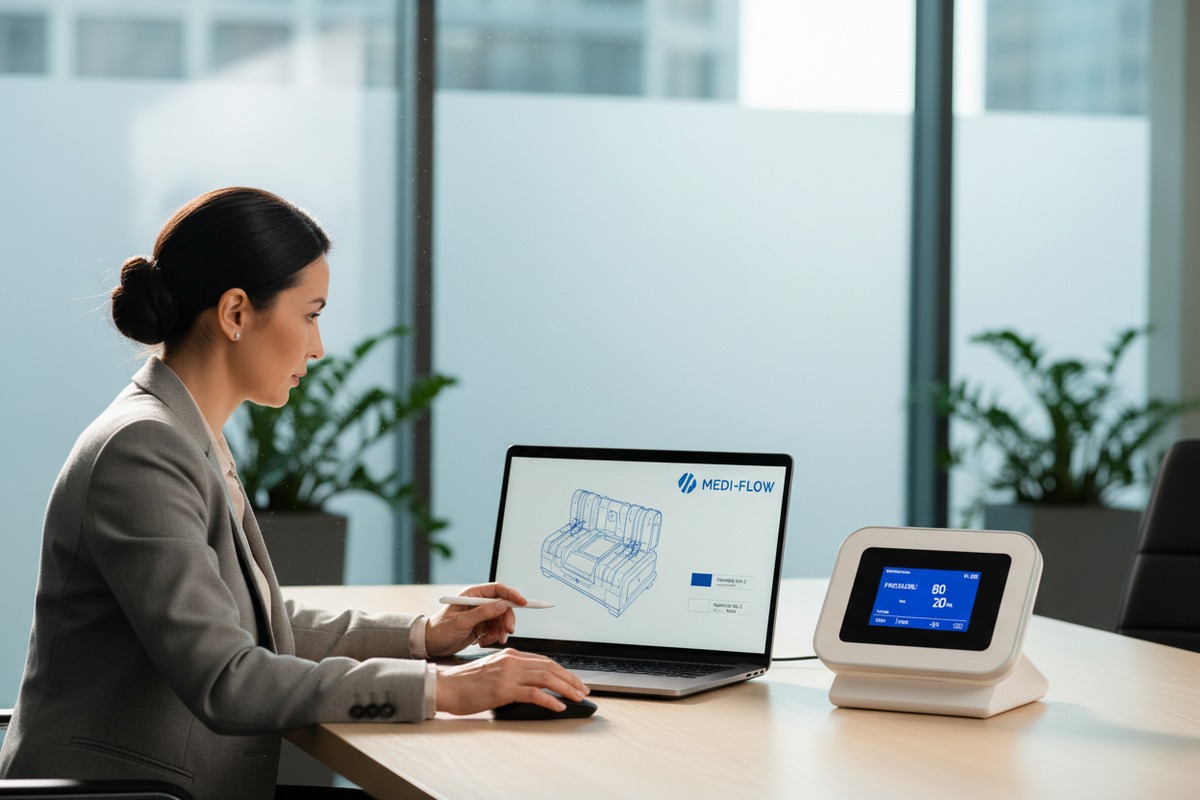
When our production team handles custom branding requests, we see how confusing OEM logo pricing and requirements can be for first-time buyers Vector logo files 2. You want your brand on high-quality pressotherapy machines 3. But hidden costs and unclear specs can delay your product launch.
To inquire about OEM logo costs and requirements for pressotherapy machines, request a detailed quote that separates logo application, packaging customization, and design fees from the base unit price. Clarify MOQ thresholds, provide vector logo files with exact color codes, and confirm compliance with medical device labeling standards for your target markets.
This guide breaks down everything you need to know. We cover budgeting, minimum order quantities 4, quality standards, and the technical files you must provide. Let’s get your custom pressotherapy project started right.
How much should I budget for custom logo application and private labeling on my pressotherapy machines?
When we quote OEM branding projects, many clients are surprised by how costs break down. They expect a single price. Instead, logo customization involves multiple touchpoints, each with its own cost structure.
Budget $50 to $300 per unit for comprehensive logo customization on pressotherapy machines, depending on the number of branding touchpoints. Basic screen logo integration may be free, while laser etching on machine bodies, custom packaging, and interface localization add incremental costs. Volume orders above 50 units typically unlock significant per-unit savings.
Understanding the Cost Components
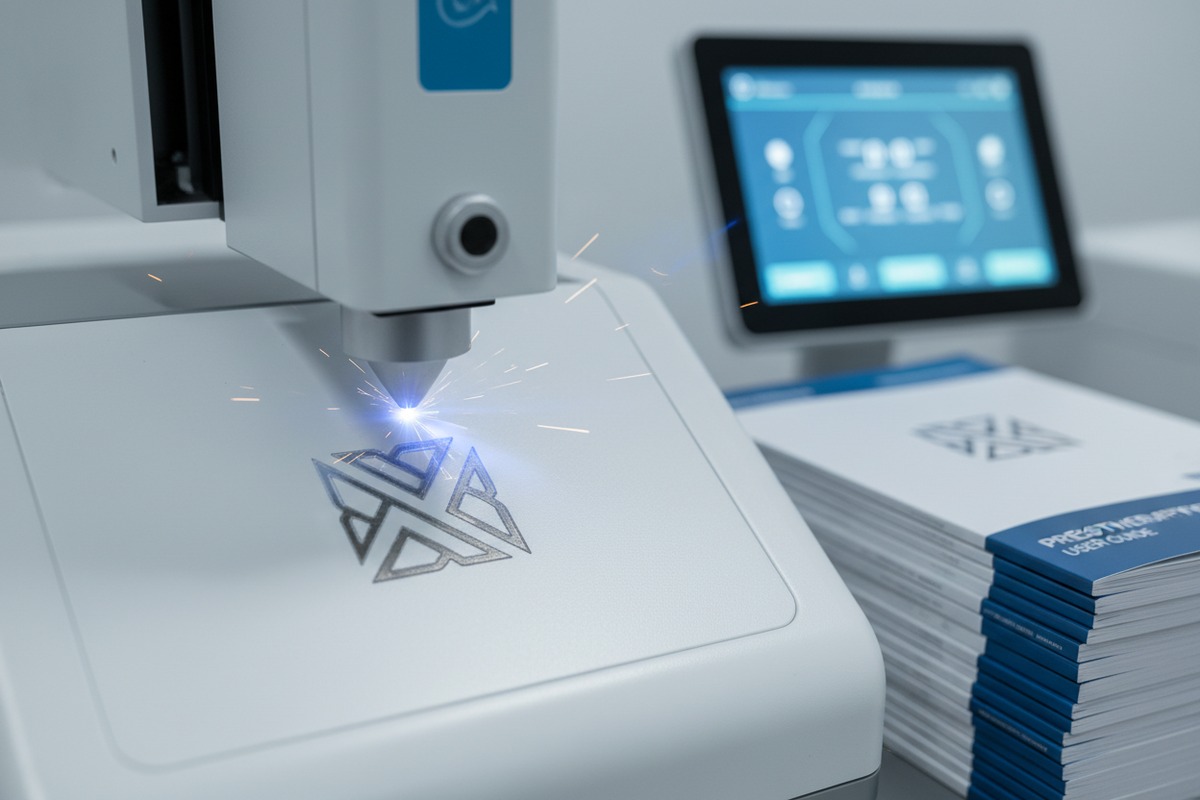
Logo customization for pressotherapy equipment is not a single line item. It spreads across several areas. Manufacturers offer personalized customization services where your logo can be "elegantly integrated into the device's startup screen and etched onto the machine's body." Each method has different costs.
Here is a breakdown of typical customization touchpoints:
| Customization Type | Typical Cost Range | Notes |
|---|---|---|
| Screen logo integration | $0-$50 per unit | Often included free with OEM orders |
| Laser etching 5 on body | $20-$80 per unit | Depends on logo complexity |
| Custom packaging design | $200-$500 setup fee | Plus per-unit printing costs |
| Interface language localization | $100-$300 one-time | Per language added |
| Operation manual branding | $50-$150 setup fee | Per document type |
Volume Discounts and MOQ Impact
Key selection drivers in the pressotherapy market include "MOQ flexibility (1–50 unit orders comprise 78% of shipments)." This means most buyers start small. But smaller orders mean higher per-unit customization costs.
Many China medical device manufacturers 6 offer OEM/ODM services and private labeling, but you should "expect higher MOQs and initial tooling costs for custom branding."
Our experience shows that breaking the 20-unit threshold often triggers a 15-25% reduction in per-unit branding costs. At 50 units, savings can reach 35-40%.
Hidden Costs to Watch
Many sourcing managers underestimate these hidden costs:
- Design revisions: Most manufacturers include 2-3 revisions. Additional rounds cost $50-$100 each.
- Sample production: Branded samples typically cost 1.5-2x the standard unit price.
- Color matching fees: Exact Pantone matching may incur $50-$100 setup charges.
- Rush fees: Expedited branding adds 20-30% to customization costs.
Manufacturers maintain MOQs because "manufacturing a product is a complex process that involves a number of different steps, including sourcing raw materials, production planning, and quality control. Each of these steps requires time and resources."
What are the minimum order quantities I need to meet for OEM pressotherapy equipment?
Our order desk handles MOQ negotiations daily. We see buyers confused about why MOQs vary so much between manufacturers. The answer lies in production economics and customization complexity.
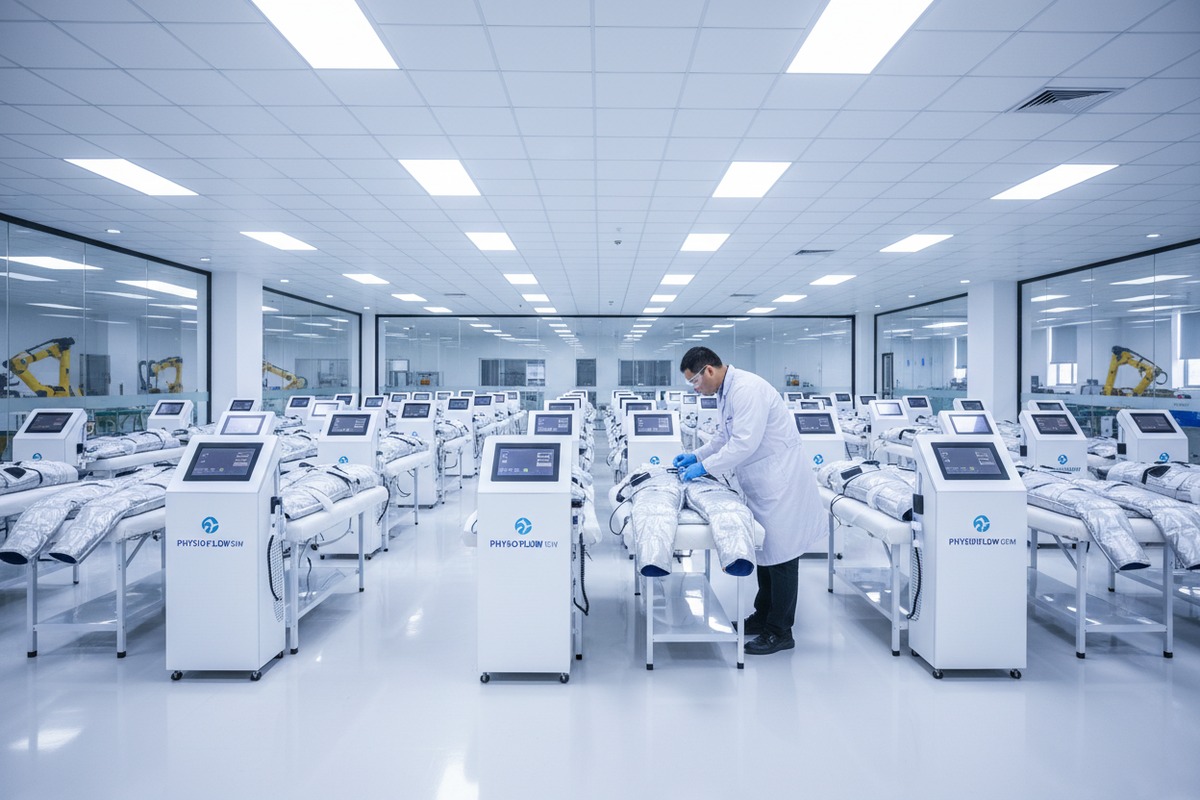
Minimum order quantities for OEM pressotherapy machines typically range from 1-5 units for basic labeling to 20-50 units for comprehensive branding packages. Stock models with simple logo decals have lower MOQs, while fully customized machines with unique colors, interfaces, and packaging require 50+ units to justify tooling and setup costs.
MOQ Tiers Explained
Medical device manufacturers in China "typically have MOQs for customized colors, logos, or feature sets. Stock/standard models often have lower MOQs."
Here is how MOQ tiers typically break down:
| Customization Level | Typical MOQ | Lead Time |
|---|---|---|
| Stock model, label only | 1-5 units | 1-2 weeks |
| Screen logo + basic packaging | 10-20 units | 2-4 weeks |
| Full branding package | 20-50 units | 4-6 weeks |
| Custom color/design modifications | 50-100 units | 6-12 weeks |
| Full ODM development | 100+ units | 3-6 months |
Why MOQs Exist
The MOQ "usually determines the minimum amount of product that a manufacturer needs to make for it to be worth their time and effort. The MOQ will usually correlate to the size of the facilities at their disposal."
For pressotherapy machines specifically:
- Each branding setup requires machine reconfiguration
- Custom packaging materials must be ordered in bulk
- Quality control procedures need documentation for each variation
Negotiating Lower MOQs
Building a good relationship with your supplier helps: "If you've been a reliable customer, always paying on time, and placing orders regularly, use this history to your advantage when you negotiate!"
Strategies that work:
- Combine SKUs: Order multiple models with the same branding to hit aggregate MOQs
- Accept higher per-unit costs: Some manufacturers offer low MOQ with a 15-25% premium
- Phase your order: Commit to annual volume but split into quarterly shipments
- Start with basic customization: Prove the market with label-only units first
Sample Order Considerations
Most manufacturers require a sample order before bulk production. Some suppliers confirm that they "can customize machines and add private logos." Sample costs are typically higher, and lead times are shorter to allow market testing.
How can I ensure the branding quality on my machines meets my high-end market standards?
Our quality control team inspects every branded unit before shipment. We understand that a poorly applied logo damages your brand more than no logo at all. High-end markets demand perfection.
Ensure branding quality by requesting digital mock-ups before physical samples, specifying logo application methods (laser etching vs. pad printing vs. decals), and requiring pre-shipment quality inspection photos. Establish clear acceptance criteria for color accuracy, placement precision, and durability testing against cleaning agents and environmental factors.
Logo Application Methods Compared
Different application methods suit different quality expectations:
| Method | Durability | Cost | Best For |
|---|---|---|---|
| Laser etching | Excellent (permanent) | High | Machine bodies, premium positioning |
| Pad printing | Good (5+ years) | Medium | Control panels, curved surfaces |
| UV printing | Good (3-5 years) | Medium | Multi-color logos on flat surfaces |
| Vinyl decals | Fair (2-3 years) | Low | Budget positioning, temporary branding |
| Screen printing | Good (5+ years) | Medium | Packaging, large flat areas |
Medical Device Branding Standards
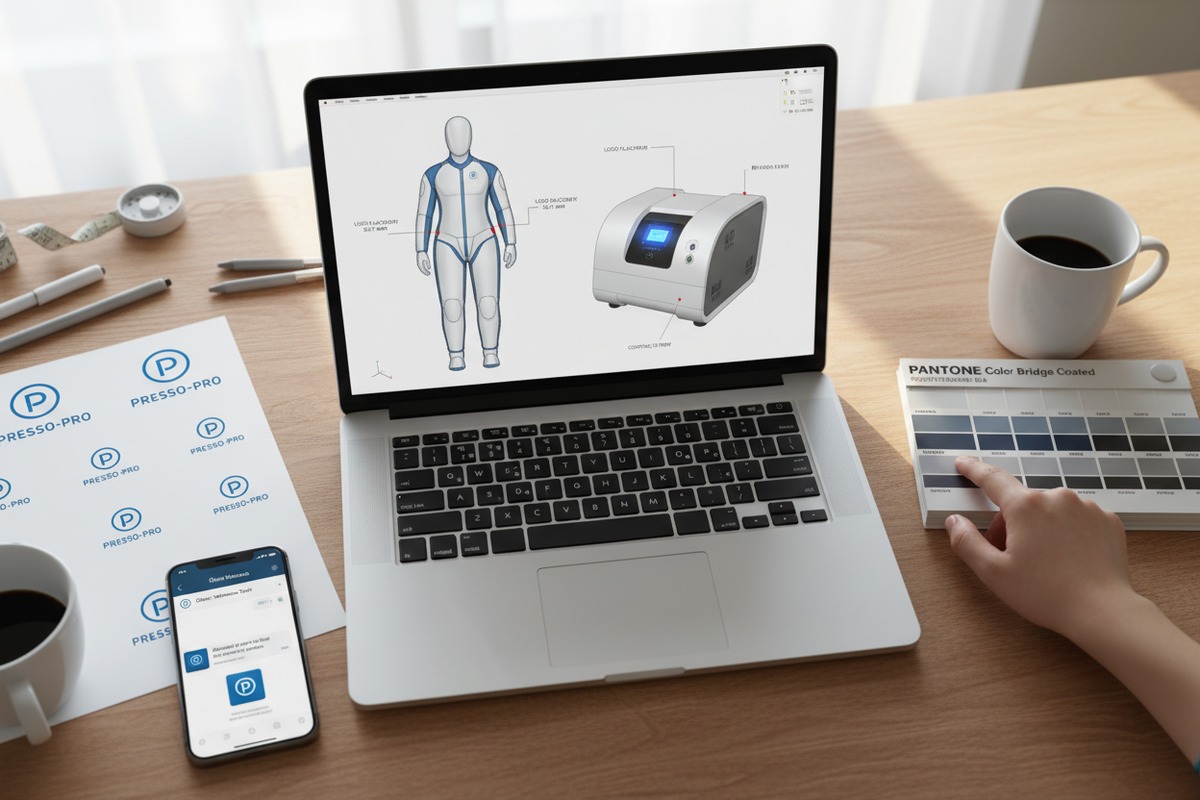
A comprehensive brand standards guide for medical devices should include "clear rules for proper logo placement, sizing, and acceptable color variations" along with "specific HEX, RGB, and CMYK codes for brand colors to ensure color consistency across digital and print materials."
For pressotherapy equipment targeting wellness centers and clinics, your branding must:
- Withstand cleaning with common disinfectants
- Remain legible under various lighting conditions
- Maintain color accuracy over years of use
- Not interfere with required regulatory symbols
Quality Inspection Protocol
For most labels, "standard legibility is exemplified by 'crisp' images that are legible without speckles, bleed, shadowing/ghosting, or smears."
Request these inspection checkpoints:
- Pre-production sample approval: Physical sample with your exact branding
- First-article inspection: Check first 3-5 production units
- In-process QC photos: Document every 10th unit during production
- Pre-shipment inspection: Verify 100% of units meet standards
Color Accuracy Requirements
Industry best practices recommend using appropriate color codes for each application: "request your external suppliers for print tests to check which colour code (Pantone, CMYK or RGB) will provide the best colour match."
Provide your manufacturer with:
- Pantone color code 7 (for physical printing)
- CMYK values (for packaging)
- RGB/HEX values (for screen displays)
- Acceptable tolerance ranges (typically ΔE < 3 for premium)
Durability Testing
High-end markets require branding that lasts. Ask your manufacturer to test:
- 500 wipe cycles with 70% isopropyl alcohol
- UV exposure equivalent to 2 years of indoor use
- Humidity exposure at 85% RH for 48 hours
- Temperature cycling between -10°C and +50°C
What technical specifications and design files must I provide to start my custom pressotherapy project?
Our design team has processed hundreds of logo files. We know what works and what causes delays. Providing the right files upfront saves weeks of back-and-forth revisions.
Provide vector logo files in AI, EPS, or PDF format with all fonts converted to outlines. Include exact Pantone, CMYK, and RGB color codes, clear guidelines for minimum size and spacing, and approval for both positive and negative (reversed) versions. Supply mockup preferences for placement on the device body, screen interface, and packaging.
Required File Formats
Your manufacturer needs specific file types for different applications:
| Application | Required Format | Resolution/Specs | Notes |
|---|---|---|---|
| Machine body printing | AI, EPS, or PDF | Vector (scalable) | Convert all fonts to outlines |
| Screen startup logo | PNG or BMP | 300+ DPI, exact pixel dimensions | Check screen resolution first |
| Packaging printing | AI, EPS, PDF | Vector with bleeds | Include 3mm bleeds |
| Instruction manuals | AI, PDF | Vector preferred | Embed all fonts |
Color Specification Requirements
Your brand standards should include "typography guidelines: approved fonts, sizes, and spacing rules for consistent readability and brand identity."
Provide a color specification sheet with:
- Primary brand color: Pantone, CMYK (C:M:Y:K %), RGB (R:G:B values), HEX
- Secondary colors: Same specifications
- White space requirements: Minimum clear space around logo
- Background restrictions: Approved and prohibited background colors
Logo Usage Guidelines
Send a simple brand guideline document that covers:
- Minimum size: Smallest acceptable reproduction size (e.g., 25mm width)
- Aspect ratio: Must not be stretched or compressed
- Isolation zone: Clear space around logo (usually 1/4 logo height)
- Acceptable placements: Upper right, centered, etc.
- Prohibited uses: Examples of incorrect usage
Screen Interface Specifications
For startup screen logos on pressotherapy control units, provide:
- Exact pixel dimensions matching the display resolution
- File format: Usually PNG with transparency or BMP
- Color depth: 24-bit or 32-bit depending on display
- Animation files (if applicable): GIF or video format
For digital displays, logos typically should follow specifications like "120×120 pixels" with appropriate "color depth: 32 bit" in "BMP file" format.
Packaging Design Files
Custom packaging requires comprehensive files:
- Die-cut template: Exact dimensions with fold lines
- Artwork layers: Separated for easier modifications
- Print-ready PDF: With bleeds, crop marks, and color bars
- Barcode specifications: UPC/EAN placement and size
Documentation Checklist
Before sending files, verify:
- All fonts converted to outlines/paths
- No linked images (embed all elements)
- Color mode matches application (CMYK for print, RGB for screen)
- Correct file format for each application
- Brand guidelines document included
- Contact information for approval process
Regulatory Symbol Considerations
Medical device manufacturers "must adhere to international labeling standards, such as ISO 15223-1 8, which provides guidelines for using Medical Device Symbols. Compliance with these standards ensures consistency and clarity across different markets."
Your logo design must leave space for:
- CE marking (for EU markets)
- FDA establishment registration (for US)
- ISO certification marks
- Manufacturer identification symbols
Conclusion
Getting OEM logo costs and requirements right from the start saves time and money. Budget carefully for each customization touchpoint. Meet realistic MOQs based on your customization needs. Demand quality that matches your market positioning. And provide complete, professional design files. Your branded pressotherapy machines can compete at the highest levels when you approach OEM sourcing with this structured framework.
## Footnotes

<span id="footnote-1">
1. Replaced HTTP 404 with an authoritative FDA page on general device labeling requirements. <a href="#ref-1" class="footnote-backref">↩︎</a>
</span>

<span id="footnote-2">
2. Explains what vector files are and why they are crucial for logo scalability and quality. <a href="#ref-2" class="footnote-backref">↩︎</a>
</span>

<span id="footnote-3">
3. Replaced HTTP 405 with a comprehensive article from Healthline explaining pressotherapy, including how the machines work. <a href="#ref-3" class="footnote-backref">↩︎</a>
</span>

<span id="footnote-4">
4. Defines MOQ, explains its purpose, and how it impacts businesses. <a href="#ref-4" class="footnote-backref">↩︎</a>
</span>

<span id="footnote-5">
5. Explains the process and applications of laser etching for marking materials. <a href="#ref-5" class="footnote-backref">↩︎</a>
</span>

<span id="footnote-6">
6. Replaced HTTP 403 with an informative article listing top medical device companies in China from GlobalData. <a href="#ref-6" class="footnote-backref">↩︎</a>
</span>

<span id="footnote-7">
7. Describes the Pantone Color System for consistent color matching in design and printing. <a href="#ref-7" class="footnote-backref">↩︎</a>
</span>

<span id="footnote-8">
8. Details the international standard for symbols used in medical device labeling. <a href="#ref-8" class="footnote-backref">↩︎</a>
</span>

 English
  Español de México
  Deutsch
  Français
  العربية
  Русский