

We frequently receive inquiries from salon owners and distributors who feel limited by standard equipment specifications minimum order quantity (MOQ) 1. When we design our lymphatic drainage systems 2 here in Guangzhou, we understand that your clients come in all shapes and sizes, and a standard suit often fails to deliver the precise compression needed for effective treatment. You need equipment that fits your business model as well as it fits your customers.
To get accurate custom sizing costs, you must send manufacturers specific body dimensions, desired airbag configurations, and estimated order volumes. Most suppliers require a minimum order quantity (MOQ) of 10 units for customization, with costs typically 15-30% higher than standard models depending on materials and design complexity.
Below, I will guide you through the specific questions and data points you need to present to manufacturers to ensure you receive a transparent and commercially viable quote.
How do I request a professional price breakdown for custom-sized pressotherapy machine components?
Many buyers struggle to get clear quotes because their initial emails lack technical detail, leading to long back-and-forth exchanges. Our sales team responds fastest and most accurately when clients provide a structured Bill of Materials (BOM) request 3 rather than a general inquiry about “larger sizes.”
Request a breakdown by listing the exact components you need customized, such as arm sleeves or leg cuffs. Ask for separate line items for mold fees, material upgrades, and labor costs. This transparency allows you to compare the base unit price against the surcharge for non-standard dimensions.
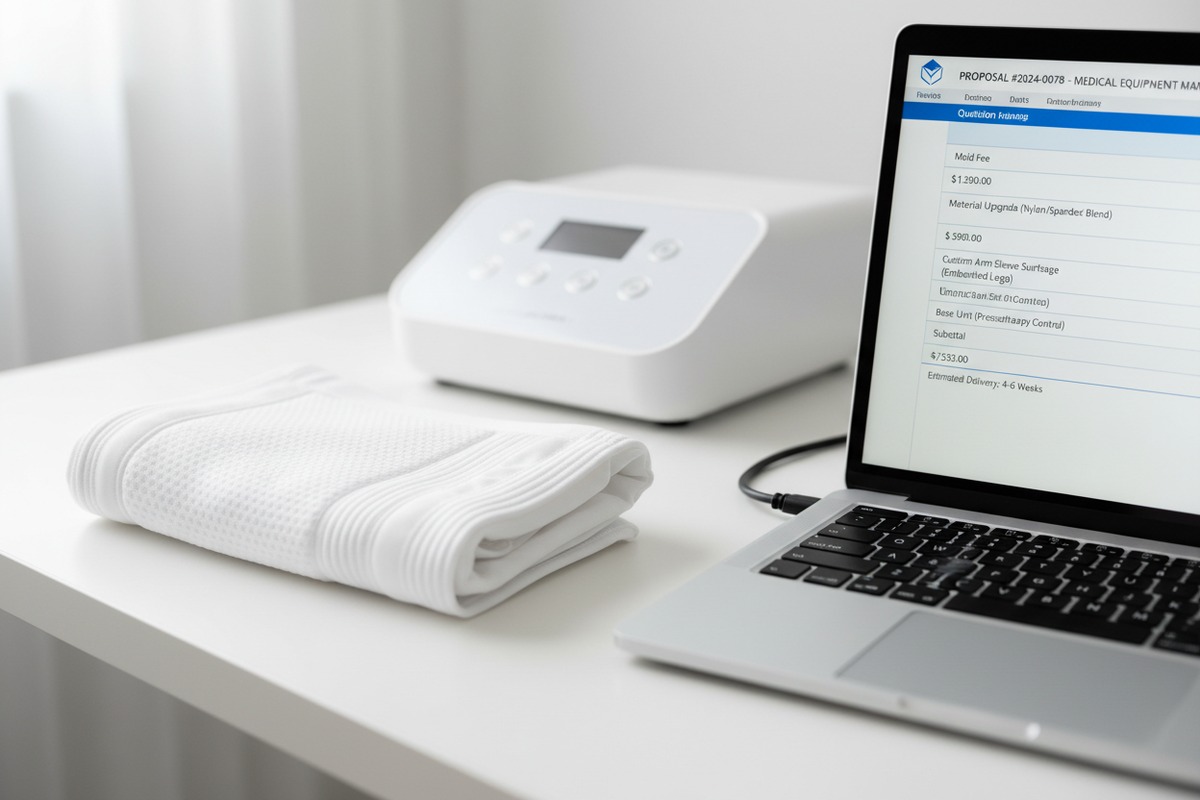
Understanding the Components of a Custom Quote
When you approach a factory for custom sizing, you are essentially asking them to disrupt their standard production line. Standard machines are produced in batches using established patterns and molds. Customization requires new patterns, manual cutting of fabric, and potentially different calibration for the air pump to handle the increased volume of air required for larger suits.
To get a professional breakdown, your inquiry should explicitly ask for the "Delta Cost." This is the difference between the standard unit price and your custom unit price. A professional supplier should be able to list these costs clearly.
Structuring Your Request Email
Do not simply ask, "How much for a custom size?" Instead, structure your request to show you understand the manufacturing process. Break your request down into three categories:
- Non-Recurring Engineering (NRE) Costs: These are one-time fees. Ask the supplier: "What is the pattern-making fee for a custom leg cuff size?" or "Is there a setup fee for cutting a new fabric shape?" Non-Recurring Engineering (NRE) Costs 4
- Unit Cost Increase: This covers the extra material (TPU or Nylon) and the extra labor time required to sew non-standard shapes.
- Component-Level Pricing: Ask for the price of the machine (the pump unit) to be separated from the price of the suit. This helps you see if the price hike is justified by the suit manufacturing alone.
Identifying Hidden Cost Drivers
In our experience, buyers often overlook the cost of the internal airbags 5. A larger suit does not just mean more fabric; it often requires larger internal airbags to ensure the pressure remains consistent. If the suit is made larger but the internal airbags remain the standard size, the treatment will be ineffective because the compression will not reach the client's skin effectively.
Therefore, your price breakdown request should specifically ask: "Does the quoted price include resized internal airbags, or just a larger outer shell?" This question signals to the supplier that you are a knowledgeable buyer who cannot be fooled by cheap shortcuts.
Standard vs. Custom Component Cost Estimation
Use the table below to understand what a reasonable surcharge looks like for different components.
| Component | Standard Wholesale Range (USD) | Estimated Custom Surcharge | Reason for Cost Increase |
|---|---|---|---|
| Control Unit (Pump) | $200 – $400 | +0% – 5% | Usually no change unless pressure calibration is needed. |
| Leg Cuffs (Pair) | $60 – $100 | +25% – 40% | Requires new fabric cutting patterns and larger airbags. |
| Arm Sleeves (Pair) | $40 – $70 | +20% – 35% | Complex geometry around the shoulder requires manual sewing. |
| Waist/Abdomen Belt | $30 – $60 | +15% – 25% | Simplest to resize, mainly involves extending the length. |
| Extension Zippers | $5 – $10 | N/A | A cheaper alternative to full customization. |
By referencing a table like this in your own planning, you can spot if a supplier is overcharging you. If a supplier quotes a 100% price increase for a slightly larger waist belt, you know to challenge that cost.
What specific measurements must I provide in my inquiry to get an accurate quote for custom sizing?
We have seen significant production delays occur simply because a client provided total length but forgot circumference data. In our engineering department, precise geometric data is crucial for calibrating airbag pressure distribution 6 and ensuring the suit does not burst under pressure.
You must provide circumference measurements at key points: ankle, calf, thigh, hips, waist, and upper arm. Additionally, specify the total length of limbs and the desired overlap between air chambers. Providing these metrics in centimeters ensures our pattern makers create accurate templates without needing costly revisions.

The Danger of Generic Sizing
Using terms like "XL," "XXL," or "Plus Size" is dangerous in international trade. An "XL" in the Asian market is vastly different from an "XL" in the US or European market. When we export to the US, we find that standard Asian sizes are often too narrow in the thigh and shoulder areas.
To get an accurate quote, you must act as your own technical designer. You need to provide a measurement chart (Tech Pack) 7 to the factory. If you do not provide this, the factory will guess based on their local standards, which will likely result in a product that does not fit your clients.
Essential Circumference Metrics
The most critical data points for pressotherapy are circumferences. The machine works by inflating air chambers. If the circumference of the suit is too small, the chambers will not have room to inflate, leading to painful pressure points or popped zippers.
You must measure and specify:
- Ankle Circumference: The entry point for the pressure wave.
- Calf Circumference: The widest point of the lower leg.
- Thigh Circumference: Measure at the widest point near the groin. This is the most common area where standard suits fail.
- Hip/Waist Circumference: Essential for the abdominal belt.
- Bicep Circumference: Critical for arm sleeves.
Length and Chamber Overlap
Length is secondary to circumference but still vital. If a leg cuff is too long, it will press into the client's groin or ribs uncomfortably. If it is too short, it leaves areas untreated.
Furthermore, you should inquire about "Chamber Overlap." High-quality custom suits feature overlapping airbags (imbricated). This ensures there are no gaps in compression. When you request custom sizes, ask the manufacturer: "Will the custom size maintain the 2-3cm chamber overlap?" If the manufacturer stretches the fabric without adding more material to the airbags, gaps will form, reducing the therapy's effectiveness.
Critical Measurement Checklist
When emailing your supplier, copy and paste a table similar to the one below, filled with your target dimensions.
| Measurement Point | Standard Dimension (Approx) | Your Required Custom Dimension (Example) | Tolerance (+/-) |
|---|---|---|---|
| Total Leg Length | 90 cm | 105 cm | 2 cm |
| Thigh Circumference | 60 cm | 85 cm | 2 cm |
| Ankle Circumference | 35 cm | 45 cm | 1 cm |
| Waist Circumference | 110 cm | 140 cm | 2 cm |
| Arm Length | 85 cm | 95 cm | 2 cm |
| Shoulder Width | 45 cm | 60 cm | 2 cm |
Providing this level of detail shows the supplier you are serious. It allows them to calculate the exact yardage of fabric needed (Yield), which leads to a precise cost quote rather than a padded estimate.
How will my custom sizing requirements impact the total landed cost and production lead time?
Clients often overlook how larger garment dimensions increase shipping weight and packaging volume until they see the final invoice. When we coordinate logistics for our US partners, we see that custom sizes often require non-standard carton configurations, which drives up the cost per unit significantly.
Custom sizing typically increases production lead time by 15 to 25 days due to pattern adjustment and material cutting. Financially, expect the total landed cost to rise by approximately 20% because larger suits increase volumetric weight, leading to higher international shipping fees and potential customs duty adjustments.
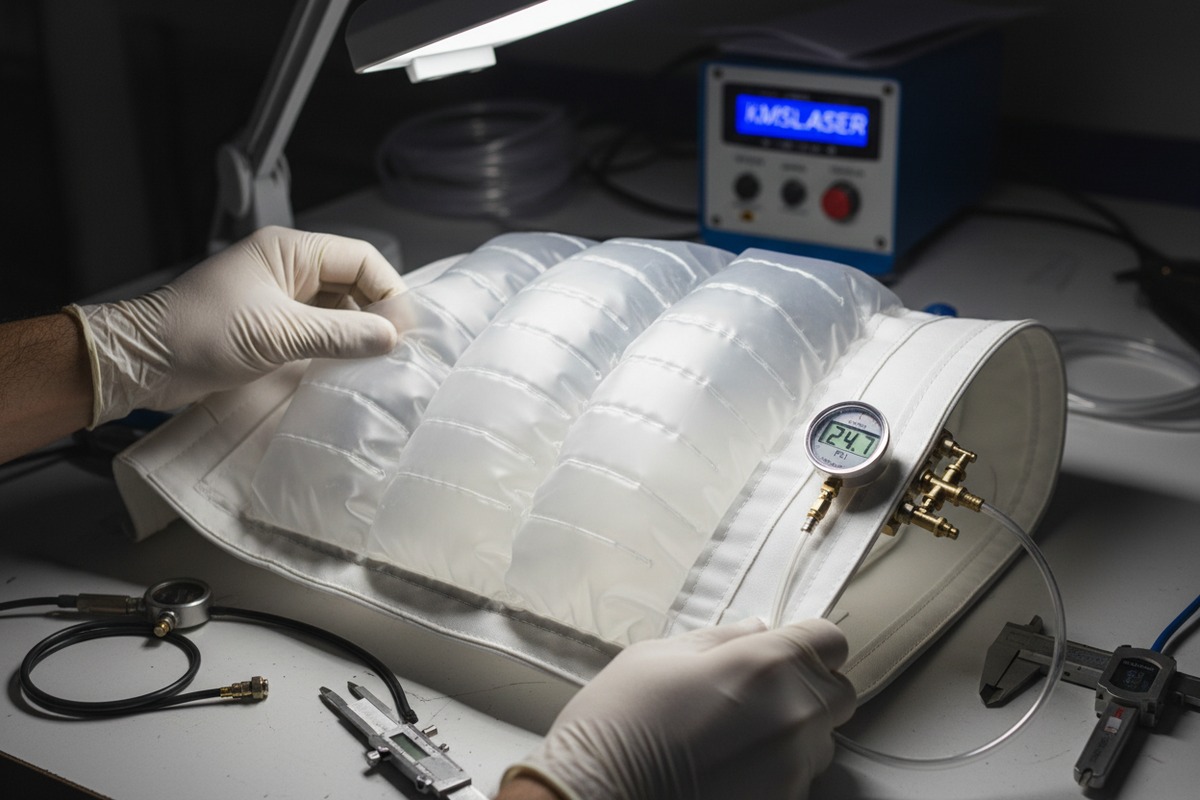
Production Timeline Impacts
Time is money. For standard off-the-shelf items, a factory can often ship within 3-5 days. Customization changes this dynamic entirely.
- Pattern Making (5-7 Days): The paper patterns must be drawn and digitized.
- Sample Production (7-10 Days): A single unit is made to test the fit and air pressure.
- Customer Approval: You will need to view photos or videos (or receive the physical sample) to approve it.
- Bulk Production (15-20 Days): Cutting and sewing custom sizes is often done manually or on slower lines than standard automated production.
If you are launching a new salon or product line, you must build this buffer into your schedule. Do not promise your customers a launch date until you have confirmed the "Ex-Works" date with the factory.
Shipping and Logistics Reality
The "Landed Cost" is the final price of the product once it arrives at your door. Custom sizing impacts this in two ways:
- Volumetric Weight: Logistics companies charge based on size, not just dead weight. A custom suit for larger clients requires more fabric and larger airbags. This implies the folded suit is thicker and takes up more space in the box. If the standard box size is 50x40x30cm, a custom suit might require a 60x50x40cm box. This slight increase can jump your shipping cost into a higher bracket.
- Packing Materials: Standard machines usually come in pre-cut foam inserts. Custom suits may not fit in these standard foam inserts. The factory may need to use bubble wrap or custom-cut foam, which adds a small but real cost to the packaging fees.
Cost Analysis: Standard vs. Custom
Here is a hypothetical breakdown of how customization affects the bottom line.
| Cost Element | Standard Unit (USD) | Custom Unit (USD) | Variance |
|---|---|---|---|
| Ex-Works Price (Product) | $300 | $390 | +30% |
| Packaging Fee | Included | $15 | New foam/box |
| Shipping (Air Freight) | $120 | $160 | Higher volume |
| Import Duty (Example 25%) | $75 | $97.50 | Based on value |
| Total Landed Cost | $495 | $662.50 | +34% |
As you can see, a 30% increase in manufacturing cost can translate to a 34% or higher increase in total cost once logistics and taxes are applied. You must account for this margin when setting your retail price or service menu prices.
Can I get a transparent breakdown of the OEM fees for private labeling my custom-sized machines?
Branding distinguishes your salon or distribution business from competitors using generic equipment. We encourage clients to ask about logo placement on custom suits early, as printing on non-standard fabric sizes requires specific tooling and cannot always use the same screens as our standard production runs.
Yes, reputable manufacturers will provide a separate line item for OEM fees. This typically includes screen printing setup costs, logo mold creation for the machine body, and custom packaging design fees. Requesting this breakdown ensures you are paying one-time tooling fees rather than an inflated per-unit cost.
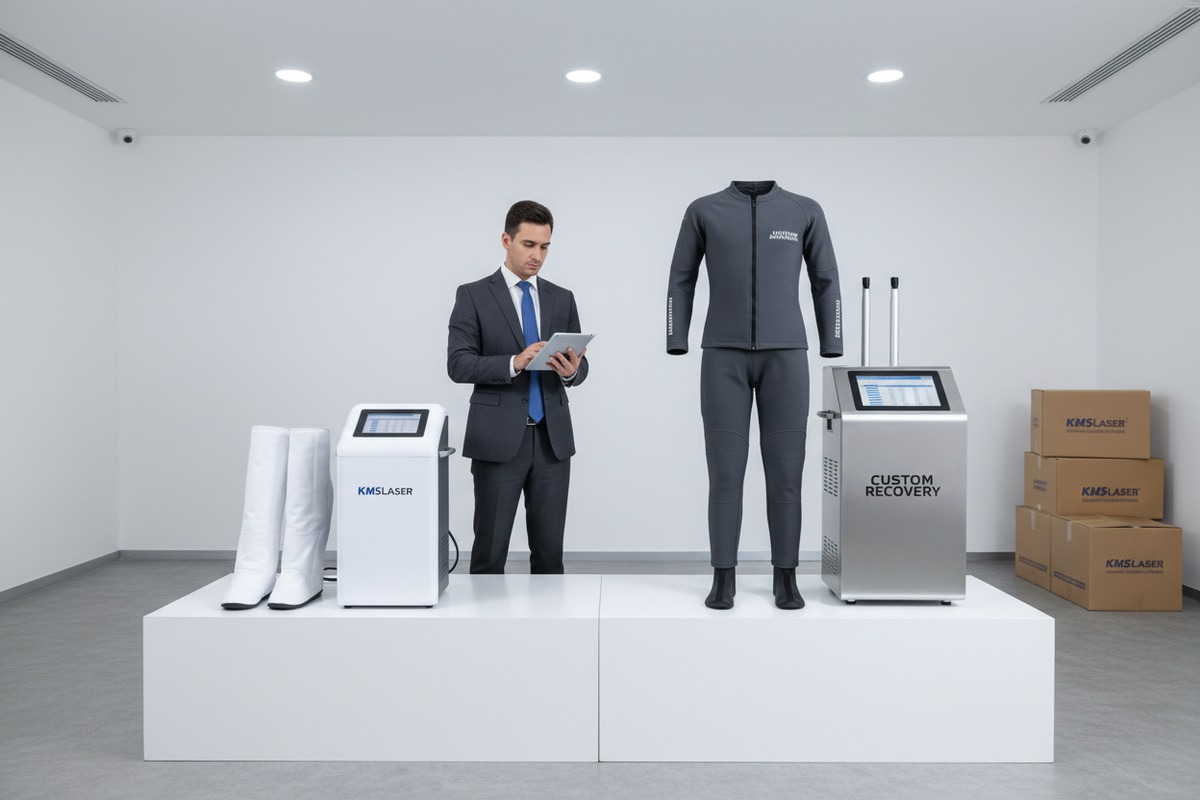
One-Time vs. Recurring Costs
When you inquire about private labeling (OEM) 9, it is vital to distinguish between NRE (Non-Recurring Engineering) costs and unit costs.
- NRE (One-Time): This includes the cost to make the silk-screen film for your logo, the cost to program the digital display with your startup logo, and the cost to create a cutting die for your custom box. You should only pay this once.
- Unit Cost (Recurring): This is the labor cost to actually print the logo on each machine. This should be a small fee (e.g., $1-$5 per unit).
If a supplier gives you a high unit price without mentioning setup fees, they might be hiding the setup cost inside the unit price. This is bad for you because you will overpay on reorders. Always ask: "Can you separate the mold/film fees from the unit price?"
Branding Locations and Techniques on Custom Suits
Branding a custom-sized suit presents unique challenges. On a standard suit, we know exactly where the logo fits. On a custom suit, the available surface area changes.
- Screen Printing: The most common method. However, if the leg cuff is much wider, a small logo might look disproportionate. You may need to pay for a larger logo screen to maintain aesthetics.
- Embroidery: This looks premium but can puncture the airtight TPU material if not done on a separate outer layer. We generally advise against embroidery on the air chambers themselves to avoid leaks.
- Digital Interface: Don't forget the machine screen. Changing the startup logo is usually a software update. Ask if this is free for orders over 10 units.
Common OEM Fee Structure
Use this table to evaluate the quotes you receive.
| OEM Service | Cost Type | Typical Market Price (USD) | Notes |
|---|---|---|---|
| Logo on Machine Body | One-time Setup | $50 – $100 | Usually silk screen or sticker mold. |
| Logo on Machine Body | Per Unit | $1 – $3 | Labor and ink cost. |
| Logo on Suit (Fabric) | One-time Setup | $30 – $80 | Film creation for the screen. |
| Logo on Suit (Fabric) | Per Unit | $2 – $5 | Varies by number of colors. |
| Custom Boot Up Screen | One-time Setup | $50 – $200 | Software engineering time. |
| Custom User Manual | One-time Setup | Free – $50 | Layout adjustment. |
By demanding this level of detail, you protect your margins. You also ensure that when you place your second order, the price drops because you have already paid the setup fees.
Conclusion
Inquiring about custom sizing costs requires a shift from asking "How much?" to asking "How is this calculated?" By providing detailed circumference measurements 10, requesting a BOM-style price breakdown, and understanding the logistics implications, you can secure professional-grade equipment that fits your specific client base. Investing time in this detailed inquiry process protects you from hidden costs and ensures your investment delivers a high ROI through superior client satisfaction.
Footnotes
1. Defines a common business term in manufacturing and supply chain. ↩︎
2. Explains the medical function and components of the lymphatic system. ↩︎
3. Explains a critical document for product manufacturing and procurement. ↩︎
4. Replaced HTTP 404 with a Wikipedia article providing a comprehensive definition of Non-Recurring Engineering (NRE) Costs. ↩︎
5. Details a key component and its function in pressotherapy machines. ↩︎
6. Explains the technical aspect of maintaining consistent pressure in airbag systems. ↩︎
7. Defines a standard document used in garment manufacturing for specifications. ↩︎
8. Explains a key factor in calculating shipping costs for goods. ↩︎
9. Defines a common business practice for branding and manufacturing. ↩︎
10. Highlights the importance of precise body measurements for custom fitting. ↩︎

 English
  Español de México
  Deutsch
  Français
  العربية
  Русский