When our production lines run at full capacity, we see firsthand how unit costs drop with volume minimum order quantities 1. Yet many importers still pay more than they should for shockwave therapy machines 2. The problem is simple: they negotiate alone, skip research, and ignore hidden costs.
To get better bulk pricing for imported shockwave therapy machines, negotiate minimum order quantities of 10-100 units for 20-50% discounts, consolidate manufacturing and logistics with one partner, explore private labeling for deeper savings, and factor in shipping, duties, and ongoing costs when comparing suppliers.
Below, we break down the exact strategies that help our clients cut costs by thousands per unit supply chain management 3. From volume negotiations to landed cost 4 reduction, this guide covers everything you need.
How can I leverage my order volume to negotiate better unit prices for shockwave therapy machines?
Every week, our sales team handles inquiries from buyers ordering just one or two units. They pay top dollar. Then we see clients ordering 50 units who pay less than half per machine. The difference comes down to how you use your volume as leverage.
Committing to larger order quantities unlocks tiered pricing structures where suppliers offer 20-50% discounts on bulk orders of 10-100 units. Request quotes at multiple volume levels, compare suppliers, and use competitor pricing as negotiation leverage to secure the best unit price.

Understanding Tiered Pricing Structures
Most manufacturers, including our factory, use tiered pricing. The more you order, the lower your unit cost. This happens because setup costs, quality control overhead, and shipping logistics spread across more units.
Here is a typical pricing breakdown we see in the market:
| Order Quantity | Radial Machine Price (USD) | Focused Machine Price (USD) | Discount vs. Single Unit |
|---|---|---|---|
| 1 unit | $3,000 – $8,000 | $20,000 – $50,000 | 0% |
| 10 units | $2,400 – $6,400 | $16,000 – $40,000 | 20% |
| 50 units | $1,800 – $4,800 | $12,000 – $30,000 | 40% |
| 100 units | $1,500 – $4,000 | $10,000 – $25,000 | 50% |
How to Request Quotes Effectively
When you contact suppliers, ask for quotes at three different quantities. For example, request pricing for 10, 30, and 100 units. This shows you are a serious buyer. It also reveals how flexible the supplier is on pricing.
Use this script when reaching out: "We are planning a bulk purchase of shockwave therapy machines. Please provide your best pricing for 10, 30, and 100 units. We are comparing multiple suppliers and will make a decision within two weeks."
Use Competitor Quotes as Leverage
Once you have quotes from three or four suppliers, share the best price with others. Say something like: "We received a quote of $2,200 per unit for 50 machines from another factory. Can you match or beat this?" In our experience, most suppliers will adjust their pricing to win your business.
Consider Future Orders in Your Negotiation
If you plan to reorder every quarter, mention this upfront. Long-term partnerships matter to manufacturers. We often offer better initial pricing when buyers commit to annual purchase agreements. A written letter of intent can unlock additional 5-10% savings.
Watch Out for MOQ Traps
Some suppliers list very low prices for extremely high MOQs like 500 units. This ties up your capital and warehouse space. Calculate your actual sales volume before committing. A slightly higher per-unit cost with a 20-unit MOQ often makes more sense than cheap pricing you cannot use.
What can I do to reduce my landed costs when importing bulk beauty equipment from China?
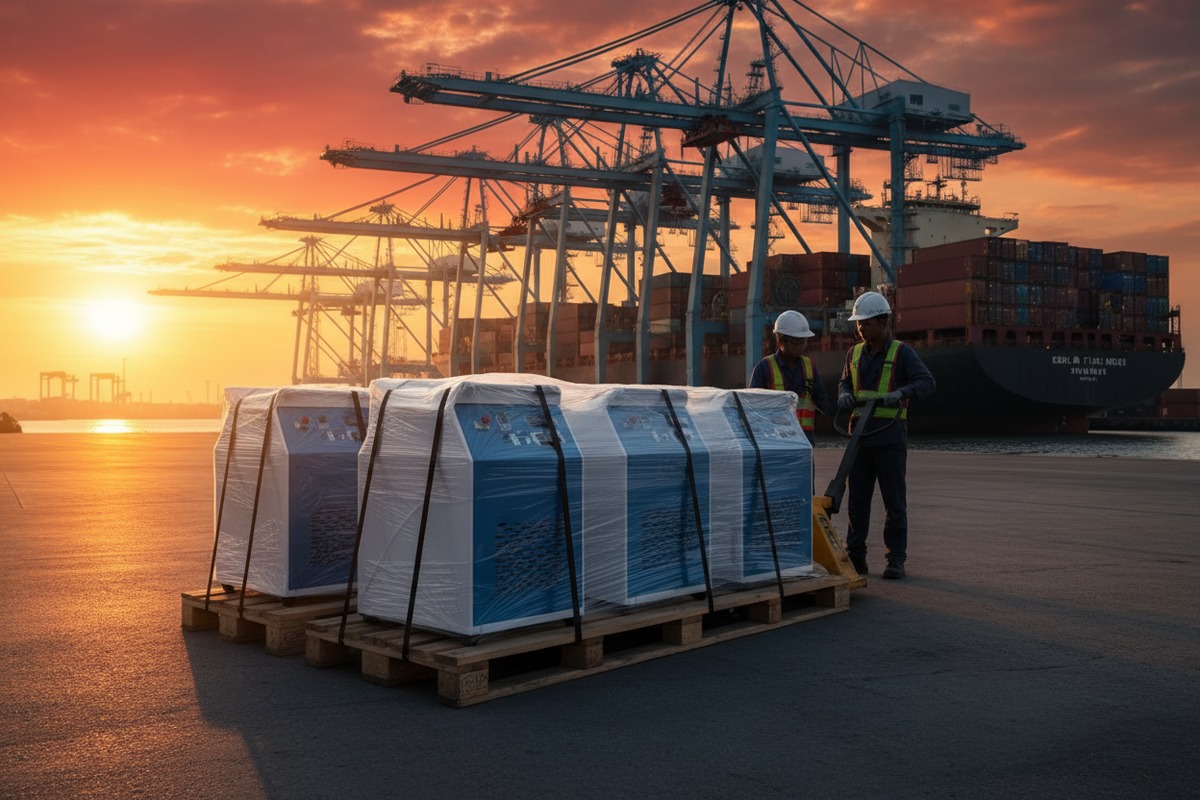
The quote from your supplier is just the starting point. When our clients receive their first shipment, they sometimes face surprise fees at customs. Duties, shipping, and handling can add 20-40% to your total cost if you are not careful.
Reduce landed costs by choosing sea freight over air for non-urgent orders, negotiating Incoterms like DDP or CIF, accurately classifying products for lower duty rates, and consolidating shipments to spread container costs across more units.
Breaking Down Landed Costs
Landed cost means everything you pay to get products from the factory to your warehouse. This includes:
| Cost Component | Typical Range | Notes |
|---|---|---|
| Product cost | $1,500 – $8,000/unit | Base negotiated price |
| Shipping (sea) | $33 – $150/unit | Cheaper for bulk |
| Shipping (air) | $150 – $350/unit | Faster but expensive |
| Import duties | 5-15% of value | Varies by HS code |
| Customs brokerage | $150 – $500/shipment | Fixed fee per entry |
| Insurance | 0.5-1% of value | Protects against loss |
| Handling fees | $50 – $200/shipment | Port and warehouse |
Choose the Right Shipping Method
Sea freight costs 60-80% less than air freight. For shockwave machines, which are not highly time-sensitive, ocean shipping makes sense. A full container load (FCL) costs around $3,000-$6,000 from China to the US West Coast. Split this across 50 machines, and you pay just $60-$120 per unit.
Air freight makes sense only for urgent orders or samples. We recommend clients use air for their first test unit, then switch to sea for bulk orders.
Negotiate Better Incoterms
Incoterms 6 define who pays for what during shipping. Common options include:
- FOB (Free on Board): You handle shipping and insurance from the port. More control, more work.
- CIF (Cost, Insurance, Freight): Supplier handles shipping to your port. Easier but less control over costs.
- DDP (Delivered Duty Paid): Supplier handles everything including customs. Highest convenience, built-in margin for supplier.
At our factory, we recommend CIF for most buyers. It gives you a clear total cost while letting you manage customs yourself.
Classify Products Correctly
HS codes 7 determine your duty rate. Shockwave therapy machines can fall under different classifications depending on their medical vs. aesthetic use. Work with a customs broker to find the most accurate code with the lowest duty rate. Misclassification risks penalties, but proper classification can save thousands.
Consolidate Shipments
If you buy multiple products from China, combine them into one shipment. Container costs stay fixed whether you ship 30% full or 100% full. We help clients coordinate with their other Chinese suppliers to maximize container space.
How does private labeling my shockwave machines affect my total bulk procurement budget?
Many of our clients start by reselling our standard models. Then they ask about putting their own brand on the machines. Private labeling 8 changes your cost structure in ways that can help or hurt your budget.
Private labeling typically adds $500-$2,000 per unit for custom branding, packaging, and certifications but enables higher retail margins of 30-50% more than generic resale. Budget impact depends on order volume, customization depth, and your target market positioning.

What Private Labeling Includes
When you private label a shockwave machine, you are not just slapping a logo on it. The process involves several cost components that affect your budget differently based on customization level.
| Customization Level | Description | Added Cost Per Unit | Minimum Order |
|---|---|---|---|
| Basic branding | Logo on machine and packaging | $200 – $500 | 20 units |
| Custom packaging | Branded boxes, manuals, warranty cards | $300 – $800 | 30 units |
| UI customization | Your brand on screen interface | $500 – $1,200 | 50 units |
| Color/design changes | Custom housing colors or panel design | $1,000 – $2,000 | 100 units |
| Full OEM development | Unique features or specifications | $2,000 – $5,000+ | 200+ units |
How Volume Offsets Branding Costs
Tooling and setup fees are often one-time costs. For example, creating a custom logo mold might cost $2,000. If you order 20 units, that adds $100 per machine. Order 200 units, and it drops to $10 per machine.
In our factory, we waive basic branding setup fees for orders above 50 units. This makes private labeling nearly cost-neutral at higher volumes.
The Revenue Side of Private Labeling
Generic machines compete on price alone. Your competitors sell the same product. Private-labeled machines let you compete on brand value. Our clients who private label typically price their machines 30-50% higher than generic equivalents.
Consider this example: A generic radial machine costs $2,500 wholesale and sells for $4,000 retail. A private-labeled version costs $3,000 wholesale but sells for $6,000 retail because of perceived brand value. Your margin jumps from $1,500 to $3,000.
Certification Considerations
If you plan to sell private-labeled machines in the US or EU, you may need updated certifications with your brand name. CE and FDA certifications can cost $5,000-$15,000 depending on the product class. Factor this into your first-year budget. Once obtained, certifications cover all future orders of that model.
When Private Labeling Does Not Make Sense
For small volume buyers ordering fewer than 20 units annually, private labeling rarely pays off. Setup costs eat into margins. Instead, focus on negotiating better pricing on standard models until your volume grows.
Can I get better wholesale rates by consolidating my manufacturing and logistics with one partner?
Some clients use one factory for machines, another for packaging, and a third party for shipping. They think they are getting the best price from each. But this approach often costs more when you add up coordination time, quality issues, and missed volume discounts.
Consolidating manufacturing and logistics with a single partner typically saves 15-25% on total costs by combining volume discounts, eliminating coordination overhead, reducing quality control failures, and streamlining communication across your supply chain.

The Hidden Costs of Multiple Suppliers
Working with multiple vendors creates problems that do not show up in price quotes:
- Communication overhead: Managing emails, payments, and schedules with five suppliers takes five times longer than one.
- Quality mismatches: Different factories have different standards. Packaging from Supplier B may not fit machines from Supplier A.
- Finger-pointing: When problems arise, each supplier blames the others. You waste time resolving disputes.
- Split volume: Your 50-unit order across three suppliers becomes three small orders, losing volume discounts.
How Consolidation Improves Pricing
When our clients move all their purchasing to one partner, they immediately see better rates. Here is why:
| Factor | Multi-Supplier Approach | Single-Partner Approach |
|---|---|---|
| Volume discount tier | Split across suppliers | Full volume at one supplier |
| Shipping consolidation | Separate shipments | One container, shared costs |
| Quality control | Multiple inspections needed | One integrated QC process |
| Payment terms | Negotiate separately | Better terms for larger total spend |
| Communication time | 10+ hours/week | 2-3 hours/week |
Finding a Full-Service Partner
Not all suppliers offer complete services. Look for partners who provide:
- Manufacturing of the core product
- Custom packaging and branding
- Pre-shipment quality inspection
- Documentation for customs
- Door-to-door logistics coordination
At our company, we built these capabilities specifically because clients asked for them. They wanted one point of contact, not five.
The Relationship Value
Long-term partnerships unlock benefits beyond immediate cost savings. Suppliers prioritize reliable buyers during supply shortages. They offer early access to new products. They accommodate rush orders when needed.
One of our US clients has ordered quarterly for three years. They now receive 30-day payment terms, priority production slots, and a dedicated account manager. These benefits came from consolidation and consistency, not from switching suppliers constantly.
When to Use Multiple Suppliers
Consolidation is not always the answer. If you need highly specialized components that your main supplier cannot provide, source those separately. Also, keep a backup supplier relationship for supply chain emergencies. But for your core product line, consolidation almost always wins.
Conclusion
Better bulk pricing comes from smart negotiation, landed cost management, strategic private labeling, and partner consolidation. Apply these strategies to cut your shockwave therapy machine costs by 20-50% while building reliable supply chain relationships.
Footnotes
1. Explains what minimum order quantity (MOQ) is and its importance. ↩︎
2. Explains the definition, uses, and types of shockwave therapy machines. ↩︎
3. Provides a comprehensive overview of supply chain management activities and goals. ↩︎
4. Defines landed cost and outlines its various components for importers. ↩︎
5. Defines tiered pricing and explains how it works in business. ↩︎
6. Official source for international commercial terms defining buyer/seller responsibilities. ↩︎
7. Explains Harmonized System codes for classifying traded products internationally. ↩︎
8. Defines private labeling and how it allows businesses to sell branded products. ↩︎

 English
  Español de México
  Deutsch
  Français
  العربية
  Русский