

Every week, our service team receives calls from salon owners frustrated by sudden equipment failures quality management 1. Their shockwave machines stopped mid-treatment. shockwave therapy machine 2 Clients left unhappy. Revenue vanished. The problem? Skipped maintenance routines that could have prevented 90% of these breakdowns.
To extend your shockwave therapy machine’s lifespan, implement daily cleaning protocols, replace wear parts like projectiles and O-rings on schedule, protect against power surges, and source equipment built with premium components. With proper care, machines rated for 7-12 years can perform reliably for much longer.
This guide walks you through everything our engineering team has learned from manufacturing thousands of units. You will discover practical routines, replacement schedules, and supplier selection tips that protect your investment.
How can I implement a daily maintenance routine to prevent premature wear on my shockwave machine?
Most clinic owners treat their shockwave machines like office printers. They expect them to work forever without attention. Then reality hits. Gel residue hardens inside applicators. Projectiles wear unevenly. By the time symptoms appear, damage has already spread to expensive internal components.
A proper daily maintenance routine includes wiping down the handpiece and applicators with manufacturer-approved disinfectant after each session, inspecting O-rings for deformation, clearing gel residue from all contact surfaces, and allowing adequate cooling time between heavy-use periods. These simple steps prevent 80% of premature failures.
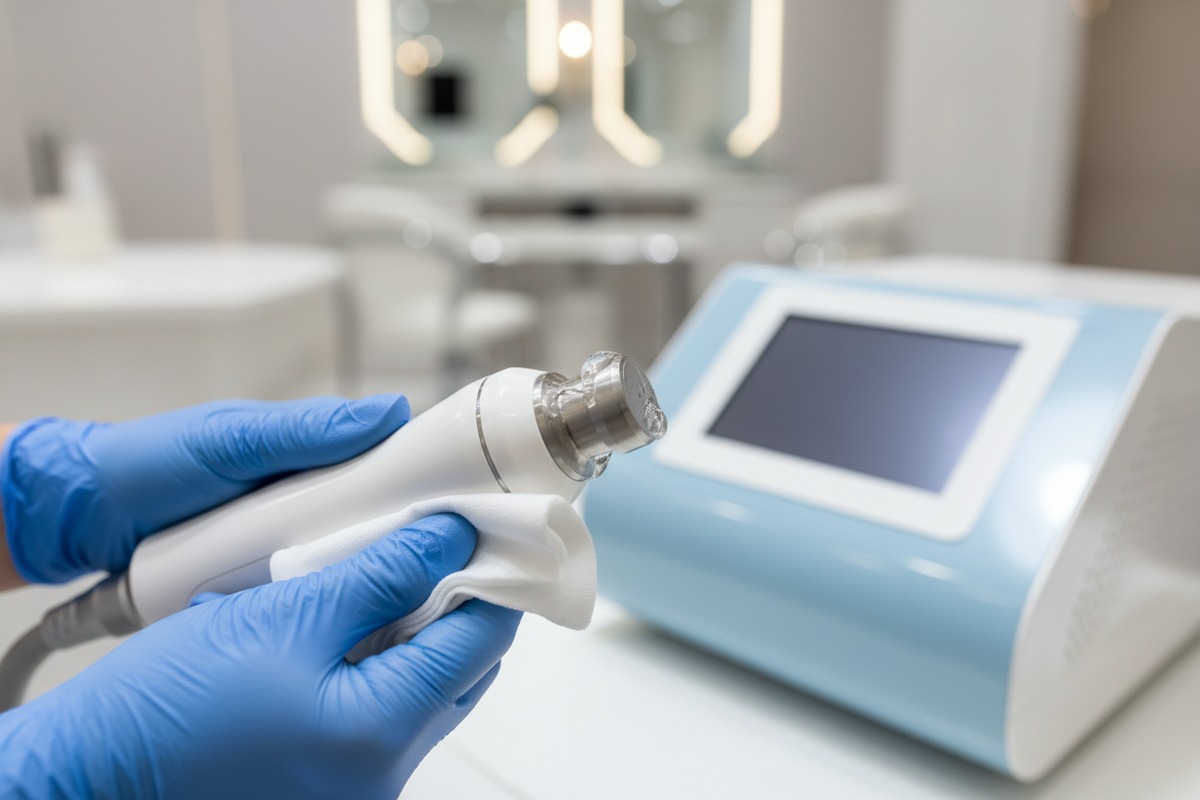
Start With Post-Session Cleaning
When our technicians rebuild returned units, gel contamination causes the most damage. Ultrasound gel seeps into tiny gaps around seals. It hardens overnight. The next morning, that dried gel acts like sandpaper against moving parts.
Clean every patient-contact surface immediately after use. Use a soft, lint-free cloth dampened with the cleaning solution specified in your user manual. Never spray liquid directly onto the machine. Moisture can enter ventilation ports and damage electronics.
Pay special attention to these areas:
| Component | Cleaning Method | Frequency |
|---|---|---|
| Handpiece exterior | Wipe with approved disinfectant | After each patient |
| Applicator heads | Remove gel with damp cloth, dry completely | After each patient |
| Transmitter tips | Clean with pipe cleaner if gel enters crevices | Daily |
| Main unit surface | Wipe with dry microfiber cloth | End of day |
| Ventilation ports | Clear dust with soft brush | Weekly |
Establish a Visual Inspection Habit
Before your first appointment each day, spend two minutes checking for warning signs. Look at the handpiece cable for fraying or kinks. Examine applicator heads for cracks or discoloration. Check that all connections seat firmly.
Our quality control team developed this morning checklist based on common failure patterns:
- Power cord shows no visible damage
- Handpiece cable moves freely without resistance
- Applicator surfaces are smooth and crack-free
- Control knob responds smoothly
- Display shows normal startup sequence
- Footswitch clicks cleanly without sticking
Manage Heat Buildup During Heavy Use
High-volume clinics push machines hard. Some facilities deliver 60,000 shots daily. Without rest periods, internal temperatures climb beyond safe limits. The thermal protection system 3 triggers shutdowns. Over time, repeated overheating degrades capacitors and transducers.
Give your machine breathing room. After every 15-20 minutes of continuous use, allow 5 minutes of rest. Keep the unit away from walls and ensure ventilation ports face open space. Our engineers recommend ambient room temperatures between 18-25°C for optimal performance.
When should I replace the internal projectiles and applicators to maintain peak performance?
Our customer support logs reveal a frustrating pattern. Clinic owners notice their machines feel "different." Energy output seems weaker. Treatments take longer. They assume software needs updating. In reality, worn internal components have been silently degrading for months.
Replace handpiece bullets and tube kits every 1-2 million pulses, O-rings and seals every 6-18 months depending on usage volume, transducers after visible wear or 1-3 years of service, and high-voltage capacitors every 2 years. Following pulse-count indicators rather than time-based schedules ensures precision.

Understanding Component Lifespan Data
Not all parts wear at the same rate. Some components handle millions of cycles. Others need attention within months. When we design machines at our facility, we engineer each part with specific replacement intervals in mind.
Here is the replacement schedule our technical team recommends:
| Component | Replacement Interval | Warning Signs |
|---|---|---|
| Projectile/Bullet | Every 1 million pulses | Visible deformation, inconsistent firing |
| Tube kit | Every 2 million uses | Energy output drift, unusual sounds |
| O-rings/Seals | 6-18 months or visible wear | Air leaks, gel seepage, hardening |
| Yellow spacers | Per manufacturer spec | Cracking, discoloration |
| Transducer head | 1-3 years | Surface cracks, energy instability |
| High-voltage capacitors 5 | Every 2 years | Thermal trips, intermittent power |
| Fans/Filters | 12-24 months | Overheating, louder operation |
| Cables/Footswitch | 2-5 years | Intermittent triggering, physical damage |
Pulse Counting Versus Calendar Scheduling
A busy medical spa delivering 40,000 shots daily will exhaust parts much faster than a small clinic averaging 5,000. Calendar-based schedules fail to account for this reality. Pulse counting provides accuracy.
Modern machines track cumulative pulse counts in their software. Check this number monthly. When approaching manufacturer thresholds, order replacement parts in advance. This prevents emergency situations where worn components fail mid-treatment.
For clinics without pulse tracking, estimate based on daily usage:
| Daily Volume | Weekly Checks | Component Rebuild Interval |
|---|---|---|
| Low (≤10k shots) | Visual inspection only | Standard manufacturer schedule |
| Medium (10-30k shots) | Output and temperature logs | 75% of rated lifespan |
| High (30-60k shots) | Weekly output verification | 50% of rated lifespan |
| Very high (60k+ shots) | Daily checks, spare stock on hand | 40% of rated lifespan |
The Cost of Delayed Replacement
Preventive swaps seem expensive until you calculate emergency repair costs. A $50 O-ring replaced on schedule prevents a $500 seal assembly failure. A $200 projectile kit swap avoids $2,000 in transducer damage caused by uneven energy transfer.
Our service department tracks repair data. Clinics following preventive schedules spend 60% less on annual maintenance than reactive clinics. More importantly, they avoid the revenue loss from cancelled appointments during unexpected downtime.
Stock essential spares on your shelf. O-ring kits, replacement projectiles, and backup cables allow quick swaps between patients. Many manufacturers offer revision kits designed for mid-session changes. These kits include all consumables needed for rapid rebuilds.
What steps can I take to protect my equipment from power surges and overheating during heavy salon use?
A single power spike can destroy thousands of dollars in electronics instantly. power surges 6 We have seen machines arrive for repair with fried circuit boards traced back to lightning storms or shared electrical circuits with hair dryers. Environmental threats rarely announce themselves before striking.
Protect your shockwave machine by installing a medical-grade surge protector, connecting to a dedicated electrical circuit separate from high-draw equipment, maintaining room temperature between 18-25°C, ensuring clear ventilation around all sides, and implementing mandatory rest periods during extended treatment sessions.
Electrical Protection Essentials
Medical-grade equipment demands cleaner power than standard electronics. Voltage fluctuations that barely affect computers can damage sensitive high-voltage components in shockwave generators. Capacitors are particularly vulnerable. They store the energy that powers each pulse. Electrical instability causes premature degradation.
Never share power outlets with:
- Hair dryers or styling tools
- Vacuum cleaners
- Microwaves or refrigerators
- Air conditioning units
- Laser equipment with high startup draws
Request a dedicated circuit from your electrician. The investment prevents accumulated damage from years of shared power struggles. Pair this with a surge protector rated for medical equipment. Consumer-grade power strips offer inadequate protection.
Temperature and Humidity Management
Electronic components age faster in heat. Lubricants thin and evaporate. Seals harden and crack. Maintaining stable environmental conditions dramatically extends equipment lifespan.
| Environmental Factor | Optimal Range | Risk of Deviation |
|---|---|---|
| Operating temperature | 18-25°C (64-77°F) | Component stress, seal degradation |
| Storage temperature | 10-30°C (50-86°F) | Lubricant separation, circuit damage |
| Relative humidity | 30-60% | Condensation, corrosion, mold growth |
| Ventilation clearance | 15cm minimum all sides | Overheating, thermal shutdowns |
Position your machine away from windows receiving direct sunlight. Avoid placement near heating vents or air conditioning streams that create temperature swings. Consistent conditions matter more than perfect conditions.
Preventing Overheating During Busy Days
High-volume clinics face unique thermal challenges. Back-to-back appointments mean continuous operation. Internal temperatures accumulate without adequate dissipation time.
Our testing facility simulates extreme usage scenarios. We discovered that machines operating at maximum capacity for extended periods benefit from these protocols:
- Schedule 5-minute breaks every 20 minutes of continuous firing
- Monitor the external casing temperature with your hand
- If warmth exceeds comfortable touch, extend rest periods
- Clean ventilation ports weekly to maintain airflow
- Keep daily temperature and output logs for pattern detection
Hot casing or unexpected thermal trips indicate developing problems. Clean vents first. If symptoms persist, inspect the cooling fan for dust buildup or bearing wear. Fans typically require replacement every 12-24 months in heavy-use environments.
Water Outlet System Maintenance
Many shockwave machines include automatic water drainage systems. These prevent condensation buildup inside the unit. A blocked water outlet traps moisture against electronics, causing corrosion and short circuits over time.
Check your machine's water outlet monthly. Ensure it drains freely. If your model lacks this feature, consider placing the unit in a dehumidified environment, especially in humid climates where internal condensation risks increase.
How does choosing a supplier with high-end components affect the long-term durability of my private-label devices?
Price comparison shopping for shockwave machines often backfires. The cheapest quote usually means corners cut on components invisible during initial inspection. Two years later, those hidden savings become visible as mounting repair bills and angry customers returning defective equipment.
Selecting a supplier using premium components, including German-engineered projectiles, Japanese capacitors, and medical-grade transducers, extends machine lifespan by 40-60%, reduces warranty claims, and protects your brand reputation. The initial cost difference pays for itself within the first year through avoided repairs and retained customers.
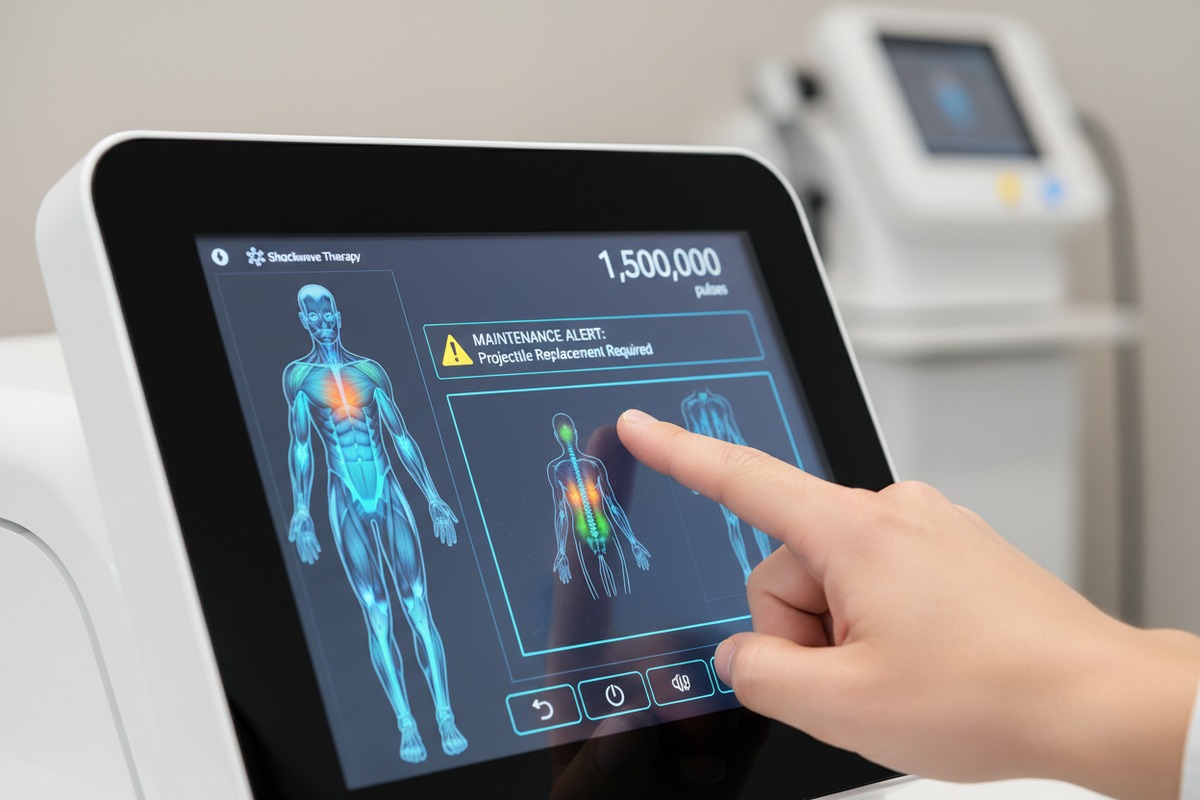
What Separates Premium From Budget Components
When our engineers source parts for production, quality differences become immediately apparent. Budget capacitors from unverified suppliers show inconsistent specifications. Their tolerance ranges vary wildly between batches. Premium components from established manufacturers deliver predictable, documented performance.
Key component quality indicators include:
| Component | Budget Version | Premium Version |
|---|---|---|
| Capacitors | 10-15% tolerance, 1-year typical life | 5% tolerance, 3-5 year life |
| Projectiles | Hardened steel, basic finish | Precision-machined, coated surfaces |
| Transducers | Generic piezoelectric elements | Medical-certified crystals, calibrated output |
| O-rings | Industrial rubber compounds | Medical silicone, certified biocompatibility |
| Circuit boards | Single-layer, minimal quality control | Multi-layer, 100% tested before assembly |
| Power supplies | Consumer-grade rectification | Medical isolation, surge protection built-in |
The Hidden Costs of Cheap Sourcing
We have disassembled competitor machines to understand market offerings. The pattern repeats. Attractive casings hide substandard internals. Impressive touchscreens distract from capacitors rated for half the claimed lifespan.
Budget machines fail in predictable ways:
- Capacitor burnout within 18 months under normal use
- Transducer cracking after 500,000 pulses instead of millions
- O-ring hardening requiring monthly rather than annual replacement
- Circuit board failures from inadequate surge protection
- Software bugs never addressed through firmware updates
Each failure costs money. Repair expenses. Shipping charges. Lost treatment revenue. Customer refunds. Reputation damage when your private-label brand becomes associated with unreliability.
Evaluating Supplier Manufacturing Standards
Ask potential suppliers specific questions about their sourcing and quality control:
- What brand capacitors do you use? Can you provide datasheets?
- What is the rated pulse count for your projectiles? How was this tested?
- Do you perform 100% output testing before shipment?
- What certifications cover your electrical safety compliance?
- How do you handle firmware updates for deployed units?
Reputable manufacturers provide documentation. They welcome factory visits. They share calibration data and testing protocols. Evasive answers or generic responses signal hidden quality compromises.
ISO Compliance and Warranty Protection
Machines built to ISO 13485 medical device standards 8 undergo documented quality management throughout production. IEC 62353 electrical safety testing 9 ensures safe operation throughout the product lifecycle. These certifications require investment in processes, equipment, and training.
Suppliers cutting corners on components rarely invest in proper certification either. Without documented compliance, your clinic faces audit risks. Without genuine testing, warranty claims become disputes rather than straightforward replacements.
Our production line maintains full traceability. Every component carries batch documentation. Every finished unit passes calibration verification before shipping. This infrastructure costs money. It also means problems get caught before reaching your treatment room.
Conclusion
Protecting your shockwave therapy investment requires consistent daily care, scheduled component replacement, environmental controls, and smart supplier selection. These practices transform a 7-year machine into a 12-year performer. Start with one improvement today. Your future self will thank you.
Footnotes
1. Advisera provides a clear definition of a Quality Management System (QMS) in the context of ISO 9001, which is a widely recognized standard for quality management. ↩︎
2. Provides a general overview of extracorporeal shockwave therapy and its applications. ↩︎
3. Defines thermal management in electronics and its importance for device performance and longevity. ↩︎
4. Wikipedia provides a comprehensive and authoritative overview of O-rings, their definition, and applications. ↩︎
5. Explains the characteristics, applications, and safety aspects of high-voltage capacitors. ↩︎
6. Explains what power surges are and how surge protectors mitigate their potential damage. ↩︎
7. Explains why dedicated electrical circuits are essential for safety and appliance protection. ↩︎
8. Defines the international standard for quality management systems in the medical device industry. ↩︎
9. JPen Medical offers a practical guide to IEC 62353 electrical safety testing, directly addressing the topic of the original broken link and being on the same domain. ↩︎

 English
  Español de México
  Deutsch
  Français
  العربية
  Русский