

Every year, we receive inquiries from brand owners who share the same frustration. They found a pressotherapy supplier with attractive pricing, only to discover the factory lacked proper certifications or could not deliver consistent branding quality. The result? Wasted time, lost money, and damaged client relationships. Our production team has seen this pattern repeat countless times across the beauty equipment industry.
Evaluating white label capabilities requires examining four key areas: OEM service depth for branding customization, quality control benchmarks for durability testing, full supply chain management from production to delivery, and engineering team capacity for custom technical development. Request certifications like CE and ISO 13485, demand sample testing, and verify factory audit reports before committing.
The following sections break down each evaluation criterion into actionable steps. You will learn exactly what questions to ask, which documents to request, and how to spot red flags that indicate a supplier cannot meet professional white label standards.
How can I verify that a manufacturer's OEM services meet my specific branding and design standards?
When our design team works with new partners, we often discover that “OEM available” means different things to different factories. Some can only add a logo sticker. Others offer full software interface customization. Understanding these differences early saves you from costly mistakes after orders are placed.
Verify OEM capabilities by requesting detailed customization menus covering logo placement options, color schemes, screen interface languages, packaging design, and startup screen branding. Ask for physical samples of previous white label projects to assess print quality, material consistency, and overall finish before signing any agreement.
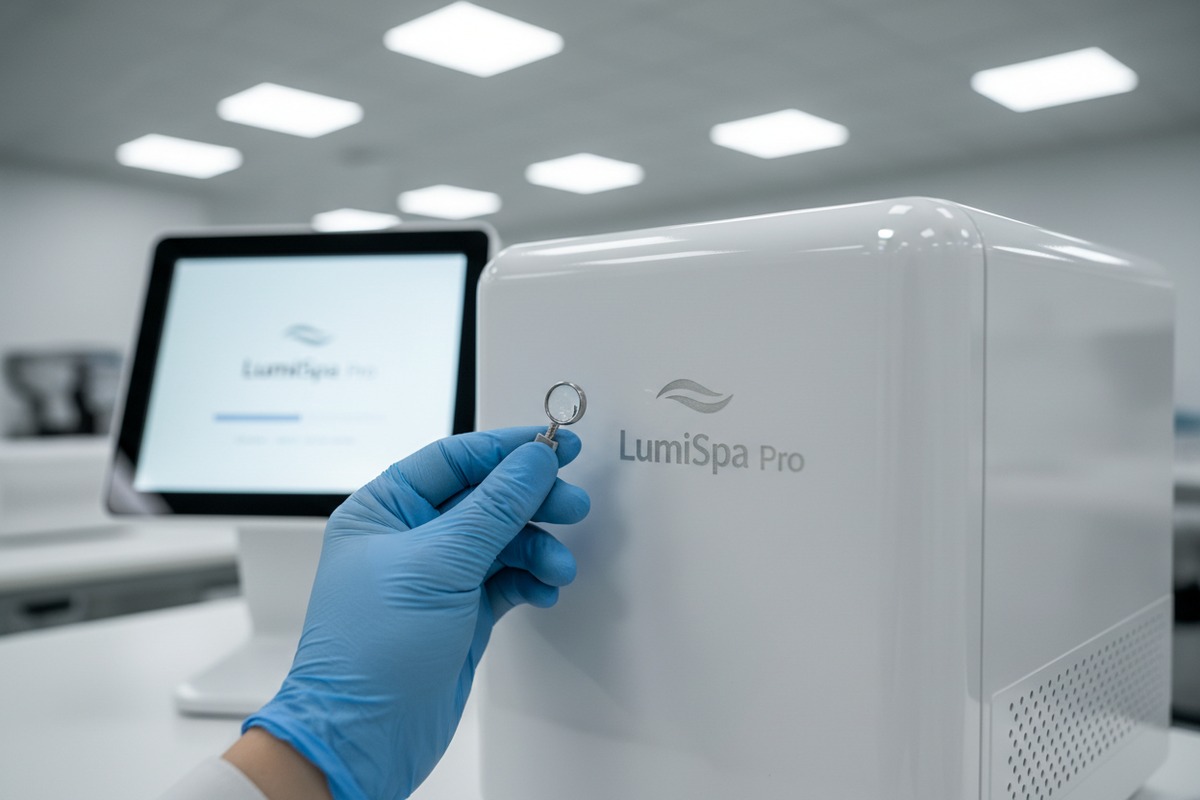
Understanding OEM vs ODM Service Levels
The terms OEM and ODM get used interchangeably, but they represent very different service depths. OEM (Original Equipment Manufacturing) 1 means the factory produces your exact specifications under your brand. ODM (Original Design Manufacturing) 2 means the factory has existing designs you can rebrand with modifications.
Brand identity customization is essential. Personalized customization services allow your logo to be elegantly integrated into the device's startup screen and etched onto the machine's body. This level of customization demonstrates a factory's true OEM capability.
Key Customization Areas to Evaluate
| Customization Area | Basic OEM | Advanced OEM | Full ODM |
|---|---|---|---|
| Logo placement | Sticker only | Etched/printed on body | Full exterior redesign |
| Screen interface | Factory default | Your logo on startup | Custom UI design |
| Color options | Standard colors | Custom color matching | Any RAL color |
| Language settings | English only | Multiple preset languages | Custom language files |
| Packaging | Generic box | Your branded box | Custom box design |
| User manual | Factory template | Your branding added | Fully custom content |
Sample Testing Protocol
Before committing to large orders, request production samples. Always verify the supplier's credibility and request product samples to ensure quality. Partnering with reliable manufacturers guarantees superior products and services.
Your sample evaluation should include:
- Print quality assessment under different lighting conditions
- Logo durability testing (rubbing, cleaning, UV exposure)
- Color consistency verification against Pantone or RAL standards
- Interface language accuracy review
- Packaging integrity after simulated shipping stress
Red Flags to Watch
Manufacturers who hesitate to share previous white label project references often lack genuine OEM experience. Sample lead times average 15 business days. If a factory quotes significantly longer times, their OEM processes may not be well-established.
Also verify that your branding will not be used for other customers. Request written exclusivity agreements for your specific design elements.
What quality control benchmarks should I use to ensure my private-label pressotherapy machines are durable?
Our quality inspection team follows a strict 47-point checklist before any machine leaves our facility. Yet when we audit potential partner factories, we often find they lack systematic quality protocols entirely. A single defective unit shipped to your customer can cost more in reputation damage than the profit from dozens of successful sales.
Essential quality benchmarks include CE and ISO 13485 certifications, in-process inspection reports, airbag pressure tolerance testing within 20-360 mmHg ranges, 24-hour continuous operation stress tests, and pre-shipment functional verification. Request third-party audit reports and demand warranty terms of at least one year for main components.
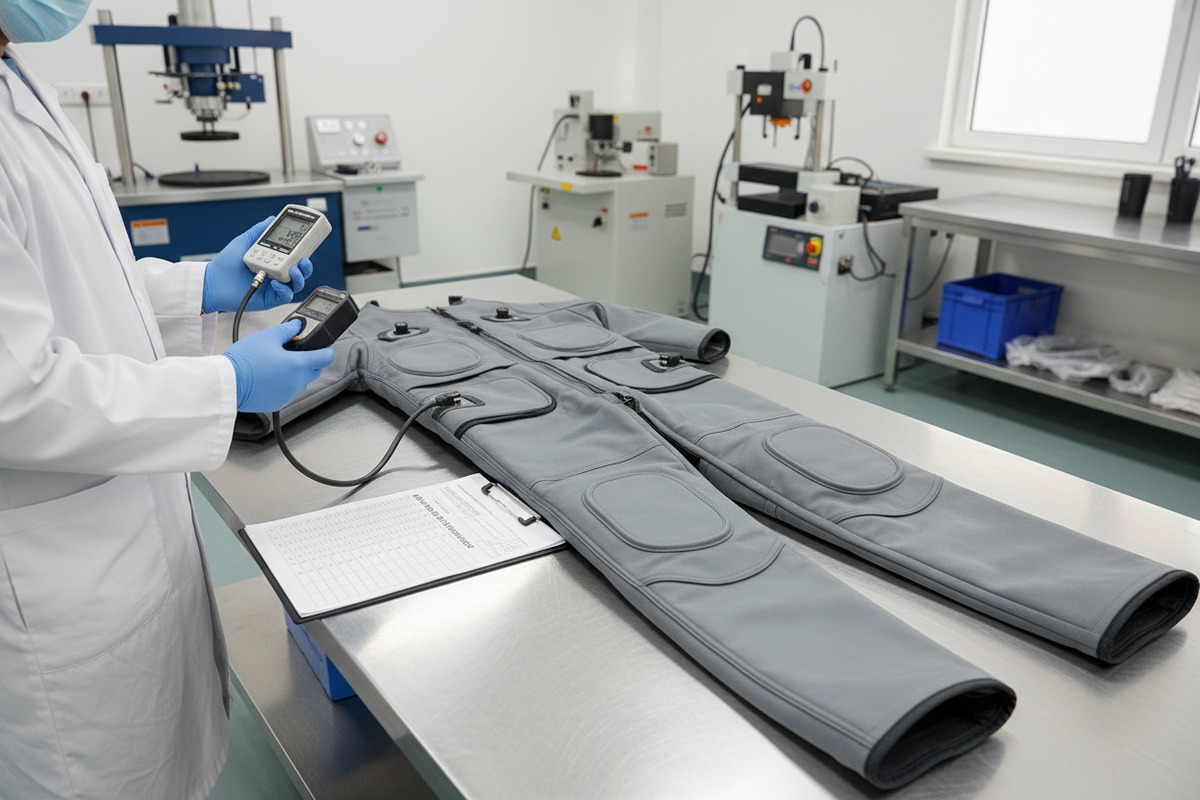
Critical Certifications to Verify
In Europe, pressotherapy machines must have a CE marking 3. This certification indicates that the product complies with the European Union's safety, health, and environmental protection requirements. The CE mark is a strong indication that the pressotherapy machine has been thoroughly tested for safety.
In the United States, the Food and Drug Administration (FDA) 4 is responsible for regulating medical devices, including pressotherapy machines. An FDA-approved device has been evaluated and deemed safe and effective for its intended use.
| Certification | Region | What It Verifies | How to Confirm |
|---|---|---|---|
| CE Marking | Europe | Safety, health, environmental compliance | Request certificate copy with Notified Body number |
| FDA 510(k) | United States | Safety and effectiveness | Search FDA database by product name |
| ISO 13485 5 | International | Quality management systems | Request certificate from accredited registrar |
| TGA | Australia | Therapeutic goods standards | Check ARTG database |
| Health Canada | Canada | Medical device safety | Verify MDEL license |
Manufacturing facilities achieving ISO13485 and MDSAP certifications 6 demonstrate commitment to quality management systems for medical devices.
In-Process Quality Checkpoints
Strict manufacturing processes require every machine to be carefully monitored and inspected. 100% personal inspection means each product undergoes thorough quality checks before shipping.
Quality control should happen at multiple stages:
- Incoming material inspection: Component quality verification
- Assembly checkpoint: Proper connection and fit verification
- Functional testing: All modes and pressure levels confirmed working
- Burn-in testing: Extended operation to identify early failures
- Final inspection: Cosmetic and packaging review
Durability Testing Standards
Manufacturers with 22+ years of experience develop excellent manufacturing processes and strict quality inspection that ensure low failure rates.
Airbag durability is particularly important. High-quality garments use PU material with durable double-layer design and user-friendly connectors. Request inflation cycle test results showing airbags withstand at least 10,000 cycles without leakage.
Warranty Terms Comparison
| Warranty Element | Minimum Acceptable | Good Standard | Excellent |
|---|---|---|---|
| Main machine | 1 year | 2 years | 3 years |
| Airbags/garments | 3 months | 6 months | 1 year |
| Technical support | Email only | Video call | On-site |
| Parts availability | 1 year | 3 years | 5+ years |
| Response time | 72 hours | 24 hours | 4 hours |
Quality-focused manufacturers implement stringent quality control processes and offer 36-month warranties.
How do I assess if a supplier can manage my full supply chain from production to door-to-door delivery?
Our logistics team coordinates shipments to over 50 countries annually. We have learned that production capability alone means nothing if a factory cannot navigate customs documentation, packaging requirements, and last-mile delivery. Many promising supplier relationships collapse during the shipping phase when hidden costs and delays emerge.
Assess supply chain capability by verifying export documentation experience for your destination country, understanding packaging specifications for damage prevention during transit, confirming insurance coverage options, and requesting references from existing customers in your region. Door-to-door delivery should include tracking visibility and clear delivery timeline commitments.

Export Documentation Competence
Global buyers benefit from China's mature export infrastructure, including bonded logistics zones that streamline customs clearance for B2B shipments.
Your supplier should provide:
- Commercial invoice with accurate HS codes 7
- Packing list with detailed weight and dimensions
- Certificate of Origin
- CE/FDA certificates for customs clearance
- Bill of Lading 8 or Air Waybill
Shipping Options and Costs
Shipping methods typically include air express couriers such as DHL, UPS, FedEx, TNT, and EMS.
| Shipping Method | Transit Time | Cost Level | Best For |
|---|---|---|---|
| Air Express (DHL/FedEx) | 3-7 days | High | Urgent orders, samples |
| Air Freight | 7-14 days | Medium | Medium volumes |
| Sea Freight LCL | 25-35 days | Low | Cost-sensitive orders |
| Sea Freight FCL | 25-35 days | Lowest per unit | Large volumes |
Standard orders ship in 30-45 days. Customizations add 15-30 days for sensor calibration and safety testing.
Packaging Standards for Safe Transit
Pressotherapy machines contain sensitive electronic components and airbag systems that require proper protection:
- Inner packaging: Foam cushioning around control unit
- Component separation: Individual wrapping for airbags
- Moisture protection: Silica gel packets and sealed bags
- Outer carton: Double-wall corrugated with proper strength rating
- Pallet mounting: For sea freight shipments
Supply Chain Red Flags
Watch for these warning signs:
- No clear shipping cost breakdown (hidden fees appear later)
- Inability to provide previous shipping documentation samples
- No tracking number system for shipment visibility
- Refusal to discuss insurance options
- Vague delivery timelines without accountability
Door-to-door service through carriers like DHL eliminates customs hassles and ensures delivery directly to your location.
Order Status Communication
Professional suppliers maintain transparent communication throughout:
| Stage | Communication Expectation |
|---|---|
| Order confirmation | Within 24 hours |
| Production start | Photo/video update |
| Quality inspection | Inspection report with photos |
| Packing completion | Packing photos |
| Shipment | Tracking number same day |
| In transit | Weekly status updates |
| Delivery | Confirmation request |
Can the factory's engineering team provide the technical support I need for custom product development?
When we develop new pressotherapy models in our R&D center, our engineers spend months testing pressure calibration algorithms and airbag chamber configurations. Brand owners who attempt custom development with factories lacking genuine engineering depth often face endless revision cycles and disappointing results. Technical capability separates true ODM partners from simple assembly operations.
Evaluate engineering capability by requesting R&D team credentials, reviewing previous custom development case studies, assessing prototyping timelines and costs, and confirming ongoing technical support availability post-sale. A capable engineering team should demonstrate experience with pressure range calibration, software interface development, and integration of additional technologies like infrared or EMS.

R&D Team Indicators
Dedicated R&D, design, and QC teams focused on innovation and patented technologies produce FDA/CE-certified machines with design patents 9 and streamlined OEM/ODM processes for branded product development.
Look for these engineering capability markers:
| Indicator | Basic Factory | Advanced ODM Partner |
|---|---|---|
| Engineering staff | <5 people | 10+ dedicated engineers |
| Design patents | None | Multiple registered |
| Prototyping capability | Outsourced | In-house |
| Software development | Licensed only | Custom development |
| Testing equipment | Basic | Full testing lab |
High-quality R&D teams with personnel accounting for over 50% of total staff and an average of more than 8 years of industry experience provide meaningful technical capability.
Custom Development Process
Custom prototypes typically incur development fees of $300-$1,200, often deductible from bulk orders.
A structured development process includes:
- Requirements documentation: Written specifications with performance targets
- Feasibility assessment: Engineering review with timeline estimate
- Design phase: CAD drawings and circuit designs
- Prototype production: First article samples
- Testing and refinement: Iterative improvements
- Production validation: Final approval before mass production
Technical Support Assessment
Lifetime technology support with 1V1 service and video call accessibility demonstrates serious technical commitment.
After-sales technical support should include:
- Remote troubleshooting via video call
- Software update availability
- Spare parts accessibility
- Technical documentation in your language
- Response time commitments
Technology Integration Capabilities
Modern pressotherapy machines often combine multiple technologies:
| Technology | Technical Requirement | Development Complexity |
|---|---|---|
| Air pressure (base) | Pressure calibration, valve control | Medium |
| Far infrared | Heating element integration, safety controls | Medium |
| EMS | Electrical stimulation circuits, safety testing | High |
| Touch screen | Interface design, software development | Medium-High |
| Multiple languages | Translation, character set support | Low |
| Data logging | Memory systems, export functionality | Medium |
Pressotherapy machines with three primary functions—Air Pressure, Far Infrared, and EMS—require sophisticated engineering to integrate properly.
Questions to Ask Engineering Teams
Direct engineering discussions reveal true capability:
- "What pressure calibration method do you use for different body areas?"
- "How do you test airbag durability and what failure rates are acceptable?"
- "Can you modify treatment program algorithms for specific protocols?"
- "What software platform do you use for interface development?"
- "How do you handle electromagnetic compatibility testing?"
If the engineering team cannot answer these questions clearly, their custom development capability is likely limited.
Conclusion
Evaluating white label capabilities requires systematic verification across branding services, quality standards, supply chain management, and engineering depth. Request documentation, samples, and references at every stage. The time invested in thorough supplier evaluation prevents costly mistakes and builds foundations for successful long-term partnerships in the pressotherapy equipment market.
## Footnotes

<span id="footnote-1">
1. Provides a comprehensive definition and common meanings of Original Equipment Manufacturer. <a href="#ref-1" class="footnote-backref">↩︎</a>
</span>

<span id="footnote-2">
2. Explains the concept of Original Design Manufacturing and its role in product development. <a href="#ref-2" class="footnote-backref">↩︎</a>
</span>

<span id="footnote-3">
3. Explains the mandatory conformity marking for products sold in the European Economic Area. <a href="#ref-3" class="footnote-backref">↩︎</a>
</span>

<span id="footnote-4">
4. Official source for medical device regulation in the United States. <a href="#ref-4" class="footnote-backref">↩︎</a>
</span>

<span id="footnote-5">
5. Provides an overview of the international standard for quality management systems in medical devices. <a href="#ref-5" class="footnote-backref">↩︎</a>
</span>

<span id="footnote-6">
6. Replaced with an authoritative FDA page providing comprehensive information on the Medical Device Single Audit Program (MDSAP), as the original official MDSAP website was returning an HTTP 405 error. <a href="#ref-6" class="footnote-backref">↩︎</a>
</span>

<span id="footnote-7">
7. Official source defining the Harmonized System for classifying traded products. <a href="#ref-7" class="footnote-backref">↩︎</a>
</span>

<span id="footnote-8">
8. Provides a legal definition and explanation of a Bill of Lading. <a href="#ref-8" class="footnote-backref">↩︎</a>
</span>

<span id="footnote-9">
9. Official guide from the U.S. Patent and Trademark Office on design patents. <a href="#ref-9" class="footnote-backref">↩︎</a>
</span>

 English
 Español de México
 Deutsch
 Français
 العربية
 Русский
