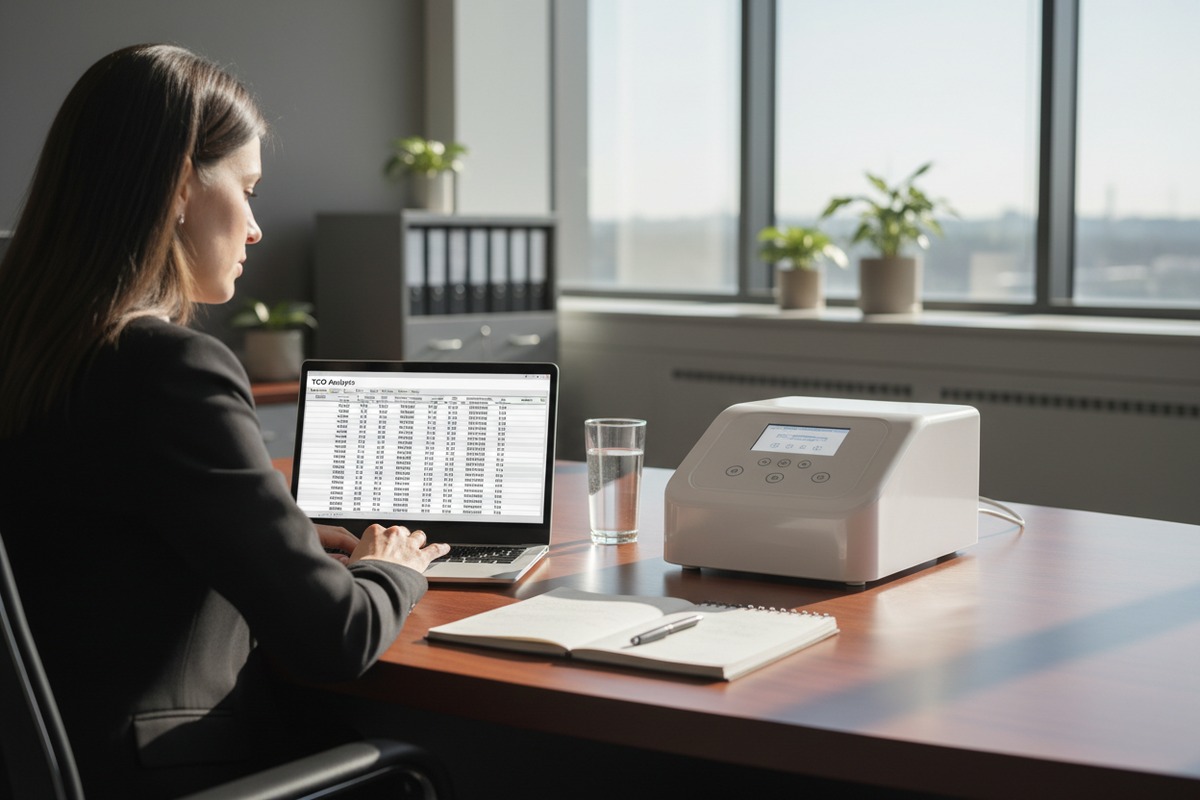
In our years of manufacturing beauty equipment in Guangzhou, we have seen many distributors fixate solely on the factory sticker price, only to face unexpected expenses later. When we finalize specifications for a new production run, we always remind our partners that the initial wire transfer is just the beginning of the financial journey. A cheap machine that requires constant air pump repairs or expensive shipping for spare parts can quickly become a liability rather than an asset for your business.
To accurately evaluate Total Cost of Ownership (TCO), buyers must look beyond the initial purchase price and calculate the cumulative costs of shipping, import duties, routine maintenance, consumable replacements, and potential downtime. A comprehensive TCO analysis reveals the true profitability of the equipment over its entire operational lifespan.
Let’s examine the specific financial components that determine the real value of your investment.
How do I calculate the true landed cost of my pressotherapy machine order?
When we prepare proforma invoices for our US clients, we often notice a significant gap between their budget expectations and the final amount required to get the goods into their warehouse. We constantly navigate complex Incoterms 1 to ensure our partners understand that a "good deal" at the factory gate doesn't always translate to a low cost per unit once it reaches American soil.
The true landed cost is calculated by adding the manufacturing price to international freight charges, marine insurance, customs duties, and local drayage fees. Buyers must also factor in customs broker charges and merchandise processing fees to determine the actual final cost per unit delivered to their facility.

Calculating landed cost 2 is a critical accounting exercise that prevents profit erosion. Many purchasing managers are surprised to find that logistics and taxes can add 30% to 50% to the EXW (Ex Works) price. To get this right, you need to build a "cost stack" that accounts for every hand that touches your shipment from our loading dock to your door.
Understanding the Cost Stack
The base price is usually quoted as EXW (you pay for everything from the factory door) or FOB (we pay to get it to the ship). However, the real expenses accumulate after the goods leave China.
- Freight & Insurance: Ocean freight rates fluctuate wildly. While we try to lock in rates, peak season surcharges can inflate costs. Insurance is non-negotiable; if a container is lost, your investment is gone without it.
- Duties and Tariffs: For US importers, HTS codes 3 determine your duty rate. Pressotherapy machines often fall under medical or massage appliance categories. You must check if your specific product code is subject to Section 301 tariffs, which can add an extra 25% tax.
- Port and Handling Fees: Once the ship arrives, you pay Merchandise Processing Fees (MPF) 4, Harbor Maintenance Fees (HMF), and forklift fees to move pallets.
The Hidden Impact of Exchange Rates
While we quote in USD, currency fluctuations affect shipping lines and local logistics providers. A slight shift in exchange rates can impact the margins on a high-volume order.
Landed Cost Calculation Example
To help you visualize this, here is a breakdown of a hypothetical order for 10 professional units.
| Cost Component | Description | Estimated Cost (USD) | Impact on Unit Cost |
|---|---|---|---|
| Factory Price (EXW) | Cost of 10 machines | $8,000 | $800 |
| Inland Freight | Trucking to port | $150 | +$15 |
| Ocean Freight | China to West Coast | $1,200 | +$120 |
| Import Duties | Est. at 5% (varies) | $400 | +$40 |
| Customs & Fees | Broker + MPF/HMF | $250 | +$25 |
| Last Mile Delivery | Truck to warehouse | $400 | +$40 |
| Total Landed Cost | Final Investment | $10,400 | $1,040 |
Note: In this scenario, the landed cost is 30% higher than the factory price. Ignoring this delta destroys margins.
What maintenance and part replacement expenses should I expect over the machine's lifespan?
Our engineering team runs extensive lifecycle tests on air pumps and valves, and we know exactly which components are most likely to fail after repeated use. We frequently advise clients that while the main control unit is built to last, the soft goods and connecting elements are consumables 5 that will require budget allocation over time.
Maintenance expenses typically center on replacing wearable components like compression suits and air hoses, which degrade from constant pressure changes and sanitation chemicals. Buyers should budget approximately 10-15% of the purchase price annually for spare parts to ensure consistent performance and avoid service interruptions.
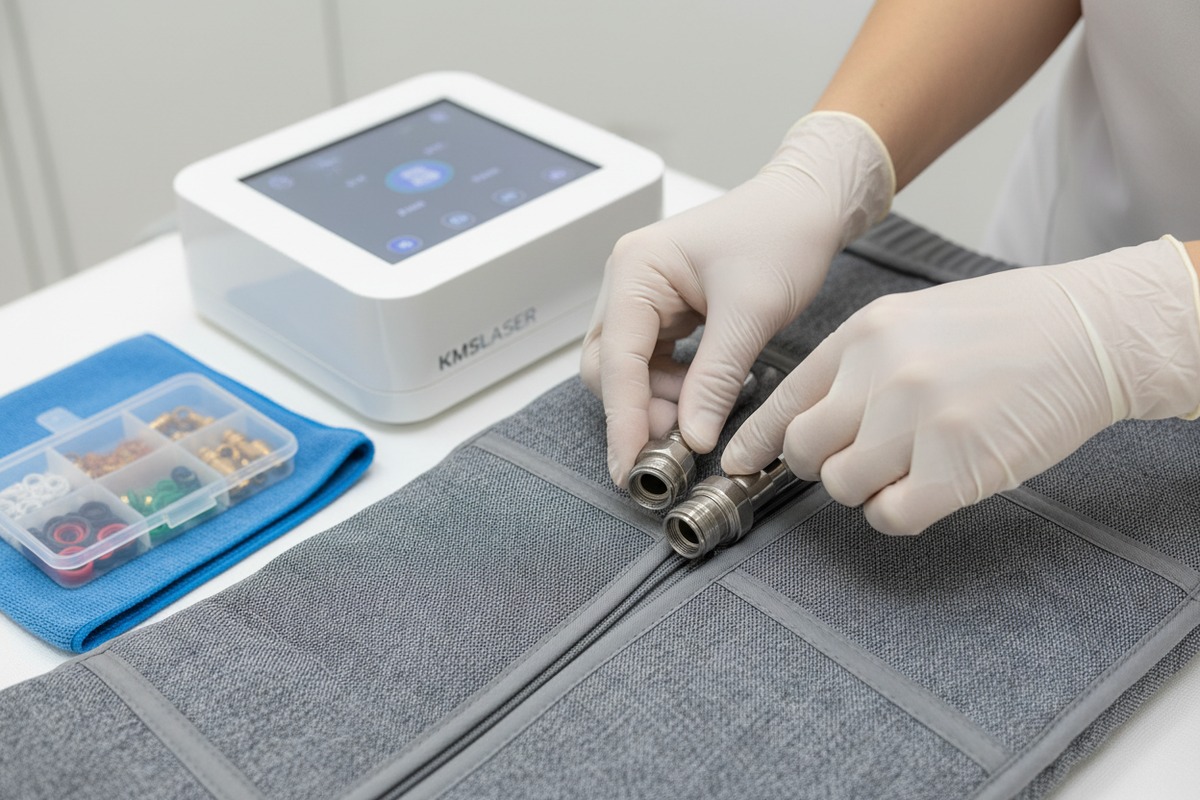
When evaluating TCO, you must distinguish between the durable parts of the machine (the compressor and motherboard) and the consumable parts (the suit and hoses). In a busy salon environment, the suit takes a beating.
The High Cost of Consumables
The compression suit is made of fabric and TPU (Thermoplastic Polyurethane). It expands and contracts thousands of times. Over time, micro-leaks develop, or the Velcro fasteners lose their grip.
- Velcro Fatigue: If the Velcro fails, the compression is ineffective. This is the #1 reason for suit replacement.
- Hygiene Wear: Harsh cleaning agents used between clients can make the plastic brittle, leading to cracks.
We recommend Purchasing Managers stock at least one backup suit per machine. If a suit fails, the machine is useless until a replacement arrives.
Internal Mechanical Maintenance
Inside the casing, the air pump is the heart of the system.
- Filter Changes: Dust can clog air intakes, causing the pump to overheat. Filters are cheap but often ignored.
- Valve Calibration: High-end machines use solenoid valves. If these stick, pressure becomes uneven.
Estimated Lifespan and Replacement Costs
Below is a breakdown of what you can expect to replace over a 3-5 year period.
| Component | Expected Lifespan | Replacement Cost (Est.) | Maintenance Frequency |
|---|---|---|---|
| Air Pressure Suit | 6 – 12 Months | $150 – $300 | High (Daily wear) |
| Connecting Hoses | 12 – 24 Months | $30 – $50 | Medium (Bending/cracking) |
| Air Filters | 6 Months | $10 – $20 | Medium (Cleaning required) |
| Main Control Unit | 5 – 7 Years | N/A | Low (rare failure) |
| Solenoid Valves | 3 – 5 Years | $50 – $100 | Low (Electronic failure) |
Ignoring these costs leads to a "break-fix" mentality that results in downtime. A proactive TCO model includes a recurring budget line item for these specific parts.
How will logistics and door-to-door delivery fees impact my total investment?
When we coordinate shipments for our North American partners, we often see how the choice of logistics can make or break the profitability of a procurement cycle. We usually recommend balancing speed against cost, but many buyers underestimate how the sheer volume of pressotherapy packaging impacts the final freight bill.
Logistics fees can impact your total investment by 20% to 40%, largely due to the high volumetric weight of the equipment packaging rather than its actual physical weight. Opting for door-to-door delivery services simplifies the import process but commands a premium compared to arranging your own customs clearance and local transport.

Shipping is not just about weight; it is about space. Pressotherapy machines, particularly the suits, are bulky. Even when vacuum-packed, the boxes are large. Couriers and airlines charge based on "Volumetric Weight 6" (Length x Width x Height / 5000), which often exceeds the actual scale weight.
Air vs. Sea Freight: The TCO Trade-off
- Express Air (DHL/FedEx): Fast (5-7 days) but incredibly expensive for bulky items. This drastically increases TCO. Use this only for sample units or emergency replacements.
- Sea Freight (LCL/FCL): Slow (30-45 days) but cost-effective. For a TCO-focused buyer, this is the only viable option for bulk orders.
- Door-to-Door (DDP): Ideally suited for busy Purchasing Managers like Elizabeth. The forwarder handles customs, duties, and delivery. You pay one flat rate. It costs more upfront but reduces administrative labor costs (your time).
The Risk of Damage in Transit
Poor logistics planning increases TCO through damage. If you choose a cheap "port-to-port" service, your goods might sit on a damp dock or be handled roughly by third-party truckers.
- Packaging matters: We use reinforced honeycomb cartons, but rough handling can still crush corners.
- The Cost of Returns: If a machine arrives damaged due to poor shipping, sending it back to China is almost never financially viable due to shipping costs. You usually have to write off the asset or fight a long insurance claim.
Logistics Cost Comparison Matrix
| Shipping Method | Speed | Cost Impact on TCO | Risk Level | Best For |
|---|---|---|---|---|
| Express Air | Very High | High (+40-60%) | Low | Samples / Spare Parts |
| Sea Freight (LCL) | Low | Low (+10-15%) | Medium (Handling) | Small Bulk Orders (5-20 units) |
| Sea Freight (FCL) | Low | Lowest (+5-10%) | Low | Large Orders (Full Container) |
| Rail (to Europe) | Medium | Medium (+20%) | Medium | EU Clients Only |
Smart TCO evaluation involves amortizing the shipping cost across the lifespan of the machine. If you save $50 on shipping but wait 6 weeks longer, calculate the lost revenue from 6 weeks of missed treatments.
How do I factor the costs of quality control and potential product failures into my TCO?
Our production line implements strict testing protocols, but we know that not all manufacturers share this discipline, and even the best systems can encounter issues. We always encourage our clients to view quality control not as an optional add-on, but as a necessary insurance policy against the disastrous costs of product failure 7.
Factoring in quality control costs involves budgeting for third-party pre-shipment inspections and estimating the financial impact of potential unit failure rates. The cost of a product failure includes not just the replacement hardware, but also the shipping fees, lost client revenue, and intangible damage to your brand reputation.

The most expensive machine is the one that doesn't work. In the B2B world, if you import 50 machines and 5 are defective, your TCO just skyrocketed.
The "Death Spiral" of Poor Quality
Imagine a scenario: You save $50 per unit by choosing a supplier with lax QC.
- Failure: The air pump overheats after 3 months.
- Resolution Cost: You cannot ship the machine back to China (freight > machine value). You must send a replacement from your inventory.
- Real Cost: You lose the cost of the first machine + shipping of the replacement + technician time + angry customer management.
The $50 saving turns into a $500 loss per incident.
Investing in Prevention
To lower TCO, you must spend money upfront to save money later.
- Pre-Shipment Inspection (PSI): Hiring a third-party agency (like SGS or Intertek) to inspect the goods in our factory before they leave. Pre-Shipment Inspection (PSI) 8 Cost: ~$300 per man-day.
- Spare Parts Allocation: Negotiate with us to include 2-3% free spare parts (PCBs, valves, suits) in the container. This prevents you from paying express shipping for parts later.
Calculating the Cost of Downtime
For a salon, a broken machine means cancelled appointments.
- Revenue per session: $80
- Sessions per day: 5
- Days to repair: 7
- Loss: $2,800.
This loss vastly exceeds the cost of the machine itself. Therefore, buying a higher-quality machine with a lower failure rate significantly reduces TCO.
QC Investment vs. Failure Cost
| Strategy | Upfront Cost | Risk of Failure | Potential Remediation Cost | Impact on TCO |
|---|---|---|---|---|
| No QC / Low-End Model | $0 | High (5-10%) | Very High (Refunds/Returns) | Negative (Unpredictable) |
| Standard QC / Mid-Range | Included | Medium (2-3%) | Medium (Spare parts swap) | Neutral |
| 3rd Party QC / High-End | $300+ | Low (<1%) | Low (Rare incidents) | Positive (Predictable) |
A smart Purchasing Manager like Elizabeth knows that "Quality is free" because it eliminates the massive costs of correction.
Conclusion
Evaluating the Total Cost of Ownership for pressotherapy machines requires a holistic view that extends far beyond the EXW price on a proforma invoice. By accurately calculating landed costs, budgeting for consumable replacements like compression suits, optimizing logistics to reduce volumetric weight impact, and investing in rigorous quality control, you protect your margins. Smart procurement isn't about finding the cheapest machine; it's about securing the most reliable asset that delivers consistent revenue with minimal unexpected downtime.
Footnotes
1. Official source for international commercial terms (Incoterms) rules. ↩︎
2. Replaced HTTP 404 link with Wikipedia’s section on ‘Actual or landed cost’ for an authoritative definition. ↩︎
3. Official website for the Harmonized Tariff Schedule of the United States (HTSUS). ↩︎
4. Detailed explanation of Merchandise Processing Fees by a trade finance platform. ↩︎
5. Wikipedia definition of consumables as items used up and replaced. ↩︎
6. Explanation of volumetric weight and its impact on shipping costs from a logistics provider. ↩︎
7. Wikipedia definition and causes of product failure in a business context. ↩︎
8. Definition and importance of Pre-Shipment Inspection from a quality control service provider. ↩︎

 English
  Español de México
  Deutsch
  Français
  العربية
  Русский