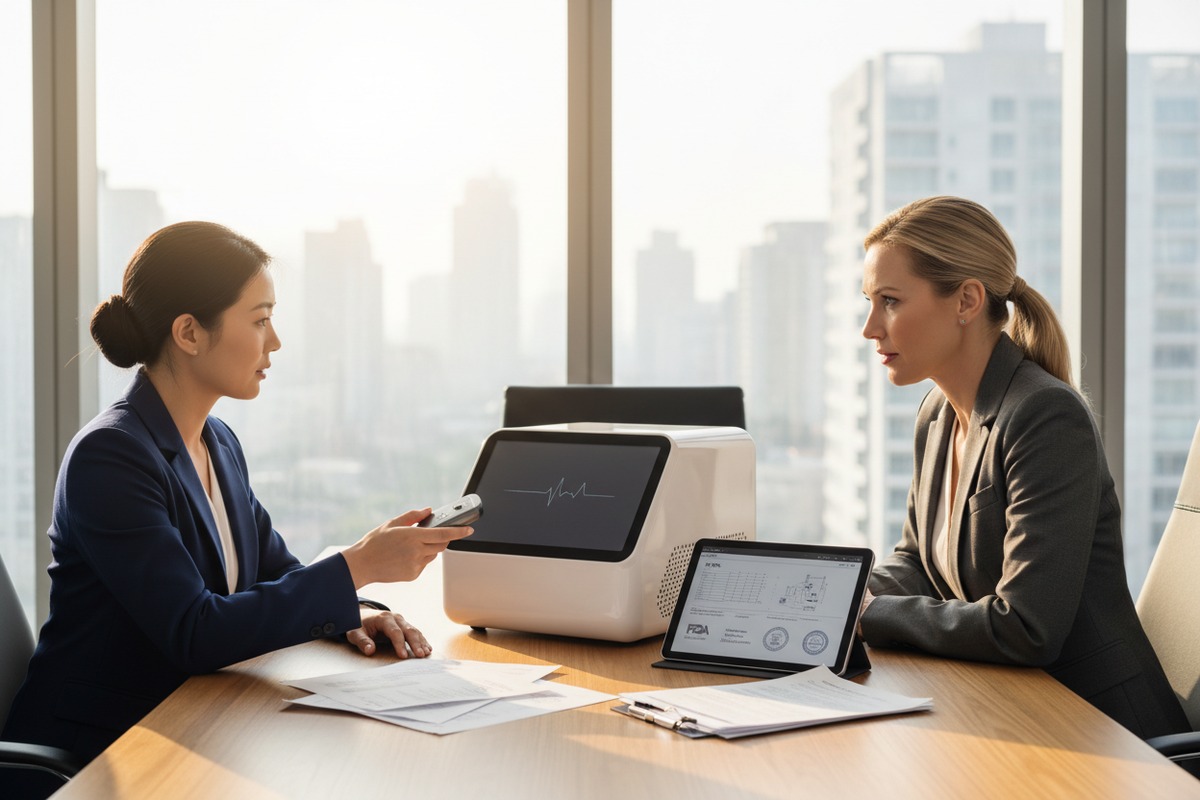
Every week, our production team receives inquiries from US buyers worried about one thing: regulatory compliance FDA 510(k) clearance status 1. The FDA landscape keeps shifting. New rules arrive. Old clearances face scrutiny. Miss a detail, and your imported shockwave devices sit in customs—or worse, get pulled from clinics.
To evaluate suppliers for US regulatory changes, verify their FDA 510(k) clearance status, confirm ISO 13485 certification for QMSR readiness by February 2026, audit their documentation practices, assess logistics capabilities for shifting import laws, and demand transparent quality control protocols aligned with current US safety benchmarks.
This guide breaks down exactly what you need to ask, check, and demand from your shockwave therapy machine supplier 21 CFR Part 820 2. Let’s walk through each critical area step by step.
How do I verify that my supplier's shockwave machines comply with the latest FDA and US safety standards?
When we ship devices to the US market, our compliance team spends weeks preparing documentation Device Master Records 3. Why? Because FDA requirements are specific, layered, and unforgiving. A single missing certificate can delay your entire order FDA prior notice documentation 4. Worse, non-compliant devices can damage your brand reputation permanently.
Verify compliance by checking the FDA's 510(k) database for clearance numbers, confirming the device classification (Class II or Class III), requesting copies of test reports for special controls, and ensuring the supplier holds ISO 13485 certification in preparation for QMSR enforcement starting February 2, 2026.

Understanding FDA Device Classifications
Shockwave therapy machines fall into different FDA categories based on their intended use and risk level. Most radial shockwave therapy (RSWT) devices are Class II, requiring 510(k) clearance. Focused extracorporeal shockwave therapy (ESWT) devices for higher-risk applications may require Class III Premarket Approval (PMA).
| Classification | Approval Type | Risk Level | Common Applications | Examples |
|---|---|---|---|---|
| Class II | 510(k) Clearance | Moderate | Plantar fasciitis, tendinopathies, muscle pain | Dolorclast (2007) |
| Class III | PMA Approval | High | Diabetic foot ulcers, specialized wound healing | dermaPACE (2017) |
| Class II | 510(k) Clearance | Moderate | Intravascular lithotripsy | Shockwave Medical (2021) |
Key Verification Steps
First, search the FDA's 510(k) Premarket Notification Database. Enter the device name or manufacturer. Look for the clearance letter and summary. This confirms substantial equivalence to a legally marketed device.
Second, request the supplier's complete technical file. This should include non-clinical performance testing results, biocompatibility reports, electromagnetic compatibility (EMC) testing, and software verification documentation if applicable.
Third, verify ISO 13485:2016 certification. Starting February 2, 2026, the Quality Management System Regulation (QMSR) 5 replaces parts of 21 CFR Part 820. Suppliers without ISO 13485 certification 6 will struggle to meet US requirements.
The Clearance vs. Registration Trap
Many buyers confuse FDA clearance with FDA registration. They are completely different. Registration means a company has listed with the FDA. It does not mean their devices are approved for medical use. Clearance confirms safety and effectiveness for specific indications.
Our engineering team has seen buyers receive devices with only registration numbers. These devices cannot legally market as FDA-cleared medical equipment in the US.
What quality control protocols should I demand to ensure my imported equipment meets updated US performance benchmarks?
In our factory, quality control starts before production begins. We inspect raw materials, test components, and validate every assembly step. But not every supplier operates this way. Some cut corners. Others lack the systems to catch problems before shipment.
Demand documented quality control protocols including incoming material inspection, in-process testing, final performance verification against FDA special controls, calibrated measurement equipment, and traceable records for each production batch—all aligned with ISO 13485 requirements for QMSR compliance.

Critical Performance Parameters
Shockwave therapy machines must meet specific technical benchmarks. These parameters directly affect treatment outcomes and patient safety. When evaluating suppliers, request test data for these specifications.
| Parameter | Acceptable Range | Test Method | Why It Matters |
|---|---|---|---|
| Pressure Output | 0.1–5.0 bar | Hydrophone measurement | Determines tissue penetration depth |
| Frequency Range | 1–22 Hz | Oscilloscope verification | Affects treatment duration and comfort |
| Energy Flux Density | 0.08–0.60 mJ/mm² | Calibrated dosimetry | Defines therapeutic vs. diagnostic levels |
| Shock Count Accuracy | ±5% variance | Counter verification | Ensures protocol consistency |
In-Process Quality Checkpoints
Strong suppliers implement multiple inspection stages. Ask for documentation of these checkpoints:
Stage 1: Component Verification. All incoming parts undergo inspection against specifications. Circuit boards, transducers, and housings must meet tolerances before entering production.
Stage 2: Assembly Testing. During assembly, technicians verify electrical connections, mechanical fit, and initial functionality. Our team uses automated test stations that log results for every unit.
Stage 3: Burn-In Testing. Completed devices run continuously for 24-48 hours. This catches early failures before shipping.
Stage 4: Final Performance Validation. Every machine undergoes full-parameter testing against FDA special control requirements. Output pressure, frequency accuracy, and energy delivery must fall within specified ranges.
Documentation Requirements for US Compliance
The upcoming QMSR regulation emphasizes traceability. Suppliers must maintain records that connect raw materials to finished devices. Ask for:
- Calibration certificates for all measurement equipment
- Training records for production personnel
- Batch records linking serial numbers to test results
- Corrective action reports for any quality issues
Our quality team maintains these records for seven years minimum. This exceeds FDA requirements and protects both supplier and buyer during audits.
Can my OEM partner provide the technical documentation and private labeling required by new US regulatory changes?
When our clients request private labeling, documentation becomes their responsibility. The FDA holds the brand owner accountable, not just the manufacturer. This means your OEM partner must deliver complete, accurate technical files that support your regulatory submissions.
Your OEM partner must provide comprehensive technical documentation including 510(k) submission support files, Device Master Records, labeling artwork meeting FDA requirements, user manuals with cleared indications only, and post-market surveillance procedures—all transferable to support your brand's regulatory standing.
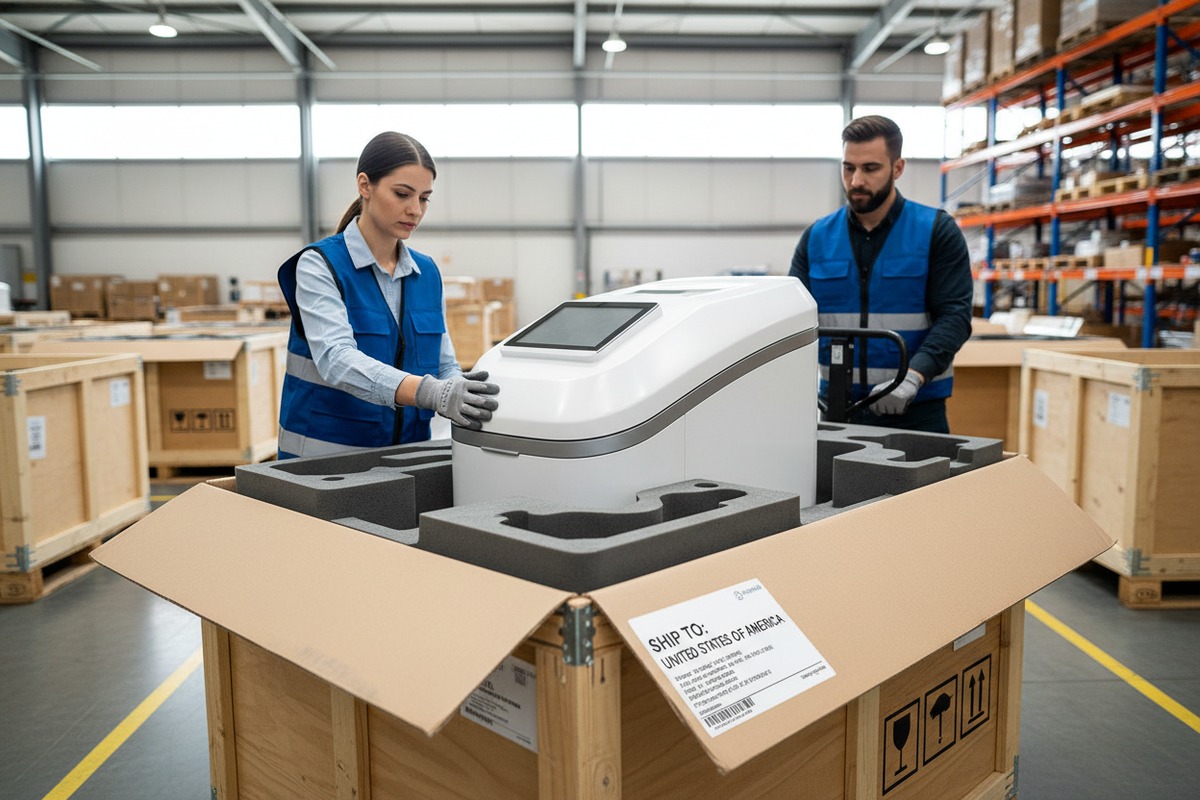
Essential Documentation Package
Private labeling under US regulations requires specific documents. Your supplier should provide all items in this checklist.
| Document Type | Purpose | FDA Requirement | Update Frequency |
|---|---|---|---|
| Device Master Record | Manufacturing specifications | 21 CFR 820.181 | As changes occur |
| Design History File | Development documentation | 21 CFR 820.30 | Project completion |
| Risk Analysis | Hazard identification | ISO 14971 compliance 7 | Annual review |
| Labeling Specifications | Artwork and content | 21 CFR 801 | Per product revision |
| IFU (Instructions for Use) | User guidance | FDA labeling requirements | Per indication change |
Labeling Requirements Under FDA Rules
FDA labeling rules are strict. Your device labels must include:
- Manufacturer name and address (can be your brand)
- Device name matching 510(k) clearance
- Cleared indications for use only
- Contraindications and warnings
- Lot number and manufacturing date
Off-label claims are prohibited on packaging and marketing materials. While clinicians may use devices off-label, your labeling cannot promote unapproved uses. Our design team creates labeling templates that meet FDA requirements while allowing brand customization.
Supporting Your Regulatory Submissions
If you plan to submit your own 510(k), your OEM partner should provide predicate device comparison data, performance test reports, biocompatibility summaries, and software documentation. These files become part of your submission to FDA.
Strong OEM partners also maintain post-market surveillance systems. They track complaints, adverse events, and field corrections. This data supports your continued compliance and helps identify potential issues before they become recalls.
QMSR Documentation Impacts
The QMSR regulation increases documentation requirements. Suppliers must demonstrate:
- Management responsibility and resource allocation
- Design and development controls
- Production and process controls
- Measurement, analysis, and improvement systems
Our team has already updated documentation systems for QMSR compliance. We recommend asking potential suppliers about their QMSR preparation timeline. Those without clear plans may struggle after February 2026.
How will my supplier manage door-to-door logistics and customs compliance if US import laws for beauty devices shift?
Our logistics team monitors US import regulations weekly. Tariff codes change. Documentation requirements evolve. Customs enforcement priorities shift. A supplier without dedicated logistics expertise can leave your shipment stranded at the port.
Your supplier should manage door-to-door logistics through established freight partnerships, provide accurate HS code classification, prepare FDA prior notice documentation, maintain customs broker relationships, and have contingency plans for regulatory changes affecting import procedures and duty rates.

Import Documentation Essentials
Medical devices entering the US require specific documentation. Missing paperwork causes delays and additional inspection fees.
| Document | Purpose | Who Prepares | Timing |
|---|---|---|---|
| Commercial Invoice | Value declaration | Supplier | Before shipping |
| Packing List | Contents detail | Supplier | Before shipping |
| FDA Prior Notice | Entry notification | Importer/Broker | 15 days before arrival |
| Certificate of Conformity | Compliance statement | Supplier | With shipment |
| Bill of Lading | Shipping contract | Freight forwarder | At departure |
HS Code Classification Matters
Shockwave therapy machines typically fall under HS code 9018.90 (medical instruments and appliances). Incorrect classification triggers customs holds, penalties, and potential seizure. Our shipping department verifies HS codes with US customs brokers before every shipment.
FDA Entry Review Process
FDA screens imported medical devices through the Operational and Administrative System for Import Support (OASIS). Factors triggering additional review include:
- First-time importers
- New products from existing suppliers
- Countries with previous compliance issues
- Random selection for inspection
Experienced suppliers prepare for these scenarios. We include redundant documentation and maintain direct communication with customs brokers during clearance.
Preparing for Regulatory Shifts
US import laws for beauty and medical devices continue evolving. Trade policies, tariff structures, and FDA enforcement priorities all affect your supply chain. Smart suppliers build flexibility into logistics planning.
Our approach includes maintaining relationships with multiple freight forwarders, keeping documentation templates updated for different scenarios, and monitoring regulatory news affecting medical device imports. When Section 301 tariffs changed, we helped clients adjust shipping strategies within days.
Cost Considerations
Logistics costs include freight, duties, customs brokerage fees, and potential storage charges. Request detailed cost breakdowns from suppliers. Hidden fees often appear during customs clearance if documentation is incomplete or incorrect.
Section 179 tax deductions 8 offer significant savings for 2025 equipment purchases—up to $1.16 million. A $150,000 shockwave system purchase could save $55,000 or more in taxes. Factor these savings into your purchasing timeline and logistics planning.
Conclusion
Evaluating suppliers for US regulatory compliance requires systematic verification of FDA status, quality systems, documentation capabilities, and logistics expertise. The February 2026 QMSR deadline makes ISO 13485 certification essential. Choose partners who demonstrate readiness today, not promises for tomorrow.
Footnotes
1. Explains the FDA’s premarket notification process for medical device clearance. ↩︎
2. Provides the official text of the FDA’s Quality System Regulation for medical devices. ↩︎
3. Details required documentation for manufacturing a medical device under FDA regulations. ↩︎
4. Outlines FDA requirements for submitting prior notice for imported medical devices. ↩︎
5. Explains the FDA’s new Quality Management System Regulation for medical devices. ↩︎
6. Defines the international standard for quality management systems in the medical device industry. ↩︎
7. Explains the international standard for risk management applied to medical devices. ↩︎
8. Explains the tax deduction allowing businesses to expense qualifying equipment purchases. ↩︎

 English
  Español de México
  Deutsch
  Français
  العربية
  Русский