

When we design our systems, we frequently observe how overwhelmed clinic staff struggle with complex equipment setups 1. A new machine should solve your operational problems, not create a bottleneck in your team’s daily workflow or add unnecessary stress.
Evaluating staff workload requires assessing setup time, training hours, and maintenance needs before purchasing. Efficient pressotherapy machines should offer intuitive automation, reducing manual labor to under five minutes per session, while enabling therapists to treat 20% more patients daily through streamlined workflows and minimal supervision requirements.
Let’s break down the critical factors that determine if a new device will help your team thrive or hinder their productivity.
How much training time will my staff need to master this new pressotherapy equipment?
During our export quality checks 2, we often find that complicated interfaces with vague icons confuse technicians and delay deployment. If your team cannot confidently learn the system within one or two days, it disrupts your entire operation and lowers morale.
Most professional pressotherapy machines require four to eight hours of initial training for staff to master controls and safety protocols. Systems with pre-programmed modes and intuitive touchscreens significantly reduce this learning curve, allowing technicians to operate independently after just two supervised practice sessions, minimizing downtime.
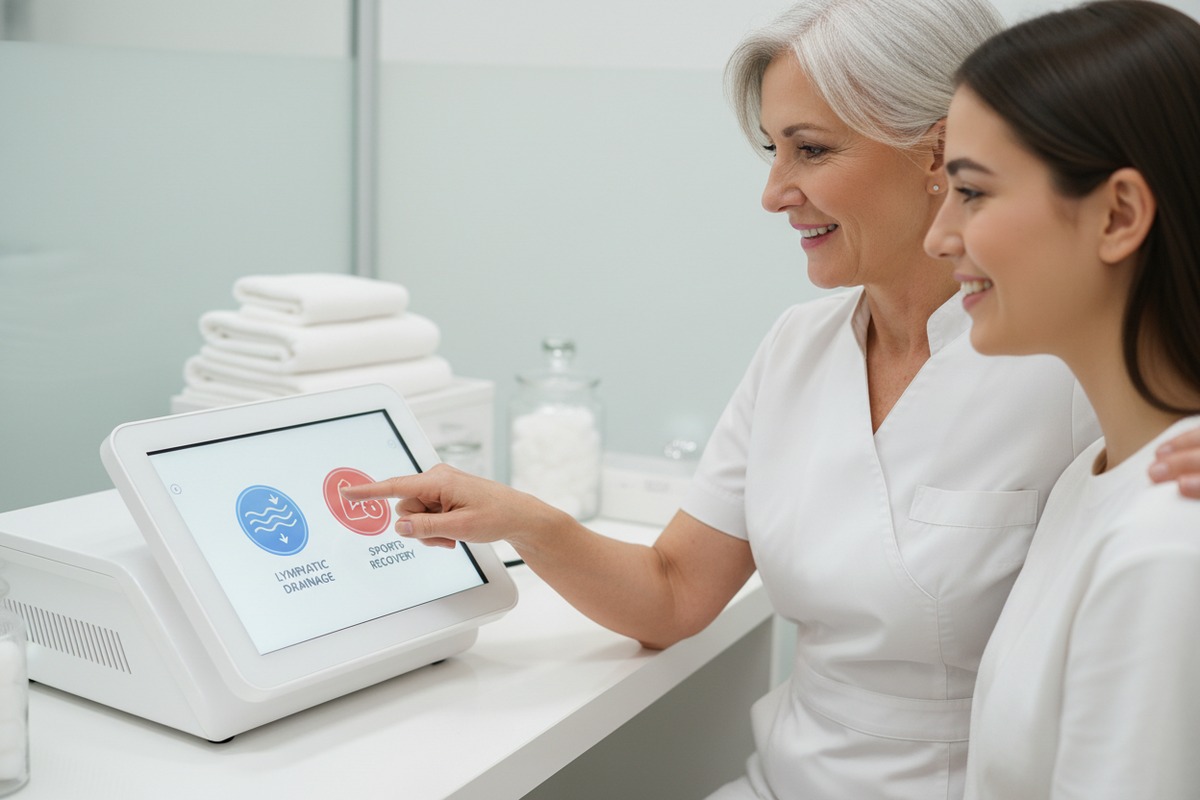
When we evaluate the "hidden costs" of a new machine, the time spent on education is often overlooked. A machine might look sleek on the brochure, but if the operating system is not user-friendly, your Purchase Manager will face complaints from the floor staff immediately. From our manufacturing perspective, the goal of a good User Interface (UI) 3 is to make the technology invisible. The therapist should focus on the client, not on navigating ten sub-menus to start a simple lymphatic drainage cycle 4.
The Cost of Complexity in Staff Turnover
In the beauty and wellness industry 5, staff turnover can be high. If you purchase a machine that requires a PhD to operate, you are creating a vulnerability. Every time a trained technician leaves, you lose that specialized knowledge. When we build our control boards, we aim for a "plug-and-play" logic.
A machine with a steep learning curve demands constant retraining. You must calculate the cost of a senior therapist stopping their revenue-generating work to train a new hire. If the machine is intuitive, a new hire can shadow a senior staff member for just a few sessions and be ready to go. Complex machines might require flying in a trainer from the supplier or paying for expensive online certification courses repeatedly.
Pre-set Modes vs. Manual Customization
To reduce mental load on your staff, look for machines that balance customization with automation. Purely manual machines require the staff to set pressure for every chamber, cycle time, and inflation speed. This increases the risk of error and requires high concentration.
Conversely, machines with "Smart Presets" allow the staff to select "Sports Recovery" or "Edema Reduction" and hit start. This does not mean they cannot adjust settings, but the baseline is established instantly. This feature alone can save 10-15 minutes of training time per specific protocol.
Estimating the Training Timeline
Below is a breakdown of what you should expect regarding training commitments based on the machine's interface complexity.
| Interface Type | Initial Training Time | Staff Proficiency Timeline | Impact on Workload |
|---|---|---|---|
| Analog / Dials | 2-4 Hours | 1 Week | High: Requires manual monitoring and constant adjustment during treatment. |
| Basic Digital | 4-6 Hours | 3-5 Days | Medium: Staff must memorize error codes and button sequences. |
| Smart Touchscreen | 1-2 Hours | 1 Day | Low: Visual guides and presets reduce cognitive load significantly. |
By selecting a smart touchscreen model, you are effectively buying back hours of your staff's time every single week.
How can I ensure the machine's maintenance requirements won't overwhelm my service team?
We rigorously test our pneumatic components 6 because we know that frequent pump failures frustrate clinic owners and disrupt schedules. Constant repairs drain your team’s energy, create booking chaos, and reduce your overall profit margins significantly.
To prevent maintenance overload, prioritize machines with modular components and self-diagnostic software that simplify troubleshooting. High-quality air pumps and durable suit connectors reduce failure rates, ensuring your service team spends less time on repairs and more time on preventative care, keeping operational efficiency high.
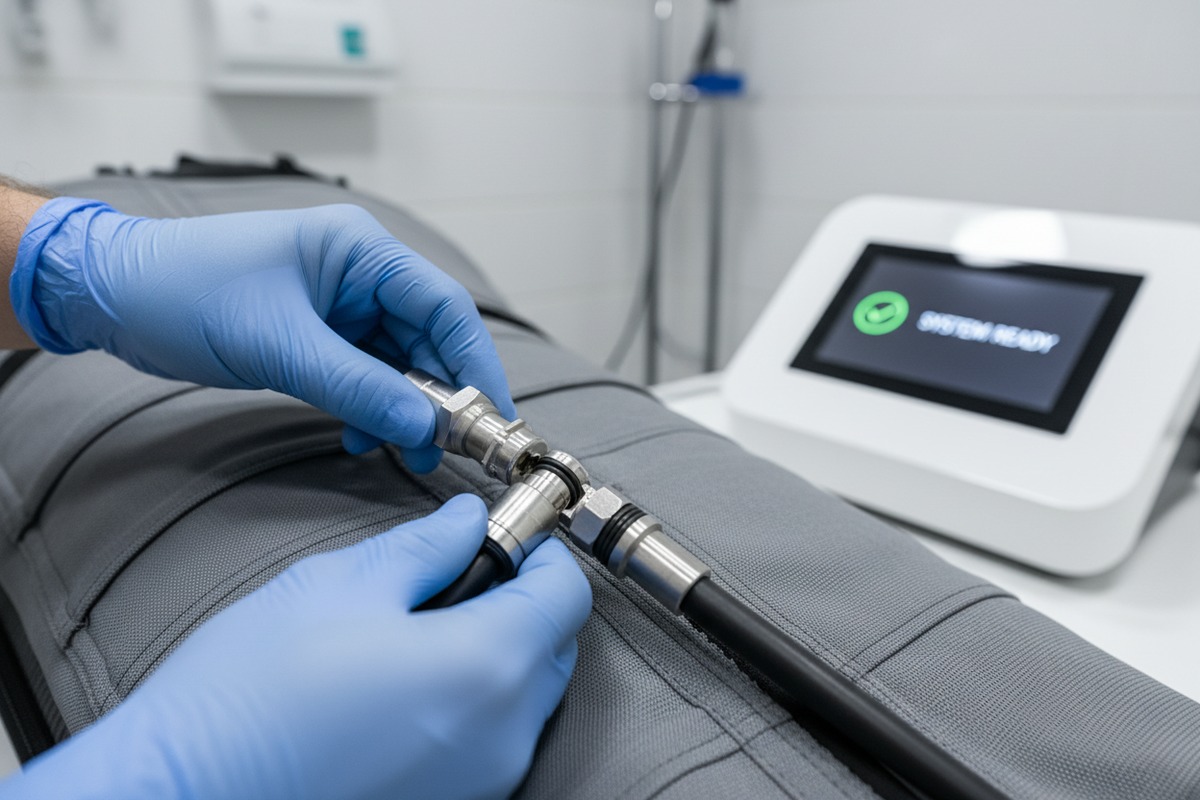
Maintenance is the silent workload killer. When we talk to distributors in the US, the number one complaint isn't performance—it's reliability. If a machine breaks down, your front desk staff has to call clients to reschedule, your technicians are idle, and your management team is on the phone with tech support. This is all "workload" that generates zero revenue.
Durability of Consumables
The most handled parts of a pressotherapy machine are the suits and the connecting hoses. These are what we call "high-touch" areas. In a busy clinic, a suit might be zipped and unzipped 15 times a day. If the zipper quality is poor or the velcro wears out in three months, your staff will struggle to secure the suit properly. This leads to poor treatment results and frustration.
When sourcing, ask about the "cycle life" of the velcro and zippers. We often reinforce these areas because we know that a therapist struggling with a broken zipper adds 5 minutes of stress to a session. Furthermore, the air bladders inside the suit should be made of high-density TPU 7 (Thermoplastic Polyurethane) rather than cheap PVC, which tends to crack and leak, forcing your staff to stop mid-session to patch holes.
Modular Design for Quick Fixes
Modern engineering has moved towards modularity. In the past, if an air pump failed, you had to ship the whole unit back to China or a local service center. Now, we design machines where the main control board or the pump unit can be swapped out by removing a few screws.
For your service team, this is the difference between a 3-week downtime and a 20-minute fix. Ask your supplier if they provide "Plug-and-Play" spare parts. If your internal technician can swap a part without soldering, you have saved countless hours of logistics work.
Routine Maintenance vs. Repair
There is a difference between cleaning and fixing. You want a machine that requires simple cleaning but minimal fixing. Your staff needs a clear protocol. If the machine requires complex daily calibration, they won't do it, and the machine will fail.
Here is a recommended maintenance schedule to keep workload manageable:
| Task | Frequency | Estimated Staff Time | Impact if Neglected |
|---|---|---|---|
| Suit Sanitization | After every patient | 2-3 Minutes | High infection risk; bad odors; client complaints. |
| Filter Check | Weekly | 5 Minutes | Dust enters the pump; reduced pressure; overheating. |
| Connector Inspection | Monthly | 10 Minutes | Air leaks; uneven pressure; ineffective treatment. |
| Internal Calibration | Annually | 30 Minutes | inaccurate pressure; potential safety risks. |
What design features should I prioritize to reduce my technicians' manual setup time?
Our engineering team constantly refines suit connectors to snap fast because we understand that fumbling with zippers or loose hoses wastes valuable appointment time. Every wasted minute frustrates both your staff and your waiting clients.
Prioritize design features like quick-connect hose systems, color-coded attachment ports, and adjustable Velcro suits to minimize setup time. These ergonomic improvements can cut preparation from ten minutes down to three, allowing technicians to focus on client comfort rather than struggling with technical assembly between appointments.
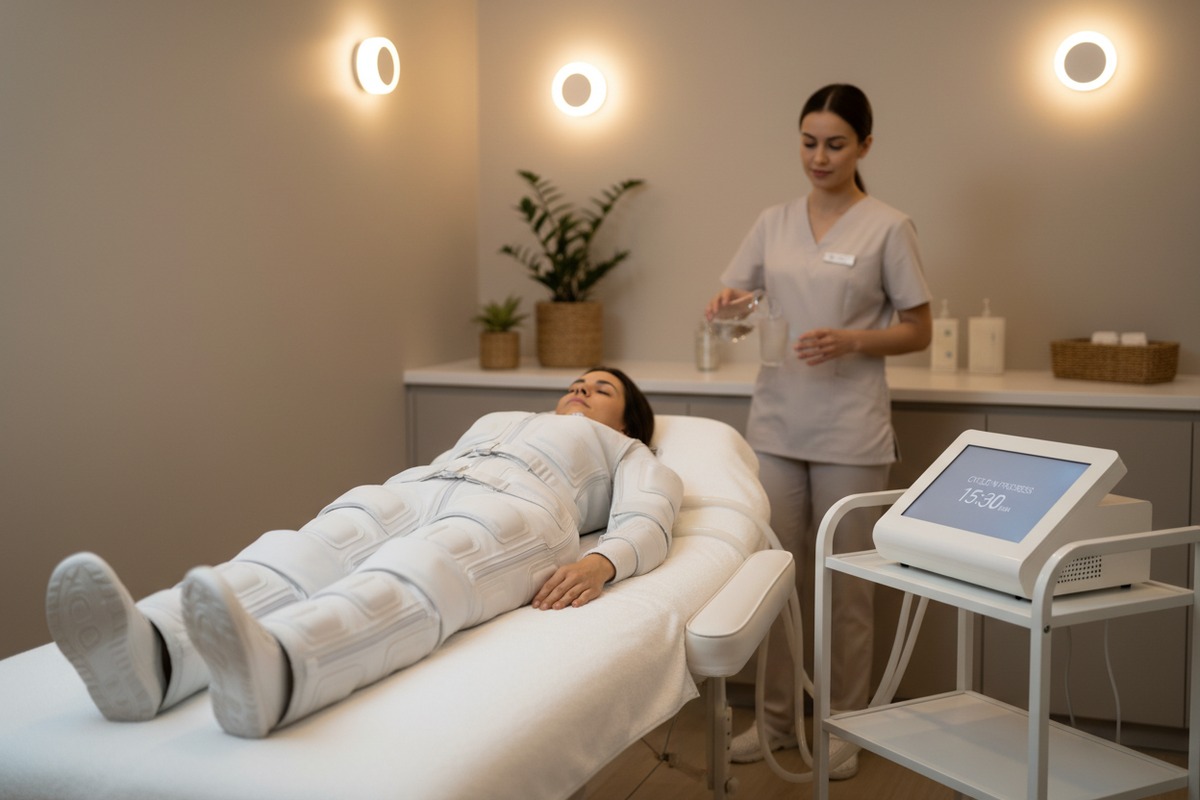
In a high-volume spa or clinic, speed is currency. If your therapist spends 15 minutes setting up a client for a 30-minute session, your efficiency ratio is poor. We specifically look at the "Turnover Time"—the time from one client leaving the room to the next client starting treatment. The design of the machine plays a massive role here.
The "Spaghetti" Problem
One of the biggest complaints we hear is about hose management. A full-body suit can have up to 24 individual air chambers. If each chamber has a separate, loose hose, you end up with a tangled mess that looks like spaghetti. Your staff has to untangle this before every session.
To solve this, look for "integrated hose" designs. This is where the air tubes are sewn inside the suit fabric or bundled into a single robust cable that plugs into the machine with one click. This feature alone prevents tangling and makes the treatment room look cleaner and more professional. It eliminates the mental fatigue of sorting wires.
Suit Sizing and Ergonomics
Clients come in all shapes and sizes. If your staff has to fight to close a zipper on a larger client, it is physically demanding and embarrassing for the client. We recommend suits that use a combination of zippers for security and heavy-duty Velcro for adjustability.
Furthermore, "expanders" are vital accessories. These are zipper strips that add circumference to the legs or waist. A machine package that includes these standard expanders prevents your staff from having to turn away clients or struggle to make a suit fit.
Intelligent Connectors
Color-coding is a simple but effective engineering choice. If the left leg connector is blue and the right leg connector is red, your staff doesn't have to think. They plug Blue into Blue. It sounds trivial, but after 8 hours of work, these small visual cues prevent mistakes.
Additionally, the physical mechanism of the connector matters. Screw-in connectors are secure but slow. Snap-lock (or bayonet) connectors are fast and secure. We always advise buyers to physically test how hard it is to unplug the suit. If it requires significant force, your staff will develop hand fatigue or repetitive strain injuries over time.
How will this pressotherapy machine's automation level affect my team's daily treatment capacity?
When we analyze clinic workflows, we see that manual monitoring kills productivity and limits revenue potential. Automated pressure adjustments free your staff to handle other tasks or prepare the next room, maximizing their utility.
High automation levels allow therapists to multitask safely, increasing daily treatment capacity by up to 30% without adding staff. Machines with automatic pressure regulation and timer shut-offs permit "set and forget" operation, enabling a single technician to manage two rooms simultaneously, significantly boosting revenue per hour.

The ultimate goal of procuring a new machine is to increase ROI. Labor is usually the highest cost in a service business. If a machine requires a therapist to stand next to it for 45 minutes, that machine is expensive to run. If the machine is autonomous, the labor cost drops dramatically.
The "Set and Forget" Advantage
Modern pressotherapy machines are designed to be hands-free. Once the therapist selects the program and ensures the client is comfortable, the machine handles the rest. It cycles through the inflation and deflation patterns, monitors pressure to ensure it doesn't exceed safety limits, and turns off automatically when the timer hits zero.
This "Set and Forget" capability changes the workflow. A therapist can set up Patient A in Room 1, and while Patient A is receiving treatment, the therapist can go to Room 2 to perform a consultation or a manual massage on Patient B. This is called "concurrent treatment." It effectively doubles the output of a single staff member during that time block.
Calculating Throughput Gains
Let's look at the numbers. If you move from a manual or semi-manual workflow to a fully automated one, the capacity increases significantly.
| Metric | Manual / Low Automation | High Automation (Set & Forget) |
|---|---|---|
| Therapist Role | Constant monitoring & adjusting | Setup (5 mins) -> Disconnect (5 mins) |
| Active Labor Time | 45 Minutes per session | 10 Minutes per session |
| Staff Multi-tasking | Impossible | Possible (Admin, cleaning, 2nd client) |
| Max Clients / Day (1 Staff) | 8 Clients | 10-12 Clients (with overlapping slots) |
Safety Sensors and Trust
To achieve this level of automation, you must trust the machine. This is where "Safety Sensors 8" come in. Our high-end models have pressure feedback loops. If the machine detects that a client moved and the suit is kinked, creating a pressure spike, it will automatically vent air to normalize the pressure.
Without this feature, a therapist must stay nearby to ensure the client isn't hurt. With it, the therapist can walk away with confidence. When evaluating a machine, ask: "Does this unit have real-time pressure monitoring and emergency auto-venting?" This feature is the key to unlocking true multi-tasking for your workload.
Conclusion
Evaluating the impact on staff workload is just as critical as checking the price tag. A pressotherapy machine that is difficult to set up, hard to clean, or complex to learn will collect dust in the corner of your clinic. By prioritizing intuitive interfaces, durable modular design 9s, and high levels of automation, you protect your team from burnout and position your business for scalable growth. The right machine works for your staff, not against them.
Footnotes
1. Discusses challenges of complex equipment in ICU environments. ↩︎
2. Outlines FDA requirements and regulations for exporting medical devices. ↩︎
3. Explains the importance of good UI design in medical devices for usability and safety. ↩︎
4. Provides a general overview of the lymphatic drainage process. ↩︎
5. Provides market overview and statistics for the beauty and wellness industry. ↩︎
6. Explains the critical role and benefits of pneumatic components in healthcare. ↩︎
7. Explains the properties and applications of high-density TPU in various products. ↩︎
8. Details how safety switches and sensors enhance safety in medical equipment. ↩︎
9. Discusses the benefits and challenges of modular design in medical devices. ↩︎

 English
 Español de México
 Deutsch
 Français
 العربية
 Русский
