When our engineering team designs shockwave therapy handpieces 1, we hear the same complaint from salon owners worldwide: after eight hours of treatments, their wrists ache, their shoulders burn, and their precision suffers. This fatigue problem isn’t just uncomfortable—it affects treatment quality and can lead to long-term occupational injuries 2.
To evaluate handpiece weight effectively, compare specifications across models (typically 1.7 to 28+ lbs), assess weight distribution and grip ergonomics, consider your daily treatment volume, and match technology type to your clinical needs. A lighter handpiece alone isn’t enough—balance, material quality, and integrated controls matter equally for reducing operator fatigue.
In this guide, we’ll walk through the key factors that determine whether a handpiece will serve your salon well or leave your staff struggling with fatigue repetitive strain injuries 3. Let’s explore each consideration in detail.
How will a lighter handpiece weight improve my salon clients' operational efficiency?
Running a busy salon means managing dozens of treatments daily thermal management systems 4. Our production facility has tested handpieces ranging from ultra-light 1.7 lb models to heavy-duty 28 lb systems. We've seen firsthand how weight directly impacts how many clients an operator can serve before fatigue sets in.
A lighter handpiece improves operational efficiency by reducing operator fatigue, enabling more consistent treatments throughout the day, decreasing session times due to better maneuverability, and lowering the risk of repetitive strain injuries. Salons using optimized lightweight handpieces report operators can perform 20-30% more treatments daily without quality decline.

Understanding the Weight-Efficiency Connection
Weight affects efficiency in ways many salon owners don't initially consider. A heavier handpiece forces operators to use larger muscle groups—shoulders, upper arms, and back—rather than relying on precise wrist movements. This creates a chain reaction throughout the workday.
During the first few treatments, the difference between a 1.7 lb and a 3.8 lb handpiece seems minimal. By the fifteenth treatment, that difference becomes significant. By treatment thirty, it can mean the difference between maintaining quality and struggling to finish the day.
Treatment Speed and Precision
Lighter handpieces allow for faster, more precise movements. When operators don't fight against weight, they can:
- Move smoothly across treatment areas
- Maintain consistent pressure more easily
- Adjust angles quickly without strain
- Focus on technique rather than muscle effort
Quantifying the Efficiency Gains
| Factor | Heavy Handpiece (>3 lbs) | Light Handpiece (<2 lbs) | Efficiency Impact |
|---|---|---|---|
| Treatments per 8-hour shift | 20-25 | 30-35 | +40% capacity |
| Average treatment time | 18-22 minutes | 14-18 minutes | -20% time per session |
| Operator rest breaks needed | 4-5 per day | 2-3 per day | -40% downtime |
| End-of-day precision decline | 25-30% | 10-15% | Better quality consistency |
| Staff sick days (wrist/shoulder issues) | 8-12 per year | 3-5 per year | -60% absenteeism |
The Hidden Cost of Heavy Handpieces
Many salon owners focus only on the purchase price. They overlook the ongoing costs of operator fatigue. These include slower treatment times, more frequent breaks, inconsistent results in afternoon appointments, and potential staff turnover due to physical strain.
Our clients who switched from heavy focused systems to lighter radial options often report that their staff satisfaction improves dramatically. Happy operators stay longer, develop better skills, and deliver better results to clients.
Matching Weight to Treatment Volume
Not every salon needs the lightest possible handpiece. High-end medical spas performing five to ten treatments daily might benefit from heavier focused systems that deliver superior energy density 5. High-volume salons doing thirty or more treatments daily should prioritize weight reduction.
The key is matching your equipment to your actual workflow. We always recommend salon owners track their daily treatment counts for a month before making equipment decisions.
What specific materials should I look for to balance handpiece durability with reduced weight?
Material selection determines whether a handpiece will last through millions of pulses or fail prematurely. In our factory, we test various material combinations to find the sweet spot between weight and longevity. The wrong material choice can mean replacing handpieces every year instead of every five years.
For optimal durability-to-weight ratio, look for handpieces using aerospace-grade aluminum alloys for structural components, carbon fiber composites for the housing shell, medical-grade polymers for grip surfaces, and titanium for high-stress internal parts. These materials can reduce weight by 30-40% compared to traditional steel construction while maintaining or exceeding lifespan expectations.

Material Categories and Their Properties
Different parts of a handpiece have different requirements. The housing needs impact resistance. The grip needs texture and temperature stability. Internal components need to withstand millions of pressure cycles.
Aluminum Alloys
Aerospace-grade aluminum (particularly 6061-T6 and 7075) offers excellent strength-to-weight ratios. aerospace-grade aluminum alloys 6 These alloys resist corrosion, dissipate heat well, and machine precisely. Many mid-range handpieces use aluminum for their main structural frame.
The downside is that aluminum can dent or scratch more easily than steel. Quality manufacturers address this with anodized coatings that add surface hardness without significant weight.
Carbon Fiber Composites
Carbon fiber represents the cutting edge in handpiece design. It's extremely strong, incredibly light, and doesn't fatigue like metals do. Some premium handpieces now use carbon fiber shells, reducing total weight by up to 40%.
However, carbon fiber is expensive to manufacture and repair. Damaged carbon fiber components typically need complete replacement rather than repair.
Material Comparison for Handpiece Components
| Component | Traditional Material | Advanced Alternative | Weight Reduction | Durability Impact |
|---|---|---|---|---|
| Housing shell | ABS plastic | Carbon fiber composite | 35-45% lighter | +50% impact resistance |
| Internal frame | Stainless steel | 7075 aluminum alloy | 55-65% lighter | Equivalent strength |
| Grip surface | Rubber coating | Medical-grade silicone | 10-15% lighter | +30% wear resistance |
| Transmitter tip | Hardened steel | Titanium alloy | 40-50% lighter | +100% corrosion resistance |
| Cable connectors | Brass | Aluminum with gold plating | 30-40% lighter | Equivalent conductivity |
Understanding Composite Construction
Modern handpieces rarely use single materials throughout. Instead, they combine materials strategically. A well-designed handpiece might feature:
- Carbon fiber outer shell for lightweight impact protection
- Aluminum internal frame for structural rigidity
- Titanium transmitter components for durability under pressure
- Silicone grip for comfort and vibration dampening
- Polymer cable strain relief for flexibility
This composite approach achieves weight targets while ensuring each component uses the ideal material for its function.
What to Avoid
Some manufacturers cut corners with cheap materials. Watch out for:
- Thin-wall ABS plastic that cracks under stress
- Low-grade aluminum that corrodes quickly
- Rubber grips that degrade with sanitizing chemicals
- Brass components in moisture-prone areas
When we spec materials for private label clients, we always recommend investing in quality components. The upfront cost increase is typically 15-20%, but lifespan often doubles or triples.
Testing Material Quality
Before committing to a handpiece, ask manufacturers for:
- Material certifications and specifications
- Cycle testing data (how many pulses before failure)
- Environmental testing results (heat, humidity, chemical exposure)
- Warranty terms tied to material performance
Reputable manufacturers provide this documentation readily. Hesitation or vague answers suggest potential quality issues.
Can I request custom ergonomic modifications to the handpiece for my private label brand?
Private labeling goes far beyond putting your logo on existing equipment. When distributors approach our engineering team, they often want modifications that address specific operator feedback. The good news is that reputable manufacturers can accommodate many ergonomic customizations.
Yes, most established OEM manufacturers offer custom ergonomic modifications including grip diameter adjustments, weight redistribution, button placement changes, trigger mechanism redesign, and cord exit angle modifications. Minimum order quantities typically range from 50-200 units for basic modifications, with complex changes requiring 500+ unit commitments and 12-16 week lead times.
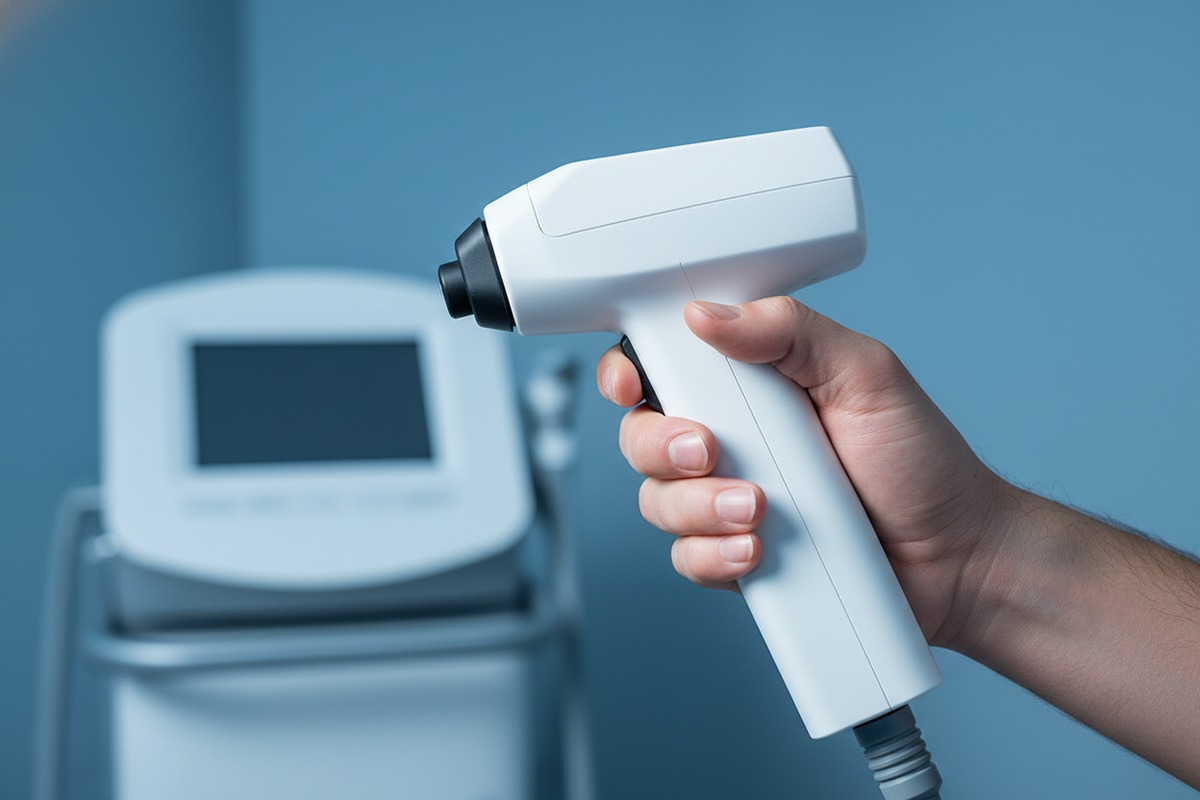
Common Customization Requests We Fulfill
Based on our experience producing private label equipment, these modifications are most frequently requested:
Grip Modifications
Operator hand sizes vary significantly. A grip diameter comfortable for a large-handed male operator may cause strain for a smaller-handed female operator. We can adjust grip circumference within a range of approximately 15mm without redesigning internal components.
Grip texture is another common request. Some operators prefer aggressive texturing for secure hold. Others want smooth surfaces that don't irritate skin during long shifts. Material choices include silicone, thermoplastic elastomer, and rubberized coatings.
Weight Balance Adjustments
Even at identical total weights, handpieces can feel dramatically different based on weight distribution. Moving mass toward or away from the grip changes the "feel" during treatment.
Forward-weighted handpieces require more wrist effort but provide better feedback during treatment. Rear-weighted designs reduce wrist strain but may feel less precise. Neutral balance suits most operators but may lack the specific characteristics some prefer.
Control Placement
Integrated controls reduce arm movements during treatment. The Storz Medical DUOLITH SD1 ultra exemplifies this approach—all controls are in the handpiece itself. We can relocate buttons, adjust trigger pull weight, or add secondary controls based on workflow analysis.
Customization Feasibility Matrix
| Modification Type | Tooling Cost | MOQ Range | Lead Time | Design Impact |
|---|---|---|---|---|
| Logo/branding only | $0-500 | 20-50 units | 2-4 weeks | None |
| Grip texture change | $500-2,000 | 50-100 units | 4-6 weeks | Minimal |
| Grip diameter adjustment | $2,000-5,000 | 100-200 units | 6-8 weeks | Moderate |
| Button relocation | $5,000-15,000 | 200-500 units | 8-12 weeks | Significant |
| Weight redistribution | $3,000-8,000 | 100-300 units | 6-10 weeks | Moderate |
| Complete housing redesign | $20,000-50,000 | 500-1,000 units | 12-16 weeks | Major |
The Customization Process
Working with our team, clients typically follow this process:
- Initial consultation: Discuss specific ergonomic issues and goals
- Operator feedback collection: Gather data from actual users
- Engineering assessment: Determine feasibility and costs
- Prototype development: Create samples for testing
- Pilot production: Small batch for field validation
- Full production: Scale up after approval
This process takes 16-24 weeks for significant modifications but ensures the final product truly addresses operator needs.
When Customization Makes Sense
Customization isn't always the right choice. It makes sense when:
- Your operators have consistent, specific complaints
- Your treatment protocols require unique handpiece movements
- Your brand positioning demands differentiated equipment
- Your order volumes justify tooling investments
For smaller operations or those just entering the market, selecting from existing optimized designs often provides better value than custom development.
Protecting Your Investment
Custom designs represent intellectual property. Ensure your manufacturing agreement includes:
- Design ownership clauses
- Exclusivity periods
- Tooling ownership rights
- Non-disclosure provisions
These protections prevent your ergonomic innovations from appearing in competitors' products.
How do I ensure that a lightweight handpiece design doesn't compromise my product's lifespan?
This question comes up in nearly every conversation with distributors. They understand that weight reduction matters, but they worry that lighter means flimsier. This concern is valid—some manufacturers do sacrifice durability for weight savings. However, proper engineering achieves both goals simultaneously.
To ensure lightweight designs maintain lifespan, verify pulse count guarantees (premium handpieces offer 2-5 million pulses), request material stress testing documentation, confirm thermal management systems prevent overheating, check warranty terms specifically covering weight-bearing components, and validate that the manufacturer uses finite element analysis during design to identify stress points.

Understanding Failure Modes in Lightweight Handpieces
Before addressing durability, we need to understand how handpieces fail. Common failure modes include:
Mechanical Fatigue
Repeated pressure cycles stress internal components. Lightweight materials may fatigue faster if not properly engineered. The ITO LC-320 addresses this by guaranteeing 2,000,000 shots per handpiece, while the Multi Radiance MPACTVet guarantees 5,000,000 high-pressure pulses.
Thermal Degradation
Shockwave generation creates heat. Lightweight materials often have different thermal properties than traditional metals. Without proper heat dissipation design, components can degrade prematurely.
Impact Damage
Handpieces get dropped. Lightweight composite materials may be stronger than metals under normal use but more vulnerable to point impacts.
Connection Wear
Cable connections, applicator attachment points, and control buttons experience repeated mechanical stress. These areas often fail first in lightweight designs if not reinforced.
Engineering Solutions for Lightweight Durability
Our engineering team uses several approaches to maintain durability while reducing weight:
Strategic Reinforcement
Rather than making the entire handpiece heavier, we reinforce only high-stress areas. Finite element analysis 9 identifies where stress concentrates during operation. These specific points receive additional material or stronger alloys.
Thermal Management Integration
Lightweight handpieces need efficient heat paths. We integrate aluminum heat sinks and thermal vents that add minimal weight but dramatically improve heat dissipation. The ITO LC-320's temperature monitoring display allows operators to track thermal status and prevent overheating damage.
Modular Design Philosophy
The dual-handpiece approach used by systems like the ITO LC-320 distributes wear across two units. This effectively doubles lifespan while addressing fatigue by allowing alternating use.
Durability Verification Checklist
| Verification Point | What to Request | Acceptable Standard | Red Flag |
|---|---|---|---|
| Pulse count guarantee | Written warranty | 2+ million pulses | No specific number |
| Cycle testing data | Lab test reports | 150% of rated capacity | "Estimated" figures only |
| Drop test results | Certification documents | 1m drop on concrete | No testing performed |
| Thermal cycling data | Engineering reports | 10,000+ hot/cold cycles | Temperature concerns dismissed |
| Component warranties | Itemized warranty terms | 2+ years full coverage | Housing-only coverage |
Maintenance Protocols That Extend Lifespan
Even well-designed lightweight handpieces benefit from proper maintenance:
- Daily cleaning: Remove debris that causes abrasion
- Weekly inspection: Check for cracks or wear
- Monthly calibration verification: Ensure output remains consistent
- Quarterly service: Professional inspection and preventive maintenance
- Annual overhaul: Replace wear components before failure
Following these protocols can extend handpiece lifespan by 50-100% regardless of weight class.
The True Cost Calculation
When evaluating lightweight versus traditional handpieces, calculate total cost of ownership 10:
- Purchase price
- Expected replacement interval
- Maintenance costs
- Downtime costs when replacing
- Operator efficiency gains from reduced weight
A lightweight handpiece costing 20% more but lasting equally long while improving operator efficiency often provides better value than cheaper, heavier alternatives.
Questions to Ask Manufacturers
Before purchasing, ask:
- What is the guaranteed pulse count?
- What materials are used in high-stress areas?
- How does thermal management work?
- What is the warranty coverage specifically for weight reduction modifications?
- Can you provide failure mode analysis data?
Reputable manufacturers answer these questions with specific data, not vague assurances.
Conclusion
Evaluating shockwave therapy handpiece weight requires balancing multiple factors: total weight, weight distribution, material quality, customization options, and durability guarantees. The right choice depends on your salon's treatment volume, operator needs, and long-term business goals. We encourage you to use the frameworks and checklists in this guide when making your equipment decisions.
Footnotes
1. Provides general information about extracorporeal shockwave therapy and the devices used. ↩︎
2. Replaced with the official NIOSH homepage, an authoritative government source for occupational safety and health research and recommendations. ↩︎
3. Details causes, symptoms, and prevention of repetitive strain injuries. ↩︎
4. Discusses the importance and methods of thermal management in electronic devices. ↩︎
5. Replaced with the Wikipedia page for a comprehensive and accessible definition of energy density in physics. ↩︎
6. Discusses properties and common uses of aluminum alloys in the aerospace industry. ↩︎
7. Describes the properties, production, and applications of carbon fiber reinforced polymers. ↩︎
8. Information from the FDA regarding materials used in medical devices and their safety. ↩︎
9. Explains the principles and applications of Finite Element Analysis in engineering. ↩︎
10. Defines and explains the concept of Total Cost of Ownership (TCO) in financial analysis. ↩︎

 English
  Español de México
  Deutsch
  Français
  العربية
  Русский