

When we monitor our assembly lines, we often see that a pressotherapy machine 1's perceived quality depends heavily on its physical stability. If your salon clients experience a wobbling device during treatment, they immediately question the safety and value of your brand, leading to avoidable returns and reputation damage low center of gravity 2.
To effectively evaluate stand stability, you must prioritize a low center of gravity, verify that the base width exceeds the control unit's width by at least 20%, and test for a 10-degree tilt resistance. Ensure the stand utilizes heavy-gauge steel rather than hollow plastic to anchor the pneumatic vibrations generated during operation.
The following sections outline the specific technical checks and design features you need to prioritize to ensure your equipment remains secure and professional digital calipers 3.
How can I verify the structural integrity of the stand material during my pre-shipment inspection?
In our experience fulfilling orders for US distributors, we know that glossy photos often hide the reality of thin, flimsy metal that dents under pressure 5-point star design 4. A weak stand frame not only feels cheap but can buckle under the weight of heavy-duty pumps, causing safety hazards for your end-users.
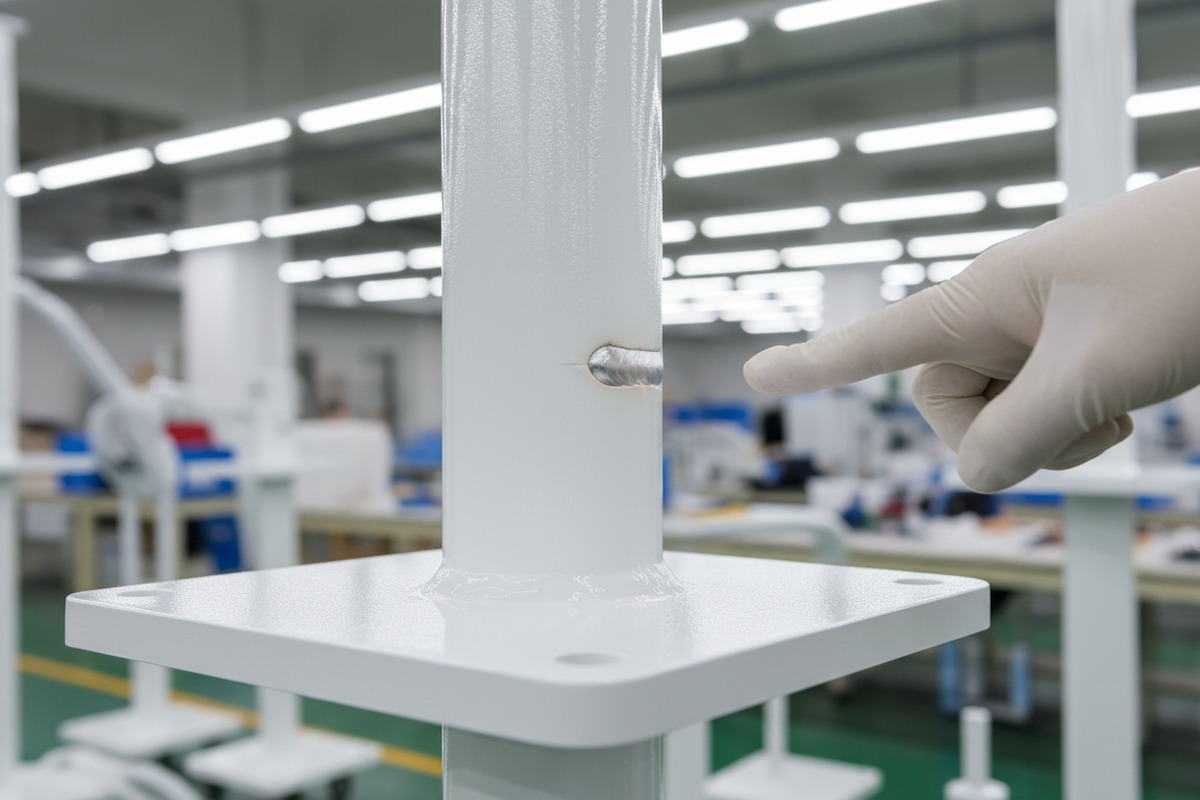
You can verify structural integrity by using digital calipers to measure the metal gauge, ensuring a minimum thickness of 1.5mm for main support columns. Additionally, inspect the weld points for consistency and perform a static load test by applying downward pressure to check for flexing or audible creaking.
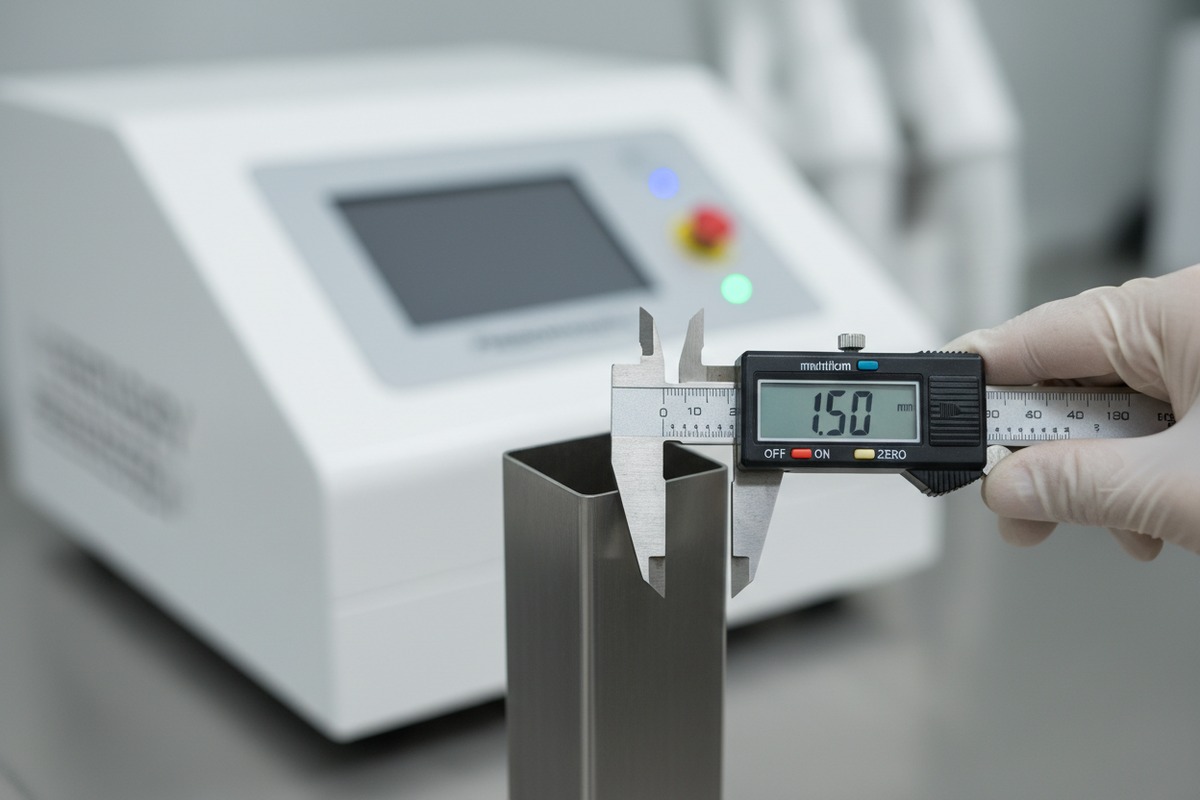
When you are investing in professional beauty equipment, the material science behind the stand is just as critical as the electronics inside Total Lock casters 5. A stand might look robust in a PDF catalog, but the physical reality can be very different. During your pre-shipment inspection (PSI), you need to move beyond visual checks and use physical verification methods.
Checking Material Thickness and Type
The most common "cost-saving" trick we see in the industry involves using thin sheet metal or substituting steel for lighter, cheaper aluminum alloys in the base. For a pressotherapy machine, which generates vibration during the pneumatic compression cycles, mass is your friend. You want a heavy, dense material that absorbs vibration rather than amplifying it.
You should instruct your inspection agent to measure the wall thickness of the stand's vertical column. A high-quality stand intended for salon use should use cold-rolled steel 6 with a thickness of at least 1.5mm to 2.0mm. Anything below 1.0mm is liable to dent if a cart hits it and will likely flex when the machine is pushed.
Weld Quality vs. Bolted Joints
Structural integrity 7 also depends on how the pieces are joined. We recommend looking for full-penetration welds 8 on the base structure rather than spot welds or simple screw fixings. Screws can loosen over time due to the pump's vibration. If the unit uses bolts, they must be accompanied by lock washers or nylon-insert lock nuts to prevent loosening.
Here is a comparison of common materials we encounter in the supply chain:
| Material Type | Typical Thickness | Stability Rating | Vibration Damping | Verdict |
|---|---|---|---|---|
| Thin Gauge Aluminum | 0.8mm – 1.0mm | Low | Poor | Avoid. Too light and dents easily. |
| Standard Steel Tubing | 1.2mm – 1.5mm | Medium | Good | Acceptable for entry-level units. |
| Heavy-Duty Cold Rolled Steel | 1.8mm – 2.5mm | High | Excellent | Ideal for professional salon use. |
| Reinforced ABS Plastic | N/A (Molded) | Low/Medium | Medium | Okay for home units, not for salons. |
The Static Load Test
Finally, perform a "lean test." With the machine mounted, lean firmly on the top corner of the control unit. A stand with good structural integrity will transfer that force directly to the wheels without the vertical column bending or twisting. If you see the neck of the stand flex, it is a sign of metal fatigue waiting to happen.
What specific base design features should I look for to prevent my pressotherapy machines from tipping?
We have redesigned several prototypes after finding that a sleek, narrow look often results in a machine that falls over when a therapist pulls a hose. Tipping is a major liability issue for salons, and a poorly designed base is the primary culprit for equipment damage and potential client injury.
Look for a base footprint that extends beyond the vertical projection of the control unit and preferably utilizes a 5-point star design or a wide H-frame. Essential features include a weighted chassis plate and a low center of gravity that keeps the unit upright even when tilted 15 degrees.

The geometry of the base is the foundation of safety. Pressotherapy machines present a unique challenge because they have long hoses and cuffs attached to them. During a treatment, if a client shifts or a therapist tugs on a hose to extend it, that lateral force is applied at the top of the machine—the worst possible place for stability.
The Importance of Base Geometry
The shape of the base dictates the "tipping axis." A square base has four tipping axes (the lines between the wheels). A 5-point star base, commonly seen on high-end medical carts, offers five tipping axes and reduces the distance to the edge of support, making it much harder to tip over.
If your supplier offers an H-frame base (shaped like the letter H), ensure the crossbar is deep enough. The wheels must be positioned far enough apart so that the "footprint" of the wheels is larger than the "footprint" of the control unit sitting on top.
Center of Gravity Management
The higher the center of gravity, the easier the unit tips. Many manufacturers try to make the stand look "airy" and light, but this is dangerous. You want "bottom-heavy" design.
We often inspect the bottom of the base to see if counterweights are added. A simple steel plate added to the underside of the base can lower the center of gravity significantly.
Evaluating Tilt Stability
When evaluating a sample, or instructing your inspection team, apply the 15-degree rule. The machine should be able to be tilted 15 degrees off-center without falling over. If it tips at 5 or 10 degrees, it is unsafe for a busy salon environment where people are moving quickly.
Below is a breakdown of base designs and their stability profiles:
| Base Design Style | Tipping Risk | Floor Space Usage | Recommendation |
|---|---|---|---|
| Small Circle/Square (4 wheels) | High | Minimal | Reject. Prone to tipping when hoses are pulled. |
| Wide H-Frame | Low | Medium | Acceptable. Good side-to-side stability. |
| 5-Point Star Base | Very Low | High | Best. The standard for medical stability. |
| Z-Frame (Cantilever) | Medium/High | Medium | Use Caution. Requires heavy counterweights to be safe. |
Cable and Hose Management Integration
A base design that prevents tipping must also manage the "leverage" factors. Does the stand have hooks or bins lower down the column for hose storage? Storing heavy hoses and cuffs low on the stand lowers the center of gravity. If the design forces you to hang heavy cuffs at the very top, it raises the top-heaviness and increases tipping risk.
How do I test the locking mechanism and stability of the casters for heavy-duty salon use?
When we source components for our premium lines, we reject generic office-chair wheels because they fail to grip smooth salon floors, causing the machine to "walk" during operation. Without high-grade locking casters, your machine becomes a drifting annoyance that frustrates therapists and interrupts treatments.
You must test casters by engaging the brakes and attempting to drag the unit across a smooth surface; it should resist movement without the wheels rotating or skidding. Verify that the locking mechanism freezes both the wheel rotation and the swivel bearing (total lock) to ensure complete immobility.
Casters are often the first point of failure on salon equipment. In a salon, floors are typically smooth tile or wood, and they may have hair or dust. A cheap caster will either slide when locked or get clogged and stop rolling altogether.
Distinguishing Lock Types
There is a massive difference between a "wheel lock" and a "total lock."
- Wheel Lock: Only stops the wheel from spinning. The stem can still swivel. This means if you push the machine, it can still pivot and shift position.
- Total Lock: Stops the wheel from spinning AND stops the stem from swiveling. This makes the machine rigid and immovable.
For pressotherapy machines, you absolutely want Total Lock casters on at least two (preferably all four) wheels. This ensures that when the therapist is setting up the cuffs on a patient, the machine doesn't drift away.
Material Matters: PU vs. Nylon
Hard Nylon wheels are cheap but noisy and slippery on tile floors. They have poor traction.
Polyurethane (PU) or Medical-Grade Rubber wheels are superior. They are quiet, absorb vibration from the floor, and provide "grip" which helps the brakes hold the machine in place.
The "Wiggle" Test
Before approving a shipment, test the play in the wheels. With the brakes OFF, wiggle the wheel sideways. Excessive play indicates cheap bearings that will wobble and eventually break. With the brakes ON, there should be zero movement.
Caster Grade Specifications
| Feature | Standard Office Grade | Medical / Salon Grade | Why It Matters |
|---|---|---|---|
| Lock Type | Wheel Brake Only | Total Lock (Wheel + Swivel) | Prevents "crabbing" or shifting during use. |
| Wheel Material | Hard Plastic / Nylon | Soft PU / Rubber | Grip on smooth floors; noise reduction. |
| Bearing Type | Plain / Bushing | Ball Bearing | Smooth rolling under heavy load; longevity. |
| Brake Pedal | Small plastic tab | Large metal/reinforced pedal | Ease of use for therapists wearing different shoes. |
Impact on Vibration
Believe it or not, good casters help with machine noise. A pressotherapy pump vibrates. If the casters are hard plastic and loose, they will rattle against the floor, creating a buzzing noise that disturbs the relaxing atmosphere of the salon. Soft rubber casters act as shock absorbers, isolating the machine from the floor.
Can my supplier customize the stand weight to match the specific center of gravity of my branded equipment?
Our engineering team frequently adjusts internal counterweights for private-label clients because adding a custom tablet holder or larger screen shifts the balance point. If you don't request this calibration, your customized, high-tech looking machine might be mechanically unbalanced and prone to falling.
Yes, capable suppliers can customize stand weight by installing internal steel ballast plates or using thicker base materials to counterbalance top-heavy components. You should provide your supplier with the exact weight distribution of your custom head unit so they can calculate the required counterweight mass.

One of the biggest advantages of working with a factory that offers ODM (Original Design Manufacturing) services is the ability to tune the physics of the product, not just the aesthetics. If you are developing a private label machine, you might be adding features that change the weight distribution—like a larger touch screen, a heavier casing, or additional accessory holders.
The Physics of Customization
When you modify the "head" (the main control unit), you change the center of gravity (CoG). If you make the head heavier, the CoG moves up. To compensate, we must add weight to the bottom.
This is usually done via Ballast Plates. These are simple, heavy steel plates bolted inside the base cover. They are a cost-effective way to ensure stability without redesigning the entire stand mold.
Communicating with Your Supplier
Do not just ask for a "stable stand." Be specific.
- Request: "I need the base weight to be at least 2.5x the weight of the head unit."
- Request: "Please calculate the tipping angle with my new 15-inch screen installed."
Cost Implications
Adding weight is generally cheap. Iron and steel are inexpensive materials. The cost comes from the shipping. Heavier stands cost more to ship by air or sea. However, this is a necessary trade-off. A lighter shipping weight might save you $20 per unit, but if the machine feels flimsy, you lose that value in customer perception.
Customization Options for Stability
| Modification | Purpose | Cost Impact | Stability Impact |
|---|---|---|---|
| Internal Ballast Plates | Add mass to base | Low (Material) / High (Shipping) | Very High |
| Thicker Column Walls | Increase rigidity | Medium | High |
| Wider Base Legs | Increase footprint | High (New Mold Required) | Very High |
| Lowering Head Mounting | Lower CoG | Low | Medium |
The "Blind" Test
When we prototype for clients, we often do a blind test. We put the same machine on a standard lightweight stand and a weighted custom stand. Even if the visual design is identical, the buyer always chooses the weighted one. It feels premium. It feels medical. It feels expensive. Customizing the weight is the secret ingredient to making a mid-range machine feel like a high-end luxury device.
Conclusion
Evaluating pressotherapy stand stability requires looking beyond the aesthetic design to the engineering fundamentals: material gauge, base geometry, locking casters, and weight distribution. By rigorously inspecting these elements and requesting specific stability features from your supplier, you ensure your brand delivers safety and professional quality in every salon.
Footnotes
1. Explains the medical/aesthetic treatment and device. ↩︎
2. Explains the physics principle of stability in design. ↩︎
3. Replaced HTTP 405 with a comprehensive guide on how to use digital calipers. ↩︎
4. Details the design for enhanced stability in mobile equipment. ↩︎
5. Distinguishes this caster type for complete immobility. ↩︎
6. Provides information on this specific type of steel and its manufacturing process. ↩︎
7. Replaced HTTP 404 with an authoritative Wikipedia page defining structural integrity. ↩︎
8. Replaced HTTP 403 with an authoritative source from the American Welding Society explaining full-penetration welds. ↩︎
9. Details the material properties and benefits for structural integrity. ↩︎

 English
  Español de México
  Deutsch
  Français
  العربية
  Русский