
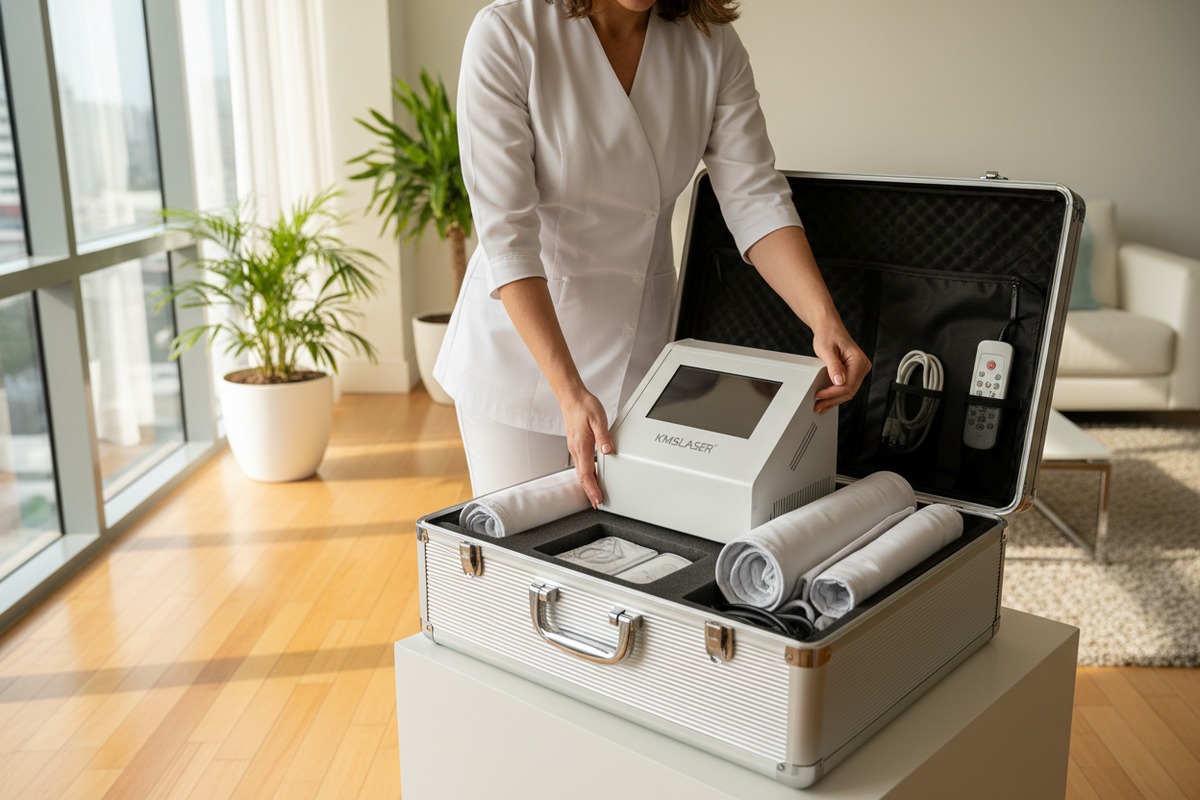
When we test new prototypes in our lab, we constantly simulate the heavy wear and tear a mobile therapist faces daily PCB-integrated air pumps 1. Moving equipment between clients is exhausting, and heavy gear only adds to the physical strain and logistical headaches.
To evaluate portability for South America, prioritize units under 3kg with dual voltage (110V/220V) capabilities to handle Brazil’s varied grid. Look for compact dimensions that fit in carry-on luggage and rechargeable battery options that last 2 hours, ensuring you can operate in remote locations without reliable power access.
Finding the right balance between power and weight is difficult, so let’s break down the specific features you need to check.
How do I determine if the pressotherapy machine’s weight is light enough for my daily travel?
In our shipping department, we weigh every component to ensure our partners do not pay for unnecessary air freight costs 2. We know that every extra kilogram translates to higher duties and more fatigue for the end-user.
You must look for a total system weight between 2kg and 3kg, excluding the cuffs, to ensure it is manageable for public transit or walking. Machines exceeding 5kg often require wheeled cases, which become impractical on uneven sidewalks or when climbing stairs in client homes without elevators.
The Real Cost of Heavy Equipment
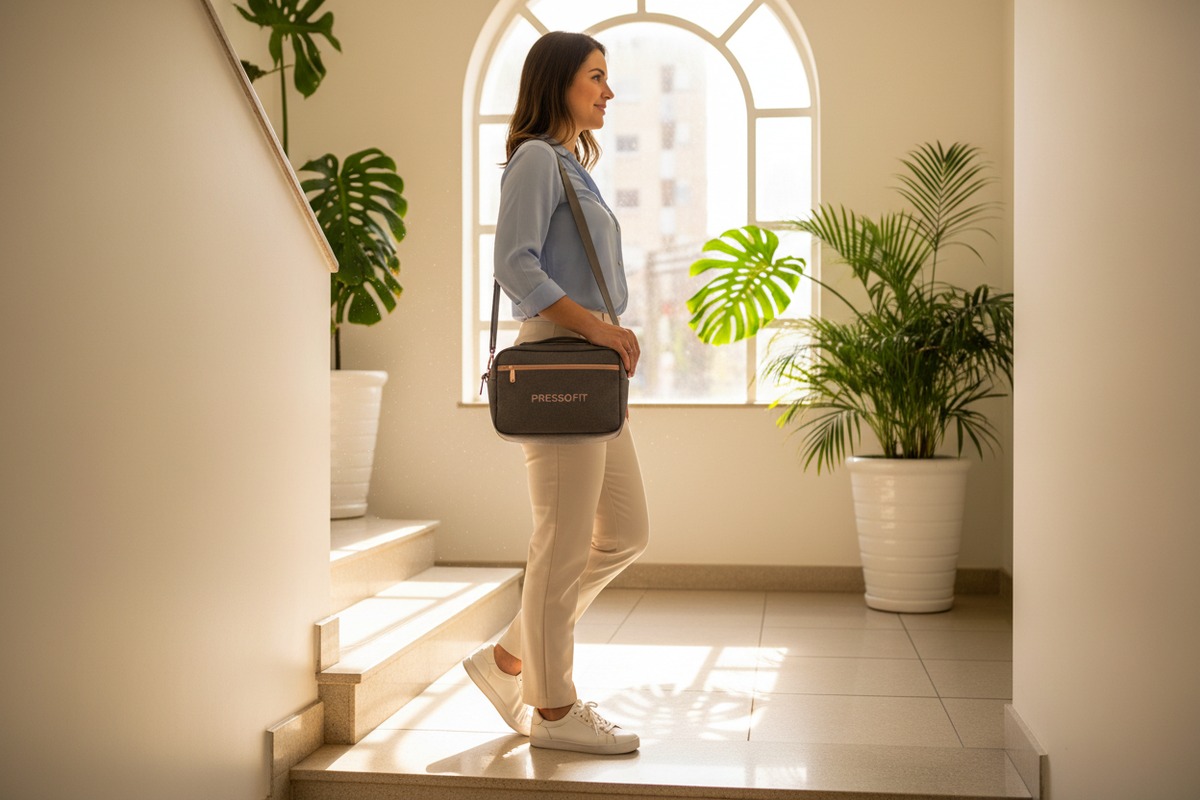
For a mobile therapist in a bustling city like São Paulo or Bogotá, the machine's weight is not just a number on a spec sheet; it defines your daily capacity. If you carry a 13kg clinic-style unit, you limit the number of clients you can visit before exhaustion sets in.
We recommend focusing on the "functional weight." This includes the main control unit, the power brick, and the essential hoses. Many older models use heavy metal internal valves. Modern portable units use lightweight solenoid valves 3 and PCB-integrated air pumps. This shift allows us to reduce the main unit weight to around 2.1kg without sacrificing pressure consistency.
Weight vs. Performance Trade-offs
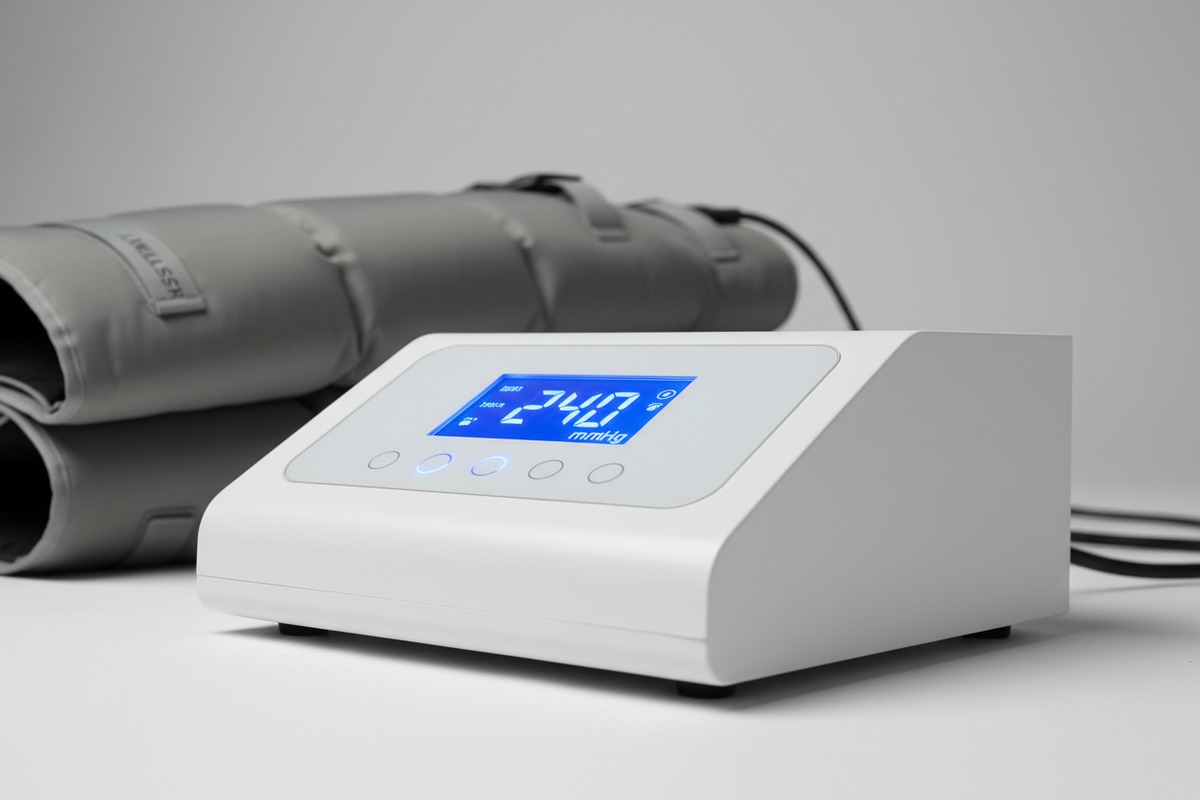
A common fear is that a lighter machine means weaker pressure. This is partially true if you compare it to massive hospital-grade systems. However, for aesthetic and sports recovery treatments, a portable unit generating 240mmHg is sufficient. The key is the pump efficiency, not the sheer mass of the motor.
Analyzing Weight for Travel Modes
Different travel modes in South America require different weight thresholds. If your therapists rely on ride-shares or personal cars, a 5kg unit is acceptable. If they use the metro or walk, anything over 3kg becomes a burden.
Comparison of Pressotherapy Machine Types
| Feature | Ultra-Portable Unit | Standard Mobile Unit | Clinic/Static Unit |
|---|---|---|---|
| Main Unit Weight | 1.8kg – 2.5kg | 3kg – 5kg | 10kg – 25kg |
| Cuff Weight (Set) | ~2.5kg | ~3kg | ~5kg (Heavy duty) |
| Transport Method | Backpack / Tote | Wheeled Case | Dedicated Cart |
| Best Use Case | Home visits, Sports events | Hotel spas, Salons | Fixed Clinic Location |
| Pressure Range | 30-240mmHg | 20-200mmHg | 20-250mmHg+ |
What features should I check to ensure the machine remains durable during transit across South America?
Our engineers rigorously drop-test casings because we understand that shipping boxes are often handled roughly during international transit. A machine that cannot survive the journey to the client won't last long in the field.
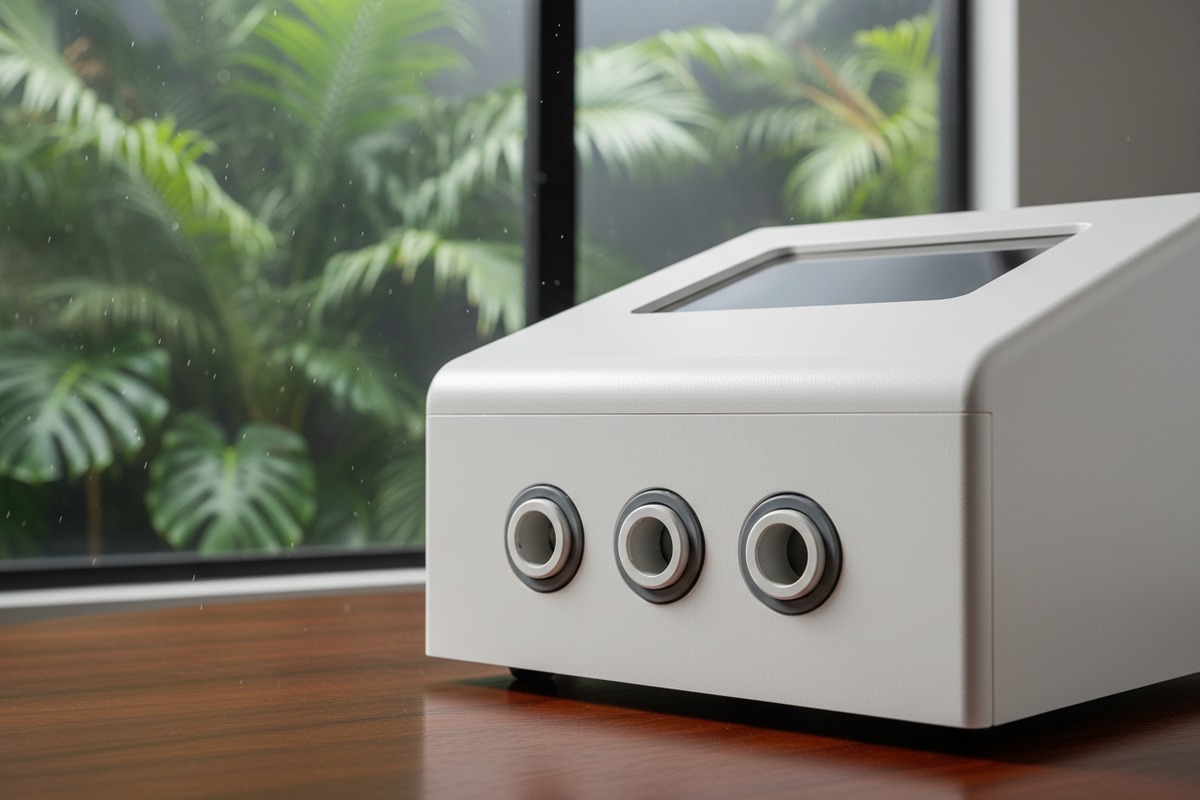
Prioritize machines built with high-grade ABS plastic rather than brittle standard polymers to withstand shocks from bumpy roads. Check for IP-rated sealed ports to protect internal circuits from the high humidity found in the Amazon region or the fine dust common in Andean areas.
Material Selection Matters
The outer shell of your pressotherapy device is its first line of defense. In our manufacturing process, we use ABS (Acrylonitrile Butadiene Styrene) 4 for portable units. ABS is impact-resistant and has a slight flexibility that prevents cracking under stress. This is crucial for mobile therapists traveling on unpaved roads or crowded buses in regions like Lima or La Paz.
Avoid machines with metal casings for mobile use. While metal seems strong, it dents easily. Once a metal case dents, it can press against internal pneumatic tubes, causing blockages or leaks.
Climate-Specific Durability
South America presents diverse environmental challenges.
- Humidity: In coastal Brazil or the Amazon basin, moisture is a killer for electronics. You need a machine with coated internal PCBs 5 (printed circuit boards) that resist corrosion.
- Dust: In drier, mountainous regions, fine dust can clog air intakes. Look for machines with accessible, washable air filters.
Internal Shock Absorption
It is not just about the outside. The internal air pump must be mounted on shock-absorbing rubber feet. If the pump is bolted directly to the chassis, vibrations from transit can loosen internal hose connections. When we assemble our portable series, we use silicone damping mounts. This reduces noise during operation and protects the motor from sudden jolts when the bag is dropped.
Durability Checklist for Mobile Therapists
| Component | What to Avoid | What to Look For | Why it Matters? |
|---|---|---|---|
| Outer Casing | Thin PVC or Metal | Thick ABS Plastic | Resists cracks and dents during travel. |
| Air Ports | Rigid plastic clips | Metal or Reinforced Quick-Connectors | Frequent connecting/disconnecting wears out plastic clips. |
| Power Cord | Fixed/Hardwired | Detachable C13/C14 Cable 6 | If a fixed cord breaks, the whole machine is down. Detachable cords are replaceable. |
| Screen | Glass Touchscreen | Soft-touch Membrane or Acrylic | Glass shatters easily; membrane buttons are durable and wipe-clean. |
How can I evaluate if the setup and breakdown time will fit into my busy mobile appointment schedule?
We time our assembly teams on the production floor to identify any slow steps in the connection process. If it takes our experts too long to connect the hoses, we know it will frustrate a therapist working in a client's living room.
Evaluate the connection system by looking for "quick-connect" plugs that attach all air chambers simultaneously rather than individual hoses. Ensure the software interface loads in under 10 seconds and offers "one-touch" preset modes to minimize programming time during short appointments.

The Economics of Setup Time
For a mobile therapist, time is inventory. If a session is booked for 60 minutes, spending 15 minutes on setup and breakdown reduces the treatment time to 45 minutes, or forces the therapist to extend the visit, making them late for the next client.
Efficient machines utilize a unified connector block 7. Instead of plugging in 6 or 8 individual hoses into the machine and the cuffs, you plug in one main block. This design feature alone can save 5-8 minutes per appointment.
Managing the "Spaghetti" of Hoses
One of the biggest frustrations in mobile pressotherapy is hose management.
- Integrated Hoses: Some advanced cuffs have air tubes integrated inside the fabric. This prevents tangling.
- Color Coding: If hoses are separate, they must be color-coded or numbered clearly at both ends.
- Wireless Options: While fully wireless battery boots exist, they often lack the power of a base unit. However, they reduce setup time to zero.
Software Responsiveness
Hardware is only half the battle. When you turn on the machine, does it require a complex password or a long boot-up sequence? Ideal software for mobile use should be "Instant On."
We recommend machines that recall the last setting. If a therapist treats clients with similar needs (e.g., post-workout recovery), they can simply power on and press start, rather than navigating three sub-menus every time.
Time Savings Analysis
| Setup Step | Traditional Machine Time | Optimized Mobile Machine Time | Savings per Client |
|---|---|---|---|
| Unpacking | 3 minutes | 1 minute (Custom Bag) | 2 min |
| Hose Connection | 4 minutes (Individual lines) | 30 seconds (Unified block) | 3.5 min |
| Boot & Program | 2 minutes | 30 seconds (Presets) | 1.5 min |
| Deflation/Packing | 5 minutes | 2 minutes (Active vacuum) | 3 min |
| Total Time | 14 minutes | 4 minutes | 10 minutes |
Does the manufacturer offer compact, private-label designs that I can easily transport to my clients?
When we collaborate with international brands, we often redesign the chassis to reduce wasted internal space for better shipping efficiency. We understand that a bulky housing not only costs more to ship but also looks unprofessional in a compact mobile setting.
Manufacturers can offer compact OEM designs by utilizing vertical internal stacking to reduce the footprint to the size of a lunchbox. Look for "white label" options that allow you to print your logo on backpack-friendly matte cases, ensuring a professional brand image during home visits.
Importance of Form Factor
In the B2B beauty industry, many "portable" machines are just shrunk-down versions of clinic models. They often retain awkward, boxy shapes that dig into your back when carried in a bag.
True mobile-first design features:
- Rounded corners: Prevents tearing the lining of carrying bags.
- Recessed handles: Allows for easy grabbing without protruding parts that break.
- Vertical orientation: Takes up less space on a client's cluttered bedside table.
Private Labeling for Mobile Credibility
If you are distributing these machines to therapists in South America, branding is vital. A generic machine looks like a cheap import. A branded machine builds trust.
For compact designs, we often use pad printing 8 or UV printing for logos because it is durable and does not peel off like stickers. Since mobile machines are handled frequently, the branding method must be abrasion-resistant.
Logistics: The Hidden Cost of Volume
Shipping to South America involves high freight costs and complex import duties, especially in Brazil and Argentina. Couriers like DHL or FedEx charge based on "volumetric weight" (Length x Width x Height / 5000), not just actual weight.
If a manufacturer sells you a machine that is light (3kg) but comes in a huge box with Styrofoam padding, you will pay for 8kg or 10kg of freight. We focus on high-density foam packaging that hugs the device tightly, minimizing the box size. This can save $30-$50 per unit in shipping costs alone.
Customization Options for Portability
| Customization Feature | Benefit for Mobile Therapist | Manufacturer Requirement |
|---|---|---|
| Carry Bag Integration | Machine fits perfectly; professional look. | MOQ (Minimum Order Quantity) usually 100+ units. |
| Logo on Casing | Brand recognition during house calls. | Low MOQ (often 10-50 units). |
| Custom Voltage (Dual) | Works in any building (old/new) or city. | Standard in export models (ensure switchable). |
| Compact Housing Mold | Fits in standard backpacks; easier travel. | High MOQ for new molds; choose existing compact stock models. |
Conclusion
Evaluating pressotherapy portability requires looking beyond just the kilogram count. You must assess the durability of the casing, the efficiency of the setup process, and the logistics of shipping compact designs to South America. By prioritizing features like dual voltage, unified hose connectors, and shock-resistant ABS materials, you ensure that your mobile therapists can deliver high-quality treatments anywhere, from high-rise apartments to remote wellness retreats, without equipment failure holding them back.
Footnotes
1. Provides information on miniature solenoid valves and their integration in compact devices. ↩︎
2. Explains factors and calculation of international air freight expenses. ↩︎
3. This article directly discusses lightweight plastic solenoid valve bodies, which is highly relevant to the original anchor text and context. ↩︎
4. Wikipedia provides a comprehensive and authoritative overview of Acrylonitrile Butadiene Styrene (ABS) plastic, including its properties and uses. ↩︎
5. Explains conformal coating for PCBs, enhancing durability against environmental factors. ↩︎
6. Explains the differences and uses of C13 and C14 power cords. ↩︎
7. Describes manifold bases for consolidating pneumatic valve connections in systems. ↩︎
8. Defines pad printing as an indirect offset process for 3D objects. ↩︎

 English
  Español de México
  Deutsch
  Français
  العربية
  Русский