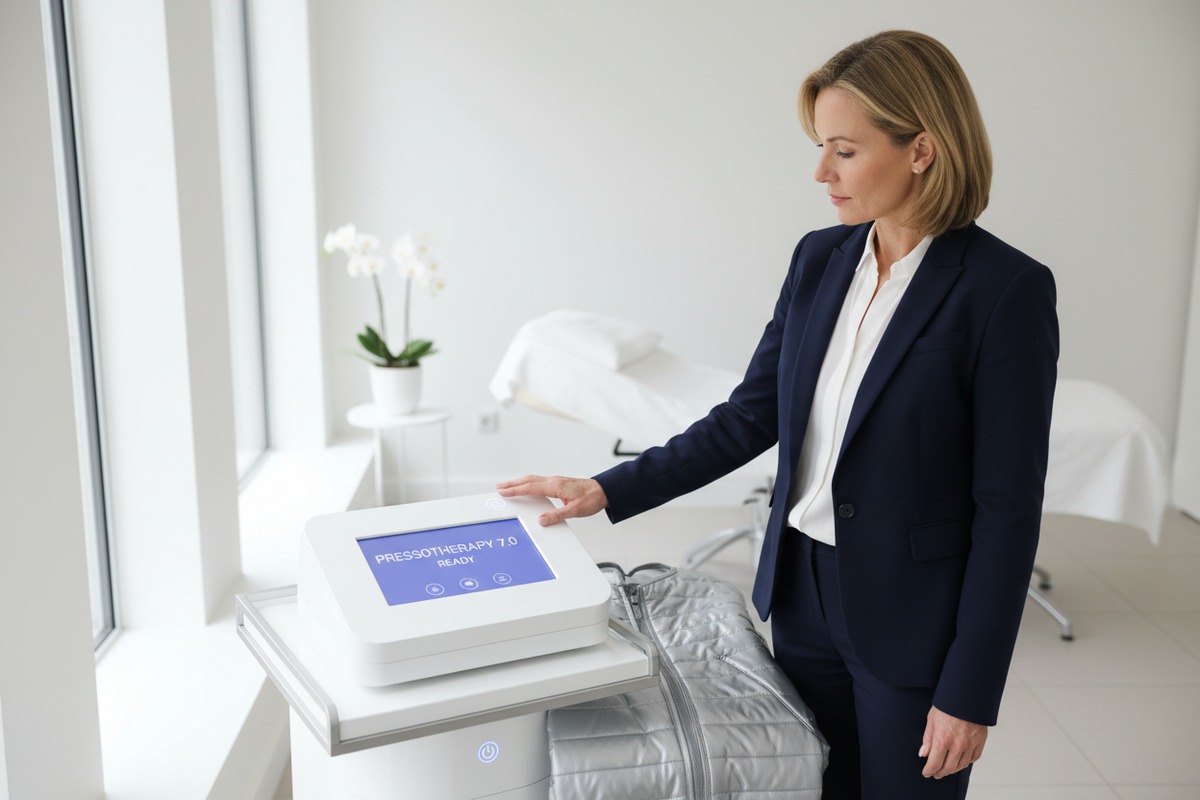
Working on our production floor in Guangzhou, we often hear the same concern from European salon buyers: “How do I know this pressotherapy model will actually sell well?” It is a fair question. With so many options flooding the market, picking the wrong machine means wasted capital and frustrated clients.
To evaluate pressotherapy machine popularity for European salons, focus on four key areas: tracking feature trends like high-chamber counts and infrared add-ons, analyzing regional market data for demand growth, verifying supplier sales claims through certifications and client references, and ensuring customization options align with your high-end brand positioning.
Let me walk you through the exact framework we use when advising our brand partners on which pressotherapy models to source infrared thermotherapy 1. This guide covers everything from identifying trending features to verifying supplier credibility.
How do I identify which pressotherapy features are currently trending among my European salon clients?
Our engineers regularly analyze feedback from European distributors to understand what features drive repeat orders AI-driven pressure adjustments 2. Many buyers underestimate how quickly feature preferences shift in this market. Miss the latest trend, and your inventory sits unsold CE certification documentation 3.
The most in-demand pressotherapy features for European salons in 2025 include machines with 18-20 air chambers for even pressure distribution, multi-technology integration combining pressotherapy with EMS and infrared thermotherapy, AI-driven pressure adjustments, and user-friendly interfaces with preconfigured treatment modes.

Why Air Chamber Count Matters
Salon owners increasingly favor machines with higher chamber counts ISO 13485 compliance 4. A machine with 20 air chambers delivers more even compression than one with 8 or 12 chambers. This difference shows in treatment results.
European salons particularly value this because their clients expect visible improvements within 3-4 sessions Medical Device Regulation (MDR 2017/745) 5. Uneven pressure from low-chamber machines often leads to inconsistent results and client complaints.
The Rise of Multi-Function Machines
Single-function pressotherapy devices are becoming less popular. Modern European salons prefer machines that combine multiple technologies in one unit.
| Feature Combination | Benefits | Market Adoption Rate |
|---|---|---|
| Pressotherapy + Infrared (40-50°C) | Enhanced fat reduction, skin elasticity | High |
| Pressotherapy + EMS | Muscle toning, body contouring | Growing |
| Pressotherapy + Thermotherapy | Deep tissue warming, relaxation | Moderate |
| Standalone Pressotherapy | Basic lymphatic drainage | Declining |
Smart Technology Integration
AI-driven devices now dominate the premium segment. These machines can adjust pressure in real-time based on client feedback and treatment progress. Our R&D team has noticed a clear shift toward smart operating systems that support multiple languages and allow for customized treatment protocols.
What European Salons Actually Order
Based on orders we process for European markets, here are the specifications that sell best:
- Pressure range: 240-260 mmHg maximum
- Air chambers: 18-20 minimum
- Treatment areas: Full body coverage (legs, arms, abdomen)
- Additional features: Infrared heating, preset programs
- Interface: Touchscreen with intuitive controls
What data points should I use to measure the market demand for pressotherapy in my target European regions?
When we advise distributors on market entry, we always start with concrete data. Gut feelings do not cut it when you are investing in inventory. The wrong assumptions about demand can leave you with unsold machines.
Key data points for measuring European pressotherapy demand include market size projections (the European market is valued at approximately $198 million in 2025 with a 6.55% CAGR), regional adoption rates in Germany, France, UK and Italy, specialty clinic versus spa adoption ratios, and treatment application trends favoring veno-lymphatic circulation and cellulite reduction segments.

Market Size and Growth Projections
The numbers tell a clear story. The global pressotherapy systems market 6 is experiencing robust growth driven by demand for non-invasive therapies.
| Market Metric | 2024 Value | 2025 Value | 2033 Projection | CAGR |
|---|---|---|---|---|
| Global Market | ~$250 million | ~$705 million | ~$1.25 billion | 6.55% |
| European Market | N/A | ~$198 million | Growing | 6.55% |
| European Market Share | N/A | 28.1% | Stable | N/A |
Regional Breakdown Within Europe
Europe is not a single market. Each country has different adoption patterns.
Germany and UK lead in market value. France and Italy have strong manufacturing traditions. Over 45% of wellness clinics in Germany now offer pressotherapy as part of body-contouring and lymphatic drainage services. This shows deep market penetration in the wellness sector.
Application Segment Analysis
Understanding which treatments drive demand helps you choose the right machine specifications.
The veno-lymphatic circulation 7 application captured about 29.6% share of market volume. This includes treatments for chronic venous insufficiency and lymphedema. However, the cellulite reduction segment is expected to grow the fastest due to increasing demand for aesthetic treatments.
End-User Categories
Different buyers have different needs. Here is how demand breaks down:
| End-User Type | Market Position | Growth Trend |
|---|---|---|
| Specialty Clinics | Largest share | Stable |
| Hospitals | Significant | Moderate growth |
| Medical Spas | Emerging | Fast growth |
| Wellness Centers | Expanding | Fast growth |
How to Use This Data
When sourcing machines, match specifications to the dominant applications in your target region. If you sell primarily to aesthetic spas, prioritize cellulite reduction features. If your clients are medical clinics, focus on veno-lymphatic capabilities.
Europe remains a crucial hub for device innovation and research, with over 35% of total product patents globally originating from this region. This means European buyers expect cutting-edge technology.
How can I verify that a Chinese supplier's pressotherapy model is actually selling well in the European market?
This is the question we hear most often from new partners. When we started our export business, we saw many competitors making bold claims about their machines' European success. Many turned out to be exaggerated. Here is how to separate fact from fiction.
Verify a Chinese supplier's European sales claims by requesting CE certification documentation and ISO 13485 compliance, asking for verifiable references from European distributors, examining export records to EU countries, checking for Medical Device Regulation (MDR 2017/745) compliance, and requesting real client testimonials with contact information for follow-up verification.

Certification Is Non-Negotiable
Any machine entering the European market must have proper certifications. Without them, the supplier cannot legally sell in Europe, which means their "European sales" claims are false.
| Certification | Purpose | Required For |
|---|---|---|
| CE Marking | EU safety, health, environmental compliance | All EU sales |
| ISO 13485 | Quality management for medical devices | Professional-grade equipment |
| MDR 2017/745 | Medical Device Regulation compliance | Medical applications |
| ISO 9001 | General quality management | Manufacturing standards |
When we prepare machines for European clients, we ensure all necessary certifications are in place before shipment. A reputable supplier should provide these documents without hesitation.
Red Flags to Watch For
In our experience, certain behaviors indicate a supplier may be exaggerating their market success:
- Vague responses when asked about specific European clients
- Unable to provide certification documentation quickly
- No references you can actually contact
- Pricing that seems too low for the claimed quality
- No after-sales support infrastructure for European time zones
Verification Steps That Work
Here is the process we recommend:
Step 1: Request Documentation
Ask for CE certificates, ISO certifications, and test reports. These should be current and verifiable.
Step 2: Ask for Specific References
A supplier with genuine European sales should be able to provide contact information for at least 2-3 distributors or salon clients in Europe.
Step 3: Check Export History
Ask which European countries they have exported to. Legitimate suppliers should be able to name specific countries like Germany, France, Italy, Spain, Netherlands, and provide approximate volumes.
Step 4: Evaluate Technical Support
Does the supplier offer technical support compatible with European time zones? Without proper support, even good machines will generate complaints.
Sample Evaluation Checklist
Use this checklist when evaluating suppliers:
| Evaluation Criteria | Verified? | Notes |
|---|---|---|
| CE marking valid and current | ☐ | Check expiry date |
| ISO 13485 certified | ☐ | Manufacturing quality |
| Provides European client references | ☐ | Must be contactable |
| Has exported to EU before | ☐ | Ask for country list |
| Offers EU-compatible technical support | ☐ | Time zone coverage |
| Warranty terms clearly stated | ☐ | Minimum 1-2 years |
| Spare parts availability | ☐ | Critical for commercial use |
Using uncertified equipment could result in legal repercussions and damage to salon reputations. For businesses such as spas, salons, and physical therapy centers, proper certification protects both the buyer and their end clients.
Can I customize the design of a popular pressotherapy model to better suit my high-end brand positioning?
Many of our long-term partners started with this exact question. They found a machine with the right specifications but needed it to reflect their premium brand identity. Our production line handles these customization requests regularly.
Yes, reputable Chinese manufacturers offer extensive OEM/ODM customization for pressotherapy machines. Customization options typically include branded logo placement on machine body and screen display, custom interface design with your brand colors and language settings, modified housing colors and materials, custom packaging, and even functional parameter adjustments to match your treatment protocols.

Understanding OEM vs ODM Options
The level of customization depends on which service model you choose.
| Service Type | What You Get | Investment Level | Timeline |
|---|---|---|---|
| OEM (Original Equipment Manufacturing) | Full custom design based on your specifications | Higher | Longer |
| ODM (Original Design Manufacturing) | Existing design with branding customization | Lower | Shorter |
| Private Label | Standard product with your logo added | Lowest | Fastest |
Customization Options We Commonly Provide
When European brand owners work with our team, here are the typical customization areas:
Visual Branding
- Logo placement on machine body
- Screen display with your brand elements
- Custom color schemes for housing
- Branded packaging design
Interface Customization
- Multiple language support (English, French, German, Spanish, Italian)
- Custom user interface design matching your brand identity
- Preset treatment programs tailored to your protocols
- Touch screen interaction optimization
Functional Modifications
- Pressure range adjustments
- Treatment mode customization
- Integration with salon management software
- Timer and session length settings
The Customization Process
Here is how the typical customization project flows:
Phase 1: Requirements Gathering
You provide detailed specifications, brand guidelines, and any sketches or design concepts. The more detail you give, the better the final result.
Phase 2: Prototype Development
Our design team develops prototypes based on your requirements. This includes both visual mockups and functional samples.
Phase 3: Review and Refinement
You review the prototype and request any changes. Most projects require 2-3 revision rounds to perfect the design.
Phase 4: Production and Quality Control
Once approved, we move to mass production with weekly progress updates. Each batch undergoes quality inspection before shipment.
Cost Considerations for Customization
Customization adds cost, but the investment often pays off through higher margins on your branded products.
| Customization Level | Typical Additional Cost | MOQ Impact |
|---|---|---|
| Logo and packaging only | 5-10% | Minimal |
| Interface customization | 10-20% | Moderate |
| Housing redesign | 20-40% | Higher MOQ required |
| Full OEM development | 40%+ | Significant MOQ |
Making Customization Work for High-End Positioning
To justify premium pricing, your customized machine should include elements that clearly differentiate it from standard models:
- Premium materials for the compression suit
- Exclusive treatment programs not available elsewhere
- Superior user interface design
- High-quality packaging with premium unboxing experience
- Comprehensive documentation and training materials
OEM medical devices empower healthcare companies with the flexibility to customize equipment, aligning seamlessly with their brand identity and specific requirements.
Conclusion
Evaluating pressotherapy machine popularity 8 for European salons requires a systematic approach. Focus on trending features like high-chamber counts 9 and multi-technology integration. Use concrete market data to validate demand in your target regions. Always verify supplier claims through certifications and references. And work with a manufacturer who can customize designs to match your brand positioning.
Footnotes
1. Details the health benefits of infrared heat therapy, including pain relief and improved circulation. ↩︎
2. Discusses the transformative role of AI in aesthetic medicine, including personalized treatments. ↩︎
3. Outlines the definition, requirements, and process for obtaining CE marking for medical devices in the EU. ↩︎
4. Describes ISO 13485 as the harmonized standard for quality management systems in the medical device industry. ↩︎
5. Replaced with an authoritative page from TÜV Rheinland, a Notified Body, explaining the EU Medical Device Regulation (MDR 2017/745). ↩︎
6. Offers an overview of the global pressotherapy systems market size and growth drivers. ↩︎
7. Explains pressotherapy’s role in promoting proper lymphatic and venous circulation. ↩︎
8. Provides market size, growth, and trends for pressotherapy systems globally. ↩︎
9. Explains how the number of chambers impacts the effectiveness and comfort of air compression therapy. ↩︎

 English
  Español de México
  Deutsch
  Français
  العربية
  Русский