

When we design pressotherapy systems for clients in tropical regions or busy spas with steam rooms, we often see standard machines fail within months due to invisible moisture damage conformal coated PCBs 1. This frustration drives our engineering team to implement strict protection protocols that go beyond basic assembly. If you do not account for humidity, you risk frequent breakdowns and angry customers IPX rating reports 2.
To evaluate moisture resistance, verify the machine has conformal coated PCBs, corrosion-resistant ABS or stainless steel chassis, and sealed pneumatic connectors. Request IPX rating reports (ideally IPX1 or higher) and demand proof of 72-hour humidity chamber testing to ensure durability in environments exceeding 60% relative humidity.
Let’s look at the specific components and processes you need to check to ensure your investment lasts salt spray test report 3.
How can I verify that the internal circuit boards are treated for high-humidity salon environments?
We have seen many competitors' machines short-circuit because their control boards lack protection against the condensation typical in steam-filled spa rooms Hydrolysis-Resistant TPU 4. Our engineers prioritize sealing these delicate components to prevent the "silent killer" of electronics: oxidation.
Verify internal circuit board protection by asking for macro photos showing a glossy, uneven finish on the PCB, which indicates the presence of conformal coating. You should also request a salt spray test report for the electronics, which proves the board can withstand corrosive, humid air without shorting or corroding.
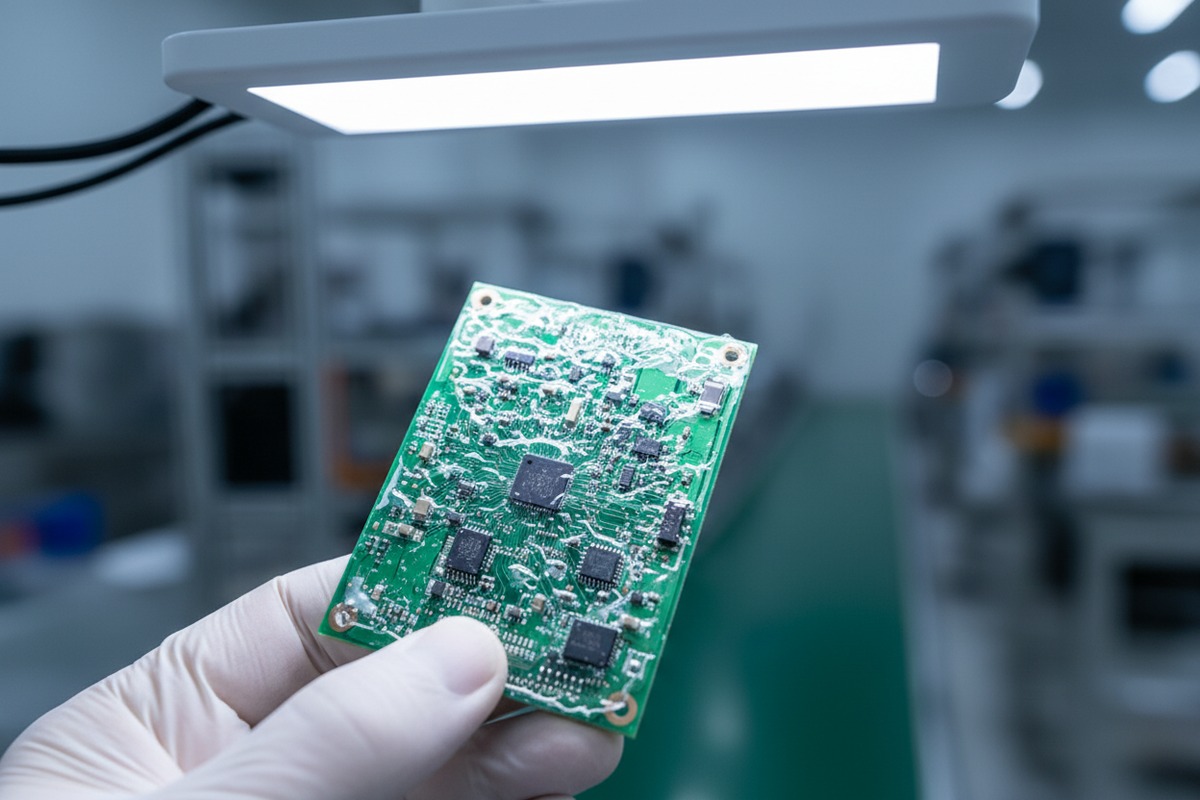
The heart of your pressotherapy machine is the Printed Circuit Board (PCB) 5. In a salon environment, humidity levels often fluctuate drastically. When the machine cools down after use, moisture in the air can condense on the internal electronics ISO 13485-compliant checklists 6. If the PCB is untreated, this water causes short circuits or long-term corrosion that destroys the copper pathways.
The "Glossy" Visual Test
You do not need to be an engineer to check this. Ask your supplier to open the casing of a sample unit or send high-resolution photos of the motherboard VCI (Volatile Corrosion Inhibitor) bags 7. You are looking for a thin, transparent layer that looks like clear nail polish over the chips and solder points. This is conformal coating.
If the board looks dry, matte, and dusty, it is likely untreated. An untreated board is a ticking time bomb in a humid climate. The coating acts as a raincoat for the electronics, repelling moisture, dust, and even mold growth.
Ask for the Right Materials
Not all coatings are equal. We recommend asking specifically if the supplier uses acrylic or silicone-based coatings. Silicone is superior for high-temperature fluctuations, while acrylic is easier to repair.
Here is a comparison of common board treatments you might encounter:
| Treatment Type | Moisture Resistance | Repairability | Recommendation |
|---|---|---|---|
| No Coating | Very Poor | High | Avoid for Spa Use |
| Acrylic Coating | Good | Easy | Standard Protection |
| Silicone Coating | Excellent | Difficult | Best for High Humidity |
| Epoxy Potting | Extreme | Impossible | Overkill (Heavy/Expensive) |
The UV Light Check
If you visit the factory or have a UV light handy, shine it on the board. Professional conformal coatings usually contain a UV tracer that glows blue or purple. This allows quality control staff to confirm that the coating covers 100% of the surface. If you see dark spots, the protection is incomplete.
What anti-corrosion materials should I demand for my pressotherapy machine's chassis and connectors?
In our factory, we switched from standard iron screws to stainless steel after noticing rust spots on units returned from coastal clinics. Using the wrong materials on the exterior can lead to cosmetic degradation and mechanical failure surprisingly fast.
Demand a chassis made from industrial-grade ABS plastic or powder-coated aluminum, which resists rust better than painted steel. For connectors, insist on 304 stainless steel or gold-plated contacts, and ensure air tubing uses hydrolysis-resistant TPU rather than standard silicone that degrades in moisture.

The material choice determines whether your machine looks premium or cheap after a year of use. In humid environments, oxidation attacks any exposed metal.
Chassis Materials: Plastic vs. Metal
Many high-end machines now use ABS (Acrylonitrile Butadiene Styrene) plastic for the main casing. While some buyers perceive plastic as "cheap," high-grade ABS is actually superior for moisture resistance. It does not rust, it is non-conductive (safer for electrical devices), and it is easy to clean.
If you prefer a metal look, insist on anodized aluminum or 304 stainless steel. Avoid "painted iron" or "galvanized steel" chassis. Even a small scratch in the paint will allow rust to spread underneath, causing the paint to bubble and peel.
The Connector Crisis
The air connectors where the tubes attach to the machine are critical points of failure.
- Plastic Connectors: These are generally safe from corrosion but can crack if they become brittle.
- Metal Connectors: You must demand Stainless Steel 304 or Chrome-plated Brass.
- Risk: If the supplier uses cheap iron alloys, the moisture from the compressed air will rust the connectors from the inside out. This rust eventually blocks the airflow, reducing the pressure and effectiveness of the treatment.
Tubing Material Matters
The air tubes themselves are vulnerable. In high humidity, standard polyurethane (PU) tubing can suffer from hydrolysis, where water molecules break down the polymer chains. The tube becomes sticky, cloudy, and eventually cracks.
Demand Hydrolysis-Resistant TPU (Thermoplastic Polyurethane). It costs more but remains flexible and clear for years, even in tropical climates.
| Component | Standard Material (Avoid) | Recommended Material (Select) | Why? |
|---|---|---|---|
| Main Casing | Painted Mild Steel | Industrial ABS Plastic | No rust, electrical safety. |
| Screws | Zinc-plated Iron | 304 Stainless Steel 8 | Prevents rust streaks. |
| Air Plugs | Nickel-plated Iron | Chrome-plated Brass | Resists internal corrosion. |
| Air Tubing | Standard PU | Ether-based TPU | Resists hydrolysis/cracking. |
How do I assess a supplier's quality control standards for moisture resistance during the manufacturing process?
Our production line integrates humidity chambers because spot-checking finished units is never enough to guarantee longevity in a busy, steamy salon. We know that if we do not stress-test the machine at the factory, the environment will do it for us later.
Assess quality control by requesting video evidence of the aging test performed in a high-humidity chamber (80-90% RH). Additionally, ask for the factory’s SOPs regarding airbag airtightness checks under wet conditions and verify they use ISO 13485-compliant checklists for seal integrity before final assembly.

A supplier can promise you the best materials, but if their assembly process is sloppy, moisture will find a way in. You need to verify that their Quality Control (QC) process specifically targets environmental stress.
The Aging Room Test
Every reputable manufacturer has an "Aging Room." This is a dedicated area where machines run continuously for 24 to 72 hours before packaging. However, for moisture resistance, the room must be more than just shelves.
- Ask: "Do you control humidity in your aging room?"
- Look for: A hygrometer in their photos/videos showing 60% RH or higher.
- Why: Running the machine generates heat. If the ambient air is humid, this heating and cooling cycle during the test will expose weak solder joints or bad seals immediately.
Airtightness Under Stress
Pressotherapy suits (airbags) are manually welded. A tiny pinhole might not leak at first but will burst open when the material is damp and warm.
- The Dunk Test: Ask if they perform water immersion tests for the airbags. Submerging the inflated airbag in water (like checking a tire) is the only way to see micro-leaks.
- Pressure Decay: The machine should be able to hold pressure (e.g., 200 mmHg) for 5 minutes without dropping more than 5 mmHg. Ask for the QC data log for your specific batch.
Checklist for Your Audit
When you evaluate a supplier, send them this checklist. Their ability (or refusal) to provide this data tells you everything about their quality standards.
| QC Step | Standard Process | High-Quality Process (Moisture Resistant) |
|---|---|---|
| PCB Inspection | Visual check | UV Light Check for Conformal Coating |
| Aging Test | 4 hours, room temp | 48+ hours, high humidity simulation |
| Airbag Test | Inflation only | Pressure decay test + visual seam check |
| Final Clean | Air blow | Alcohol wipe + Seal inspection |
If a supplier says they do "100% inspection," dig deeper. Ask how they inspect. A visual glance is not enough. You need data.
What protective packaging measures will keep my machines safe from moisture during long-distance sea freight?
We learned the hard way that ocean freight creates "container rain," so we now double-seal every carton before it leaves our warehouse. The journey from China to the US or Europe can expose your cargo to extreme temperature swings that create water inside the box.
Protect your machines by demanding VCI (Volatile Corrosion Inhibitor) bags or thick PE plastic wraps that seal the unit completely. Ensure the supplier places high-absorption silica gel desiccant packs inside the wrapping and uses a double-wall corrugated carton to prevent external moisture penetration during sea transit.

The ocean is a harsh environment. During a 30-day voyage, the temperature inside a shipping container can swing from 60°C (140°F) in the day to freezing at night. This cycle causes "Container Rain"—condensation that forms on the roof of the container and drips down onto your boxes. Even if the container doesn't leak, the moisture is already in the air inside.
The Inner Defense: VCI Bags
Standard plastic bags are not enough; they trap moisture inside. You should ask for VCI (Volatile Corrosion Inhibitor) bags. These bags release molecules that settle on metal surfaces and form a protective shield against rust. If VCI is too expensive for your budget, demand thick (at least 0.08mm) PE bags that are heat-sealed, not just taped shut.
Desiccants: The Moisture Trap
Throwing a tiny packet of silica gel into the box is useless for a large machine.
- Quantity: For a pressotherapy machine, you need large desiccant bags (50g to 100g size).
- Placement: They must be inside the plastic bag with the machine. If they are just loose in the cardboard box, they will saturate instantly and stop working.
- Type: Calcium chloride desiccants absorb 300% of their weight in moisture, far superior to standard silica gel (which only absorbs 30%).
The Outer Shield: Carton Quality
Cardboard acts like a sponge. Once it gets wet, it loses structural integrity, and your machines will get crushed.
- Requirement: Double-wall or triple-wall corrugated cardboard (5-layer or 7-layer).
- Strapping: Plastic straps around the box help hold it together even if the cardboard softens slightly.
- Palletizing: If you are buying in bulk, insist that the boxes are shrink-wrapped together on a plastic (not wood) pallet. Wood pallets contain moisture that can evaporate into your boxes.
Packaging Checklist for Your Purchase Order (PO)
Include these requirements in your PO terms:
- Device sealed in heat-sealed PE bag or VCI bag.
- Minimum 100g desiccant inside the sealed bag.
- Outer carton: 7-layer corrugated cardboard.
- No wooden pallets (or fumigated/dry wood only).
Conclusion
Evaluating moisture resistance is not about checking a single feature; it requires a holistic review of materials, electronics protection, manufacturing QC, and packaging. By enforcing these standards—conformal coatings, stainless materials, and strict aging tests—you ensure your pressotherapy machines withstand the humid reality of salon environments, protecting your reputation and bottom line.
Footnotes
1. Explains what conformal coating is and its benefits for protecting PCBs from environmental factors. ↩︎
2. Defines the IPX rating system for electronic device water resistance and explains its numerical values. ↩︎
3. Describes the ASTM B117 standard for salt spray testing, a common method for corrosion assessment. ↩︎
4. Explains the properties of polyether-based TPU, including its excellent hydrolysis resistance for wet applications. ↩︎
5. Provides a comprehensive definition and overview of what a Printed Circuit Board is. ↩︎
6. Outlines ISO 13485 as a quality management system standard for medical device manufacturers and suppliers. ↩︎
7. Defines VCI packaging and how VCI bags protect metals from corrosion during storage and shipping. ↩︎
8. Authoritative and comprehensive information on 304 stainless steel, its composition, and properties. ↩︎

 English
  Español de México
  Deutsch
  Français
  العربية
  Русский