When our production line first started assembling pressotherapy systems 1 over a decade ago, we saw many spa owners struggle with one thing: choosing the right machine that actually fits their business. Some bought cheap units that broke after weeks. Others overpaid for features they never used. The real pain? Lost revenue, frustrated clients, and a treatment menu that felt incomplete.
To properly evaluate a pressotherapy machine, you should assess its technical specifications (chamber count, pressure range, build quality), determine how it enhances your existing body contouring services, verify the supplier’s OEM branding capabilities and performance track record, and confirm the manufacturer’s quality control and logistics support to prevent inventory delays.
In this guide, we will walk through each of these evaluation factors step by step OEM branding capabilities 2. Whether you are expanding your spa’s services or replacing outdated equipment, this will help you make a smart, confident decision.
Every week, our engineers test dozens of pressotherapy components before they go into production. We have seen what separates a professional-grade machine from a cheap knockoff. The difference often comes down to a few key specs that many buyers overlook—until problems arise.
To assess if a pressotherapy machine meets premium brand standards, examine the chamber count (24 chambers is the gold standard), verify pressure accuracy via direct pneumatic reading, check the pressure range (ideally 20–160 mmHg or higher), evaluate air tube mounting durability, and inspect suit material quality for long-term professional use.

Chamber Count Matters More Than You Think
The number of air chambers directly affects treatment quality. A versatile 24-chamber compression suit with adjustable settings is considered essential for massage therapists, body contouring experts, and med spa professionals. Entry-level machines with fewer chambers simply cannot deliver the same even pressure distribution.
Here is what you need to know:
| Chamber Count 3 | Best For | Pressure Distribution |
|---|---|---|
| 8–12 chambers | Home use, basic treatments | Uneven, gaps between zones |
| 16–20 chambers | Entry-level professional | Moderate coverage |
| 24+ chambers | Premium professional use | Optimal, full-body coverage |
Pressotherapy uses accessories and 20 air bags (10 pairs on each side) to apply periodic or overall pressure to the entire body or specific areas. However, for true premium results, 24 chambers remain the benchmark.
Pressure Range and Accuracy
A machine is only as good as its pressure control. Quality devices support chamber cuffs with 4 modes of operation and generate pressure in the range of 20–220 mmHg. This flexibility lets you customize treatments for different client needs—from gentle lymphatic drainage 4 to intensive muscle recovery.
Our quality control team always checks whether the displayed pressure matches the actual pressure applied. This is non-negotiable for clinical applications. Premium IPC devices are equipped with compression sensors that monitor the applied pressure and provide feedback to ensure the device functions correctly and applies the desired pressure.
Build Quality Indicators
For facilities planning regular client use, material quality ensures durability and comfort. Look for:
- Double-layered elastic suits that resist wear
- Stationary air tube mounting (not removable) for long-term reliability
- High-quality nylon or elastic materials for the compression garments
Materials made from high-quality nylon fabric are comfortable, breathable, easy to clean, and durable for long-term use.
Safety Certifications to Verify
| Certification | What It Means | Priority Level |
|---|---|---|
| CE Mark | European safety standards | Essential |
| FDA Clearance 5 | US market compliance | Essential for US sales |
| ISO 13485 6 | Medical device quality management | Highly recommended |
| RoHS | Restricted hazardous substances | Standard |
Leading manufacturers place a high value on quality, following the ISO13485 quality system and abiding by certifications held by the FDA, CE, RoHS, MSDS, and FCC.
From our experience working with distributors across the US and Europe, we have seen spas transform their revenue by adding pressotherapy—but only when it fits their existing service lineup. The wrong machine for the wrong menu is just expensive furniture.
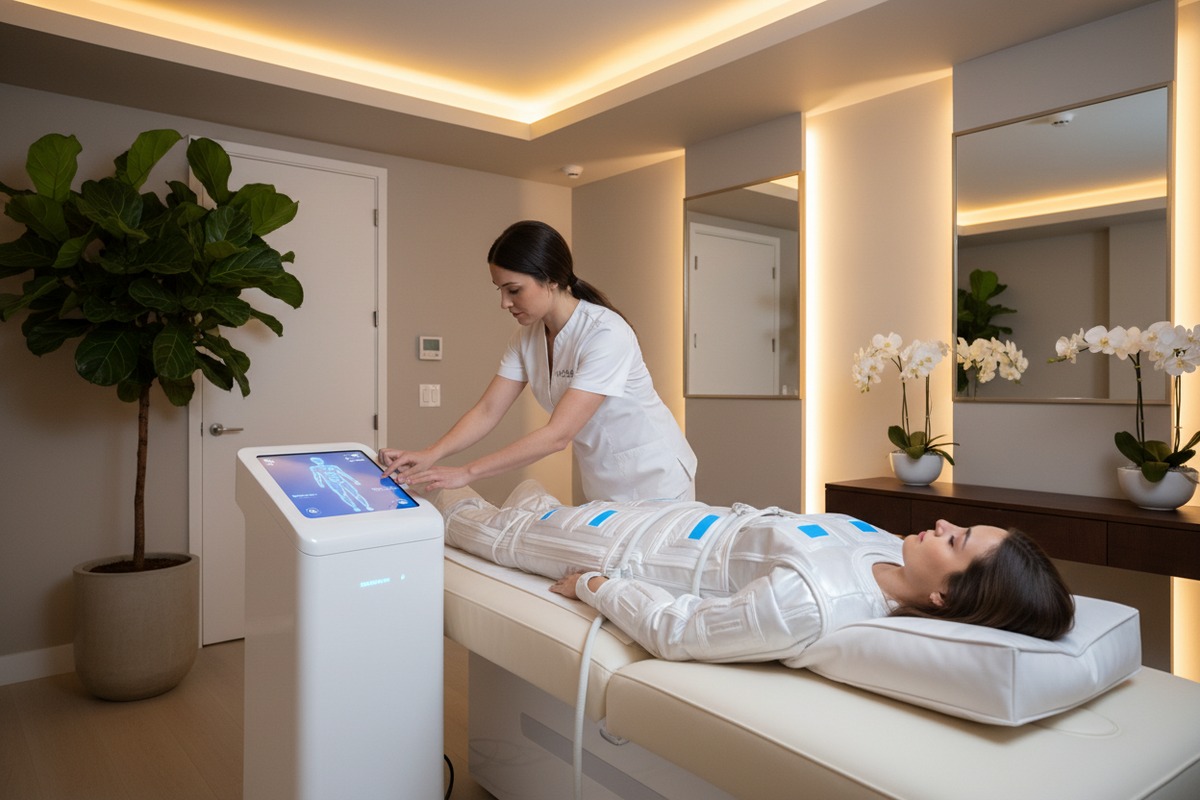
Adding pressotherapy enhances your body contouring menu when it complements existing treatments like cavitation, RF, or cryolipolysis, addresses unmet client needs such as lymphatic drainage and post-procedure recovery, and offers versatile functions like EMS or infrared that expand treatment options without requiring additional equipment investments.
Identifying Service Gaps
Before purchasing, audit your current treatment menu. Ask yourself:
- Do you offer post-cavitation or post-cryolipolysis recovery treatments?
- Are clients asking for lymphatic drainage or detox services?
- Can you provide muscle recovery for athletic clients?
With the help of other technologies like lipoaser, cryo slimming, and vacuum therapy, the possible benefits of pressotherapy can be optimized creating the best possible results.
Complementary Treatment Positioning
Pressotherapy works best as part of an integrated protocol, not a standalone service. Here is how it pairs with common treatments:
| Existing Treatment | How Pressotherapy Enhances It | Recommended Protocol |
|---|---|---|
| Cavitation | Accelerates fat elimination | Pressotherapy immediately after cavitation |
| RF Skin Tightening | Improves circulation, boosts results | Alternate sessions |
| Cryolipolysis | Reduces swelling, speeds recovery | 2–3 days post-cryo |
| Manual Massage | Consistent pressure, less staff fatigue | Supplement or replace |
The technology helps to increase the effects of cavitation and RF treatments and helps to reduce weight if used periodically.
Multi-Function Machines Expand Your Options
Modern pressotherapy systems often include additional technologies. Systems offering three technologies—pressotherapy, EMS functionality, and far infrared fat dissolution—allow your spa to perform three different treatments with just one device.
This matters because:
- Lower capital investment – One machine, multiple revenue streams
- Space efficiency – Important for smaller treatment rooms
- Client convenience – Combined treatments in single sessions
Client Demographics to Consider
Given its effectiveness, safety, and ease of use, pressotherapy is increasingly being adopted by individuals to relieve chronic pain, reduce muscle soreness and tension, improve blood circulation, and expedite recovery after intense physical activity.
Think about who you serve:
- Athletes – Need muscle recovery and circulation support
- Post-surgery clients – Require lymphatic drainage for edema
- Wellness seekers – Want detox and relaxation treatments
- Body contouring clients – Benefit from enhanced treatment protocols
ROI Calculation Framework
With session pricing ranging from $80 to $180, pressotherapy technology provides a highly profitable addition to your spa or practice.
A simple calculation:
- Average session price: $100
- Sessions per day: 4
- Days per month: 20
- Monthly revenue potential: $8,000
Even modest utilization can quickly recoup your equipment investment.
What should I look for when evaluating a supplier's ability to provide custom OEM branding and stable performance?
Our team has helped hundreds of brand owners bring their private-label pressotherapy machines to market. We know firsthand that not every manufacturer can deliver consistent branding and reliable performance. Some promise everything and deliver little.
When evaluating a supplier's OEM capabilities, verify their logo integration options (machine body, startup screen, packaging), assess their R&D team's ability to customize features to your specifications, confirm they hold relevant certifications (ISO, CE, FDA), review their production consistency through sample testing, and request references from existing private-label clients.

What True OEM Capability Looks Like
Not all "OEM services" are equal. Here is what you should demand:
| Branding Element | Basic OEM | Premium OEM |
|---|---|---|
| Logo on machine body | ✓ | ✓ |
| Custom startup screen | Sometimes | ✓ |
| Branded packaging | Sometimes | ✓ |
| Custom color options | Rarely | ✓ |
| Modified software/UI | No | ✓ |
| Custom treatment protocols | No | ✓ |
Quality OEM providers customize the beauty equipment casing, packaging, and user interface with your brand logo and utilize high-quality printing techniques to ensure the logo's colors and design align with your brand image, offering durability and resistance to wear.
R&D and Customization Depth
A manufacturer with a strong R&D team can do more than slap your logo on a generic machine. Professional R&D teams with extensive experience in developing beauty machines can swiftly respond to customer needs and provide efficient solutions.
Ask potential suppliers:
- Can you modify the pressure range 7 for specific protocols?
- Can the user interface be translated to my market's language?
- What is the lead time for custom modifications?
- Do you offer sample units for testing before bulk orders?
Quality Control Systems to Verify
Leading manufacturers utilize advanced production equipment and strict quality control systems 8 to ensure each machine meets high-quality standards.
Request documentation on:
- Incoming material inspection – How do they verify component quality?
- In-process quality checks – What testing occurs during assembly?
- Final product testing – Every machine tested before shipment?
- Calibration records – Pressure accuracy verification?
Performance Stability Indicators
Through utilization of advanced technology and rigorous quality control measures, quality manufacturers are capable of manufacturing high-quality products that contribute to the growth, increased value, and overall success and profitability of your brand.
Look for:
- Consistent component sourcing – Same suppliers, same quality
- Burn-in testing – Machines run before shipping to catch early failures
- Warranty terms – Longer warranty = manufacturer confidence
- Spare parts availability – Can you get replacements quickly?
Red Flags to Watch For
Be cautious if a supplier:
- Cannot provide factory inspection visits (in-person or virtual)
- Has no established clients willing to give references
- Offers prices far below market average (quality suffers)
- Cannot show certifications upon request
- Has inconsistent communication or vague answers
How do I ensure the manufacturer's quality control and logistics support will prevent delays in my inventory cycle?
When we ship machines to our partners across the US and Canada, we track every step from our Guangzhou facility to their warehouse doors. We have learned that quality control failures or logistics bottlenecks can devastate a distributor's sales cycle. One delayed shipment means lost revenue and unhappy downstream customers.
To prevent inventory delays, verify the manufacturer's pre-shipment inspection protocols, confirm they use reliable door-to-door logistics partners (DHL, FedEx, UPS), request production timeline guarantees with penalty clauses, establish clear communication channels for order status updates, and ensure they maintain adequate safety stock for your order volumes.

Quality Control Checkpoints That Matter
Key highlights of strong manufacturers include adherence to quality control to achieve perfection, with well-trained production line staff and great after sales service for 100% client satisfaction.
Demand visibility into these QC stages:
| QC Stage | What Should Happen | Your Verification |
|---|---|---|
| Incoming Inspection | Components tested before use | Request inspection reports |
| Assembly QC | Each unit checked during build | Ask for process documentation |
| Functional Testing | Full operation test, pressure calibration | Request test certificates |
| Pre-Shipment Inspection | Final check before packing | Schedule video call or third-party inspection |
| Packaging Verification | Protective packaging, correct labeling | Define packaging specs in contract |
Logistics Partners and Delivery Speed
Quality manufacturers promise fast and efficient delivery as all products reach customers within 5-7 days, with professional and responsible staff taking care of timely and safe delivery of products.
Key questions to ask:
- Which carriers do you use for international shipping?
- Do you offer door-to-door service?
- What is your average shipping time to my region?
- Can you provide tracking numbers immediately after dispatch?
- Who handles customs clearance?
Preventing Inventory Disruptions
Effective inventory management 9 is critical in industries where products are often seasonal. A well-managed warehouse can help brands manage their inventory levels, reducing the risk of stockouts and overstocking.
Work with your manufacturer to establish:
- Minimum order lead times – Know exactly how long production takes
- Safety stock agreements – Can they hold inventory for quick reorders?
- Demand forecasting collaboration – Share your projections so they can plan
- Expedited production options – What if you need machines urgently?
Communication Protocols
A streamlined logistics network ensures on-time delivery, inventory accuracy and cost control in an increasingly complex global market.
Establish clear expectations:
- Order confirmation – Within 24 hours
- Production updates – Weekly during manufacturing
- Shipping notification – Same day as dispatch
- Arrival estimate updates – If any delays occur
Dealing with Quality Issues
Even the best manufacturers occasionally have problems. What matters is how they handle them.
Customer service and customer satisfaction are paramount, with dedicated after-sales service teams available 24 hours via telephone or online chat.
Ensure your contract covers:
- Replacement policies for defective units
- Return shipping cost responsibility
- Response time guarantees for technical support
- Warranty claim procedures
Conclusion
Evaluating a pressotherapy machine requires careful attention to technical specs, treatment menu fit, supplier capabilities, and logistics reliability. Take your time, ask tough questions, and verify everything before signing a purchase order.
Footnotes
1. Provides a comprehensive explanation of what pressotherapy is and its benefits. ↩︎
2. Describes what OEM capabilities entail for product customization and branding. ↩︎
3. Details the importance of chamber count in pressotherapy devices. ↩︎
4. Explains the physiological process and benefits of lymphatic drainage. ↩︎
5. Explains the FDA’s role in regulating medical devices in the US market. ↩︎
6. Defines the international standard for medical device quality management systems. ↩︎
7. Describes pressotherapy as using an ‘air pressure machine’ that ‘dispenses the correct amount of pressure every time’, providing context for pressure application. ↩︎
8. Explains the principles and importance of quality control in manufacturing processes. ↩︎
9. Defines inventory management and its importance in efficient supply chain operations. ↩︎

 English
  Español de México
  Deutsch
  Français
  العربية
  Русский