

When we calibrate the pressure sensors on our production line, we are not just checking for accuracy; we are ensuring the comfort that keeps your clients returning Repeat Visit Rate (RVR) 1. Nothing kills a salon’s reputation faster than inconsistent treatments that fail to deliver relief.
To evaluate the impact of pressotherapy machines on customer retention, track key metrics like Repeat Visit Rate (RVR) and Customer Lifetime Value (CLV) specifically for compression clients. Analyze pre- and post-treatment survey scores on relief levels and correlate them with rebooking frequency to quantify loyalty improvements.
Let’s examine the specific data points and equipment features that determine whether your investment builds long-term loyalty.
How can I track the direct impact of pressotherapy results on my clients' repeat booking rates?
Our engineering team constantly fine-tunes pressure cycles because we know that if a client feels pain instead of relief, they cancel their next appointment Customer Lifetime Value (CLV) 2. Inconsistent drainage results are a primary cause of client churn 3 that we help our partners avoid.
You can track direct impact by segmenting your booking data to isolate clients receiving pressotherapy. Compare their retention rates against clients using only standard services, and monitor the 'churn rate' specifically for this treatment category to see if consistent results correlate with higher frequency rebooking.
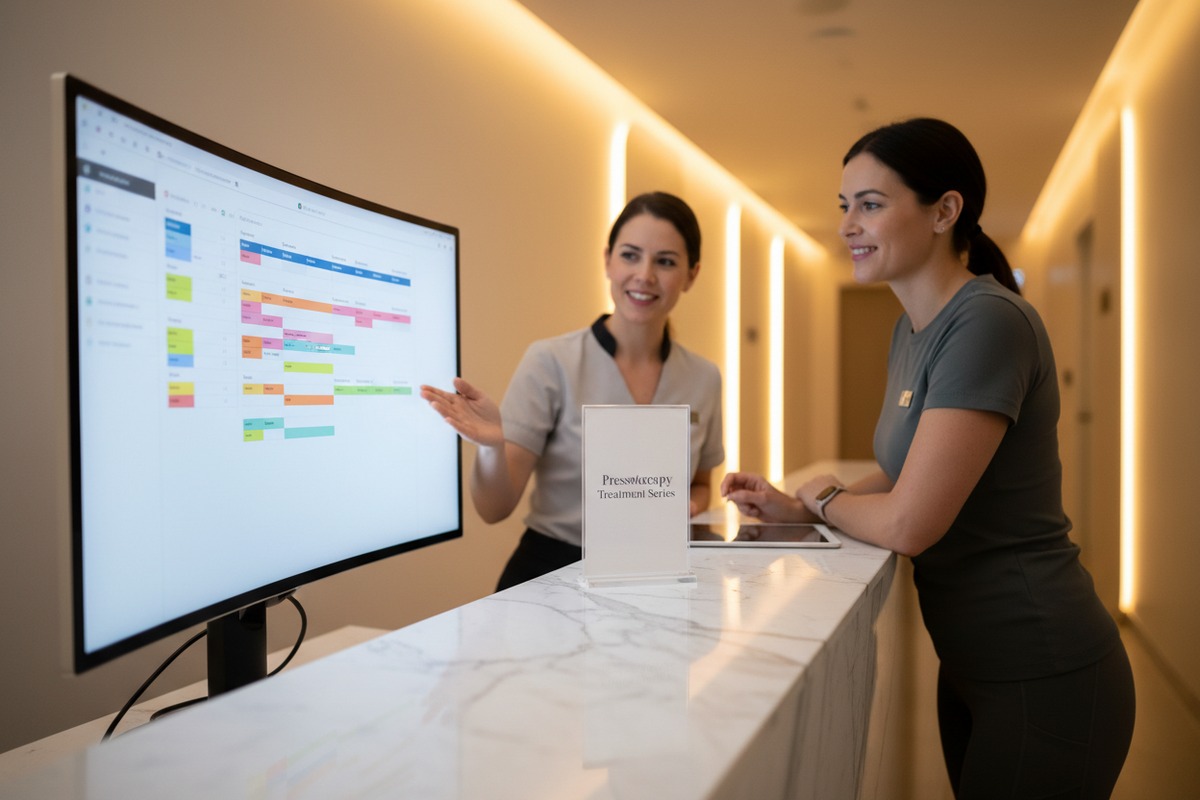
To truly understand if your pressotherapy service is driving retention, you must move beyond general salon sales figures. You need to look at the behavior of the specific clients who use these machines. In the beauty equipment industry, we often see distributors sell machines without teaching their salon buyers how to measure success. This leads to underutilization of the equipment.
Setting Up Your Tracking Dashboard
The first step is segmentation. Most salon management software allows you to tag clients based on the services they purchase. You should create a specific tag for "Pressotherapy Users." Once you have this segment, compare their behavior to your average client. You are looking for a higher frequency of visits. Because pressotherapy is often sold in courses (e.g., 10 sessions for lymphatic drainage 4), the rebooking rate should naturally be higher. If it is not, it indicates a dissatisfaction with the results.
We recommend tracking the "Drop-off Point." If clients consistently stop booking after the third session, the issue might be physical discomfort or a lack of visible results. This is often where the quality of the machine comes into play. A machine with precise pressure control ensures the experience remains pleasant, encouraging the client to complete the full course.
The Immediate Relief Factor
Pressotherapy is unique because the results—lighter legs and reduced swelling—are often felt immediately. This immediate gratification is a powerful retention tool. You should implement a quick feedback system, such as a one-question survey sent via SMS immediately after the treatment: "On a scale of 1 to 10, how much lighter do your legs feel?"
Correlate these scores with rebooking rates. You will likely find that clients who score a 9 or 10 are your most loyal customers. If scores are low, you may need to adjust your protocols or check if your equipment is delivering adequate pressure.
Metrics to Watch
Here is a simple breakdown of what to measure to gauge success.
| Metric | Definition | Why It Matters for Pressotherapy |
|---|---|---|
| Repeat Visit Rate (RVR) | The % of clients who book a second session. | High RVR proves the treatment provided immediate physical relief. |
| Course Completion Rate | The % of clients who finish a full package (e.g., 10 sessions). | Indicates sustained satisfaction and equipment consistency. |
| Cross-Sell Ratio | How often pressotherapy is booked with other services. | Shows if the machine is effectively acting as a high-margin add-on. |
By focusing on these specific numbers, you stop guessing and start knowing exactly how much value the machine adds to your business.
Will investing in high-end OEM pressotherapy machines actually improve my brand's long-term customer loyalty?
We frequently see low-quality pumps fail within months, which damages the reputation of the salons using them. We build our systems with heavy-duty components because we understand that reliability is the silent driver of your brand’s trust.
Investing in high-end OEM pressotherapy machines significantly improves long-term loyalty by ensuring consistent pressure delivery and preventing mid-treatment failures. Premium equipment allows for customized branding and superior comfort, creating a unique service experience that clients associate directly with your salon’s quality standards.
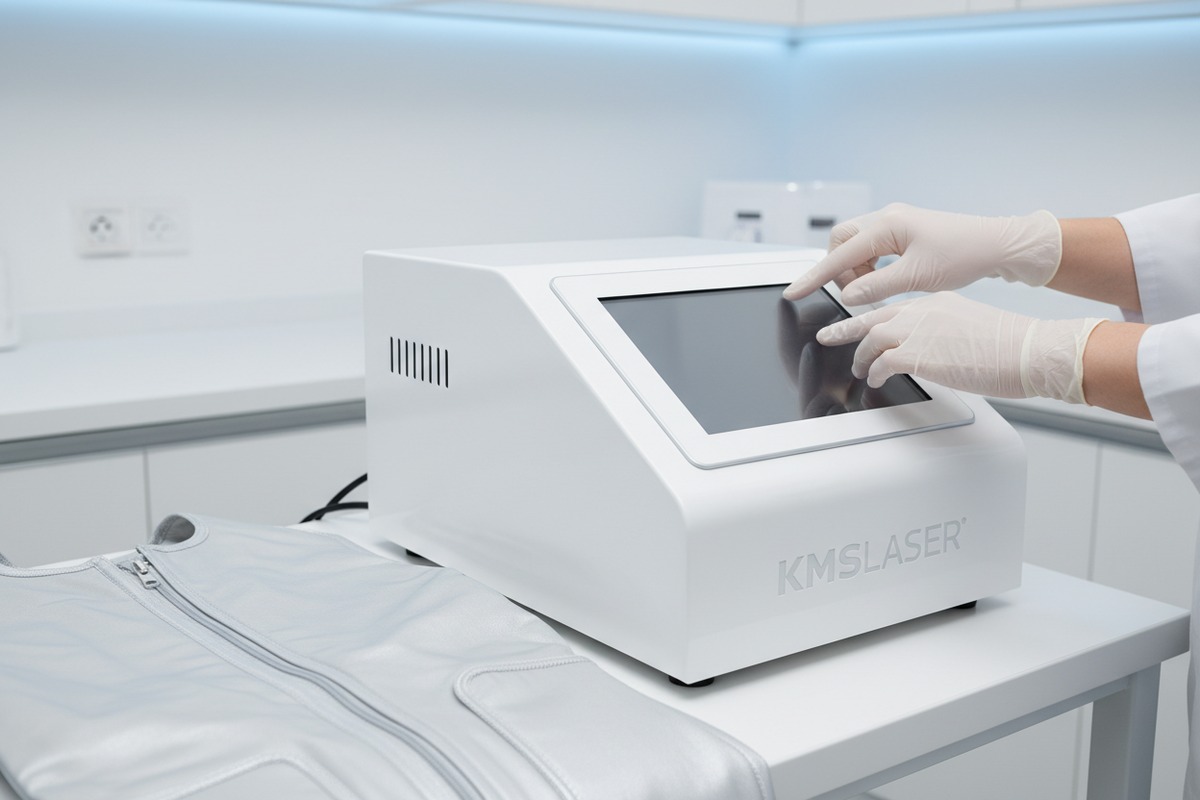
There is a misconception that all air compression machines are the same. From our perspective on the manufacturing floor, the difference is night and day. A budget machine might inflate the suit, but a high-end OEM system delivers precise, wave-like peristaltic motion 5 that mimics a therapist's hands. This difference in sensation is what builds loyalty.
The Role of Reliability in Trust
Imagine a client is midway through a relaxation session when the machine suddenly loses pressure or makes a loud, grinding noise. The "spell" of the treatment is broken. The client loses confidence not just in the machine, but in your entire establishment. High-end machines use quieter, more durable pumps. This ensures the environment remains zen-like, which is critical for wellness treatments.
When we supply OEM solutions, we focus on the durability of the air chambers and the connection points. These are the parts that undergo the most stress. If a connector snaps after three months, you have to cancel appointments. Cancelled appointments force clients to look for alternatives, effectively handing your loyal customers to your competitors.
Customization as a Retention Tool
Investing in OEM (Original Equipment Manufacturer 6) allows you to put your brand on the machine. This is not just vanity; it is psychology. When a client sees a generic machine, they perceive the service as a commodity they can get anywhere. When they see your logo on a sleek, white tabletop unit, they perceive the treatment as a proprietary protocol unique to your clinic.
This "proprietary" feel increases the perceived value of the service. Clients are more likely to stay loyal to a brand that appears to have its own specialized technology. It moves the conversation from "I'm getting a massage" to "I'm getting the [Your Brand] Body Renewal treatment."
Generic vs. OEM High-End Features
The table below highlights how hardware choices impact client psychology.
| Feature | Generic/Budget Machine | High-End OEM Machine | Impact on Loyalty |
|---|---|---|---|
| Pressure Control | Often static or uneven. | Precise, adjustable gradients. | Comfort prevents pain, encouraging return visits. |
| Noise Level | Loud mechanical hum. | Whisper-quiet operation. | Enhances relaxation; clients feel more "pampered." |
| Visual Branding | Generic factory label. | Your salon/distributor logo. | Builds brand authority; makes the service harder to compare on price. |
How do I assess if the machine's durability is preventing technical downtime and keeping my salon buyers satisfied?
During our pre-shipment inspections, we rigorously stress-test air connectors because we know that one broken valve in a busy clinic causes immediate revenue loss and angry managers. A machine that works every day is a machine that makes money.
Assess durability impact by logging maintenance tickets against client complaints. If technical downtime is zero while appointment slots remain full, your machine’s reliability is actively protecting revenue. High uptime percentages directly correlate with salon buyer satisfaction as they avoid cancelling profitable appointments due to equipment failure.

Durability is often an afterthought until something breaks. For a distributor or a salon owner, technical downtime is the silent killer of retention. If a machine is out of order for a week, you might disrupt the treatment schedules of 20 to 30 clients. Those clients, especially those recovering from surgery or athletes needing immediate relief, will not wait. They will go elsewhere.
Calculating the Cost of Downtime
To evaluate this, you need to track "Technical Churn." This is the number of clients lost specifically during periods where equipment was unavailable. If you notice a spike in lost clients during weeks where you had maintenance issues, you have a direct correlation.
From a manufacturing standpoint, we advise looking at the connection ports and the suit material. These are the most common failure points. High-quality TPU (Thermoplastic Polyurethane) 7 suits resist tearing and hold pressure better than cheaper PVC options. If you are constantly patching suits or wiggling cords to get a connection, your client perceives the equipment as "janky" or unsafe.
Identifying Weak Points
We often see distributors trying to save money on the accessories, buying a good main unit but cheap suits. This is a mistake. The suit is what touches the client. If it feels plasticky, sweaty, or tears easily, the client assumes the whole machine is bad.
Satisfied buyers (your downstream salon customers) want "plug and play" reliability. They judge the quality of your equipment by how little they have to think about it. If they are calling you for repairs every month, they are not focusing on their clients, and their retention rates drop. Conversely, a robust machine allows them to book back-to-back sessions confidently.
Common Failure Points & Prevention
| Component | Common Issue | Retention Consequence | Prevention Strategy |
|---|---|---|---|
| Air Hoses | Kinking or cracking. | Uneven pressure interrupts relaxation. | Use industrial-grade silicone hoses. |
| Suit Zippers | Bursting under pressure. | Session aborted mid-way; very embarrassing. | Ensure suits have adjustable sizing/expanders. |
| Control Unit | Overheating. | Machine shuts down; appointment cancelled. | Choose units with adequate cooling systems. |
What data should I collect to prove that my custom-branded equipment is reducing customer churn?
When we print a client's logo on a chassis, we are helping build their identity. However, without data, that identity is just a sticker, not a business asset. You need numbers to prove the brand effect is working.
Collect data on 'Client Win-Back Rates' and 'Service Add-On Frequency' for your branded machines. High attachment rates to other treatments prove the equipment is keeping clients engaged. Additionally, gather qualitative Net Promoter Scores (NPS) specifically asking about the comfort and effectiveness of your branded device.
Proving that a specific piece of equipment reduces churn requires a mix of quantitative and qualitative data. You are trying to capture the client's sentiment toward the technology itself. Does the machine make them feel taken care of? Does it solve their problem?
The Power of NPS Surveys
The Net Promoter Score (NPS) 8 is a standard tool, but you should tailor it. Instead of asking "Would you recommend our salon?", ask "Based on your pressotherapy results today, how likely are you to recommend this specific treatment to a friend?"
If you have custom-branded equipment, this question tests the strength of your brand. If the scores are high, it means your private-label equipment is a key asset. We have found that salons using branded equipment tend to have higher perceived authority. Clients trust "The [Salon Name] Protocol" more than a generic service.
Analyzing Treatment Combinations
Pressotherapy is rarely a standalone treatment in high-retention business models. It is an "Add-On King." It pairs perfectly with cryolipolysis (fat freezing), cavitation, or facials.
You should collect data on the "Attachment Rate." This measures how many clients who come in for a facial are convinced to stay for a pressotherapy session. A high attachment rate indicates that the machine is easy to sell and easy to experience. It reduces churn by increasing the client's "share of wallet" and time spent in the clinic. The more services a client uses, the harder it is for them to leave you for a competitor.
Key Data Points to Harvest
- Usage Utilization: How many hours per day is the machine running? Low utilization often precedes high churn.
- Complaint Logs: Are clients complaining about pressure intensity?
- Membership Conversions: How many trial clients convert to a monthly membership that includes pressotherapy?
By gathering this data, you move from hoping the machine works to knowing it is the anchor of your retention strategy.
Conclusion
Evaluating the impact of pressotherapy on retention requires looking beyond sales. By monitoring repeat visit rates, equipment uptime, and client feedback on comfort, you ensure your manufacturing investment actively builds a loyal customer base.
Footnotes
1. Defines a key performance indicator for customer loyalty. ↩︎
2. Explains a crucial metric for long-term customer value. ↩︎
3. Defines a critical business metric for customer loss. ↩︎
4. Provides medical context for the pressotherapy treatment. ↩︎
5. Describes the wave-like muscle contractions in biological systems. ↩︎
6. Explains the industry term for product manufacturing. ↩︎
7. Details the properties of a durable material for equipment. ↩︎
8. Defines a widely used metric for measuring customer loyalty. ↩︎

 English
 Español de México
 Deutsch
 Français
 العربية
 Русский
