

When we test new prototypes at our Guangzhou facility, we know that specifications on paper don’t always equal results on skin clinical trials 1. You need proof before investing capital.
To evaluate effectiveness, prioritize machines with validated pressure ranges of 40-80 mmHg and sequential inflation cycles. Look for documented circumference reduction in clinical trials and before-after photographic evidence showing improved skin texture. Reliable devices must demonstrate consistent pressure maintenance to effectively stimulate lymphatic drainage and reduce cellulite appearance.
Here is how you can assess the quality and performance of these devices to ensure high customer satisfaction.
How can I verify the clinical efficacy of your pressotherapy machines before I commit to a bulk order?
In our experience exporting to US salons, we find that seeing raw data builds more trust than marketing brochures edema reduction 2. We encourage buyers to demand specific performance metrics.
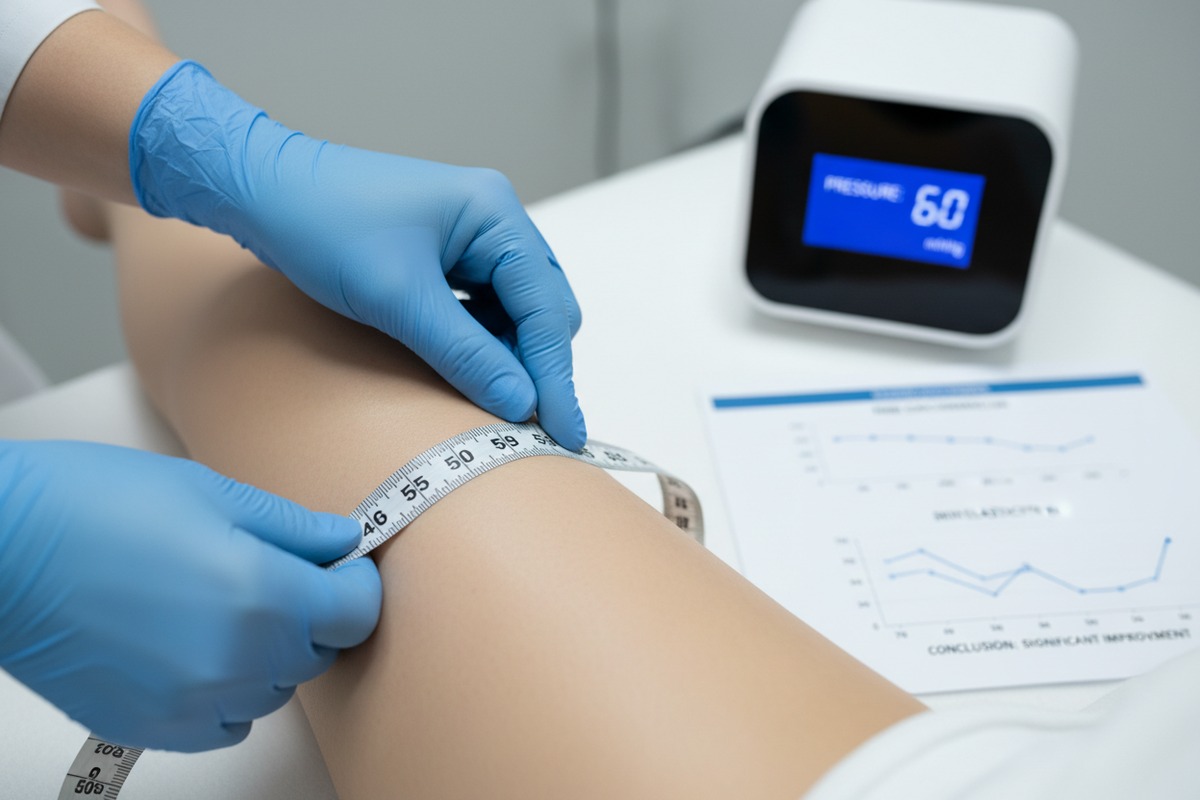
You should request case studies that track thigh circumference reduction and skin elasticity improvements over a 4-8 week period. Verify efficacy by checking for edema reduction metrics and photographic evidence of smoother skin texture, which confirms the machine successfully targets fluid retention associated with cellulite.
Understanding the Metrics of Success
When you are purchasing equipment for a chain of salons, you cannot rely on vague promises of "better looking legs." You need concrete numbers. In our engineering lab, we focus on two primary indicators that a machine is actually working: immediate fluid reduction and long-term texture change TPU (Thermoplastic Polyurethane) 3.
Cellulite is often exacerbated by poor lymphatic drainage 4. A machine that is clinically effective will show immediate results in reducing edema (water retention). This is the easiest metric to verify. Ask your supplier for data showing circumference measurements taken immediately before and after a single 30-minute session. A high-quality professional unit should yield a measurable reduction, often between 0.5 cm to 1.5 cm per thigh, simply by moving excess fluid.
However, true cellulite reduction takes time. You must look for evidence of long-term improvement in skin structure. This is usually documented through skin elasticity 5 tests or standardized photography over a course of 8 to 12 sessions.
Key Indicators for Clinical Validation
To ensure the machine will deliver the results your brand promises, you need to analyze the data provided by the manufacturer. We recommend organizing the evidence into the following categories to see if the machine meets professional standards.
Table 1: Clinical Performance Indicators
| Indicator | Timeframe | Expected Professional Result | What It Means for Cellulite |
|---|---|---|---|
| Circumference Reduction | Immediate (1 session) | 0.5 – 1.5 cm reduction | confirms effective lymphatic drainage of excess fluid. |
| Skin Smoothness | Medium (4-6 weeks) | Visible reduction in "orange peel" | Indicates breakdown of minor fibrous bands and reduced edema. |
| Pain/Heaviness Relief | Immediate | Significant relief reported | Shows improved circulation and reduced venous pressure. |
| Skin Elasticity | Long (8-12 weeks) | measurable increase in firmness | Suggests improved collagen support and microcirculation. |
Differentiating Water Weight from Structural Change
It is crucial to understand that pressotherapy primarily targets the edematous component of cellulite. When we discuss results with our clients, we are transparent about this distinction. If a supplier claims their machine "melts fat," you should be skeptical. Pressotherapy is not a fat-loss device; it is a circulation device.
The "visible reduction" your customers see is largely due to the removal of stagnant interstitial fluid that pushes fat cells up against the skin. By draining this fluid, the tension on the skin surface is released, smoothing out dimples. When evaluating a machine, check if the manufacturer differentiates between these results. A trustworthy supplier will provide data on fluid dynamics and lymphatic flow rates, not just impossible weight loss claims.
What specific technical parameters should I check to ensure my customers see visible cellulite reduction?
Our engineers have found that precise pressure control is the difference between a relaxing massage and a medical-grade treatment. Technical specs directly correlate with treatment outcomes.
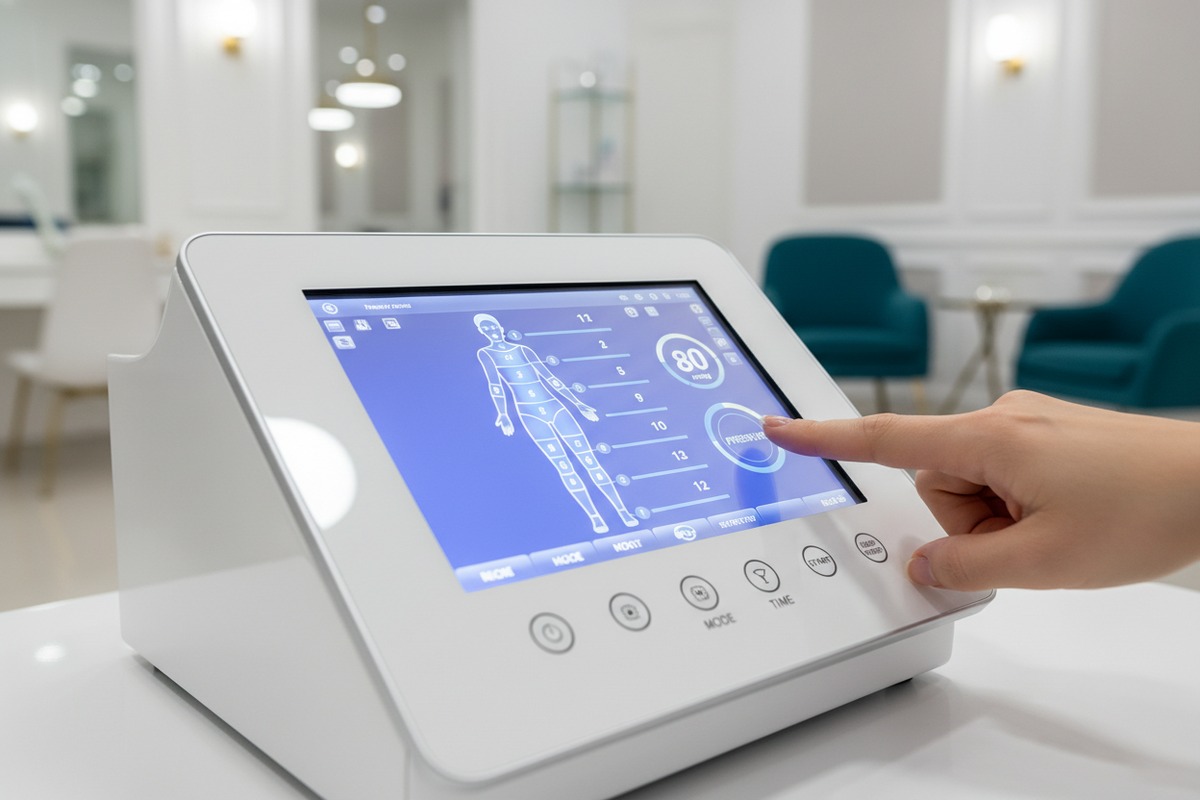
Key parameters include a pressure range of 40–80 mmHg for lymphatic stimulation and a chamber count of at least 12 to ensure smooth compression waves. You must also verify the machine offers distinct sequential inflation modes that prevent backflow, maximizing fluid movement toward lymph nodes.
The Importance of Pressure Precision
There is a common misconception that higher pressure equals better results. This is dangerous thinking. For cellulite reduction and lymphatic drainage, the "sweet spot" is actually quite low.
Our testing shows that the lymphatic vessels 6 are delicate. If a machine applies too much pressure (exceeding 100-120 mmHg for drainage), it can actually collapse the lymphatic vessels, stopping the flow entirely. This renders the treatment useless for cellulite reduction. When checking specs, look for a machine that offers fine-tuned control in the lower ranges (20-60 mmHg). The ability to maintain stable pressure at these lower levels is a sign of a high-quality air pump system. Cheap machines often fluctuate wildy, providing inconsistent therapy.
Chamber Count and Wave Fluidity
The number of air chambers (channels) in the suit is perhaps the most visible technical parameter. You will see machines with anywhere from 4 to 24 chambers.
For professional cellulite treatment, we strongly advise against anything with fewer than 12 chambers. Here is why:
- 4-8 Chambers: These are essentially segmented blocks. When one inflates, there is a gap or a "step" before the next one takes over. This creates a jerky motion that is less effective at moving fluid smoothly.
- 12-24 Chambers: With more chambers, each individual air bag is smaller. This allows for a "peristaltic" wave motion that feels like a continuous, rolling massage. peristaltic wave motion 7 This overlapping compression is far superior for preventing fluid backflow (retrograde flow) and ensuring that toxins are pushed toward the lymph nodes efficiently.
Table 2: Technical Specifications for Effective Treatment
| Feature | Standard Home Unit | Professional Salon Unit | Impact on Cellulite |
|---|---|---|---|
| Pressure Range | 20-250 mmHg (often inaccurate) | 20-200 mmHg (calibrated) | Precise low pressure (40-60 mmHg) is needed for lymph flow. |
| Chamber Count | 4 to 6 chambers | 12, 16, or 24 chambers | More chambers create a smoother wave, draining fluid better. |
| Chamber Overlap | None or Minimal | Significant Overlap (Imbricated) | Prevents fluid from getting trapped between zones. |
| Cycle Types | 1-2 basic modes | 4+ modes (Pre-therapy, Wave, Lymph) | Allows customization for different stages of cellulite. |
Analyzing Inflation Modes
You should also check the software capabilities. A machine for cellulite reduction needs specific modes. A simple "squeeze and release" is not enough.
Look for a "Pre-Therapy" mode. This opens the proximal lymph nodes (near the groin or armpits) before the main massage begins. Without this, you are pushing fluid toward a closed door.
Look for a "Wave" or "Sequential" mode. This inflates chambers one by one, holding the pressure in the previous chamber to prevent backflow. This directional control is vital for clearing the edema that contributes to the bumpy appearance of cellulite.
How do I evaluate the build quality and pressure stability to prevent performance issues in my salons?
When we source components for our production line, we prioritize durability because downtime costs salon owners money. Reliable hardware is non-negotiable for high-volume businesses.
Evaluate build quality by inspecting the air pump’s cycle durability and checking for low noise levels during operation. Ensure the suit is made from high-grade TPU rather than PVC for tear resistance, and verify that connection hoses use secure, leak-proof locking mechanisms to maintain pressure stability.
The Heart of the System: The Air Pump
The air pump is the engine of the pressotherapy machine. In a busy salon, this pump might run for 6 to 8 hours a day. If the pump is underpowered or made with cheap diaphragms, two things will happen:
- Pressure Drop: Over time, the machine will struggle to reach the set mmHg. The treatment becomes weak and ineffective.
- Overheating: The machine will shut down in the middle of a treatment to cool off, frustrating both your staff and your clients.
When evaluating a sample unit, run it for at least 60 minutes continuously at medium-high pressure. Listen to the sound. A quality pump should produce a low, rhythmic hum. A loud, rattling noise often indicates loose internal components or a strained motor. We use heavy-duty piston pumps in our export models specifically to handle the voltage and usage demands of the US market.
Suit Material: TPU vs. PVC
The suit is the part of the machine that takes the most physical abuse. It is constantly being zipped, unzipped, folded, and cleaned.
- PVC (Polyvinyl Chloride): This is common in budget machines. It feels stiff and "plastic-like." Over time, PVC can crack, especially at the fold lines. Once a crack appears, the chamber leaks, and the pressure becomes unstable.
- TPU (Thermoplastic Polyurethane): This is the gold standard for medical and salon use. It is flexible, durable, and resistant to oil and bacteria. It feels more like fabric than plastic.
- Nylon Coating: High-end suits often have a nylon outer layer bonded to the TPU. This adds strength and makes the suit easier to wipe down with disinfectant between clients, which is critical for hygiene.
Table 3: Component Quality Comparison
| Component | Budget/Home Quality | Professional/Salon Quality | Consequence for Salon |
|---|---|---|---|
| Air Pump | Membrane pump (low duty cycle) | Piston pump (high duty cycle) | Cheap pumps overheat and fail during back-to-back sessions. |
| Suit Material | PVC (stiff, cracks easily) | 420D Nylon + TPU (flexible, strong) | TPU resists tears and withstands harsh disinfectants. |
| Hoses | Thin silicone, easily kinked | Reinforced, integrated bundle | Integrated hoses prevent tangling and airflow blockages. |
| Connectors | Basic plastic push-fit | Quick-connect with locking latch | Locking connectors prevent air leaks that drop system pressure. |
Leak Testing the System
A simple test you can do with a demo unit is the "Squeeze Test." Set the machine to a hold cycle where all chambers are inflated. Once it reaches full pressure, try to physically squeeze the leg boot with your hands.
On a high-quality machine, the boot should feel rock hard (if set to high pressure) and you should not be able to compress it much. If you can easily squeeze it, or if you hear a hissing sound, there is an air leak. Air leaks are the enemy of pressure stability. Even a small leak means the pump has to work overtime to maintain pressure, shortening the machine's lifespan and delivering inconsistent therapy to the client.
Can I customize the machine’s internal programs to deliver the high-end results my brand promises?
When we collaborate with brand owners on OEM projects, we emphasize that software flexibility is a key competitive advantage. You need to adapt treatments to different body shapes and goals.
Yes, high-end machines allow you to customize inflation times, hold intervals, and pressure gradients for specific zones. Look for systems that let you save proprietary protocols and adjust settings for individual client needs, such as targeting stubborn cellulite areas or avoiding sensitive injuries.
The Power of Programmable Logic
Standard machines come with presets: "Sport," "Slimming," "Lymph." While these are good starting points, a professional aesthetician encounters a wide variety of bodies.
For example, a client with "Gynoid" body type (pear-shaped) may have significant cellulite and fluid retention in the thighs but very little in the calves. If you use a standard program, you might over-treat the calves or under-treat the thighs.
High-end machines allow you to customize the Pressure Gradient. You should be able to set the pressure in the thigh chambers higher (e.g., 60 mmHg) while keeping the foot and calf chambers lower (e.g., 40 mmHg). This customization ensures that the treatment is focused exactly where the cellulite is most visible, without causing discomfort elsewhere.
Adjusting Cycle Timing
Another critical customization feature is the inflation and deflation timing.
- Inflation Time: How long does it take to fill the chamber? Faster isn't always better. A slow fill can be more relaxing and thorough for drainage.
- Hold Time: How long does the pressure stay at the peak before releasing? For breaking down the fibrosis associated with cellulite, a longer hold time (5-10 seconds) can be beneficial to stretch the connective tissue.
- Interval Time: The pause between cycles allows the vessels to refill.
Being able to adjust these parameters allows you to create "Signature Treatments" unique to your salon. You can market a "Deep Cellulite Sculpting" session that uses a proprietary mix of high-pressure holds and rapid wave cycles, something your competitors with basic machines cannot offer.
Improving Client Retention with Data
Modern professional machines often include client management software 8. This allows you to save the specific settings used for "Mrs. Smith" on her profile.
This is huge for consistency. If Mrs. Smith comes in and sees a different technician than last time, the new technician simply loads her profile. The machine automatically sets the pressure, cycle time, and active chambers exactly how she likes it. This ensures that every session contributes effectively to her cumulative cellulite reduction plan, rather than starting from scratch every time. It builds trust and professionalism, which justifies a higher price point for your services.
Conclusion
To ensure real results, choose a machine with 12+ chambers, verifiable pressure stability, and durable TPU construction. Investing in quality equipment protects your reputation and ensures client satisfaction.
Footnotes
1. Provides the official NIH definition and context for clinical trials. ↩︎
2. Defines edema and discusses its management, relevant to fluid reduction. ↩︎
3. Explains what TPU is, its properties, and common applications. ↩︎
4. Replaced with an authoritative NHS page on lymphoedema treatment, which includes lymphatic drainage techniques. ↩︎
5. Replaced with a Wikipedia page on skin turgor, which directly relates to skin elasticity and its ability to return to shape. ↩︎
6. Describes the anatomy and function of lymphatic vessels in the body. ↩︎
7. Defines peristalsis as wave-like muscle contractions for fluid movement. ↩︎
8. Explains what CRM (client management software) is and its purpose. ↩︎
9. Defines pressure gradient as the rate of pressure change in a fluid. ↩︎

 English
  Español de México
  Deutsch
  Français
  العربية
  Русский