
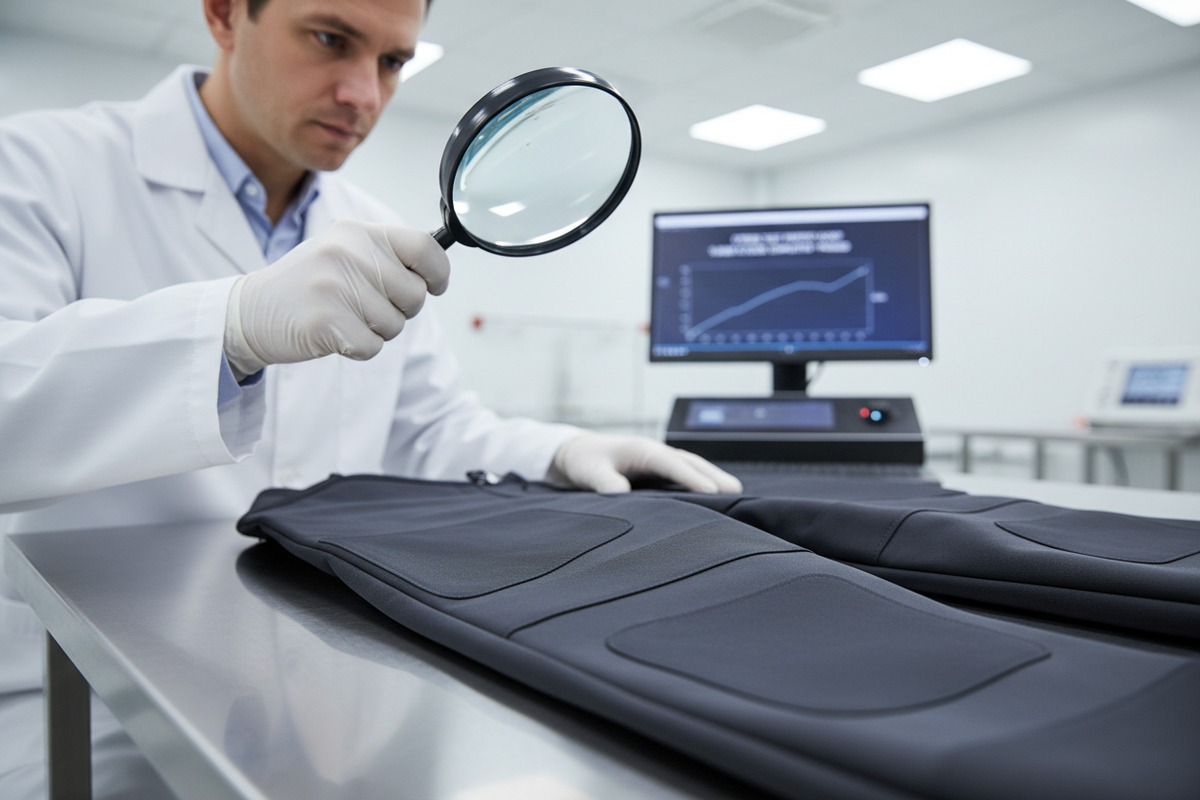
When we first began developing our compression systems, I remember discarding batches of prototype suits simply because the material felt too stiff against the skin, risking user discomfort during hour-long sessions Radio Frequency or RF welding 1. This taught us that material quality is just as critical as the pump’s motor.
To evaluate airbag material, prioritize medical-grade TPU or high-denier Nylon over standard PVC for elasticity and skin safety. Test durability by verifying high-frequency welded seams and requesting a 10,000-cycle stress test report from your supplier to ensure airtightness under high pressure.
Here is how you can technically assess these materials to protect your brand’s reputation.
Which airbag materials should I choose to ensure the best balance of financial investment, comfort, and durability for my brand?
In our factory’s material sourcing department, we often advise US clients to look beyond the initial cost per yard and focus on the “flex-fatigue” ratio of the fabric. flex-fatigue ratio 2 Choosing the wrong base material is the number one reason for product returns.
Select TPU (Thermoplastic Polyurethane) or high-density Nylon with a PU coating for the best balance. Unlike rigid PVC, these materials offer superior elasticity for comfort while maintaining high tensile strength to withstand daily inflation pressures in a salon environment without cracking.
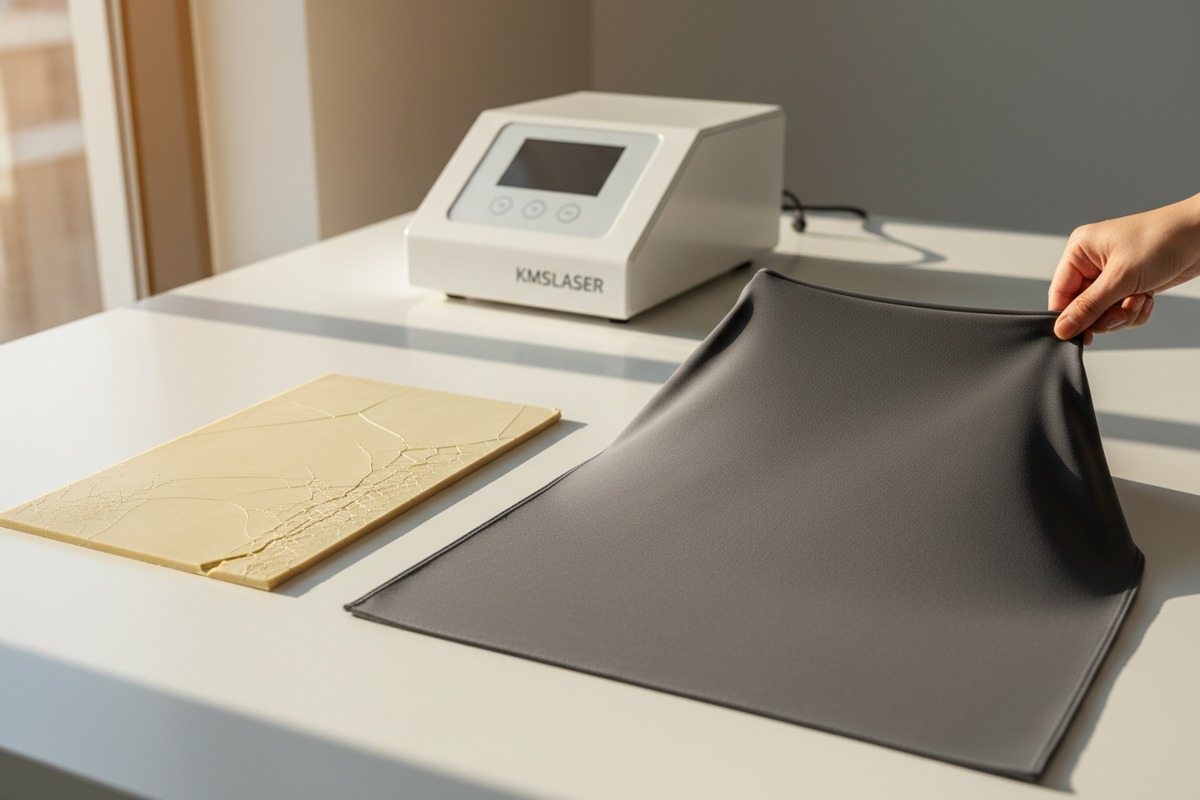
Choosing the right material is a strategic decision that impacts your warranty costs and customer satisfaction. In the beauty equipment industry, we primarily see three types of materials used for pressotherapy suits: PVC, Nylon (often coated with PU or PVC), and pure TPU 3. Understanding the physics and chemistry of these materials will help you make an informed choice.
The Limitations of Standard PVC
Polyvinyl Chloride (PVC) 4 is the most budget-friendly option and is common in entry-level home devices. However, for a professional brand, PVC poses significant risks. It is inherently rigid. To make it flexible enough for a suit, manufacturers add plasticizers. Over time, these plasticizers migrate out of the material, especially when exposed to heat and body oils. This process leads to the material becoming brittle and eventually cracking at stress points. If your brand positioning is mid-to-high-end, relying on simple PVC can lead to a high rate of warranty claims after 6 to 12 months of use.
Why TPU and Nylon Blends Dominate the Professional Market
For our professional salon clients, we almost exclusively recommend TPU or high-denier Nylon blends. TPU is a class of polyurethane plastics with many useful properties, including elasticity, transparency, and resistance to oil, grease, and abrasion. It is “thermoplastic,” meaning it handles temperature changes well without losing structural integrity.
When we bond TPU with Nylon fabric, we get the best of both worlds: the soft, skin-friendly touch of the coating and the extreme tensile strength of the woven Nylon structure. This composite material allows the airbag to inflate and conform to the client’s limb shape without the “crunchy” feeling associated with plastic suits. It is also much lighter, reducing fatigue for the therapist who has to apply and remove these suits multiple times a day.
Material Comparison for B2B Buyers
Use this table to benchmark supplier quotes. If a supplier offers a “professional” machine at a very low price, check if they are substituting TPU with PVC.
| Feature | Standard PVC | Nylon + PVC Coating | Nylon + TPU (Recommended) |
|---|---|---|---|
| Flexibility | Low (Stiff) | Medium | High (Soft & Elastic) |
| Durability | Low (Cracks over time) | Medium | High (Resistant to hydrolysis) |
| Skin Feel | Plastic/Sticky | Fabric-like | Smooth/Cool to touch |
| Weight | Heavy | Medium | Light |
| Cost | $ | $$ | $$$ |
How can I verify that the airbag seams will hold up under my customers' heavy daily usage?
Our engineering team has found that 90% of air leakage issues originate not from the fabric itself, but from the junction points where chambers meet. We strictly monitor welding temperature and time to prevent this common failure.
Verify durability by insisting on High-Frequency (HF) welding technology rather than sewn or glued seams. HF welding fuses the material layers at a molecular level, creating a unified barrier that resists the immense internal pressure generated during compression therapy sessions.

The integrity of the seams is the lifeline of any pressotherapy machine. When a machine operates at pressures up to 240 mmHg, the internal force trying to rip the suit apart is immense. If the seams fail, the machine loses pressure, the treatment becomes ineffective, and your customer loses faith in your brand.
The Science of High-Frequency (HF) Welding
You must ensure your supplier uses High-Frequency welding 5 (also known as Radio Frequency or RF welding). Unlike sewing, which punches thousands of tiny holes into the fabric (creating potential leak points), or gluing, which can degrade with heat, HF welding uses electromagnetic energy to excite the molecules of the material. This causes the materials to melt and fuse together from the inside out. The result is a seam that is as strong as the original material itself. When visiting a factory or checking videos, look for large press machines with metal dies, not sewing machines.
Examining the Weld Width and Consistency
When you receive a sample unit, inspect the weld lines closely. A high-quality industrial weld should have a consistent width, typically between 3mm to 5mm for pressotherapy airbags. If the weld is too narrow, it may peel apart under pressure. If it is uneven or has bubbles, it indicates inconsistent temperature or pressure during the manufacturing process.
The “Inflation Stress” Check
You cannot judge a seam when the suit is deflated. You must fully inflate the suit to its maximum pressure setting. Observe the seams. Do they bulge outward aggressively? Do you see any white stress marks appearing along the weld line? These are early signs of potential failure. A well-constructed airbag will maintain its shape, and the seams should look flat and secure even when fully pressurized.
Seam Technology Comparison
| Method | Airtightness | Durability | Recommended for Pressotherapy? |
|---|---|---|---|
| Stitching/Sewing | Poor (Needs taping) | Low | No |
| Adhesive/Gluing | Medium | Medium (Fails with heat) | No |
| HF Welding | Excellent | High (Fused molecules) | Yes |
What specific tests should I ask my supplier to perform to guarantee my airbags won't leak?
Before we authorize any shipment to our North American distributors, our QC managers run a series of rigorous pressure retention tests. You should not accept a “visual inspection only” report from any manufacturer.
Request a 24-hour Air Retention Test to detect slow leaks and a Burst Pressure Test exceeding your machine’s maximum output. Additionally, ask for video evidence of an underwater immersion test, which visually reveals even the microscopic pinholes that cause pressure loss.

Quality control is where the difference between a reliable supplier and a risky one becomes obvious. Leaks are often microscopic and cannot be detected by simply inflating the suit for five minutes. To guarantee your inventory is defect-free, you must define the testing protocols in your purchase order.
The 24-Hour Air Retention Protocol
The most reliable test for slow leaks is the 24-hour retention test. airtightness testing methods 6 We inflate the airbags to a specific pressure (usually slightly above operating pressure) and seal them. After 24 hours, we measure the pressure again. A drop of more than 5-10% indicates a micro-leak or a faulty valve connection. For your brand, ask the supplier to send a photo of the manometer reading at hour 0 and hour 24 for a random sampling of your order (e.g., 5% of the total quantity).
The Underwater “Bubble” Test
This is the gold standard for locating pinhole leaks. The inflated airbag is submerged in a clear water tank. Even the tiniest defect will release a stream of bubbles. While it is impractical to do this for every single unit in mass production due to drying times, it should be the standard procedure for any unit that fails the 24-hour retention test. You can ask your supplier to perform this on a pre-shipment sample while on a video call with you.
Cycle Testing for Long-Term Reliability
Durability isn’t just about holding air today; it’s about holding air after 500 treatments. Ask your supplier for their “Cycle Test” data. This involves a machine automatically inflating and deflating the airbag thousands of times. A professional grade suit should withstand at least 5,000 to 10,000 cycles without seam separation or material fatigue.
QC Checklist for Buyers
Copy this checklist into your requirements document when negotiating with suppliers.
| Test Name | Duration/Count | Acceptance Criteria |
|---|---|---|
| Static Pressure Test | 24 Hours | < 10% Pressure Loss |
| Overpressure Test | 5 Minutes | No deformation at 1.5x Max Pressure |
| Cycle Test | 5,000 Cycles | No cosmetic or structural damage |
| Valve Integrity | Visual | No cracks or loose connections |
How do I assess if the material quality matches the mid-to-high-end positioning of my beauty machines?
In our experience working with premium European brands, the tactile experience—how the material feels, smells, and looks—is what justifies a higher price tag. We pay close attention to these sensory details during production.
Assess quality by checking for odorless materials, a smooth matte finish, and rapid material recovery after folding. High-end materials feel soft against the skin, do not emit strong chemical smells, and resist permanent creasing even after being packed for shipment.
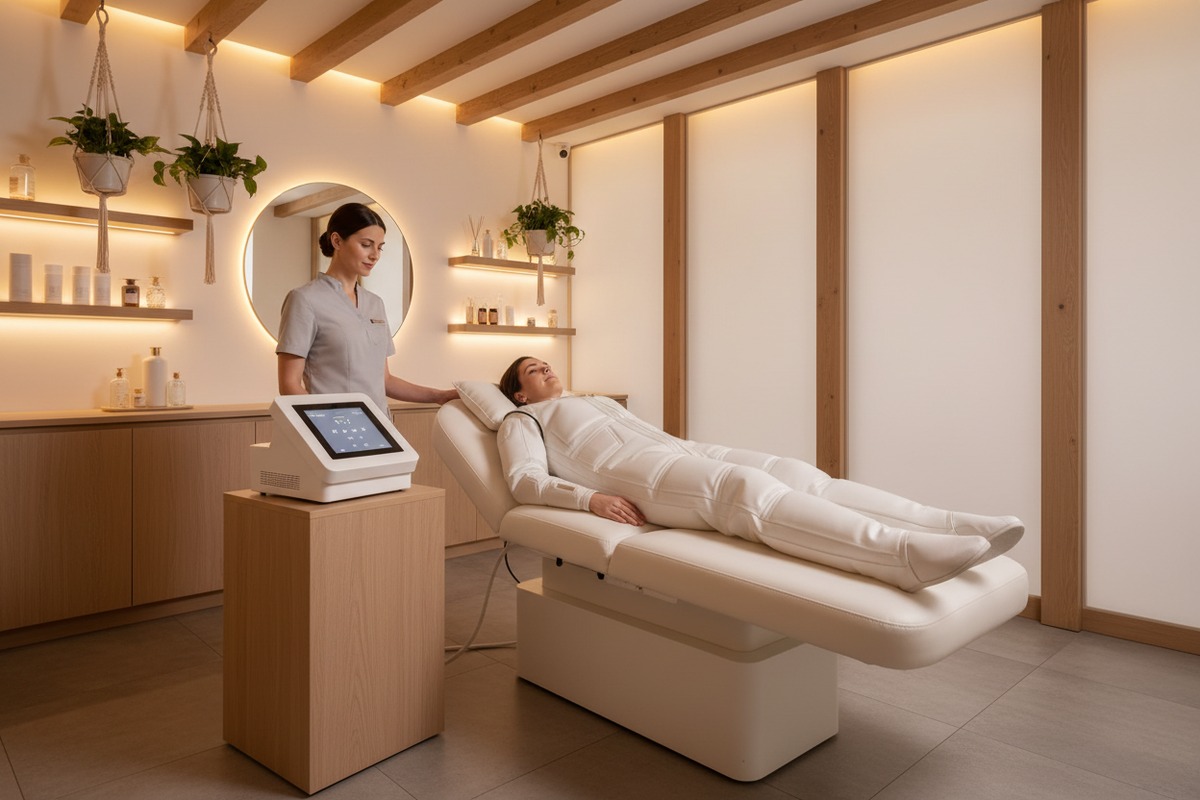
Your customers will judge the quality of your machine before they even turn it on. They will judge it the moment they open the box and touch the suit. If the material feels like a cheap pool float or smells like a chemical factory, your brand image suffers immediately. Evaluating “perceived quality” requires a sensory approach.
The Olfactory Test (Smell)
High-quality medical-grade TPU 7 and premium Nylon are virtually odorless. In contrast, low-quality PVC releases strong volatile organic compounds (VOCs) 8, resulting in a pungent “plastic” smell. This smell can be a deal-breaker in a spa environment where relaxation is key. If your sample arrives smelling toxic, it is a sign that the raw materials are not stable or safe for prolonged skin contact.
Tactile Recovery and “Memory”
Perform the “Crumple Test.” Squeeze a section of the airbag tightly in your fist for 10 seconds, then release it. High-end elastic materials will spring back to their original shape almost instantly. Lower-quality materials will stay wrinkled or show white crease marks (stress whitening). In a professional setting, suits are folded and stored daily. Material that retains deep wrinkles looks old and worn out very quickly.
Finish and Cleanability
Consider the finish of the material. A glossy, shiny finish often looks cheaper and can be sticky against the skin once the client starts to sweat. A matte finish looks more sophisticated and typically offers a better tactile experience. Furthermore, verify the material’s resistance to common salon disinfectants. You should be able to wipe the material with alcohol-free wipes without the color fading or the surface becoming tacky.
Premium vs. Budget Material Indicators
| Indicator | Budget/Low-End | Mid-to-High-End |
|---|---|---|
| Scent | Strong Chemical/Plastic | Neutral/Odorless |
| Surface | Glossy, Sticky | Matte, Smooth, Dry |
| Creasing | Holds deep wrinkles | Bounces back/Smooths out |
| Sound | Loud crinkling noise | Quiet, fabric-like sound |
Conclusion
Evaluating pressotherapy airbags goes beyond simple aesthetics; it requires a deep dive into material science, welding technology, and rigorous stress testing. By prioritizing TPU or Nylon blends, insisting on HF welding, and demanding strict leak protocols, you ensure your equipment delivers the comfort and durability your professional clients expect.
Footnotes
1. Explains the science, process, and effectiveness of Radio Frequency (RF) welding for materials. ↩︎
2. Defines flex fatigue as material weakening from repeated bending and cyclic loading. ↩︎
3. Authoritative general information source (Wikipedia) providing an overview of Thermoplastic Polyurethane (TPU). ↩︎
4. Provides a comprehensive overview of Polyvinyl Chloride (PVC) properties, uses, and benefits. ↩︎
5. Details the principles, materials, and applications of high-frequency welding technology. ↩︎
6. Highly authoritative standard (ASTM) for measuring air leakage rates, relevant to testing airtightness of materials. ↩︎
7. Explains properties, biocompatibility, and applications of medical-grade TPU in devices. ↩︎
8. Authoritative government source (EPA) providing a clear explanation of volatile organic compounds (VOCs). ↩︎

 English
 Español de México
 Deutsch
 Français
 العربية
 Русский
