Navigating Brazil’s regulatory maze can be daunting when sourcing beauty equipment. Our engineering team spends months ensuring our export units comply with strict safety protocols and performance benchmarks.
To ensure pressotherapy machines meet ANVISA standards, importers must verify that the Chinese manufacturer holds a valid Good Manufacturing Practices (GMP) certificate and that the specific device has undergone mandatory INMETRO conformity assessments. Additionally, the equipment must be classified correctly under RDC rules, requiring comprehensive technical files and safety testing reports before import authorization.
Let’s break down the specific steps, quality checks, and documents you need to secure a compliant supply chain for your medical aesthetics business.
How can I verify that my Chinese supplier's pressotherapy machines meet all ANVISA registration requirements?
We often guide new partners through the complex documentation required for Brazilian customs. Missing a single test report or using the wrong classification can result in your shipment being held indefinitely at the port.
You can verify compliance by demanding the supplier’s ISO 13485 certification and specifically requesting their INMETRO test reports issued by an accredited body. Crucially, confirm they have a local Brazilian registration holder who maintains the valid ANVISA authorization for that specific model, as foreign manufacturers cannot hold registrations directly.

Understanding the Regulatory Landscape
Verifying compliance goes far beyond checking for a logo on a website. In our daily operations, we see many buyers confuse international standards with local requirements. While a CE mark is excellent for Europe, it does not automatically grant access to the South American market. Brazil's ANVISA (National Health Surveillance Agency) 1 is the strictest regulator in the region and often sets the benchmark for neighbors like Colombia and Argentina.
The Role of the Local Registration Holder
A critical point often missed is that a Chinese factory cannot directly hold an ANVISA registration. We must appoint a local Brazilian company—either your distribution company or a third-party host—to hold the legal authorization. This local entity is responsible for submitting the technical file 2s. Therefore, your verification process must confirm two things: first, that the factory meets manufacturing standards, and second, that a local entity has successfully registered that specific model.
Classification Matters
Pressotherapy machines are generally classified as active electromedical devices 3. Depending on their claims (e.g., lymphatic drainage vs. medical edema treatment), they fall into different risk classes. Class I and II (lower risk) require a notification process, while Class III and IV require full registration and more rigorous clinical data. Ensuring your supplier understands this distinction is vital for avoiding costly delays.
Comparison of Certification Standards
To help you visualize the differences, here is how ANVISA requirements compare to other common standards we encounter in manufacturing.
| Feature | CE (Europe) | FDA (USA) | ANVISA (Brazil) |
|---|---|---|---|
| Primary Focus | Safety & Performance | Efficacy & Safety | Safety (INMETRO) & Registration |
| Testing Base | IEC 60601 Series | ANSI/AAMI Standards | IEC 60601 Series (ABNT NBR) |
| Audit Requirement | Notified Body Audit | QSR / GMP Audit | BGMP (Brazilian Good Manufacturing Practices) |
| License Holder | Manufacturer | Manufacturer/Agent | Local Brazilian Company Only |
| Language | Local EU Languages | English | Portuguese Mandatory |
What quality control measures should I expect from my manufacturer to ensure my machines pass South American safety inspections?
During our production runs, we implement specific checkpoints that align with Latin American electrical standards. Ignoring voltage stability or plug types frequently leads to failed local inspections and expensive retrofits.
Expect your manufacturer to conduct rigorous electrical safety tests compliant with IEC 60601-1 standards, which are the foundation for INMETRO certification. They should also perform functional aging tests on air pumps and pressure sensors to ensure durability under South American power grid fluctuations, providing detailed quality inspection reports for every batch.
Electrical Safety and INMETRO Standards
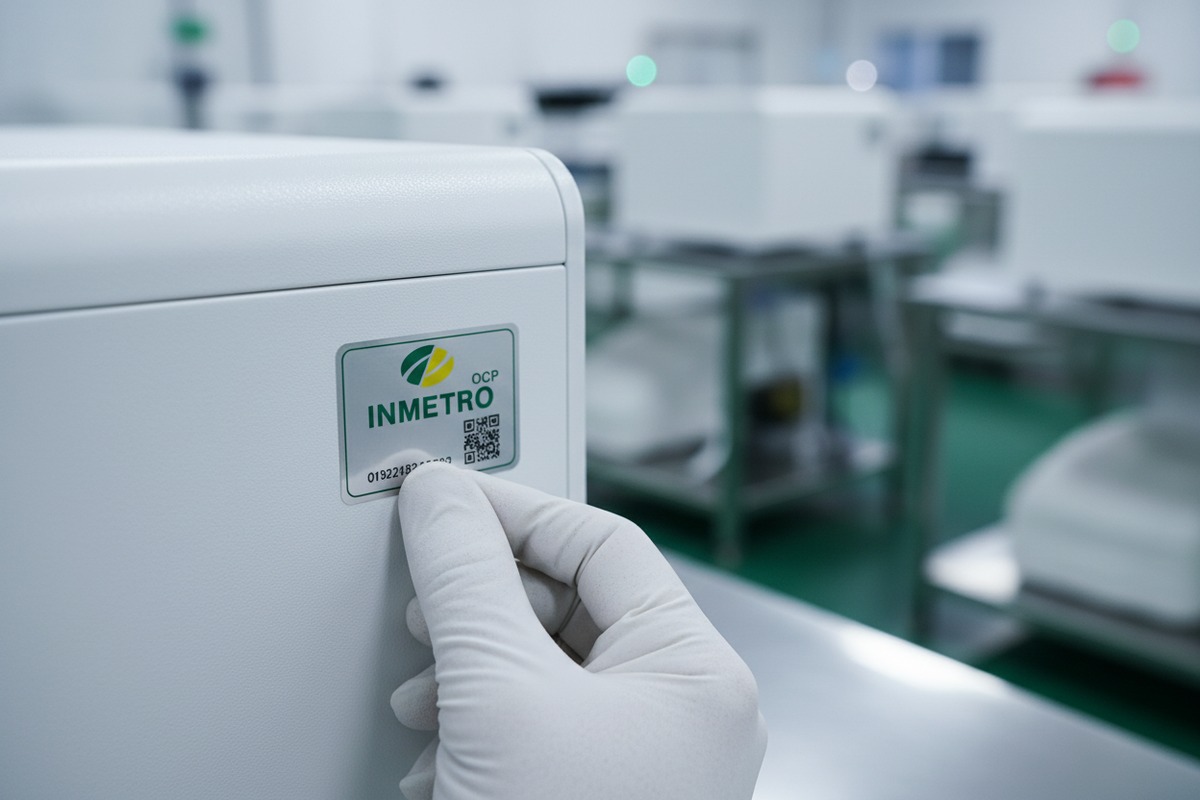
The most significant hurdle for pressotherapy equipment in South America is electrical safety. Brazil's INMETRO certification is mandatory for electromedical devices. This means every unit leaving our production line must adhere to the IEC 60601-1 standard 5. This standard covers protection against electric shock, mechanical hazards, and fire risks. When you evaluate a manufacturer, ask for their internal test protocols. They should be testing leakage current and ground resistance on 100% of the units, not just a random sample.
Durability Against Power Fluctuations
Power grids in South American regions can be less stable than in Europe or parts of Asia. Voltage spikes are common. A robust quality control process includes testing the machine's power supply unit (PSU) under varying voltages (e.g., 110V to 240V swing tests). We also stress-test the air pumps. The pumps in pressotherapy machines must maintain consistent pressure over long cycles. If the voltage drops, a poor-quality pump will fail to reach the therapeutic pressure, rendering the treatment ineffective.
Visual and Component Inspection
Beyond electricity, the physical build quality matters. South American inspectors are thorough. We check that all labels are in Portuguese (or Spanish for neighbors) and that the plugs match local standards (like the Type N plug for Brazil). The casing must be flame-retardant. Below is a checklist of specific QC points we monitor to ensure compliance.
QC Checkpoints for Pressotherapy Export
| QC Category | Specific Test / Check | Reason for Inspection |
|---|---|---|
| Electrical Safety | Dielectric Strength (Hi-Pot) Test | Prevents electric shock; mandatory for INMETRO. |
| Performance | Pressure Sensor Calibration | Ensures the pressure (mmHg) matches the digital display. |
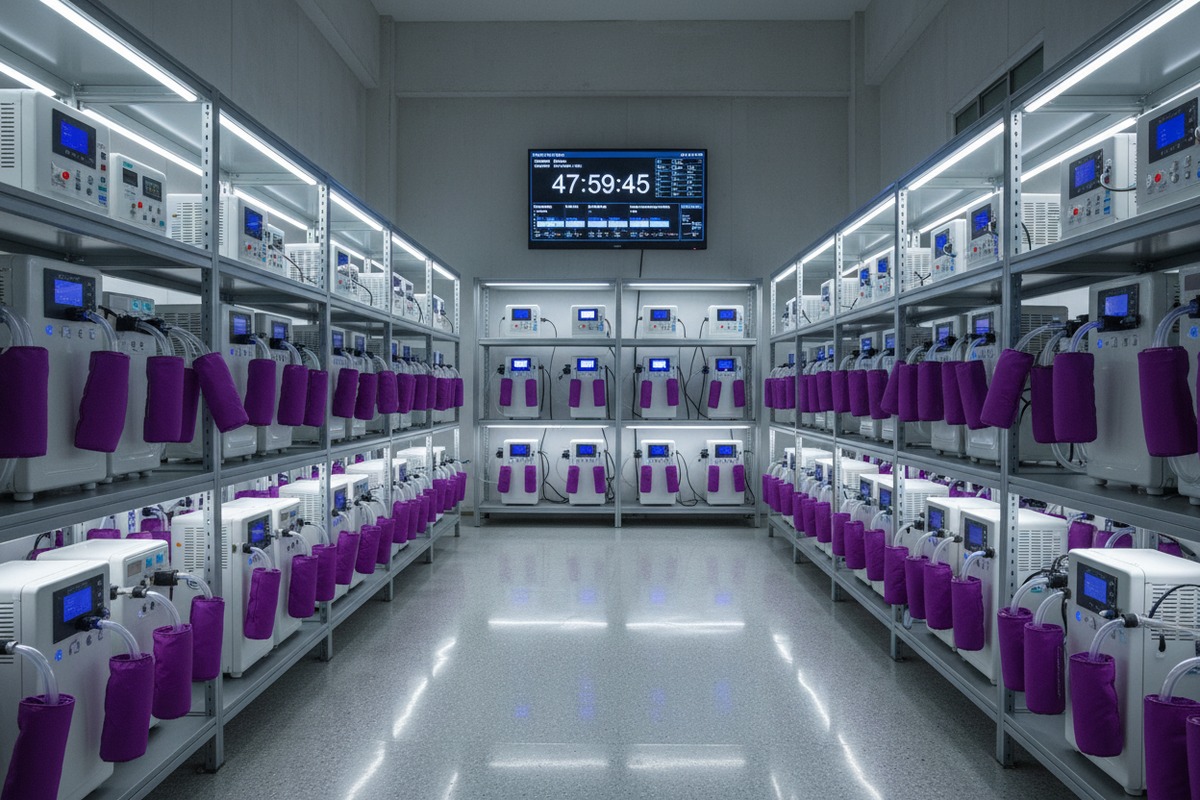
| Endurance | 48-Hour Aging Test | Identifies early component failures before shipping. |
| Physical | Plug & Cord Pull Test | Ensures power cords do not detach under stress. |
| Labeling | Portuguese Translation Check | Verifies warnings and specs meet ANVISA labeling rules. |
Can I customize the technical features of my pressotherapy equipment without losing its compliance status in my region?
Our R&D department frequently handles requests to modify pressure settings or casing designs. However, altering core components can inadvertently void existing safety certifications if not managed carefully by the engineering team.
You can customize cosmetic features like casing color or branding without affecting compliance, but significant technical changes to the air pump, pressure limits, or power supply will require a new INMETRO conformity assessment. Always consult your regulatory expert before altering the device’s internal specifications to avoid invalidating your current ANVISA registration.

The Difference Between Cosmetic and Technical Changes
When we work with OEM clients, we categorize customization requests into two buckets: "Safe" and "Critical." "Safe" changes usually involve the external appearance. You can change the color of the plastic shell, apply your logo, or change the boot-up screen logo on the LCD. These do not affect the safety or efficacy of the device. Therefore, they typically do not require a restart of the expensive ANVISA registration process.
Critical Components and Re-Certification
"Critical" changes affect the device's core function or safety. For pressotherapy, this includes the air pump motor, the main printed circuit board (PCB), the power supply, and the software logic that controls pressure limits. If you ask us to increase the maximum pressure from 200mmHg to 250mmHg, or if you want to switch to a cheaper power cord, this alters the "technical file." In Brazil, this triggers a need for a new test report.
The "Family" Registration Concept
There is a strategic way to handle this. ANVISA allows for "Family" registrations. This groups models that share the same technical characteristics and intended use. If we design a series of machines that use the same internal engine but have different outer shells, they can often be registered under one certificate. This is a smart way to offer variety to your customers without paying for multiple registrations.
Modifications Impact Table
Understanding what triggers a new certification can save you thousands of dollars.
| Customization Request | Impact on ANVISA/INMETRO | Action Required |
|---|---|---|
| Private Label (Logo) | None | Update label file in records. |
| Paint Color Change | None | Update visual documentation. |
| Software UI (Language) | Low | Verification validation needed. |
| Change Air Pump Supplier | High | Re-test for safety & EMC. |
| Increase Max Pressure | High | Full new technical file & clinical justification. |
| Change Power Supply | High | Mandatory new electrical safety test. |
Which shipping and certification documents must my supplier provide to guarantee a smooth import process into South America?
We have seen containers stuck in Santos simply because the commercial invoice lacked specific HS codes. Accurate paperwork is just as critical as the physical quality of the machines to ensure clearance.
Your supplier must provide a commercial invoice with precise HS codes, a packing list detailed by net/gross weight, and the Certificate of Origin to potentially reduce tariffs. Critically, they must supply the Letter of Authorization (LoA) empowering your local representative, along with valid INMETRO certificates and authenticated copies of the GMP compliance proof.
The Essential Document Pack
Shipping to South America requires precision. A small error in a document can lead to massive fines or the seizure of goods. The foundation is the standard shipping set: Commercial Invoice, Packing List, and Bill of Lading. However, for medical devices like pressotherapy machines, this is just the beginning. The Commercial Invoice must clearly state the brand, model, and serial numbers, and these must match exactly what is listed on the ANVISA registration.
Regulatory Specifics: The LoA and GMP
Before the ship even sails, you need a Letter of Authorization (LoA) 6. This legal document allows your Brazilian entity to represent our factory. It often needs to be notarized and consularized (authenticated) depending on the specific trade agreement between China and the destination country. Furthermore, for higher-risk classes, proof of Good Manufacturing Practices (GMP) 7 is mandatory. We provide our ISO 13485 certificate, but Brazil often requires a specific inspection or recognition of that certificate. ISO 13485 certification 8
Language and Manuals
One of the most common mistakes is sending English-only manuals. Brazil requires Portuguese. Argentina, Chile, and Colombia require Spanish. The customs officer will inspect the User Manual included in the box. If it does not match the local language requirement, the goods cannot be cleared for commercialization. We ensure that every export unit includes the correctly translated manual that matches the technical file submitted to the regulator.
Import Document Matrix by Country
Different countries have different nuances. Here is a quick guide to what is generally required across key markets.
| Document | Brazil (ANVISA) | Argentina (ANMAT) | Colombia (INVIMA) |
|---|---|---|---|
| Commercial Invoice | Required (Signed & Blue Ink) | Required | Required |
| Certificate of Origin | Recommended (Mercosur rules) | Required | Recommended |
| User Manual Language | Portuguese | Spanish | Spanish |
| Regulatory Cert | INMETRO Certificate | ANMAT Registration | INVIMA Registration |
| Factory Cert | BGMP / ISO 13485 | GMP / ISO 13485 | ISO 13485 |
| Power of Attorney | Required for Registration | Required | Required |
Conclusion
Successfully importing pressotherapy machines into South America relies on strict vetting of ANVISA compliance, robust electrical quality control, and precise documentation. Partnering with a knowledgeable manufacturer ensures your business thrives.
Footnotes
1. Official website for Brazil’s national health regulatory agency. ↩︎
2. Explains what a medical device technical file is and its regulatory requirements. ↩︎
3. Defines active medical devices and their regulatory context. ↩︎
4. Details the mandatory INMETRO certification for medical devices in Brazil. ↩︎
5. Explains the fundamental standard for medical electrical equipment safety. ↩︎
6. Describes the Letter of Authorization’s role in Brazilian medical device registration. ↩︎
7. Defines Good Manufacturing Practices and their importance in medical device manufacturing. ↩︎
8. Explains the requirements and importance of ISO 13485 for medical devices. ↩︎

 English
  Español de México
  Deutsch
  Français
  العربية
  Русский