
Navigating the complex regulatory landscape of South America often feels like a daunting hurdle for our international partners ANVISA in Brazil 1. When we collaborate with distributors targeting regions like Brazil or Argentina, we frequently encounter confusion regarding the specific documentation required for clearance. A missed document or an incorrect safety label can result in expensive equipment being held indefinitely at customs, delaying your return on investment and frustrating your waiting clients.
To ensure compliance, you must first identify the specific regulatory authority for your target country, such as ANVISA in Brazil or ANMAT in Argentina. You need to classify your pressotherapy device correctly, usually as Class II, and ensure your manufacturer provides ISO 13485 certification and IEC 60601 safety test reports to support your local registration.
The following guide breaks down the essential steps to successfully register and import your equipment without unexpected delays.
What specific medical certifications do I need to import my pressotherapy machines into South American markets?
When our engineering team designs circuits for global markets, we must constantly account for the distinct electrical and safety standards required by different South American nations ISO 13485 certification 2. Ignoring these regional variations is a primary reason why many import applications fail during the initial technical review.
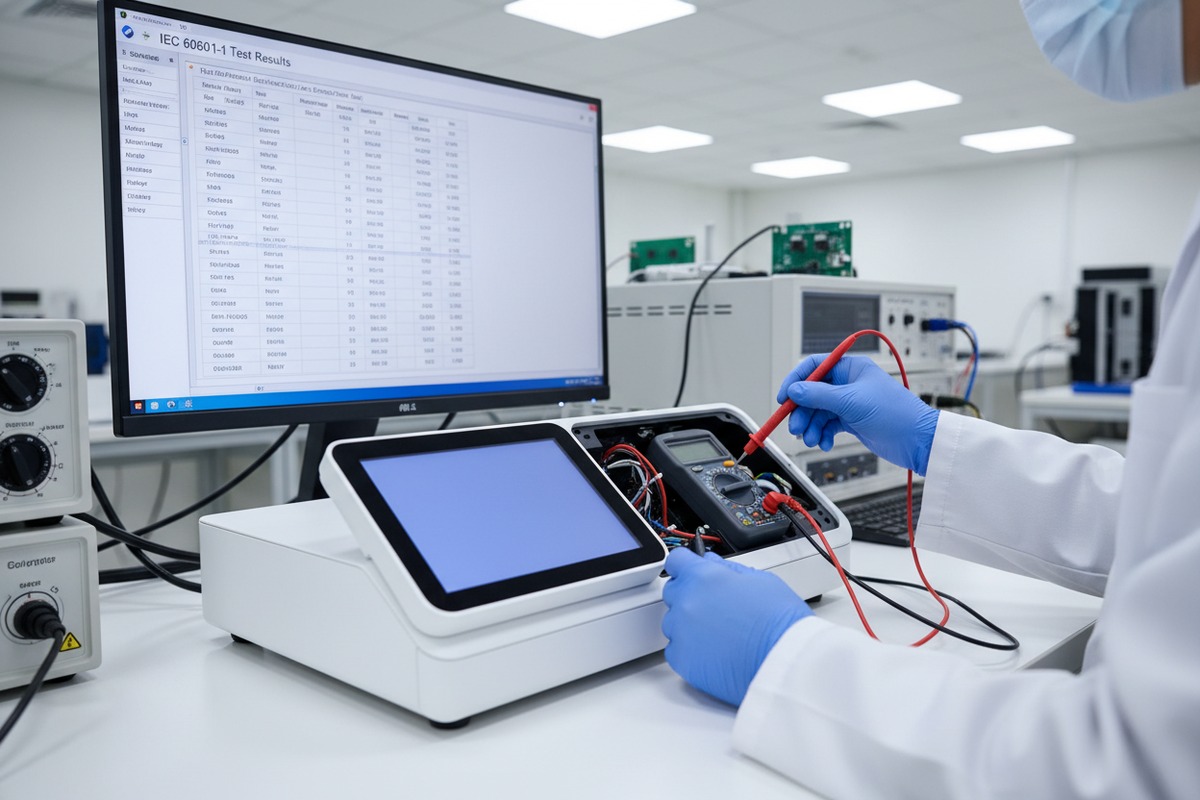
You typically need a Quality Management System certification like ISO 13485 and specific product safety reports such as IEC 60601-1 for electrical safety. Additionally, each country requires its own registration, such as the ANVISA registration in Brazil or the INVIMA sanitary registration in Colombia, often validated through local testing.
Understanding the Regulatory Landscape
South America is not a monolith; it is a collection of distinct regulatory environments that, while sharing some similarities, have unique requirements IEC 60601 safety test reports 3. The most critical step is acknowledging that a CE mark 4 or FDA clearance, while helpful, is rarely a "golden ticket" that grants automatic entry. These international standards serve as excellent reference points, but local authorities demand their own validation INVIMA sanitary registration 5.
Key Regulatory Bodies by Country
The first task is to identify who holds the keys to the market. In our experience exporting to this region, the following agencies are the primary gatekeepers:
- Brazil: ANVISA (Agência Nacional de Vigilância Sanitária) IEC 60601-1-2 6. This is arguably the strictest regulator in the region.
- Argentina: ANMAT (Administración Nacional de Medicamentos, Alimentos y Tecnología Médica).
- Colombia: INVIMA (Instituto Nacional de Vigilancia de Medicamentos y Alimentos).
- Mexico (often grouped in LATAM strategies): COFEPRIS.
The Role of Risk Classification
Pressotherapy machines generally fall under Class I (low risk) or Class II (medium risk) depending on the specific claims made. If the device is marketed purely for aesthetic relaxation, it might face lighter scrutiny. However, if we label the machine for "lymphatic drainage" or "edema reduction," it is classified as a medical device. In Brazil, for example, most active therapeutic equipment falls into Class II 7, requiring a more detailed technical dossier.
Necessary Safety Standards
Your manufacturer must provide evidence that the device is safe. The "gold standard" documents we prepare for our clients include:
- IEC 60601-1: General requirements for basic safety and essential performance.
- IEC 60601-1-2: Electromagnetic compatibility (EMC) – crucial to prove your device won't interfere with other electronics.
- ISO 13485: This proves your manufacturer operates under a quality management system specific to medical devices.
Comparison of Requirements
To help you visualize the differences, we have compiled a comparison of the three largest markets in the region.
| Feature | Brazil (ANVISA) | Argentina (ANMAT) | Colombia (INVIMA) |
|---|---|---|---|
| Primary Requirement | BGMP (Good Manufacturing Practice) audit often required for higher classes. | Local representative is mandatory; distinct focus on importer validation. | Sanitary Registration (Registro Sanitario) is mandatory. |
| Language | Portuguese (Strict requirement). | Spanish. | Spanish. |
| Local Testing | INMETRO certification 8 is usually required for electrical devices. | Mutual recognition is possible but local validation is common. | Accepts international reports but reviews are thorough. |
| Processing Time | 12–18 months. | 6–12 months. | 6–12 months. |
How can my OEM manufacturer help me prepare the technical files required for my local registration?
Our research and development department spends weeks compiling data for every new model, knowing that messy paperwork leads to rejection. We understand that as an importer, you rely heavily on the technical accuracy of the documents we generate to pass local scrutiny.
Your OEM manufacturer should provide a comprehensive Technical Dossier containing circuit diagrams, bill of materials, software validation reports, and biocompatibility tests. They must also assist in translating these technical specifications into the formats required by local agencies, such as the STED format.
The Backbone of Registration: The Technical Dossier
The technical file (or dossier) is the resume of your machine. It tells the regulator exactly how the machine is built, how it works, and why it is safe. When we work with clients, we don't just send a manual; we compile a structured data package. You cannot create this alone because you do not have access to the proprietary engineering data.
Essential Components We Must Provide
To successfully register a pressotherapy machine, your supplier must provide the following deep-level technical documents:
- Circuit Diagrams & PCB Layouts: Regulators need to see the electrical architecture to ensure there are no fire hazards or risk of shock.
- Bill of Materials (BOM): A detailed list of every component, from the air pump to the microcontroller.
- Software Lifecycle Documentation (IEC 62304): Since modern pressotherapy machines use software to control pressure cycles, we must prove the software was developed safely and has fail-safes (e.g., stopping if pressure exceeds limits).
- Biocompatibility Reports (ISO 10993): This is critical for the compression suit. Since the suit touches the patient's skin (or a thin layer of clothing), we must prove the material does not cause irritation or toxicity.
Adaptation to Local Formats
Different countries prefer different formats. The STED (Summary Technical Documentation) format is increasingly accepted globally, but local nuances exist. For example, ANVISA requires specific forms detailing the "Risk Management" history of the device (ISO 14971).
Supporting the "Legal Manufacturer"
In many South American regulations, the local importer (you) becomes the "legal manufacturer" in the eyes of the local authority. This means you are responsible for the device. However, since we are the physical manufacturer, we must support you with a "Letter of Authorization" and often a "Free Sale Certificate" (FSC) from our country of origin, proving the machine is legally sold elsewhere.
Checklist for Your Supplier
Use this table to ensure your manufacturer is sending you the right files before you start the registration process.
| Document Category | Specific File Needed | Why It Is Critical |
|---|---|---|
| Engineering | Block Diagrams & Schematics | Proves electrical safety design to engineers. |
| Material Safety | ISO 10993 9 Test Report | Validates that the suit material is safe for skin contact. |
| Performance | Clinical Evaluation Report | Summarizes literature or tests proving the therapy actually works. |
| Quality | ISO 13485 Certificate | Proves the factory has a legitimate quality system. |
| Legal | Letter of Authorization | Officially allows you to register their product in your country. |
What quality control steps should I take to ensure my machines meet regional safety and performance standards?
In our factory, we test every individual air chamber for leaks and pressure accuracy because we know that South American regulators conduct strict post-market surveillance. A single device failing a safety audit in Brazil or Colombia can lead to a recall of your entire inventory.
You should implement a pre-shipment inspection plan that verifies pressure accuracy (mmHg), electrical leakage current for local voltages, and the airtight integrity of the compression suits. It is also vital to verify that the emergency stop function is immediate and responsive.

The Importance of Voltage and Frequency
One of the most common technical failures in South America involves power supply mismatch. The region is a patchwork of electrical standards:
- Brazil: Uses both 127V and 220V, mostly at 60Hz.
- Argentina/Chile: Uses 220V at 50Hz.
- Colombia: Uses 110V at 60Hz.
If we send a machine with a 50Hz pump to a 60Hz country (like Brazil), the pump will run faster, overheat, and fail prematurely. During Quality Control (QC), you must verify that the machine is rated for the specific voltage and frequency of the destination.
Pressure Accuracy Calibration
Pressotherapy is a medical therapy. If the machine claims to deliver 40 mmHg but delivers 60 mmHg, it could injure a patient with compromised veins. If it delivers only 20 mmHg, the treatment is ineffective.
We recommend a Third-Party Inspection or a strict Video Inspection where the supplier demonstrates calibration using a digital manometer. The tolerance should typically be within ±5 mmHg.
Electrical Safety Testing (Leakage Current)
Regulators are obsessed with "Leakage Current"—the tiny amount of electricity that might pass through the patient if the insulation fails. Since pressotherapy involves a patient being wrapped in a suit connected to a machine, safety is paramount.
Your QC checklist must include a Hi-Pot Test (High Potential) and a Ground Bond Test. If the machine has a metal casing (though most modern ones like ours use medical-grade plastic), grounding is non-negotiable.
Suit Durability and Hygiene
The control unit often gets all the attention, but the suit is the working part. Poorly welded seams will burst under pressure. In our production, we use high-frequency welding rather than sewing to ensure air-tightness. During your inspection, you should inflate the suit to maximum pressure and hold it for 10 minutes to check for pressure drops (leaks).
Pre-Shipment QC Checklist
| Inspection Point | Standard/Requirement | Method of Verification |
|---|---|---|
| Voltage/Frequency | Match destination (e.g., 220V/50Hz) | Label check & Multimeter test on power up. |
| Pressure Accuracy | ±5 mmHg deviation max | Digital Manometer connected to suit output. |
| Emergency Stop | Instant deflation (< 5 seconds) | Physical test during max inflation. |
| Suit Integrity | No leaks at max pressure | inflation test (10-minute hold). |
| Visuals | No sharp edges, correct labeling | Visual & Tactile inspection. |
Which compliance documents must my supplier provide to avoid South American customs delays for my shipment?
We have seen shipments sit in customs bonded warehouses for weeks simply because a serial number on the invoice didn’t match the label. Our logistics team emphasizes that the consistency between physical labels and paper documentation is the single most critical factor for smooth clearance.
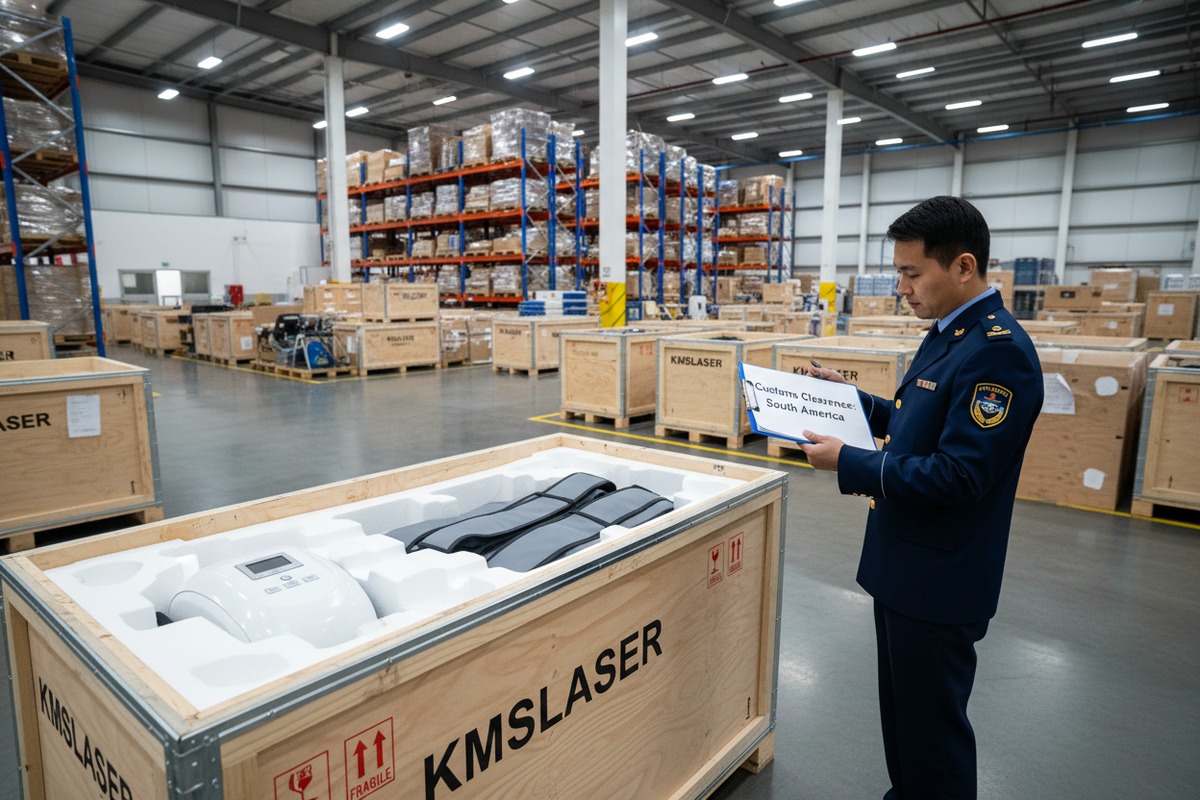
Your supplier must provide a commercial invoice with precise HS codes, a detailed packing list, a Certificate of Origin, and valid proof of local registration (import license). Crucially, the product labeling and user manuals must be in the local language (Portuguese or Spanish) and display the correct voltage ratings.
The Disconnect Between Registration and Import
There is often confusion between registering the product (the medical license) and importing the shipment (customs clearance). Once you have your ANVISA or INVIMA registration, you are not done. Every shipment must link back to that registration.
Labeling: The #1 Cause of Seizures
Customs officers do not test the machine's electronics; they read the labels. If your machine arrives in Brazil with a label in English or Chinese, it will be blocked.
- Language: Labels must be in Portuguese for Brazil, and Spanish for the rest of South America.
- Content: The label must show the Manufacturer Name, Local Importer Name, Registration Number (e.g., "Registro ANVISA nº…"), Voltage, Frequency, and Serial Number.
- UDI (Unique Device Identification): This is becoming mandatory globally. It allows regulators to track specific batches. Ensure your supplier prints a scannable UDI barcode on the device and the box.
The Import License (LI)
In countries like Brazil, you often need an Import License (Licença de Importação – LI) approved before the cargo loads onto the ship. If you ship first and ask for the license later, you may face heavy fines. The supplier needs to give you the Proforma Invoice early so you can file for this license.
Manuals and User Guides
You cannot simply throw a PDF in an email. The physical shipment usually requires a hard copy of the manual in the local language. This manual must match the version submitted during the registration process. If the registration says "Version 2.0" and the manual in the box says "Version 3.0," customs may flag the discrepancy.
Shipping Documents vs. Compliance Documents
To ensure clarity, here is how the documentation is divided:
- Commercial Docs (For Tax/Duty): Commercial Invoice, Packing List, Bill of Lading.
- Compliance Docs (For Health/Safety): Copy of Sanitary Registration, Certificate of Conformity (if applicable), User Manual (Local Language).
- Origin Docs (For Duty Reduction): Certificate of Origin (e.g., China-Chile FTA certificates can reduce import duties to 0%).
Conclusion
Successfully importing pressotherapy machines into South America requires more than just a good product; it demands a strategic partnership with a manufacturer who understands regulatory nuances. By securing the right technical files, enforcing strict quality control for local voltages, and ensuring perfect documentation alignment, you can turn compliance hurdles into a competitive advantage and ensure your equipment clears customs smoothly.
Footnotes
1. Official information on Brazil’s medical device regulator. ↩︎
2. Standard for quality management systems specific to medical devices. ↩︎
3. Essential safety standard for medical electrical equipment. ↩︎
4. European conformity marking for product safety and regulatory compliance. ↩︎
5. Official information on Colombia’s medical device registration. ↩︎
6. Standard for electromagnetic compatibility testing of medical devices. ↩︎
7. Explains medical device risk classification and regulatory controls. ↩︎
8. Brazilian certification for electrical product safety and quality standards. ↩︎
9. Standard for biological evaluation and biocompatibility testing of medical devices. ↩︎

 English
  Español de México
  Deutsch
  Français
  العربية
  Русский