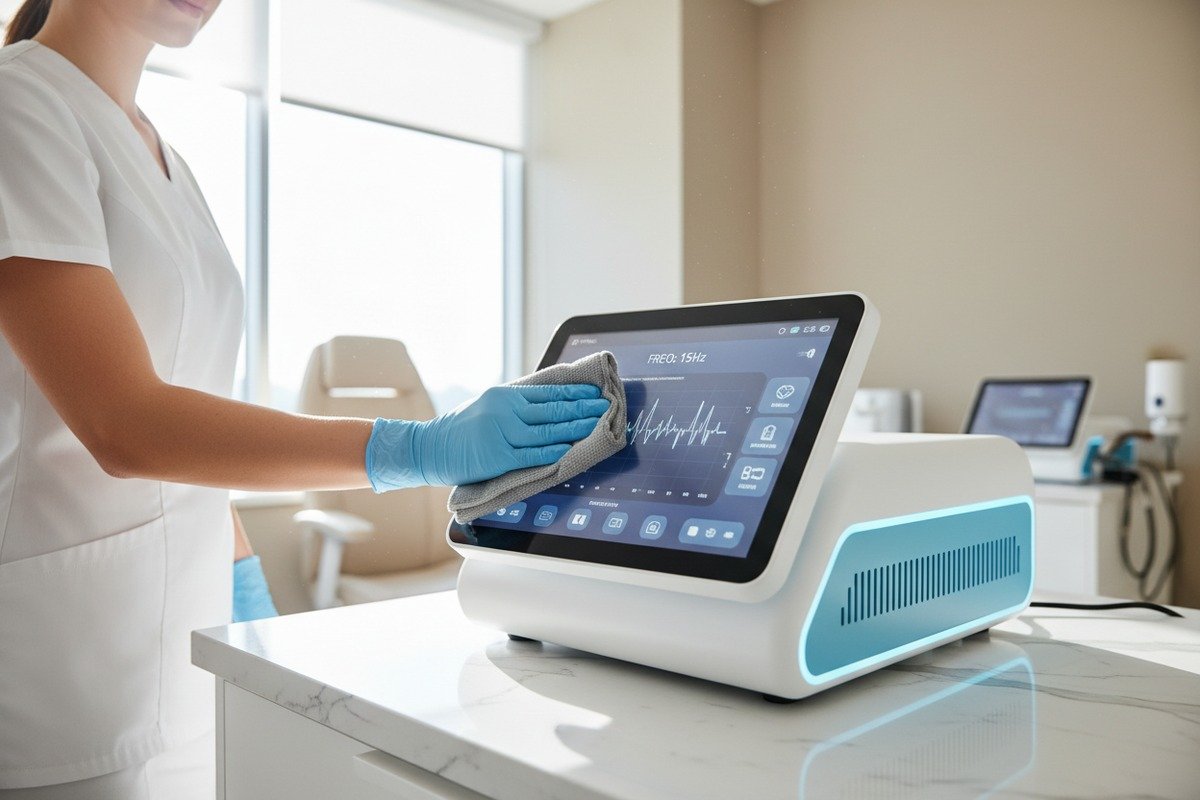
Every week, our service team receives calls from clinic owners worried about sticky handpieces or flickering displays. These problems often stem from simple neglect. Gel residue builds up. Vents get clogged. Suddenly, a reliable machine starts to fail.
Cleaning and maintaining shockwave therapy machines is moderately easy for trained staff. Daily wiping, disinfection, and routine part inspections using cloths, brushes, and approved cleaners keep devices hygienic. Following model-specific schedules prevents costly repairs from gel buildup, component wear, or overheating issues.
This guide walks you through practical steps for daily cleaning 1, lifespan extension, staff training, and technical support options. Let’s start with the basics.
What daily cleaning routine should I follow to keep my shockwave machine hygienic?
Clinic hygiene starts with simple habits. Our production engineers always stress one point: consistent daily cleaning prevents 80% of service calls. When gel dries on transmitters, it hardens. This blocks energy transfer and breeds bacteria.
A proper daily routine includes wiping handpieces and transmitters with a damp cloth after each patient, removing gel residue with 70% isopropyl alcohol, cleaning the main unit with mild soap, and inspecting cables for damage. This takes only 10-15 minutes per session.

Per-Session Cleaning Steps
After each patient, your staff should follow these steps. First, unplug the handpiece from the main unit. Use a soft tissue to remove excess gel from the applicator head. Then wipe the entire handpiece shaft 2 with a cloth dampened with 70% isopropyl alcohol. Avoid spraying liquid directly onto any component.
For the transmitter tip, use a lint-free cloth. Gel residue here causes energy loss 3 during treatments. Some clinics prefer hot towels for stubborn buildup. Our testing shows this works well, but always dry the surface completely afterward.
The main unit needs attention too. Wipe the touchscreen with a microfiber cloth. Avoid alcohol on screens—it damages the coating over time. The white plastic body and blue side panels can be cleaned with mild soapy water. The metallic control knob collects fingerprints and oils, so wipe it with a dry cloth.
End-of-Day Protocol
At day's end, perform a deeper clean. Check all cable connections for wear. Look at the power cord for fraying. Inspect the handpiece cushion for cracks or discoloration. Our quality control team flags these issues during pre-shipment inspections, but daily use causes normal wear.
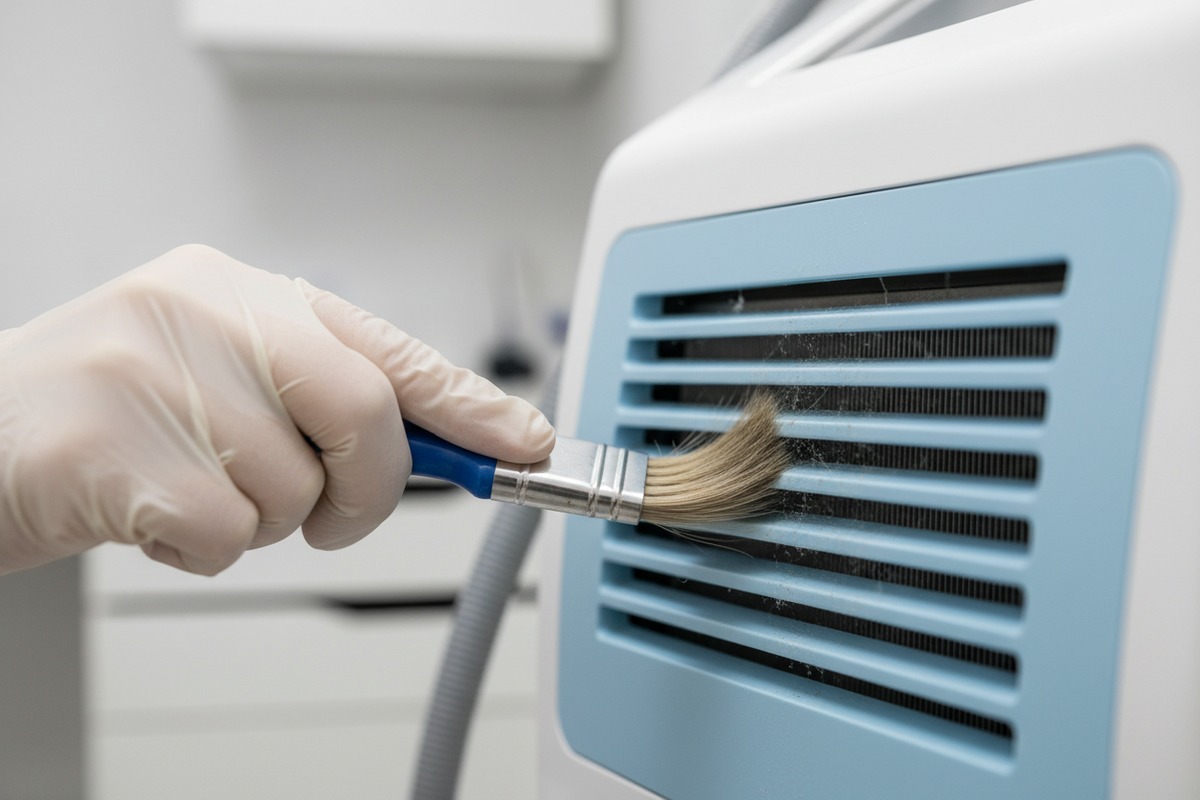
Clean the ventilation openings 4 with a soft brush. Dust accumulates here and causes overheating. The integrated LCD screen showing anatomical diagrams should be dust-free for clear visibility.
Recommended Cleaning Supplies
| Supply Type | Recommended Product | Usage Area | Notes |
|---|---|---|---|
| Disinfectant | 70% isopropyl alcohol | Handpiece, transmitter | Avoid on screens |
| Wipes | Lint-free microfiber cloths | All surfaces | Replace when worn |
| Brush | Soft-bristle brush | Vents, crevices | Low pressure only |
| Soap | Mild liquid soap | Main unit body | Dilute with water |
| Towels | Disposable hot towels | Stubborn gel residue | Dry surfaces after |
Common Mistakes to Avoid
Many clinics skip cleaning between patients. This spreads contamination. Others use harsh chemicals like bleach. These damage plastic housings and rubber seals. Some staff spray cleaners directly onto the machine. This forces liquid into internal circuits.
Our engineers recommend keeping a cleaning log. Record each session's cleaning. This builds accountability and helps identify when deeper maintenance is needed.
How can I extend the operational lifespan of my shockwave therapy equipment?
When we design machines at our facility, we test components for millions of cycles. But real-world use varies. A machine in a busy sports clinic 5 faces more stress than one in a small aesthetic practice. Smart maintenance extends lifespan dramatically.
To extend your shockwave device's lifespan, replace worn components before failure, maintain regular lubrication schedules, monitor shot counts for predictive maintenance, store equipment in climate-controlled environments, and schedule annual professional calibration to verify energy output accuracy.

Understanding Component Lifecycles
Every shockwave machine has wear parts. The handpiece bullet typically lasts 2 million shots. Revision kits need replacement after 1 million hits. Applicator tips show visible wear much sooner. Understanding these lifecycles helps you plan replacements before failures occur.
Our machines display shot counts on the integrated LCD screen. Track these numbers weekly. When approaching replacement thresholds, order parts in advance. This prevents treatment interruptions.
Component Replacement Schedule
| Component | Replacement Trigger | Typical Lifespan | Replacement Cost Range |
|---|---|---|---|
| Handpiece bullet | Damage or sticking | 2 million shots | $200-$500 |
| Revision kit | Visual wear | 1 million hits | $150-$400 |
| Applicator tips | Cracks, discoloration | 20,000 pulses | $50-$150 |
| O-rings and seals | Leakage, deformation | 6-12 months | $20-$80 |
| Full handpiece | Unrepairable damage | 3-5 years | $1,395-$8,490 |
Lubrication and Internal Care
Weekly lubrication extends internal component life significantly. Disassemble the handpiece following manufacturer guidelines. Clean the barrel and steel tube with a dry cloth. Apply a thin layer of machine oil or WD40 to moving parts. Reassemble carefully.
The bullet inside the handpiece needs special attention. When it sticks or stutters, cleaning and lubrication usually solve the problem. Our production team tests each unit before shipping, but ongoing maintenance is the owner's responsibility.
Environmental Controls
Where you store your machine matters. Temperature extremes stress electronic components 6. High humidity causes corrosion. Dust clogs vents and fans. Our engineers recommend storing equipment in climate-controlled rooms between 15-25°C with humidity below 60%.
The sleek white cuboid design of modern machines looks professional, but the smooth matte finish attracts dust. Cover the machine when not in use. Keep it away from windows where sunlight causes overheating.
Water Quality Considerations
Some shockwave machines use internal water cooling systems. Water quality affects component longevity. Hard water causes mineral buildup. Distilled water is ideal. Drain water systems after use to prevent stagnation.
Newer models feature auto-drain functions. When we developed our latest units, we added this feature specifically to reduce maintenance burden. It simplifies internals and prevents many common issues.
Software and Calibration
Quarterly software updates keep your machine current. These updates fix bugs, improve performance, and add features. Connect your device to the manufacturer's update system regularly.
Annual calibration by certified technicians verifies energy output accuracy. This ensures consistent treatment results and patient safety. Skipping calibration leads to unpredictable outcomes and potential liability issues.
Is it easy for my staff to perform routine maintenance on the shockwave applicators?
Training new staff on equipment maintenance worried one of our US distributors last year. Her technicians had no biomedical background. She wondered if they could handle applicator care. The answer surprised her.
Yes, routine applicator maintenance is straightforward for trained staff. Basic tasks include disassembling handpieces for cleaning, lubricating internal components, inspecting O-rings and seals, and replacing worn tips. Most staff learn these procedures in 30-60 minutes using video guides and manufacturer manuals.
Breaking Down Maintenance Tasks
Applicator maintenance divides into three categories: daily tasks, weekly tasks, and monthly tasks. Daily tasks take 5-10 minutes. Weekly tasks require 15-20 minutes. Monthly tasks need 30-45 minutes. This time investment pays off through reduced downtime and repair costs.
Task Difficulty Ratings
| Task | Frequency | Time Required | Difficulty Level | Tools Needed |
|---|---|---|---|---|
| External wipe-down | Daily | 5 minutes | Easy | Cloth, alcohol |
| Gel residue removal | Per patient | 2 minutes | Easy | Tissue, towel |
| Handpiece disassembly | Weekly | 15 minutes | Moderate | Manufacturer kit |
| Internal lubrication | Weekly | 10 minutes | Moderate | Oil, cloth |
| O-ring inspection | Monthly | 15 minutes | Moderate | Visual only |
| Seal replacement | As needed | 20 minutes | Moderate | Replacement parts |
| Full internal clean | Monthly | 30 minutes | Advanced | Brush, ultrasonic bath |
Training Your Team
Video-guided maintenance has become standard practice. When staff watch demonstrations for specific models, they learn faster. We provide detailed video guides for our machines showing exact disassembly steps. Pause, practice, repeat—this method works best.
Start training with external cleaning. Once staff master daily routines, introduce weekly handpiece disassembly. The process involves unscrewing the applicator head, removing the internal bullet, cleaning the steel tube, and reassembling. With practice, this becomes routine.
Tools Every Clinic Needs
Basic maintenance requires minimal tools. A set of lint-free cloths handles most cleaning. Soft brushes clean vents and crevices. Machine oil or WD40 lubricates moving parts. The manufacturer's service kit includes specialized tools for that specific model.
Keep supplies organized near the machine. When everything is accessible, staff complete maintenance consistently. Missing supplies lead to skipped steps and accumulated problems.
When to Call Professionals
Not every task suits clinic staff. Full calibration requires certified technicians with specialized equipment. Internal circuit repairs need professional expertise. Software issues beyond basic updates require technical support 7.
Establish clear boundaries for your team. Daily and weekly tasks belong to clinic staff. Monthly deep cleaning can be staff-managed with proper training. Annual calibration and complex repairs require professional service.
Building Maintenance Confidence
Staff confidence grows with successful repetitions. Start with supervised practice sessions. Let team members complete tasks while you observe. Correct technique errors immediately. After 3-4 successful cycles, most staff work independently.
Document procedures in a clinic maintenance manual. Include photos of each step. Post quick-reference guides near the machine. This reduces errors and maintains consistency when staff turnover occurs.
How will your team support my technical maintenance needs for my branded machines?
When clients brand our machines under their own labels, they need reliable support. A California distributor asked this question during our first call. Her concern was valid—her reputation depends on equipment reliability. Our answer addresses this head-on.
Our technical support includes comprehensive training documentation, video maintenance guides, responsive WhatsApp communication, spare parts inventory management, remote troubleshooting assistance, and coordination with local service technicians for complex repairs. We aim for same-day response to urgent technical inquiries.

Documentation and Training Materials
Every machine ships with detailed maintenance manuals. These cover daily routines, weekly procedures, and monthly deep cleaning. Diagrams show component locations. Step-by-step instructions guide each task. We write in plain English, avoiding technical jargon.
For OEM clients, we customize documentation with your brand. Your logo appears on manuals. Your contact information replaces ours. Your customers see a professional, cohesive brand experience.
Video Support Library
Our engineering team produces maintenance videos for each model. These show exact procedures performed on the actual equipment. Staff pause and follow along. Complex tasks become manageable with visual guidance.
We update videos when designs change. New features get dedicated tutorials. Common problems get troubleshooting guides. This library grows based on real customer feedback.
Communication Channels
WhatsApp remains our primary support channel for international clients. Response times average under 4 hours during business days. Urgent issues get priority handling. Our service team includes English-speaking technicians who understand both the equipment and your business needs.
Email works for non-urgent inquiries and documentation requests. We maintain detailed records of each client's equipment and maintenance history. This helps us provide contextual support quickly.
Spare Parts Management
We stock common replacement parts for immediate shipping. Handpiece bullets, revision kits, O-rings, and applicator tips ship within 48 hours. For less common parts, lead times extend to 1-2 weeks.
Smart clients maintain their own spare parts inventory. We help calculate optimal stock levels based on your usage patterns. A clinic performing 500 treatments weekly needs more backup parts than one doing 100.
Remote Troubleshooting Process
Most problems have simple solutions. When you contact us with an issue, we follow a structured diagnostic process. First, we gather symptoms and error codes from the LCD display. Then we check recent maintenance history. Often, we identify the cause within minutes.
For intermittent issues, we may request video documentation. Seeing the problem in action reveals details that descriptions miss. Many clients resolve issues during a single WhatsApp conversation.
Local Service Network Coordination
Complex repairs sometimes require hands-on work. We maintain relationships with biomedical service providers 8 in major US markets. When needed, we coordinate local technician visits. We provide technical guidance, parts, and documentation to ensure repairs meet our standards.
This approach combines our product expertise with local convenience. Your machines get proper service without international shipping delays.
Quality Control Throughout Ownership
Our support extends beyond reactive troubleshooting. We proactively contact clients about firmware updates. We remind about calibration schedules. We share maintenance tips based on common issues we see across our customer base.
This ongoing relationship protects your investment and your brand reputation. When your downstream customers have reliable equipment, they remain loyal customers.
Conclusion
Maintaining shockwave therapy machines requires consistent daily habits, scheduled component replacement, proper staff training 9, and reliable technical support. These efforts protect your investment and ensure treatment quality. Partner with manufacturers who prioritize ongoing service alongside quality products.
Footnotes
1. CDC guidelines on hygiene and cleaning practices to prevent the spread of bacteria in clinical settings. ↩︎
2. Mechanical engineering principles regarding the design and function of shafts in industrial and medical equipment. ↩︎
3. Scientific background on the mechanisms of energy transformation and loss in physical systems. ↩︎
4. Architectural and mechanical overview of ventilation openings for airflow and equipment cooling. ↩︎
5. Mayo Clinic overview of sports medicine services and clinical environments for physical therapy. ↩︎
6. IEEE standards for electronic components to ensure safety and reliability in technical devices. ↩︎
7. HTTP 404 ↩︎
8. WHO resources on the management and maintenance of medical devices in healthcare settings. ↩︎
9. Forbes Advisor guide on the importance and implementation of effective employee training programs for businesses. ↩︎

 English
  Español de México
  Deutsch
  Français
  العربية
  Русский