We often see clients struggle with unexpected costs after their machines leave our Guangzhou factory floor. The financial surprise can be devastating if you haven’t planned correctly for duties.
To calculate costs, identify the HS code (typically 9018.90), determine the Customs Value (CIF), and apply the combined tariff rate. For US imports from China, this often includes a base rate plus a Section 301 penalty, potentially totaling around 45% in duties depending on current trade policies.
Let’s break down the exact math and classification rules so you can protect your profit margins effectively.
What is the correct HS code for importing shockwave therapy machines from China?
During our pre-shipment inspections, we ensure every commercial invoice lists the precise code to avoid customs delays. Incorrect coding is a frequent cause of expensive border holds and audits.
The correct Harmonized System (HS) code for shockwave therapy machines is generally found under heading 9018.90, specifically 9018.90.75 or 9018.90.99 for “other” medical instruments. This 10-digit classification determines your base duty rate and eligibility for specific trade tariffs regarding medical devices.

Understanding the Harmonized System for Medical Devices
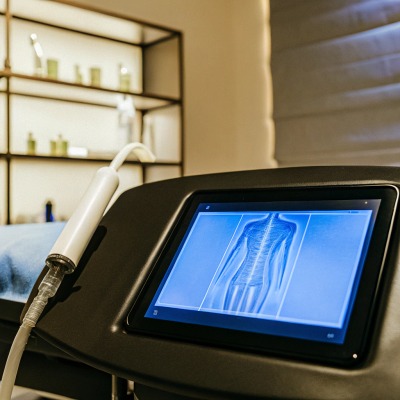
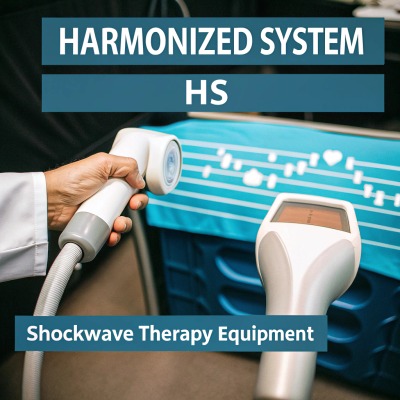
The Harmonized System (HS) is the backbone of international trade Harmonized System 1 Harmonized System (HS) 2, and selecting the right code is not merely a bureaucratic formality—it is the primary determinant of your landed cost. In our manufacturing facility, we produce shockwave therapy devices that feature touchscreens, anatomical displays, and handheld applicators. shockwave therapy devices 3 These specific physical characteristics drive the classification process.
The distinction between codes is subtle but expensive. Shockwave therapy equipment is a medical device used for physiological treatment. Therefore, it typically falls under Chapter 90: "Optical, photographic, cinematographic, measuring, checking, precision, medical or surgical instruments and apparatus."
Differentiating Between 9018 and 9019
A common mistake we see purchasing managers make is classifying these machines under Heading 9019, which covers "Mechano-therapy appliances." While shockwave therapy involves mechanical waves, customs authorities often view professional-grade medical equipment differently shockwave therapy 4 than general massage apparatus.
- Heading 9018: Instruments and appliances used in medical, surgical, dental, or veterinary sciences. This is the safer and more accurate classification for high-end clinical shockwave devices.
- Heading 9019: Mechano-therapy appliances, massage apparatus, and psychological aptitude-testing apparatus.
If your device is labeled as a "massager" on the invoice but looks like a clinical medical device with a skeletal anatomy display, Customs and Border Protection (CBP) may flag the shipment for misclassification. This can lead to retroactive duty bills and inspections.
The Cost of Misclassification
Using the wrong code does not just delay your shipment; it affects the duty rate. While some medical devices have a base duty rate of 0% under standard trade relations, the application of punitive tariffs (Section 301) relies entirely on this 10-digit code.
The table below illustrates how subtle differences in the code description can alter the classification logic, although the actual duty impact depends heavily on current Section 301 lists.
Common HS Codes for Therapy Equipment
| HS Code | Description | Typical Use Case | Risk Level |
|---|---|---|---|
| 9018.90.75 | Electro-medical instruments and appliances | Professional Shockwave Therapy | Low (Recommended) |
| 9019.10.20 | Mechano-therapy appliances; massage apparatus | Consumer-grade Massagers | High (for Clinical devices) |
| 8543.70.99 | Electrical machines and apparatus, having individual functions | Generic Electronic Devices | High (Vague) |
Table 1: Comparison of potential HS Codes for shockwave therapy equipment.
Always verify the code with a licensed US customs broker before we ship. We can provide the technical specifications and FDA product codes to support your broker's classification decision.
How do I determine the specific tariff rate for beauty equipment entering my country?
We regularly update our US partners on tariff shifts, as the landscape changes rapidly with political decisions. Failing to track these rates can turn a profitable shipment into a significant financial loss.
You must combine the Normal Trade Relations (NTR) base rate with additional Section 301 tariffs. Currently, Chinese medical devices often face a base rate plus a 25% punitive surcharge, resulting in a total effective tariff burden that can reach 45% on the declared customs value.

The Reality of Tariff Stacking
When importing from China to the United States, you rarely pay just one tax rate. You deal with "tariff stacking." This occurs when multiple duties apply to the same product. For shockwave therapy machines, the calculation involves two distinct layers: the General Rate and the Section 301 Penalty.
The General Rate (or MFN/NTR rate) is the standard duty applied to goods from most countries. For many medical instruments under Heading 9018, this base rate might be low, sometimes even 0%. However, because the goods originate in China, they are subject to trade enforcement actions.
The Impact of Section 301
The Section 301 tariffs are specific to China. Section 301 tariffs 5 These are "punitive" duties intended to address trade imbalances. Most medical and beauty equipment falls onto specific lists (like List 3 or List 4A) which trigger an additional 25% ad valorem duty.
If your shockwave machine has a base duty of 0% but is on the Section 301 list, your rate is 0% + 25% = 25%. However, if the base rate is higher, or if specific "retaliatory" measures are active, the total can climb higher. As mentioned in recent trade insights, importers should prepare for scenarios where the effective rate reaches closer to 45% depending on specific administrative updates and the exact material composition of the device.
Calculating the Duty Amount
Duties are calculated on the Ad Valorem basis, meaning "according to value." This value is usually the FOB (Free on Board) price or the CIF (Cost, Insurance, Freight) price depending on the specific customs valuation method of the importing country. The US generally uses the FOB value for duty calculation, but many importers estimate using CIF to be safe.
Fees Beyond the Duty
Beyond the tariff percentage, you must account for customs fees. customs fees 6 These are mandatory and non-negotiable.
- Merchandise Processing Fee (MPF): For formal entries (valued over $2,500), this is an ad valorem fee (approx 0.3464%) with a minimum (around $27) and a maximum (around $538).
- Harbor Maintenance Fee (HMF): If your goods arrive via ocean freight at US ports, you pay 0.125% of the cargo value.
Tariff Breakdown Example
| Component | Rate (Estimate) | Basis | Notes |
|---|---|---|---|
| Base Duty (NTR) | 0% – 20% | Commercial Invoice Value | Depends on HS Code 9018 vs 9019 |
| Section 301 Tariff | +25% | Commercial Invoice Value | Specific to China Origin |
| MPF | 0.3464% | Commercial Invoice Value | Capped at approx $538 |
| HMF | 0.125% | Commercial Invoice Value | Only for Ocean Freight |
Table 2: Breakdown of duty and fee components for US imports.
We strongly advise checking the HTS Search HTS Search tool 7 tool at hts.usitc.gov immediately before placing an order, as these rates can change overnight via executive order.
Will I be required to pay VAT or sales tax in addition to import duties?
Our accounting team frequently clarifies this for new distributors who confuse American sales tax with European-style VAT. It is crucial to distinguish between federal customs charges and state-level tax obligations.
The United States does not impose a federal Value Added Tax (VAT) on imports. Value Added Tax 8 However, you may be liable for state-level sales tax upon selling the equipment, and specific customs fees like the Merchandise Processing Fee apply instead of an import VAT.
US Sales Tax vs. International VAT
This is the most common confusion we encounter with our global partners. If you were importing our shockwave machines into the UK or Canada, you would pay VAT (Value Added Tax) or GST (Goods and Services Tax) at the border, calculated on the landed cost (Value + Duty).
In the United States, the system is different. There is no federal VAT paid to US Customs. Customs only collects duties and fees (MPF/HMF).
State-Level Sales Tax
While you don't pay tax at the border, you are likely liable for Sales and Use Tax at the state level.
- Resale Certificate: If you are importing these machines to resell them to beauty salons, you can typically avoid paying sales tax on the import by providing a valid Resale Certificate. This proves the goods are inventory, not for end-use.
- End-User Taxation: When you sell the machine to a clinic or salon, you are responsible for collecting sales tax from that customer, depending on the laws of your state and the state where the customer is located (Economic Nexus). Economic Nexus 9
Use Tax for Demo Units
If you import a shockwave machine and decide to keep it in your office as a showroom demo unit rather than selling it, you may owe "Use Tax" to your state government. This is essentially a self-assessed sales tax on goods you consumed rather than sold.
Cash Flow Implications
The absence of import VAT in the US is a cash-flow advantage compared to Europe. In Europe, importers must pay 20% VAT upfront at the port and claim it back months later. In the US, you keep that cash flow, only paying the duties. However, the duties (Tariffs) are a sunk cost, whereas VAT is usually recoverable.
International Comparison
To help our diverse clientele, we have summarized the tax differences below.
| Region | Import Duty? | Import VAT? | Recoverable? |
|---|---|---|---|
| United States | Yes (High Tariffs) | No (State Tax applies later) | No (Duty is a cost) |
| European Union | Yes | Yes (approx 20%) | Yes (VAT is reclaimed) |
| Canada | Yes | Yes (GST 5%) | Yes (Input Tax Credit) |
| Australia | Yes | Yes (GST 10%) | Yes (Input Tax Credit) |
Table 3: Comparison of Import Tax structures across major markets.
For our US clients, the focus should remain on the Tariff Stacking (Section 301) discussed in the previous section, as that is the primary "tax" burden at the border.
How can I estimate the total landed cost including shipping, insurance, and taxes?
We always advise clients to calculate the landed cost before finalizing the purchase order. This prevents margin erosion when the final logistics bill arrives and ensures your pricing strategy remains competitive.
Calculate landed cost by summing the FOB product price, international freight, insurance, total import duties (including Section 301), and customs fees (MPF/HMF). Additionally, include domestic transport costs to your warehouse to determine the true final cost per unit.

The Landed Cost Formula
The "Landed Cost" is the total price of a product once it has arrived at your warehouse door. Relying solely on the product price (FOB Price) is a recipe for disaster. For high-value items like shockwave therapy machines, logistics and taxes can add 50-60% to the base cost.
The comprehensive formula we recommend is:
Landed Cost = Product Cost (FOB) + Shipping (Freight) + Insurance + Customs Duties + Customs Fees (MPF/HMF) + Brokerage + Domestic Delivery.
Step-by-Step Calculation Guide
Let's assume you are buying a shipment of Shockwave Therapy Machines.
- Product Cost (FOB): This is the amount you pay us via wire transfer.
- Freight & Insurance: Even if you buy FOB, you must pay a freight forwarder. Insurance is vital for medical devices; a scratched touchscreen or cracked housing renders the machine unsellable.
- Duties: Apply the percentage we identified earlier (Base + Section 301) to the value.
- Brokerage Fees: Your customs broker charges a fee to file the paperwork (Entry Summary 7501). This is usually a flat fee ($100-$150) per shipment.
- Bank Fees: Don't forget the wire transfer fees or currency conversion losses.
Managing Logistics: DDP vs. FOB
We offer different Incoterms to our clients. Incoterms 10
- DDP (Delivered Duty Paid): We handle everything. You pay one price, and the machine arrives at your door. We take the risk of tariff calculation. This is easiest for you but may be slightly more expensive as we bake in a safety margin.
- FOB (Free on Board): We deliver to the port in China. You handle the freight and customs. This gives you more control and transparency over the tax amounts paid.
Hypothetical Cost Scenario
Below is a calculation for a hypothetical order of Shockwave Machines valued at $20,000.
| Cost Element | Calculation Basis | Estimated Amount |
|---|---|---|
| Product Cost (FOB) | Invoice Value | $20,000.00 |
| Int'l Freight & Ins. | Estimate | $2,500.00 |
| Customs Value | Product Only (US Rule) | $20,000.00 |
| Duty (Base + 301) | $20,000 * 45% (Scenario) | $9,000.00 |
| MPF Fee | $20,000 * 0.3464% (Max $538) | $69.28 |
| HMF Fee | $20,000 * 0.125% | $25.00 |
| Brokerage Entry | Flat Fee | $125.00 |
| Domestic Trucking | Port to Warehouse | $400.00 |
| TOTAL LANDED COST | Sum of all above | $32,119.28 |
Table 4: Detailed Landed Cost estimation for a $20,000 order.
In this scenario, the "extra" costs amount to over $12,000—more than 50% of the product value. This highlights why understanding the 45% tariff impact is critical before setting your wholesale or retail prices in the US market.
Conclusion
Accurate landed cost calculations protect your margins and business viability. Partner with experienced manufacturers to navigate HS codes and tariffs effectively, ensuring no financial surprises upon arrival.
Footnotes
1. The international authority that maintains the HS nomenclature. ↩︎
2. Official definition of the Harmonized System by the World Customs Organization. ↩︎
3. WHO guidance on medical device definitions and classification standards. ↩︎
4. General background on the medical technology and its applications. ↩︎
5. Official USTR page detailing Section 301 actions and lists. ↩︎
6. Official CBP page explaining user fees like MPF and HMF. ↩︎
7. Official tool for verifying Harmonized Tariff Schedule codes and rates. ↩︎
8. Official UK guidance on how VAT applies to imported goods. ↩︎
9. Authoritative source explaining economic nexus standards for US sales tax. ↩︎
10. The International Chamber of Commerce is the official creator of Incoterms rules. ↩︎

 English
  Español de México
  Deutsch
  Français
  العربية
  Русский